How Many National Parks Are There in Nepal?
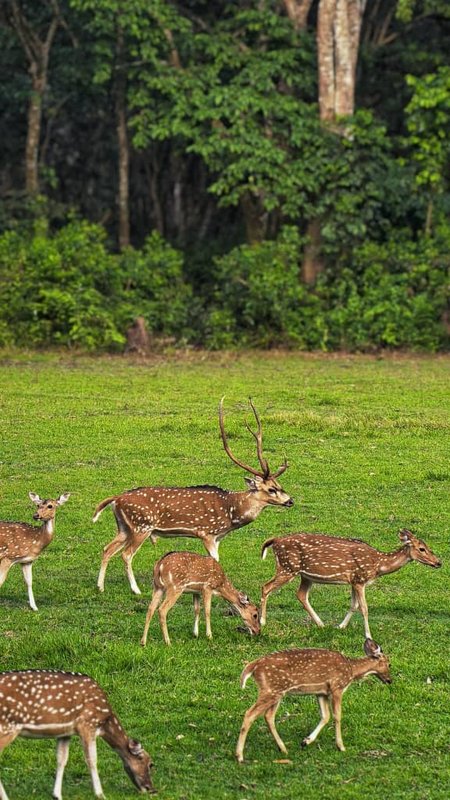
Nepal has 13 national parks as of 2026, spread across every province from the Terai grasslands near the Indian border to the glacier basins below Mount Everest. Twelve parks were established between 1973 and 2017, and the thirteenth, Chhayanath National Park in Mugu, was declared in September 2025, making Nepal's protected-area network one of the most complete in South Asia. Together the parks protect rhinos, tigers, snow leopards, red pandas, the world's deepest lake, and the highest ground on the planet.
| National Park | Established | Area | Signature Specialty |
|---|---|---|---|
| Chitwan | 1973 | 952.63 sq km | First park, UNESCO site, one-horned rhinos |
| Sagarmatha | 1976 | 1,148 sq km | Mount Everest, highest park on earth |
| Langtang | 1976 | 1,710 sq km | Closest Himalayan park to Kathmandu |
| Rara | 1976 | 106 sq km | Smallest park, largest lake in Nepal |
| Khaptad | 1984 | 225 sq km | Rolling sky meadows, Khaptad Baba ashram |
| Shey Phoksundo | 1984 | 2,712 sq km | Largest park, deepest lake, Upper Dolpo |
| Bardiya | 1988 | 968 sq km | Best wild tiger sightings in Nepal |
| Makalu Barun | 1992 | 1,500 sq km | World's fifth-highest peak, red pandas |
| Shivapuri Nagarjun | 2002 | 159 sq km | Capital city park, Kathmandu watershed |
| Banke | 2010 | 550 sq km | Transboundary tiger corridor |
| Shuklaphanta | 2017 | 305 sq km | World's largest swamp deer herds |
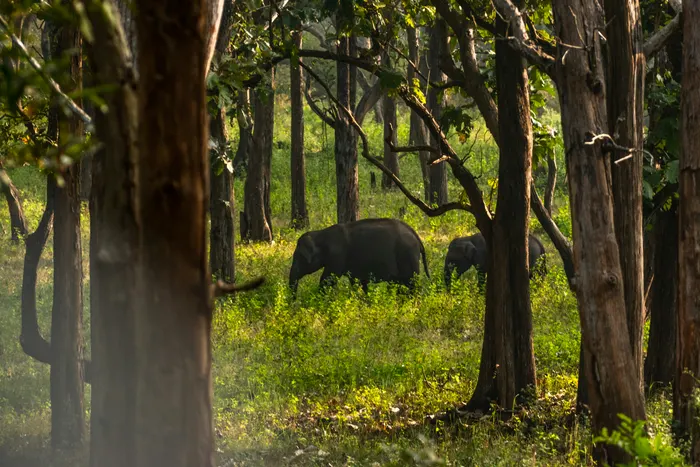
| Parsa | 2017 | 637 sq km | Quietest jungle, wild elephants |
| Chhayanath | 2025 | 906 sq km | Newest park, Karnali hill forests |
Why Are Nepal's National Parks So Special?
Nepal compresses eleven bio-climatic zones, from tropical jungle below 500 meters to nival ice above 5,000 meters, into a country you can cross in a day of flying, and the national parks guard the best of every zone. That vertical crush of ecosystems is why one small country shelters four of Asia's most charismatic big mammals: the one-horned rhinoceros, the Bengal tiger, the snow leopard, and the red panda. Two parks hold UNESCO World Heritage status, one contains the highest point on earth, and one holds the world's deepest alpine lake. No other country offers elephant-free jeep safaris, tiger forests, and Everest glaciers inside a single protected-area network this compact.
For travelers, this means one itinerary can pair a jungle safari in the Terai with a Himalayan trek, linked by a short domestic flight. The parks are the backbone of Nepal tourism, and visiting even three of them explains why the country's conservation story, from near-zero rhinos in the 1960s to a doubling of tigers by 2022, is studied worldwide.
What Makes Chitwan National Park Nepal's Wildlife Capital?
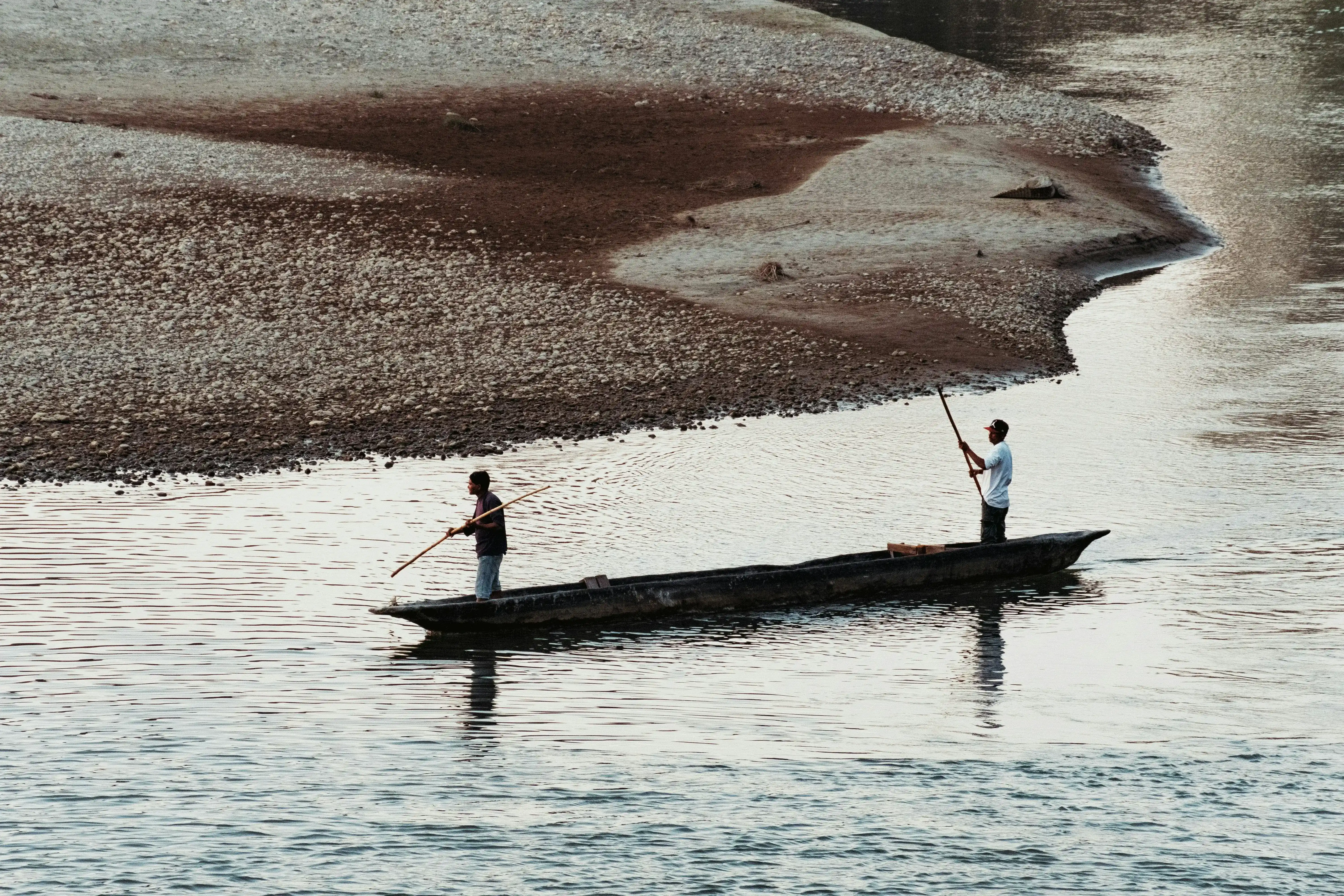
Chitwan National Park, established in 1973 as Nepal's first national park and a UNESCO World Heritage Site since 1984, protects the country's most famous wildlife cast: more than 690 greater one-horned rhinoceroses, over 120 Bengal tigers, gharial crocodiles, sloth bears, and around 543 bird species along the Rapti and Narayani rivers. Jeep safaris, canoe rides past crocodile basks, and guided forest walks make it the most accessible wildlife experience in Nepal, reachable in five hours by road from Kathmandu or 25 minutes by air to Bharatpur.
The park's grasslands and riverine forest between the Churia hills deliver sightings that rival African safaris for a fraction of the price. Plan the full experience with our Chitwan destination guide, the Kathmandu Chitwan 6 day tour, or the Chitwan bird watching expedition for the park's extraordinary aviary life.
Why Is Sagarmatha National Park the Highest Park on Earth?
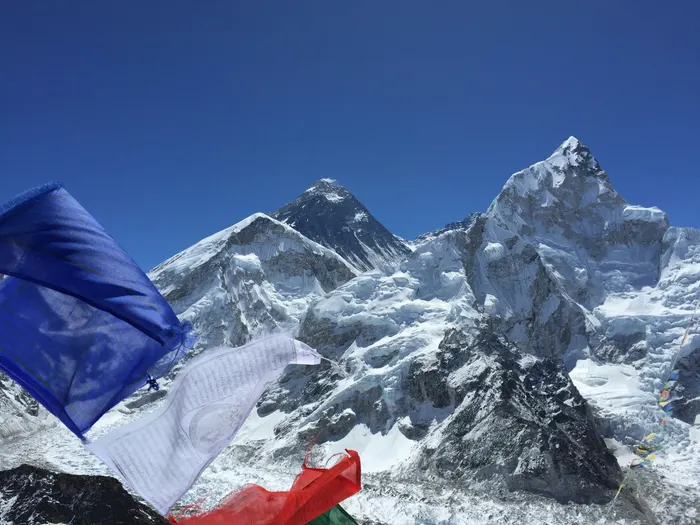
Sagarmatha National Park contains Mount Everest, at 8,848.86 meters the highest point on earth, which alone makes it the planet's loftiest national park and a UNESCO World Heritage Site since 1979. Beyond the summit, the park protects 1,148 square kilometers of Sherpa country: Namche Bazaar's cliff-hung bazaar, the Gokyo lake complex, glaciers that feed the Dudh Koshi, and thar and musk deer on the high slopes. Trekkers enter through Lukla and walk the Everest Base Camp trail through the park's entire altitudinal drama.
The park is also a living Sherpa cultural landscape of monasteries, mani walls, and villages like Khumjung, where the Sherpa people adapted Buddhism and mountaineering into a single economy. Combine it with the Everest Base Camp and Cho Oyu viewpoint trek for a route that shows four of the world's 8,000 meter peaks in one sweep, and read our guide to Nepal's best treks for fitness and season planning.
Why Do Trekkers Love Langtang National Park?
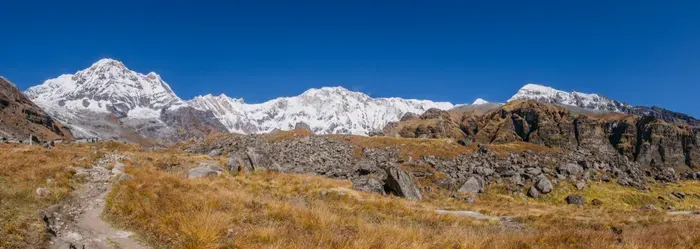
Langtang National Park is the closest Himalayan park to Kathmandu, reachable in about seven hours by road, which makes its 1,710 square kilometers of glaciated valleys the fastest big-mountain escape from the capital. The park protects the holy Gosaikunda lakes at 4,380 meters, dense rhododendron forests sheltering red pandas and Himalayan black bears, and the Tamang villages of the Langtang Valley that rebuilt themselves after the 2015 earthquake with extraordinary resilience.
The signature trek climbs from Syabrubesi through Langtang village to Kyanjin Gompa, a 3,800 meter settlement ringed by 7,000 meter walls, and can be walked comfortably in a week. Start with our Langtang destination guide or the Langtang Gosaikunda lake trek package, and pair the route with a licensed guide from our verified guides page.

What Makes Rara National Park the Queen of Lakes?
Rara National Park is Nepal's smallest national park at just 106 square kilometers, yet it contains Rara Lake, the largest lake in Nepal, a 10.6 square kilometer sheet of indigo water at 2,990 meters framed by pine and fir forest in remote Mugu district. The park's quiet is its luxury: visitor numbers stay tiny compared to Annapurna or Everest, and the lake circuit, mixed with the summer wildflower bloom from June to August, feels like the Himalaya before tourism.
The journey itself, through Jumla's Sinja Valley, the ancient capital of the Khas kingdom, adds medieval stone ruins and the Nepali language's cradle to the itinerary. See our Rara destination guide and the Rara Lake overland adventure for the full route.
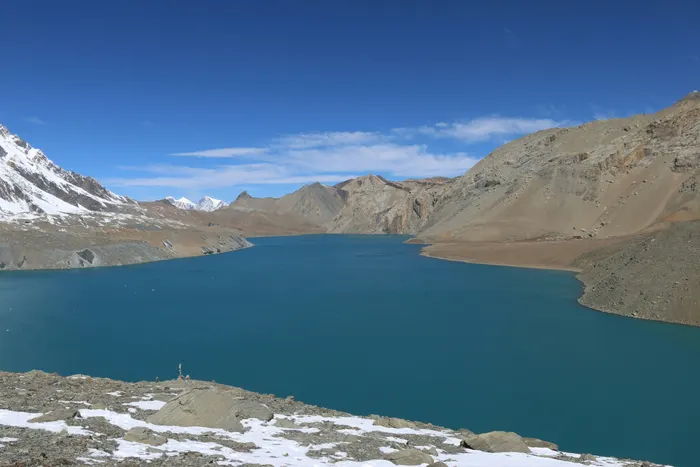
Why Is Khaptad Called the Garden in the Sky?
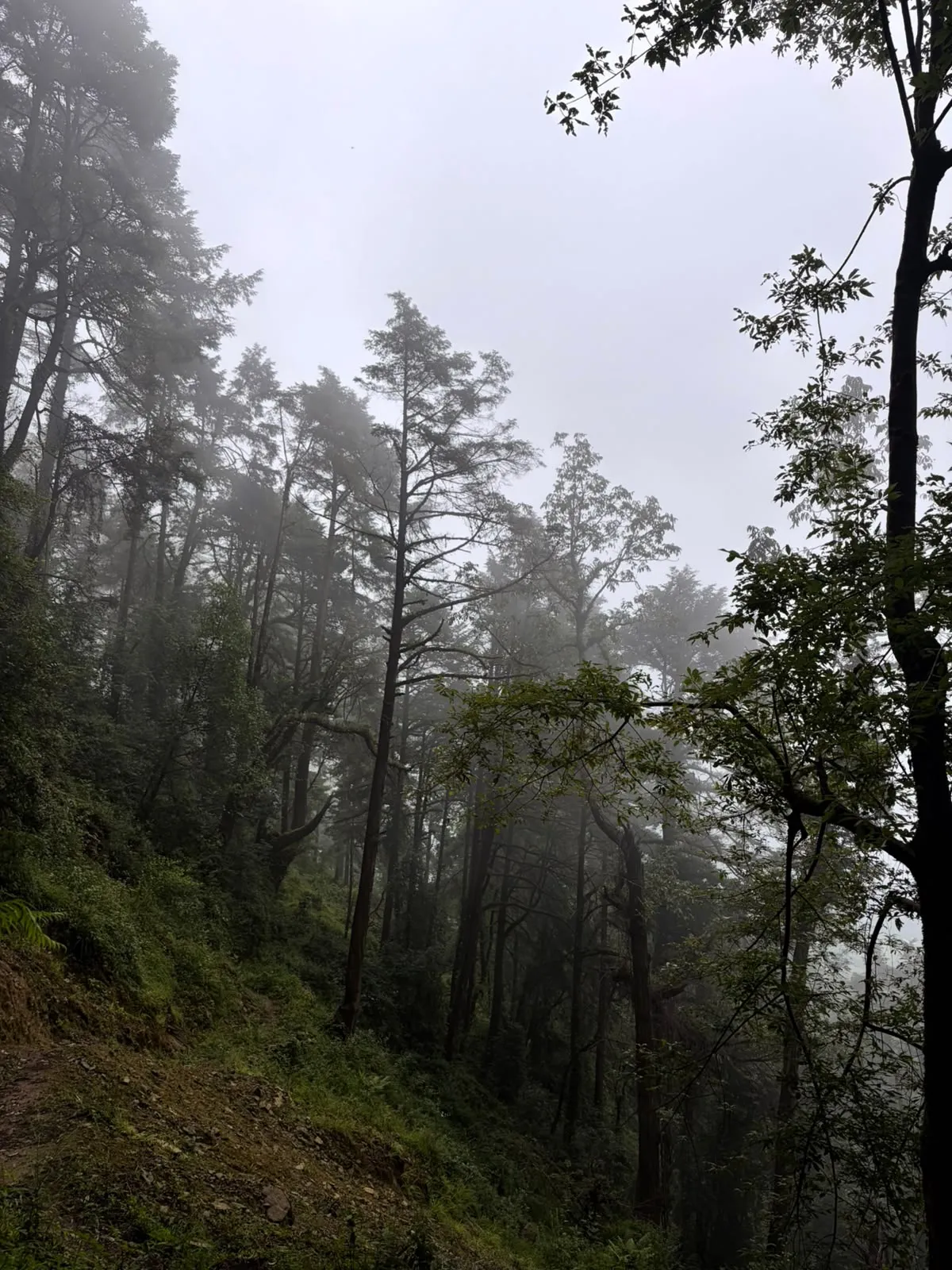
Khaptad National Park in Nepal's far-west Sudurpaschim province protects a 225 square kilometer rolling plateau of grassland and forest at around 3,000 meters, a landscape of soft moors, 22 small grassy clearings, and seasons of wildflowers that earned it the local name, the garden in the sky. The park is also sacred geography: the hermitage of Khaptad Baba, the revered 20th century sage, draws pilgrims to its ashram meadow, and the Shiva temple at Tribeni draws thousands during the Janai Purnima festival.
Wildlife watchers come for leopards, Himalayan black bears, and hundreds of bird species, while walkers come for the pure solitude of a park that sees fewer visitors in a year than Everest sees on a busy day. Our Khaptad destination guide covers access via Dipayal Silgadhi and the best season from March to May and October.
Why Is Shey Phoksundo Nepal's Largest and Deepest Wonder?
Shey Phoksundo National Park in Dolpa is Nepal's largest national park at 2,712 square kilometers, and its turquoise heart, Phoksundo Lake, is the deepest lake in Nepal at roughly 145 meters and one of the deepest alpine lakes on earth. The park spans Trans-Himalayan desert, the ancient Bon Buddhist monasteries of Upper Dolpo, the sacred Crystal Mountain, and snow leopard and blue sheep country made famous by Peter Matthiessen's The Snow Leopard.
Treks here range from the moderate Phoksundo lake trail from Juphal to full Upper Dolpo expeditions crossing 5,000 meter passes into one of the last enclaves of Tibetan culture on earth. Open our Phoksundo destination guide for permits, seasons, and the Great Himalaya Trail connection, and hire an experienced Dolpo guide from the guides marketplace.
Why Is Bardiya the Best Place to See a Wild Tiger?
Bardiya National Park in the western Terai offers Nepal's highest probability of a wild Bengal tiger sighting, backed by one of the largest tiger populations in the country, alongside wild elephants, Gangetic dolphins in the Karnali river, gharials, and the vast riverine grasslands of the Babai valley. The park's 968 square kilometers feel far wilder and quieter than Chitwan, with lodges concentrated around the single entrance at Thakurdwara.
October through March, when the grass burns short and animals crowd the waterholes, is prime time, and multi-day walking and jeep safaris outscore single-day trips for tiger luck. Read our complete Nepal safari guide for Bardiya versus Chitwan planning, or the Nepal heritage and wildlife experience for a combined cultural and safari route.
What Makes Makalu Barun a World-Record Landscape?
Makalu Barun National Park protects Makalu, the world's fifth-highest mountain at 8,485 meters, and is one of the only protected areas on earth where tropical forest below 400 meters and permanent ice above 8,000 meters sit inside one boundary, a 5,000 meter vertical crush within roughly 40 kilometers of horizontal distance. The Arun valley, one of the world's deepest valleys, runs through the park, and its slopes are among Nepal's last strongholds of the red panda.
The Makalu Base Camp trek from Tumlingtar delivers that entire altitudinal sweep in a single walk, from Rai and Limbu farm country to the Barun glacier amphitheater. Our Makalu destination guide maps the route, the Arun-Sabha confluence, and the strict camping regulations that keep this park wild.
Why Is Shivapuri Nagarjun Kathmandu's Backyard Park?
Shivapuri Nagarjun National Park is the only national park that starts inside a capital city in South Asia, its southern boundary brushing Kathmandu's northern edge at Budhanilkantha, making it the one Himalayan park you can hike before breakfast. The 159 square kilometer park supplies a large share of Kathmandu's drinking water from the Baghdwar springs, guards the Bagmati river's source at Shivapuri peak at 2,732 meters, and cradles the Nagi Gompa nunnery on its forested shoulder.
Day hikes from Kathmandu cover Shivapuri peak, the Baghdwar spring, and the Nagarjun ridge with views over the valley, with leopards, barking deer, and over 300 bird species for company. It is the perfect first taste of Nepal's park system, pairing naturally with the Kathmandu culture tour before heading further afield.
What Makes Banke National Park Special?
Banke National Park, gazetted in July 2010, is Nepal's first park created under the republican government and a key link in the Terai Arc Landscape, connecting tiger habitat across the Nepal-India border with India's Suhelwa sanctuary. Its 550 square kilometers of sal forest and Churia hill country protect tigers, wild elephants, four-horned antelopes, and giant hornbills, and its community forests around Obhari village run homestays that make it the Terai's most community-driven park.
Banke rewards travelers who have already done Chitwan and want rawer forest with fewer vehicles on the tracks. Visit between November and February for the clearest wildlife watching, and combine with Bardiya, three hours west, for a two-park Terai circuit.
Why Is Shuklaphanta the Swamp Deer Kingdom?
Shuklaphanta National Park in far-west Kanchanpur protects the world's largest concentration of swamp deer, herds of barasingha numbering over 2,000 animals that graze the park's short-grass phantas in formations visible from a hundred meters away. Upgraded from wildlife reserve to national park in 2017, the park's 305 square kilometers also shelter tigers, rhinos reintroduced through translocation, Bengal floricans, and one of Nepal's densest populations of hispid hares.
The open grassland, unlike any other Nepal park, delivers safari sightings with a Serengeti feel, and the park pairs naturally with nearby Shuklaphanta itineraries and the far-west cultural circuit to Shukreswar and the Tharu villages of Kanchanpur.
Why Is Parsa the Quietest Jungle in Nepal?
Parsa National Park, contiguous with Chitwan's eastern boundary and upgraded to national park in 2017, is the least visited jungle in the Terai, offering tiger, wild elephant, and sloth bear country without another safari vehicle in sight. Its 637 square kilometers of sal forest rise into the Churia hills where sloth bears dig for termites and wild elephants move between Parsa and Chitwan along ancient corridors, making the park a genuine wildlife buffer for its famous neighbor.
Because Parsa shares Chitwan's wildlife but a fraction of its crowds, conservation-minded travelers use it to extend a Chitwan stay with a day of pure quiet. The mosque deer alarm calls at dusk and the Rapti river elephant baths are the park's signature scenes.
What Is Nepal's Newest National Park?
Chhayanath National Park in Mugu, declared in September 2025, is Nepal's newest national park and the thirteenth in the network, protecting 906 square kilometers of Karnali hill forests between the Rara and Shey Phoksundo parks. The park, named for the Chhayanath temple above Mugu's valleys, was created to link mid-hill habitat across the Karnali corridor and extend protection to the forests that feed the Karnali, Nepal's longest river.
Facilities are still developing, which makes 2026 the year for pioneer travelers: the park links naturally into a far-west loop combining Rara Lake, Khaptad, and the Karnali river road. Watch this space as routes, permits, and homestays come online.
What About Conservation Areas and Wildlife Reserves?
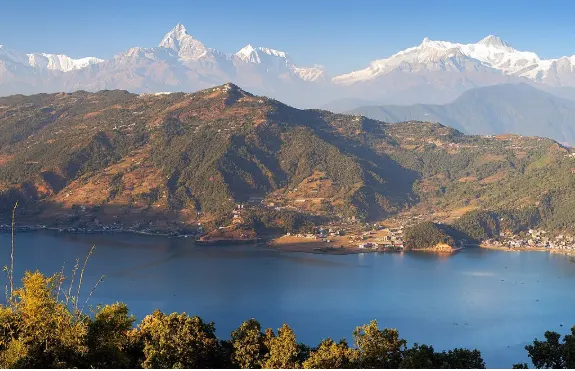
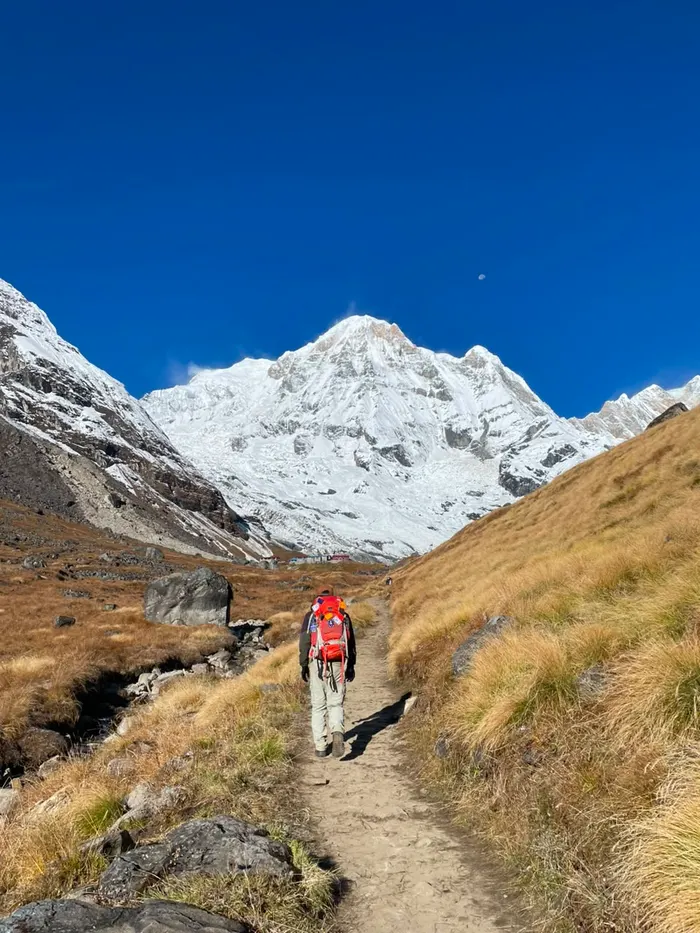
Beyond the 13 national parks, Nepal protects another layer of landscapes: conservation areas where people live inside protected land, plus wildlife and hunting reserves. The Annapurna Conservation Area is the largest protected area in Nepal at 7,629 square kilometers and the trekking heartland of the country, walked by our Annapurna winter trek; Kanchenjunga, Manaslu, Gaurishankar, and Api Nampa conservation areas guard the remaining massifs; and the Blackbuck Conservation Area in Bardiya is the smallest protected area in Nepal at 16.95 square kilometers, saved for its namesake antelope.
Koshi Tappu Wildlife Reserve in the eastern Terai is the bird watching capital of Nepal with 485 recorded species and the last wild water buffalo herds, covered in our Koshi Tappu guide, while Dhorpatan Hunting Reserve is the country's only licensed hunting area, managed for blue sheep under strict quotas.
Which National Park Should You Visit First?
Choose Chitwan for a first safari and family trips, Sagarmatha or the Annapurna region if trekking is your goal, Bardiya if a tiger sighting is the dream, Langtang for a short mountain escape from Kathmandu, Rara or Shey Phoksundo for remote wilderness, and Shivapuri for a day hike inside the capital. Most travelers combine two parks in one trip, pairing a Terai jungle with a Himalayan trek, connected by domestic flights of 30 to 45 minutes.
A classic 10 day Nepal itinerary runs Kathmandu heritage and Shivapuri, then Chitwan safari, then Pokhara and the Annapurna foothills, and is covered by the heritage and wildlife experience package. Wherever trekking is involved, a licensed guide is legally required in protected areas, so book early through the guide marketplace and read our guide hiring walkthrough.
How Much Does It Cost to Visit National Parks in Nepal?
National park entry fees in Nepal run from a few hundred rupees for Nepali citizens to roughly NPR 1,000 to 3,500 (about USD 8 to 26) for foreign visitors depending on the park, with Himalayan parks like Sagarmatha and Shey Phoksundo at the top of the range and Terai safari parks in the middle. Fees are payable at park gates in Nepali rupees, and permits for regulated zones like Upper Dolpo inside Shey Phoksundo cost extra and require a licensed guide.
Safari activities cost more than entry: a full Chitwan package with jeep safari, canoe, walking safari, and lodge runs from about USD 120 for 2 nights budget to USD 400 and up for luxury. Our safari cost guide breaks down every line item.
When Is the Best Time to Visit Nepal's National Parks?
October to March is the best time for Terai safari parks, Chitwan, Bardiya, Parsa, Banke, and Shuklaphanta, when short dry grass concentrates wildlife at waterholes and cool mornings are ideal for jeep safaris. For Himalayan parks, Sagarmatha, Langtang, Makalu Barun, and Shey Phoksundo, the two trekking windows rule: October to November for stable post-monsoon clarity and March to May for spring warmth at lower altitudes.
June to September brings monsoon rain that closes Himalayan high routes but turns mid-hill parks like Shivapuri and Khaptad lush and green for birders and waterfall lovers, at roughly half the accommodation cost. Rara is glorious from April to June when wildflowers bloom around the lake and again in October for crystalline mountain views.
What Wildlife Can You See Across Nepal's Parks?
Nepal's parks hold one of Asia's richest wildlife casts: over 690 greater one-horned rhinoceroses in Chitwan and Bardiya, a Bengal tiger population that doubled between 2009 and 2022 to roughly 355 animals, an estimated 300 to 500 snow leopards across the Himalayan parks, red pandas in Langtang, Makalu Barun, and the mid-hill forests, wild water buffalo in Koshi Tappu, Gangetic dolphins in the Karnali, and swamp deer herds in Shuklaphanta that rank among the largest on earth. Birders can top 850 species nationally, from Bengal floricans in the Terai grasslands to Himalayan monals above the tree line.
This roster in one compact country is the result of deliberate conservation: community forests buffer the parks, army posts guard against poaching, and revenue sharing gives park-edge villages a direct stake in wildlife survival, which is why Nepal's rhino and tiger recoveries are studied as global models.
How Do You Travel Between Nepal's National Parks?
Domestic flights make Nepal's park network surprisingly connected: Kathmandu to Bharatpur for Chitwan in 25 minutes, to Nepalgunj for Bardiya and Banke in 55, to Nepalgunj then Talcha airstrip for Rara in a morning, to Tumlingtar for Makalu Barun, and to Lukla for Sagarmatha. Roads cover the rest, with tourist buses linking Kathmandu, Chitwan, and Pokhara daily, and far-west routes reaching Shuklaphanta and Khaptad from Dhangadhi's airport.
The classic combinations need no more than 10 to 14 days: Chitwan plus the Annapurna foothills in a week, Everest plus Chitwan in 12 days, or a far-west sweep of Bardiya, Shuklaphanta, Rara, and Khaptad for three weeks of pure wilderness. All treks inside protected areas require a licensed guide, so lock one in from the verified guide marketplace before you finalize flights.
Conclusion: One Country, Thirteen Wild Worlds
Nepal's 13 national parks are 13 different planets packed into one small country: rhino rivers and tiger grass in the Terai, red panda forest and holy lakes in the mid-hills, and the highest and deepest landscapes on earth in the high Himalaya. Start with the park that matches your trip style, hire a licensed guide for the mountain parks, and let the same journey take you from a canoe at sunrise to a glacier at 5,000 meters. Browse the full package collection or talk to us about a custom national park circuit built around your dates, and Nepal's wildest places will do the rest.