Nepal is not merely a country of mountains; it is a landscape of the sacred. Every hilltop bears a temple, every river confluence is a tirtha (sacred crossing), and every stone along the ancient trade routes may be carved with the image of a deity. A Nepal cultural pilgrimage Himalayan experience is a journey into this sacred geography, an 8-day immersion in the temples, monasteries, and living traditions that have made the Himalayas one of the world's great spiritual destinations for over two millennia.
This guide covers everything you need to know about an 8-day cultural pilgrimage through Nepal. From the ancient Hindu shrines of Kathmandu to the Buddhist stupas that dot the valley, from the lakeside temples of Pokhara to the mountain panoramas that have inspired seekers for centuries, we map out a journey that nourishes the spirit as much as it delights the senses. For a wider view of the traditions this route draws on, the complete guide to cultural and spiritual tours in Nepal places every site on this itinerary in its wider context.


WhatIs a Cultural Pilgrimage Himalayan Experience?
A cultural pilgrimage Himalayan experience is an 8-day guided journey that combines Nepal's most significant Hindu and Buddhist sacred sites with the natural grandeur of the Himalayas. Unlike a standard sightseeing tour, it approaches each temple, stupa, and mountain viewpoint as a living place of worship, with time built in for ritual, reflection, and quiet rather than a rushed checklist of monuments.
A cultural pilgrimage in Nepal is different from a standard sightseeing tour. It is a journey undertaken with intention, where each site is approached not just as a monument to be photographed but as a living place of worship where the sacred and the everyday intersect. The 8-day cultural pilgrimage Himalayan experience combines the most significant Hindu and Buddhist sites of central Nepal with the natural grandeur of the Himalayas, creating a journey that is both spiritually enriching and visually spectacular.
The pilgrimage follows a logical geographic and spiritual progression. It begins in the Kathmandu Valley, the historic heart of Nepali civilization and home to the densest concentration of sacred sites in the country. It then moves westward to Pokhara, where the mountains themselves become objects of devotion, their snow-capped peaks reflected in the still waters of Phewa Lake. Along the way, the journey passes through traditional villages, hilltop temples, and landscapes that have been shaped by centuries of human devotion.
The Nepal cultural pilgrimage Himalayan experience package is designed for travelers who want more than a vacation; it is for those seeking a journey with meaning, whether that meaning is religious, spiritual, or simply a deeper understanding of one of the world's oldest living cultures.
Why Choose an 8-Day Pilgrimage Instead of a Standard Tour?
Eight days is the sweet spot for a Nepal pilgrimage: long enough to move beyond the Kathmandu Valley into the wider sacred landscape, short enough to fit a standard holiday. The duration allows the journey to progress from urban temples to Himalayan viewpoints, mirroring the classical pilgrimage movement from outer ritual toward inner stillness, without the fatigue of a longer expedition.
Most visitors to Nepal see the country in fragments: a day tour of Kathmandu, a quick flight to Pokhara, a viewpoint drive. A pilgrimage structure changes the experience in three ways. First, pacing: sites are visited in the morning when rituals are actually happening, not at midday when temples are quiet. Second, access: guides who understand temple etiquette can open doors that remain closed to casual visitors, from monastery courtyards to aarti ceremonies. Third, continuity: the journey builds a narrative, so by the time you watch the sun rise over the Annapurna range on day six, the mountains carry the accumulated meaning of everything you have seen before them.
The distinction matters most for travelers who describe themselves as spiritual but not religious. The itinerary is built to be meaningful regardless of belief: the practices offered along the way, from lighting a butter lamp to sitting in silent meditation, are invitations rather than obligations, and many guests find the most moving moments are the simplest ones, such as sharing tea with a grandmother who has walked for two days to reach Manakamana.
Days 1-2: Kathmandu's Sacred Hindu Sites
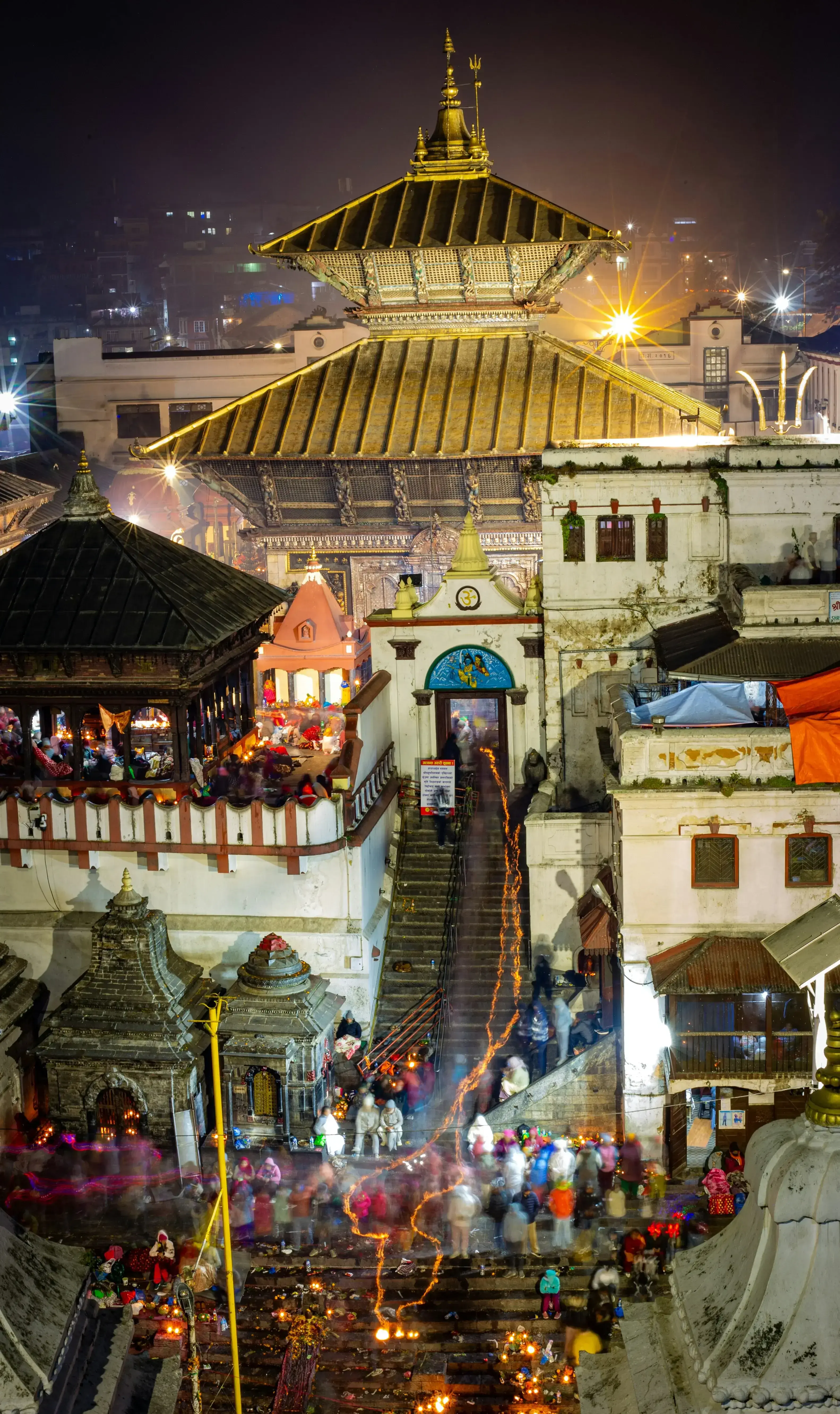
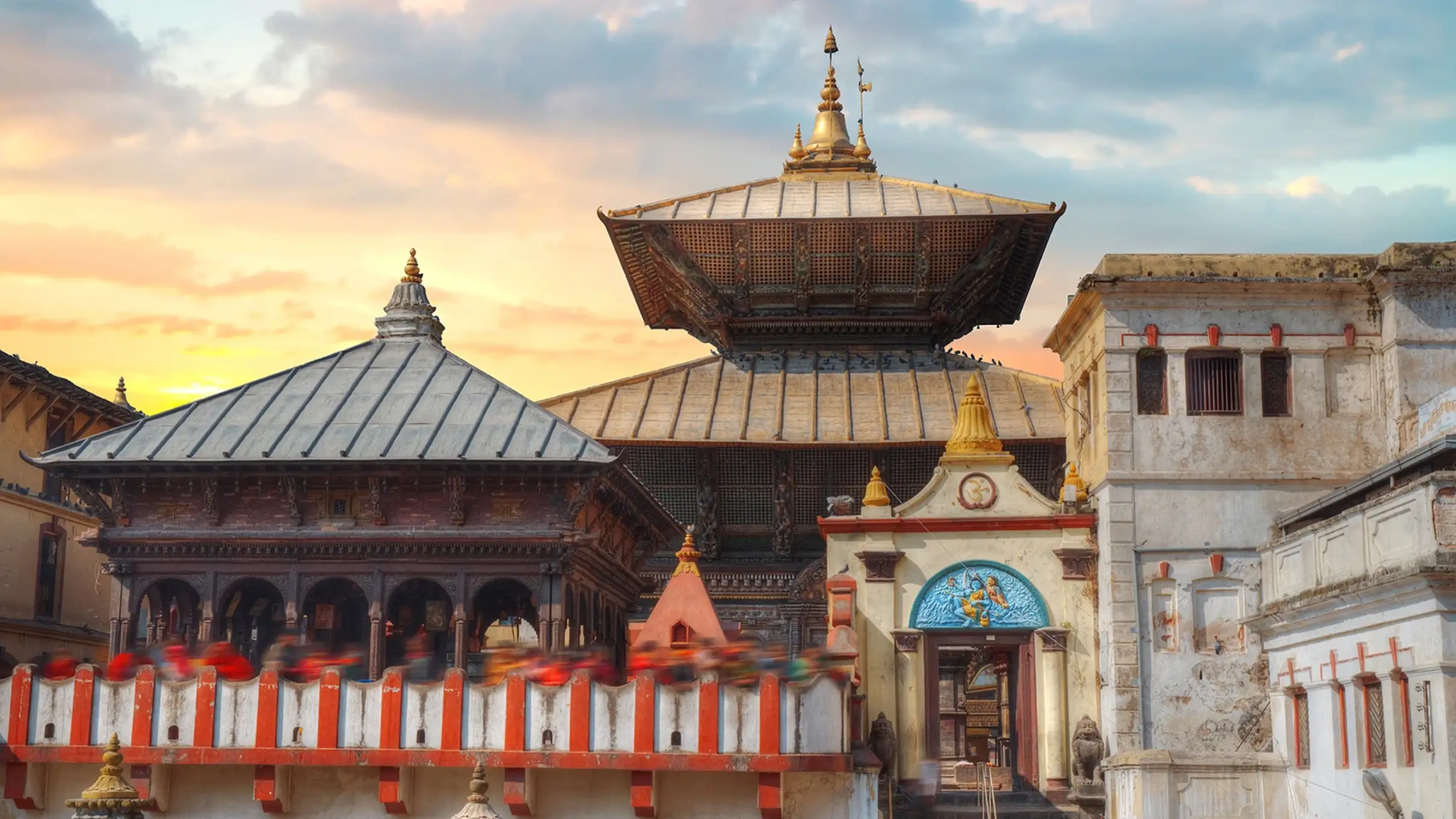
The pilgrimage begins in Kathmandu, and the first two days are dedicated to the valley's most sacred Hindu sites. The journey starts at Pashupatinath Temple, the most important Hindu shrine in Nepal and one of the most significant Shiva temples in the world. The temple complex stretches along the banks of the Bagmati River, a sacred waterway that is itself an object of veneration. The main temple, with its gilded roof and silver doors, is restricted to Hindus, but the riverside ghats, the forest of smaller shrines, and the atmosphere of devotion are accessible to all.
From Pashupatinath, the pilgrimage continues to the Guhyeshwari Temple, one of the Shakti Peethas, sites where parts of the goddess Sati's body are said to have fallen. The temple is a short walk from Pashupatinath and is an essential stop on the Hindu pilgrimage circuit. The afternoon is spent at the Budhanilkantha Temple, where a massive stone statue of Vishnu reclining on the cosmic serpent Shesha lies in a sacred pond. The statue, carved from a single block of black basalt in the 7th century, is one of the most impressive works of religious art in Nepal.
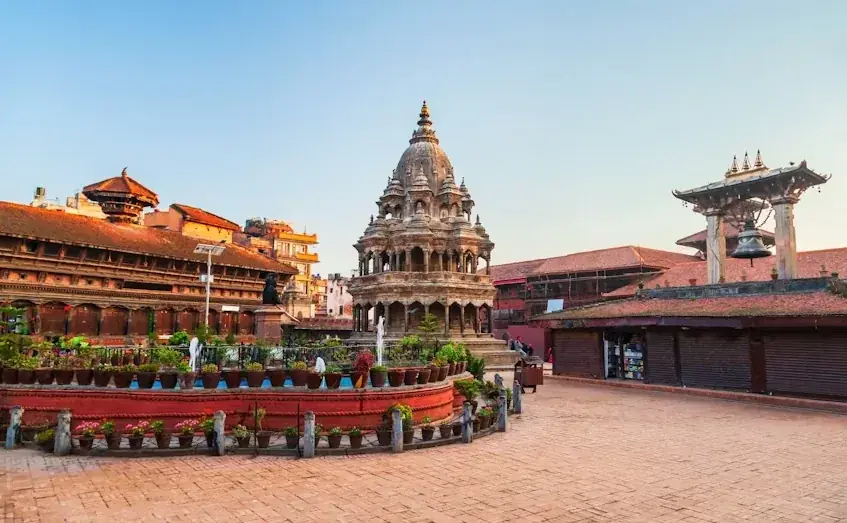
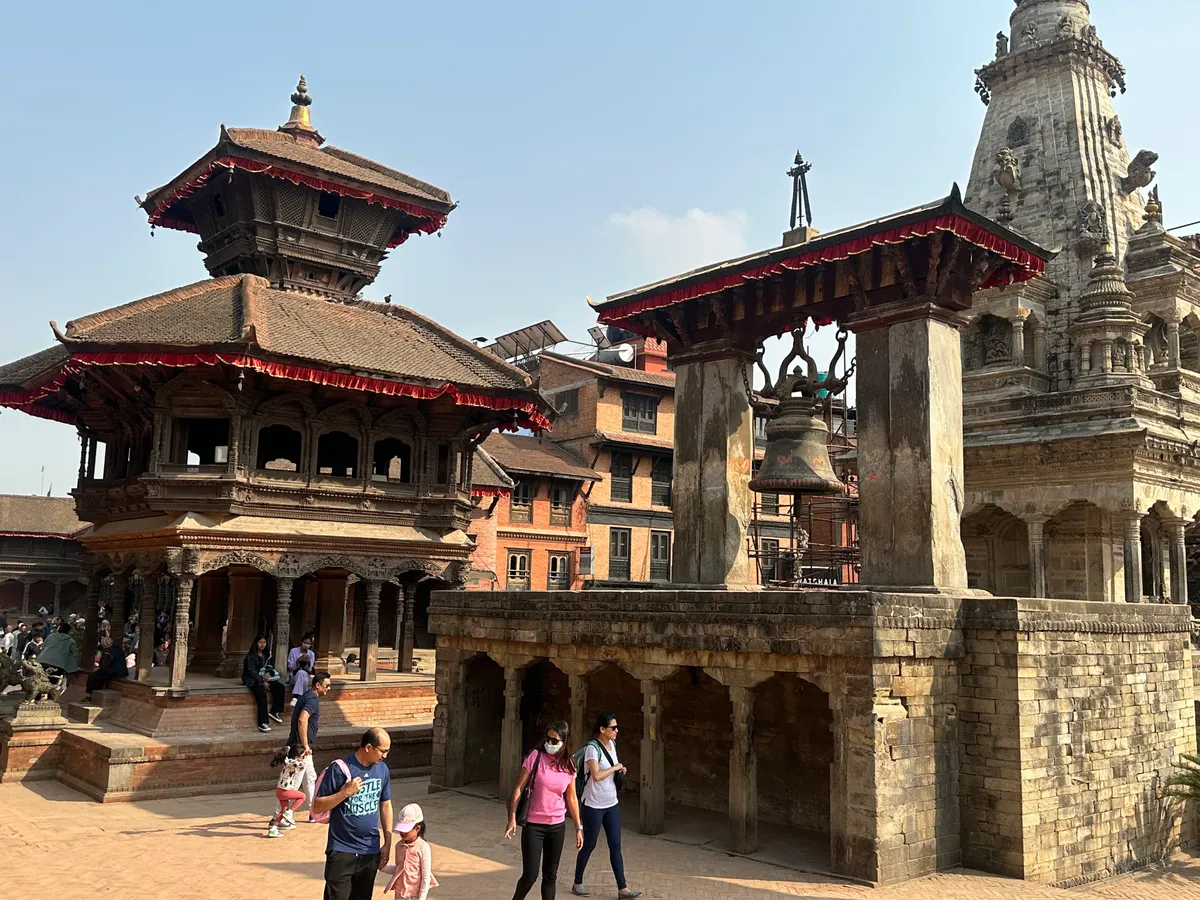
Day two explores the valley's other significant Hindu sites. The Changunarayan Temple, perched on a hilltop east of Bhaktapur, is the oldest temple in the Kathmandu Valley, with inscriptions dating to the 5th century. The temple is dedicated to Vishnu and features some of the finest stone and wood carvings in Nepal. The Dakshinkali Temple, in a forested gorge south of the valley, is dedicated to the goddess Kali and is a center of ritual offering, a practice that can be confronting for some visitors but is an authentic expression of Nepali Hindu devotion. Travelers extending their valley exploration often pair these days with the Bhaktapur day tour or the Patan Durbar Square guide, both of which deepen the Newari context of the sites on this route.


What Happens at Pashupatinath's Morning Aarti?
Each morning at Pashupatinath, as the sun rises over the Bagmati River, priests perform the aarti ceremony, offering fire, incense, and flowers to Lord Shiva while bells, conch shells, and chanting fill the air. Visitors watch from the riverside ghats as oil-lamp flames reflect on the dark water, a ritual practiced on this spot for over a thousand years.
The morning aarti ceremony at Pashupatinath is a highlight of the pilgrimage. As the sun rises, priests perform the ritual offering of fire, incense, and flowers to the deity. The sound of bells, conch shells, and chanting fills the air, and the flames of the oil lamps are reflected in the dark waters of the Bagmati. It is a powerful, multisensory experience that connects the visitor to a tradition that has been practiced on this spot for over a thousand years.
The ceremony follows a rhythm that rewards patient observation. The priests move through a sequence of offerings: flame first, then incense, then water, then flowers, each waved in a circular motion before the shrine while the assembled devotees respond with cupped hands, drawing the blessing toward their foreheads. Your guide will explain each gesture as it happens, and you are welcome to participate at whatever level feels comfortable, whether that is simply standing quietly at the river's edge or joining the offering yourself.
Days 3-4: Buddhist Stupas and Living Monasteries
The pilgrimage's middle days shift focus to Nepal's Buddhist heritage, which is as rich and ancient as its Hindu counterpart. Nepal is the birthplace of the Buddha, and Buddhism has flourished in the Kathmandu Valley for over two thousand years, developing a distinctive Newari Buddhist tradition that coexists with Hinduism in a unique syncretic relationship.
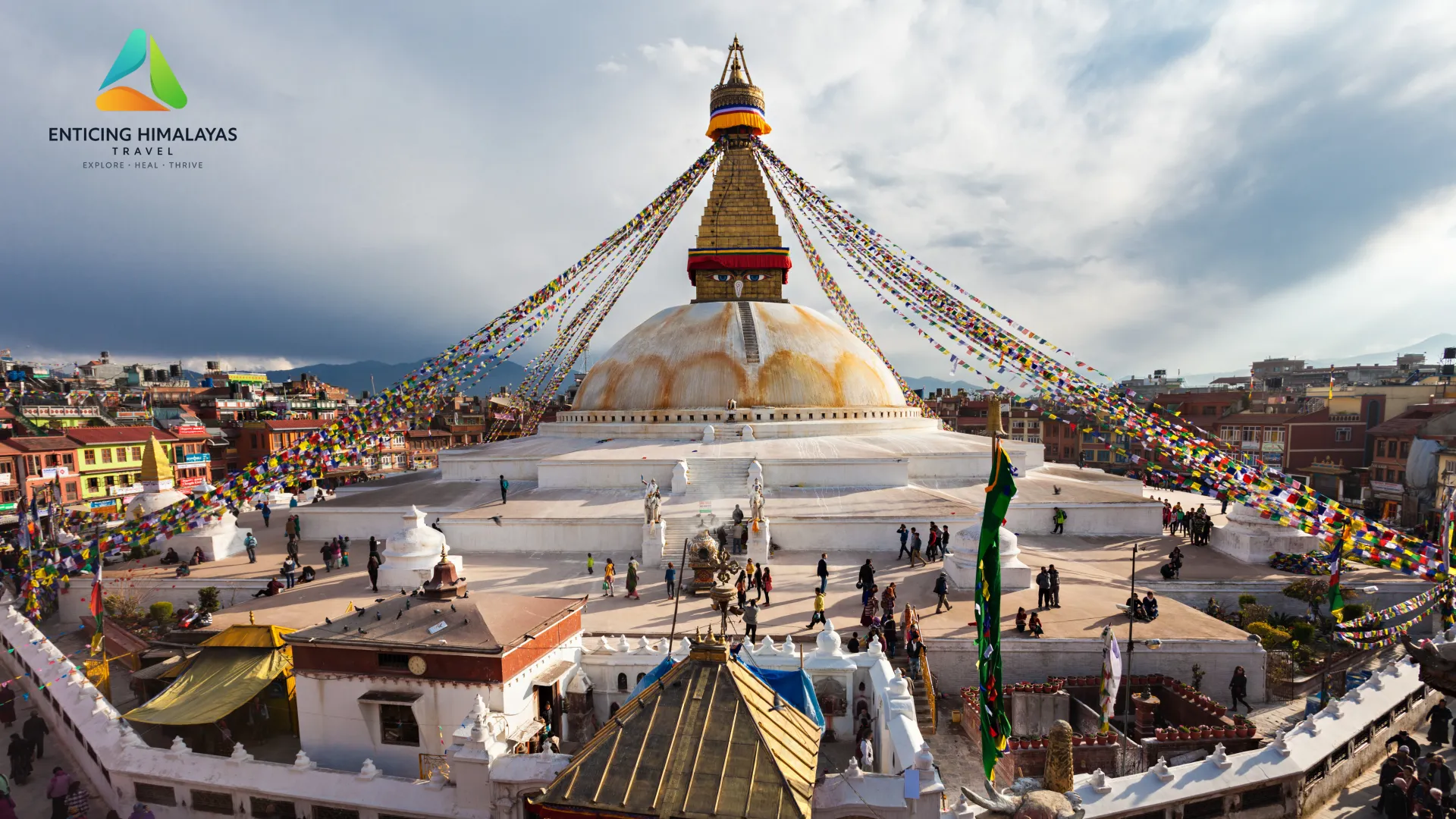
Day three begins at Boudhanath Stupa, the great Tibetan Buddhist monument and one of the largest spherical stupas in the world. The white dome, topped with a gilded spire and the all-seeing eyes of the Buddha, is the spiritual heart of Nepal's Tibetan exile community. Pilgrims from across the Himalayan region circumambulate the stupa, spinning prayer wheels and murmuring mantras. The surrounding monasteries, where young monks study Buddhist philosophy and practice debate, are open to visitors who approach with respect.
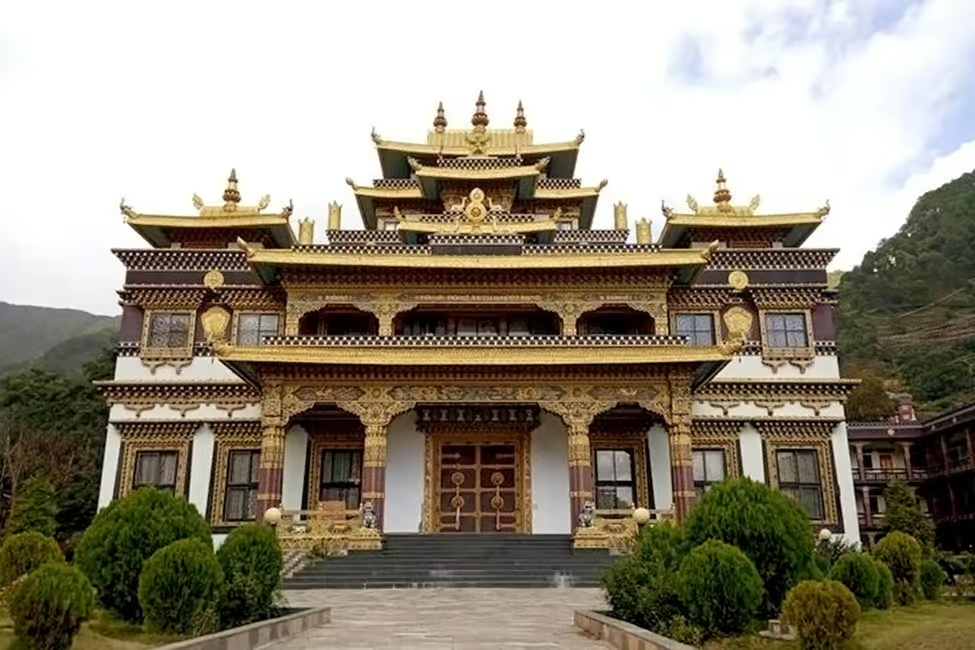
From Boudhanath, the pilgrimage moves to the Kopan Monastery, a Tibetan Buddhist monastery on a hill overlooking the stupa. Kopan is known for its meditation courses, which attract students from around the world, and its peaceful gardens offer a space for quiet contemplation. The afternoon is spent at the Shechen Monastery, one of the most important Nyingma monasteries in Nepal, with a beautiful main temple and a school of traditional thangka painting.
Day four is dedicated to Swayambhunath Stupa, the Monkey Temple, and the surrounding Buddhist sites. Swayambhunath is both a Buddhist stupa and a Hindu shrine, embodying the syncretic religious culture that defines Nepal. The 365 steps to the summit are a pilgrimage in themselves, and the view of the valley from the top is a reminder of the sacred geography that the journey has been tracing. The afternoon includes visits to the nearby monasteries and a meditation session led by a Buddhist teacher.
For travelers who want to go deeper into Nepal's Buddhist heritage, the spiritual tour in Nepal and the spiritual tour in Nepal 2026 guides explore the country's Buddhist pilgrimage circuits in greater depth, including sites like Namobuddha and the monasteries of the Kathmandu Valley rim. The Nepal cultural heritage hub is another companion read that traces the living traditions behind the valley's temples and squares.
Day 5: The Journey West Through Sacred Landscapes
Day five is the journey from Kathmandu to Pokhara, a drive of approximately six to seven hours that is itself a pilgrimage through sacred landscapes. The road follows the Trishuli River, which is considered a holy waterway, and passes through villages where roadside shrines receive daily offerings from travelers and locals alike.
The journey includes a stop at the Manakamana Temple, one of the most popular pilgrimage sites in Nepal. The temple, dedicated to the goddess Bhagwati, is reached by a cable car that climbs steeply from the Trishuli Valley to a ridge at 1,300 meters. The temple is believed to grant the wishes of those who make the pilgrimage, and it draws devotees from across Nepal and northern India. The cable car ride offers spectacular views of the river valley and the surrounding hills.
From Manakamana, the journey continues to Bandipur, a beautifully preserved Newari hill town that offers a different kind of sacred experience: the sacredness of place, of community, of a way of life that has endured for centuries. Bandipur's temples, including the Bindhyabasini Temple and the Mahalaxmi Temple, are active places of worship, and the town's panoramic views of the Annapurna and Manaslu ranges are a reminder of the Himalayan backdrop that has shaped Nepali spirituality.
Days 6-7: Pokhara, Where Mountains Become Temples
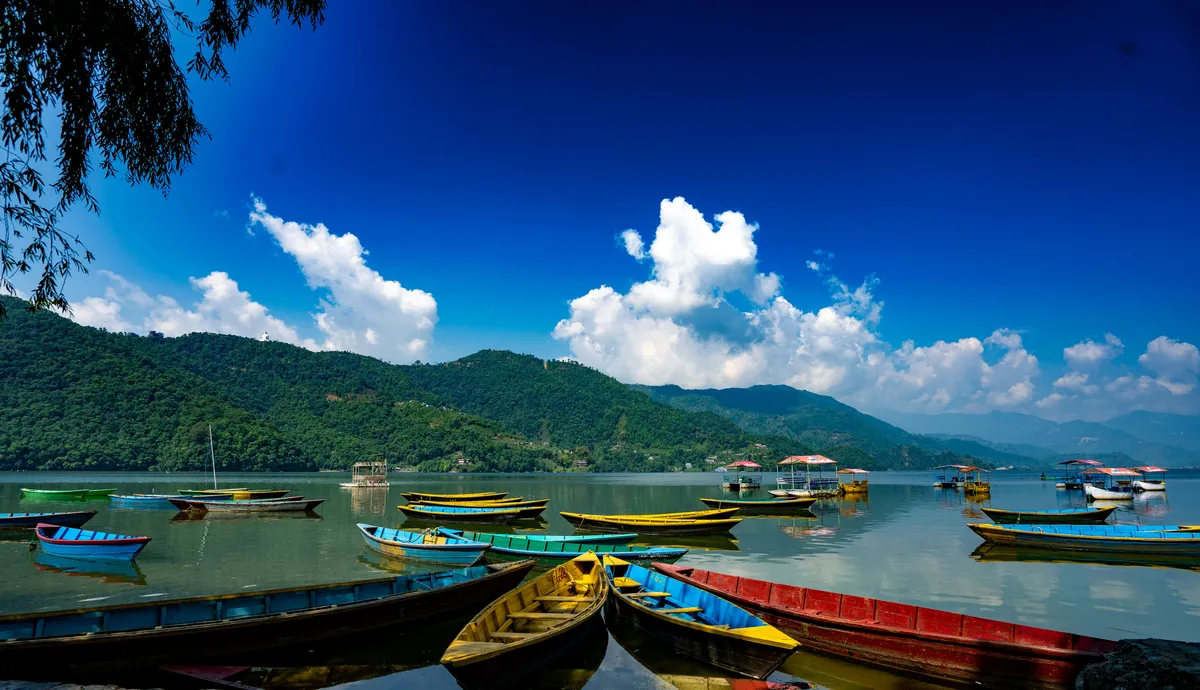
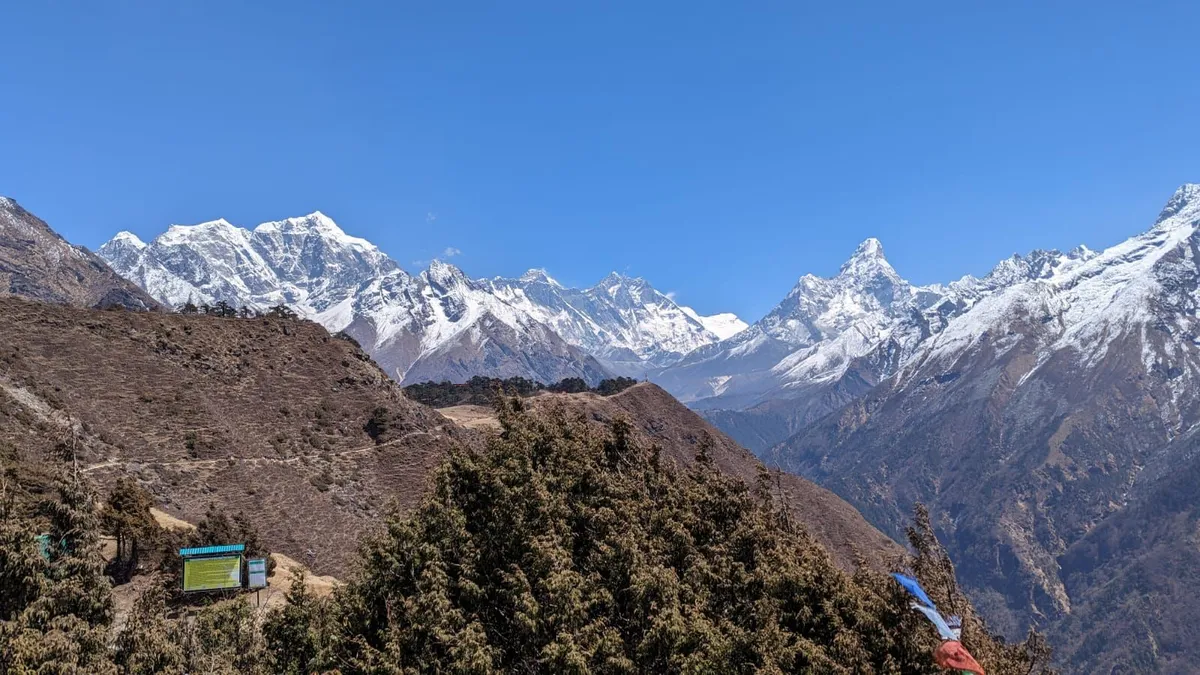
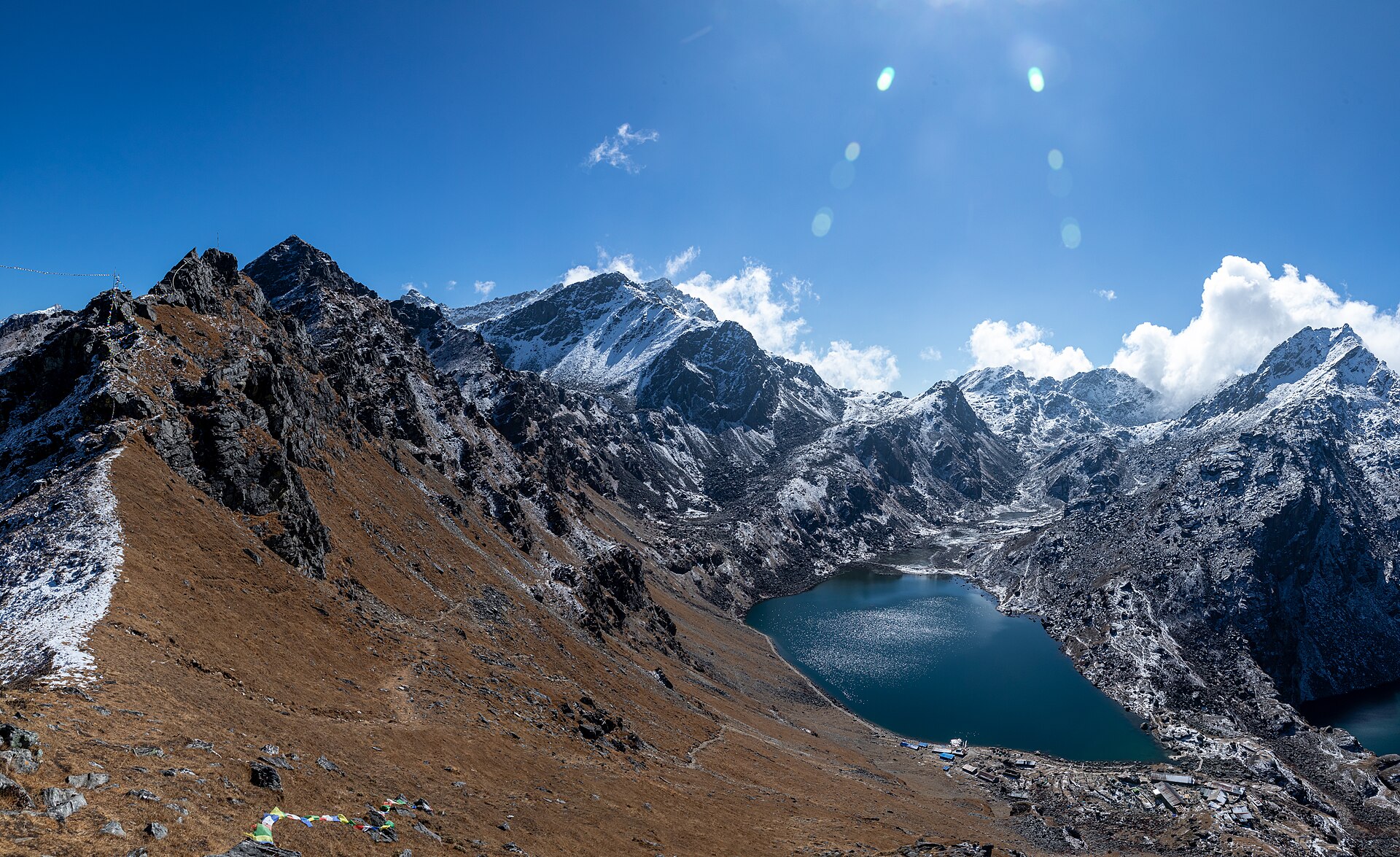
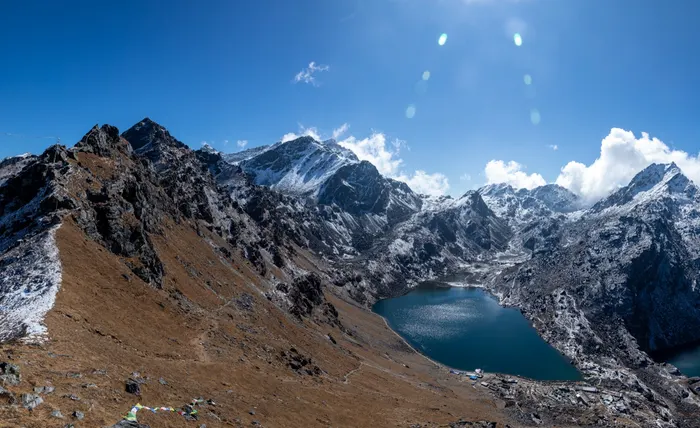
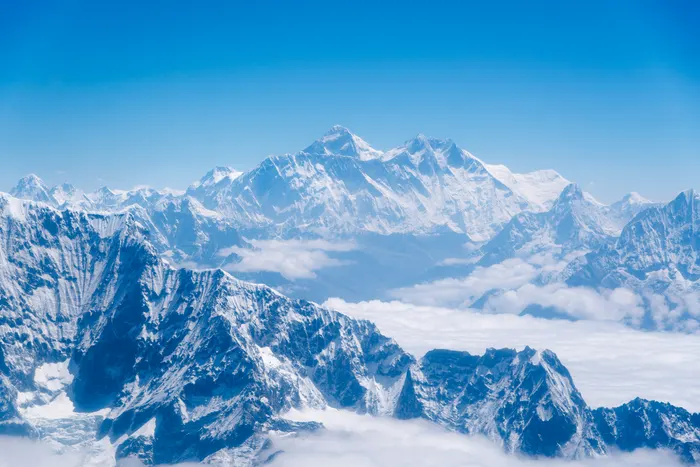
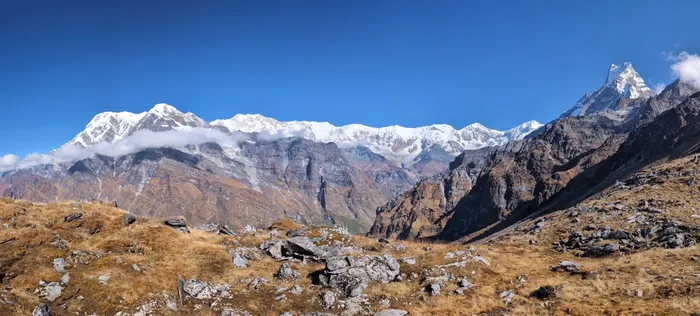
Pokhara is the spiritual climax of the pilgrimage. Here, the focus shifts from man-made temples to the natural temples of the Himalayas, the snow-capped peaks that have been objects of veneration for millennia. The Annapurna range, with its sacred peak of Machhapuchhre (Fishtail), is considered the abode of the gods, and the experience of watching the sun rise over these mountains is a spiritual event in itself.
Day six begins before dawn with the journey to Sarangkot, a hilltop viewpoint at 1,600 meters. As the first light touches the peaks of Dhaulagiri, Annapurna South, and Machhapuchhre, the mountains seem to glow from within. It is a moment of pure transcendence, and for many pilgrims, it is the highlight of the entire journey. After breakfast, the day continues with a boat ride on Phewa Lake to the Tal Barahi Temple, a two-story pagoda on an island dedicated to the goddess Durga. The temple is a place of active worship, and on Saturdays, devotees cross the lake with offerings of flowers for the goddess.
The afternoon is spent at the World Peace Pagoda, a gleaming white stupa built by Japanese Buddhist monks as a symbol of peace. The pagoda sits on a hilltop south of Phewa Lake, and the hike up through the forest takes about 45 minutes. The view from the top, encompassing the lake, the city, and the entire Annapurna range, is the best in the region. The pagoda itself houses relics of the Buddha, and the atmosphere is one of profound tranquility.
Day seven explores Pokhara's other sacred sites. The Bindhyabasini Temple, in the Old Pokhara Bazaar, is the town's oldest and most important Hindu shrine. The temple is dedicated to the goddess Bhagwati and is a center of local religious life. The nearby Bhimsen Temple, dedicated to the Newari god of trade and commerce, is a reminder of Pokhara's history as a trading center on the route between India and Tibet.
The afternoon includes a visit to the International Mountain Museum, which documents the history of Himalayan mountaineering and the spiritual significance of the mountains to the peoples who live in their shadow. The museum's exhibits on the mountain peoples, alpine ecology, and the geology of the Himalayas provide context for the pilgrimage's mountain encounters.
Day 8: Return and Reflection
The final day of the pilgrimage is the return journey to Kathmandu, either by road or by a 25-minute flight. The flight offers a final, unforgettable view of the Himalayas, a last encounter with the sacred mountains that have been the pilgrimage's constant backdrop. The road journey, while longer, offers time for reflection on the week's experiences, and many groups use it for a closing conversation about the journey's most meaningful moments.
Back in Kathmandu, the pilgrimage concludes with a final free afternoon for personal reflection, last-minute shopping for religious artifacts and handicrafts, or a final visit to a favorite temple or stupa. Many travelers choose to return to Boudhanath for one last evening circumambulation, walking the stupa circuit with pilgrims and locals as the day ends, a gentle ritual that closes the journey the way it began: in motion, among others, with intention.
How Does the Pilgrimage Engage Body, Mind and Spirit?
The pilgrimage engages all three dimensions of the traveler: the body through walking temple circuits and Himalayan viewpoints, the mind through guided commentary on iconography and ritual, and the spirit through optional practices like tika blessings, butter lamp offerings, and silent meditation. Every practice is an invitation rather than a requirement.
What distinguishes a cultural pilgrimage from a standard tour is the intention behind it. The 8-day Nepal cultural pilgrimage Himalayan experience is designed to be more than a series of sightseeing stops; it is a journey of spiritual discovery, whether that discovery is religious, philosophical, or simply a deeper appreciation of one of the world's oldest living cultures.
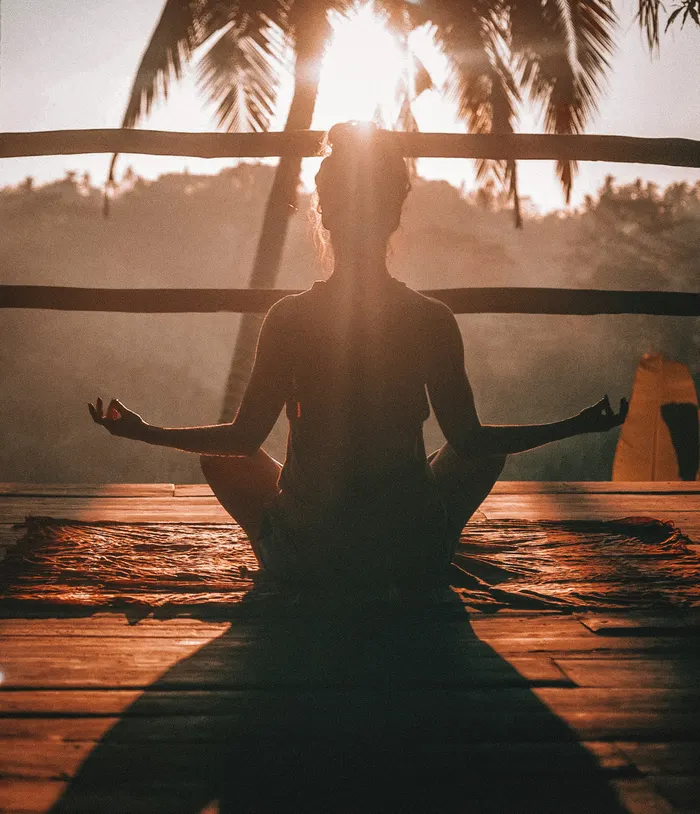
The pilgrimage incorporates elements of both Hindu and Buddhist practice. At Pashupatinath, pilgrims receive tika blessings from the temple priests. At Boudhanath, they join the circumambulation of the stupa, spinning prayer wheels and sending intentions into the world. At Swayambhunath, they light butter lamps as offerings. At the World Peace Pagoda, they sit in silent meditation. These practices are offered as invitations, not requirements, and travelers are free to participate at whatever level feels comfortable.
The pilgrimage also incorporates the natural world as a spiritual dimension. The Himalayas have been objects of veneration for millennia, and the experience of watching the sun rise over the Annapurna range from Sarangkot is a spiritual event regardless of one's religious beliefs. The journey's rhythm, moving from the urban intensity of Kathmandu to the lakeside calm of Pokhara, mirrors the spiritual journey from external stimulation to inner peace.
For those interested in a deeper spiritual immersion, the Sacred Valleys and Living Goddesses tour offers an even more intensive exploration of Nepal's spiritual heartland. The Nepal sacred Kathmandu heritage tour focuses specifically on the valley's most significant religious sites.
When Is the Best Time for a Cultural Pilgrimage?
The best seasons for a Nepal cultural pilgrimage are autumn (October to November) and spring (March to May). Autumn delivers the clearest mountain views and coincides with the major Hindu festivals of Dashain and Tihar, while spring brings warmer temperatures, blooming rhododendrons, and the Buddha Jayanti celebrations at Lumbini and Boudhanath.
Autumn offers the clearest mountain views and coincides with the major Hindu festivals of Dashain and Tihar, when the temples are at their most active and the atmosphere is charged with devotion. Spring brings warmer temperatures, blooming rhododendrons, and the Buddhist festival of Buddha Jayanti, which commemorates the Buddha's birth, enlightenment, and death.
Winter (December to February) is also viable, with clear skies and excellent mountain views, though mornings and evenings can be cold. The winter pilgrimage season includes the Hindu festival of Shivaratri, when Pashupatinath draws hundreds of thousands of devotees. The monsoon (June to September) is the least favorable season, with rain, obscured mountain views, and the possibility of road disruptions, though the landscape is lush and the temples are uncrowded.
Festival timing deserves a note of planning. Dashain and Shivaratri transform the sites on this itinerary into the busiest and most intense versions of themselves: wonderful for travelers who want to witness devotion at full volume, overwhelming for those seeking quiet. If contemplation rather than festival energy is your goal, travel in the shoulder weeks of late November or early March, when the weather is stable, the views are good, and the temple courtyards are calm.
What Should You Pack and Wear for Temple Visits?
Pack modest clothing that covers shoulders and knees, a scarf or shawl, and comfortable walking shoes with good grip. Shoes come off at temple entrances, leather items are restricted in some Hindu shrines, and the pilgrimage week involves hours of standing and walking on stone pavements, so layers and broken-in footwear matter more than anything else in your bag.
Packing for a cultural pilgrimage requires thoughtfulness. Modest clothing that covers shoulders and knees is essential for temple visits. A scarf or shawl is useful for covering up when needed and for warmth on cool mornings. Comfortable walking shoes are non-negotiable; you will be on your feet for hours each day, often on uneven stone pavements and temple steps.
When visiting temples, it is customary to remove your shoes before entering the main shrine area. Leather items, including belts and bags, are not permitted in some Hindu temples. Photography is generally allowed in temple courtyards but not inside the main shrines. Always ask before photographing devotees or religious ceremonies.
Offerings of flowers, rice, and vermilion powder can be purchased at temple entrances. A small donation to the temple is appreciated. When circumambulating stupas or temples, always walk clockwise. When receiving a tika blessing, a small donation to the priest is customary. A small daypack with water, sun protection, and a rain shell covers the practical needs of each day, since the itinerary alternates between valley heat and hilltop chill.
How Much Does an 8-Day Cultural Pilgrimage Cost?
The 8-day Nepal cultural pilgrimage Himalayan experience starts from around $520 per person, covering accommodation, ground transport, guided temple visits, and the Kathmandu-Pokhara circuit. Budget for international flights, Nepal's visa on arrival ($30-125 depending on length), travel insurance, meals not included, offerings and donations at temples, and personal shopping.
Mid-range travelers should expect total on-the-ground spending of roughly $70-110 per day beyond the package price, covering meals ($10-25 per day in tourist restaurants, less in local bhattis), optional activities like the Everest scenic flight or paragliding over Phewa Lake, and the small costs of devotion: candles at $1, offerings at a few cents, donations at $1-5 per temple. Pilgrimage is unusual among travel styles in that its most meaningful expenses are its smallest ones.
Three cost levers change the total meaningfully. First, hotel tier: the package price assumes comfortable tourist-class hotels; heritage boutique properties in Kathmandu and lakeside Pokhara can add meaningfully to the trip. Second, the return flight from Pokhara to Kathmandu ($120-140) replaces a six-hour drive with a 25-minute Himalayan panorama. Third, group size: private departures for couples and families cost more per person than fixed-group dates, but allow the slower, more contemplative pacing that many pilgrims prefer.
Where Do You Stay and What Do You Eat on the Pilgrimage?
Accommodation runs the full range of the journey's character: tourist-class hotels in Kathmandu, often in the walkable Thamel district; a heritage-style stop in Bandipur's restored Newari buildings; and lakeside hotels in Pokhara with Annapurna views from the garden. The contrast between the three bases is itself part of the itinerary's design, mirroring the move from city to hills to lake.
Food follows Nepal's daily rhythms. Dal bhat, the lentil-rice-vegetable plate that anchors Nepali life, appears at lunch and dinner, and the pilgrimage is a chance to learn why Nepalis call it their strength: endless refills, balanced nutrition, altitude-proof energy. Breakfasts are typically eggs, flatbreads, and Nepali milk tea. Kathmandu and Pokhara also offer Newari tasting sets (yomari, bara, chatamari) worth seeking out as edible heritage, while Bandipur's kitchens serve simpler hill fare. Vegetarian travelers eat effortlessly well here; much of the cuisine on this route is naturally vegetarian on temple days.
Temple-town food etiquette is worth knowing. Many sites, particularly around Hindu festivals, observe meatless days, and your guide will steer you appropriately. Alcohol is generally absent from the meals on pilgrimage-focused itineraries. Water is filtered or bottled everywhere on this route; carry a reusable bottle and purification tablets to keep the journey responsible as well as reverent.
Is This Pilgrimage Right for Families and Older Travelers?
Yes, with modest adjustments. The itinerary has no trekking component, no altitude above 1,600 meters at Sarangkot, and the longest walks are temple circuits measured in minutes rather than hours. Older travelers appreciate the unhurried pacing, and children encounter a journey built around stories, colors, and living ritual rather than long transit days.
For families, the cable car to Manakamana and the boat ride to Tal Barahi are reliable highlights, and guides used to multigenerational groups adjust commentary for younger listeners: the legends of the wish-granting goddess, the tale of the Buddha and the Monkey Temple, the naming of every peak at Sarangkot. Teenagers often connect most with the photography opportunities and the morning monastery debates at Boudhanath.
For older travelers, the practical considerations are stairs and heat. Swayambhunath's 365 steps can be avoided entirely by driving to the top entrance; Pashupatinath's main ghat area involves a sloped riverside path rather than a climb; and Sarangkot is reached by vehicle to the viewpoint. Guides routinely restructure the days around the group's energy, and the autumn and spring shoulders keep both temperature and crowds moderate. If you are planning onward travels around trekking as well, the complete guide to trekking in Nepal covers how to choose a reputable agency for any high-altitude extension.
How Can You Extend the Pilgrimage Across Nepal's Broader Heritage?
The 8-day cultural pilgrimage Himalayan experience extends naturally in three directions: southwest to Lumbini, the Buddha's birthplace, for a complete Hindu-Buddhist circuit; north into Mustang and the Muktinath shrine for high-altitude pilgrimage; or outward into heritage and nature combinations like the Golden Triangle with Lumbini tour. Each extension deepens a different dimension of the same journey.
The 8-day cultural pilgrimage is an excellent foundation for exploring Nepal's broader spiritual and cultural heritage. For those who want to extend the pilgrimage, adding Lumbini, the birthplace of the Buddha, creates a comprehensive Hindu-Buddhist pilgrimage that covers the most significant sites in Nepal. The Golden Triangle with Lumbini tour offers this extended itinerary.
For those drawn to the more remote pilgrimage sites, Muktinath, in the Mustang region, is one of the most sacred sites in the Himalayas, revered by both Hindus and Buddhists. The journey to Muktinath, whether by trekking or by helicopter, is a pilgrimage in itself, through the dramatic landscapes of the Kali Gandaki Valley.
The 8-day cultural pilgrimage Himalayan experience package can also be combined with scenic and wildlife extensions; the Nepal cultural scenic tour and the 8-day Nepal highlights tour offer alternative itineraries that complement the pilgrimage experience with different emphases on culture, nature, and wildlife. Travelers comparing the full range of EHT journeys can browse the Nepal Unveiled itinerary and the 8-day highlights guide for side-by-side planning, or start from the UNESCO World Heritage sites guide if monuments are the priority.