Manaslu Helicopter Return Trek 2026: Route, Cost and Tips
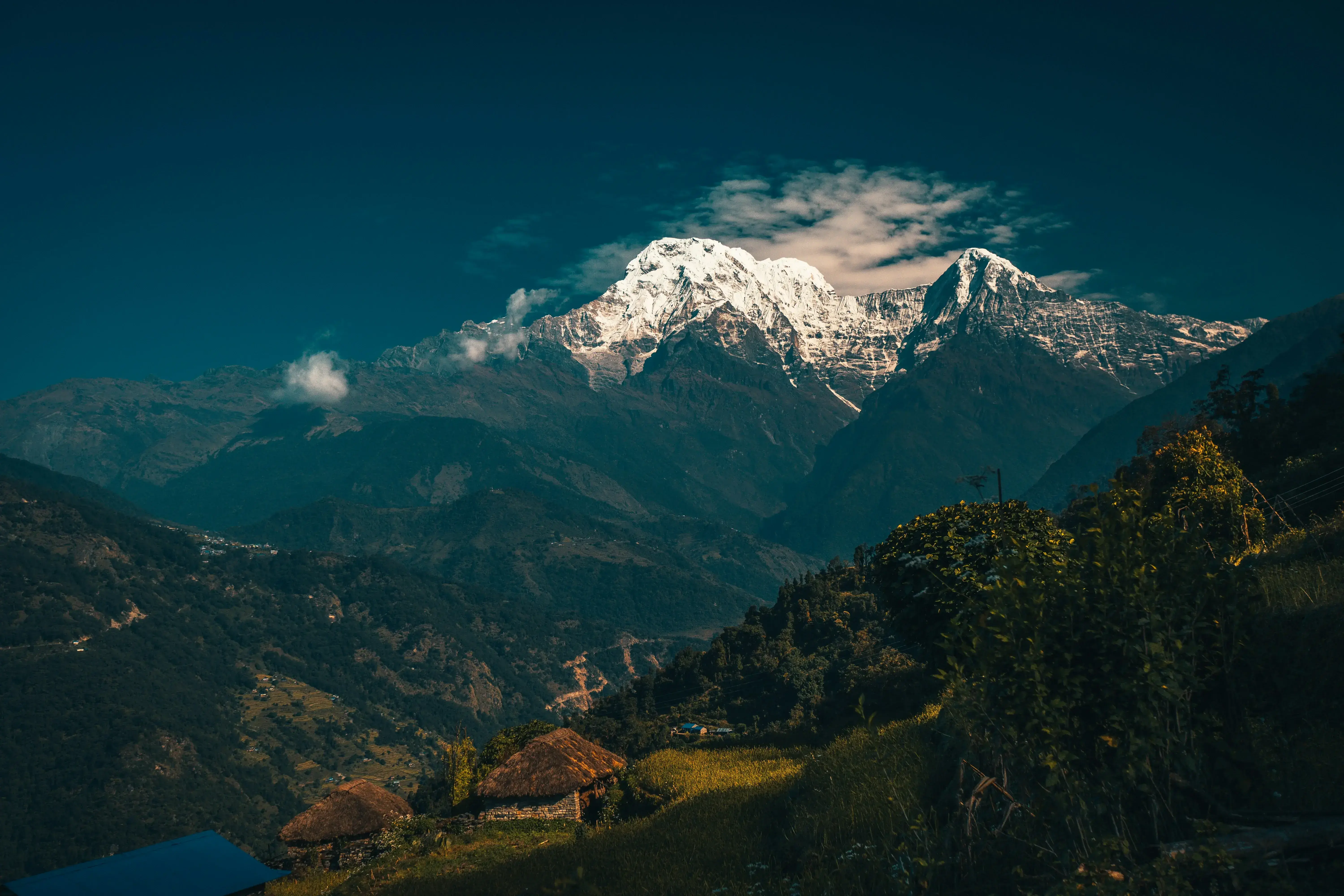
The Manaslu region wraps around Mount Manaslu, the world's eighth-highest peak at 8,163 m, and follows an ancient salt-trade route beside the Budhi Gandaki river. Closed to outsiders until 1991, it remains one of Nepal's most rewarding restricted-area treks. The Manaslu helicopter return trek gives you the whole wilderness and the big mountain scenery, then replaces the long, knee-wearing walk out with a short scenic flight from the high valley.
This guide covers the route, the real cost, the permits, the best season and the helicopter exit itself. It is built around one product, the 10-day Manaslu Heli Return Trek with a heli exit from Samdo, so every figure you read here reflects an actual itinerary rather than a generic estimate. If you are still choosing between walking out and flying out, our Annapurna helicopter return trek shows how the same idea works on a shorter circuit.
Why the Manaslu Helicopter Return Trek Changes the Game
Most trekkers who attempt Manaslu travel the full circuit. They climb to Larkya La, drop into Bimthang, then grind through four or five more days of descent and jeep travel before they see Kathmandu again. The helicopter return keeps the best part of that journey, the high valley and the close-up views of an 8,000 m massif, and cuts the rest. You still earn the scenery on foot. You simply do not have to pay for it with an extra week of sore calves.
For travellers on a fixed holiday allowance, this is often the difference between doing Manaslu at all and choosing a shorter trek instead. It also suits anyone whose knees have opinions about long descents. The trek remains a genuine Himalayan adventure, not a sightseeing flight with a stroll attached.
What Is the Manaslu Helicopter Return Trek?
It is a guided, restricted-area trek through the Budhi Gandaki valley to the Manaslu high country, ending with a helicopter flight out from the upper villages instead of the traditional walk to Dharapani. You sleep in lodges and teahouses, trek past Namrung, Shyala, Sama Gaun and Samdo, and reach the edge of the Larkya La crossing before the helicopter lifts you clear of the range.
Because Manaslu sits inside a restricted area, the trek must be organised through a licensed agency with a registered guide and a minimum of two trekkers. This is not a route you can simply turn up and walk, and that restriction is exactly why the valley still feels remote.
Why Choose a Helicopter Return Instead of the Full Circuit?
Three reasons come up again and again. Time: the full circuit, including road travel, runs close to two weeks, while the helicopter version fits into roughly ten days. Comfort: the flight removes the long, dusty descent and the rough jeep ride back to Kathmandu. Views: the helicopter climbs over terrain you would otherwise never see from above, giving you a farewell look at Manaslu, Himalchuli and the surrounding peaks.
The trade-off is cost. A helicopter exit adds a significant sum to the trip, and it is weather-dependent, so a buffer day matters. For many travellers the saving in time and the aerial finale make it worth every rupee.
Where Does the Manaslu Helicopter Return Trek Go?
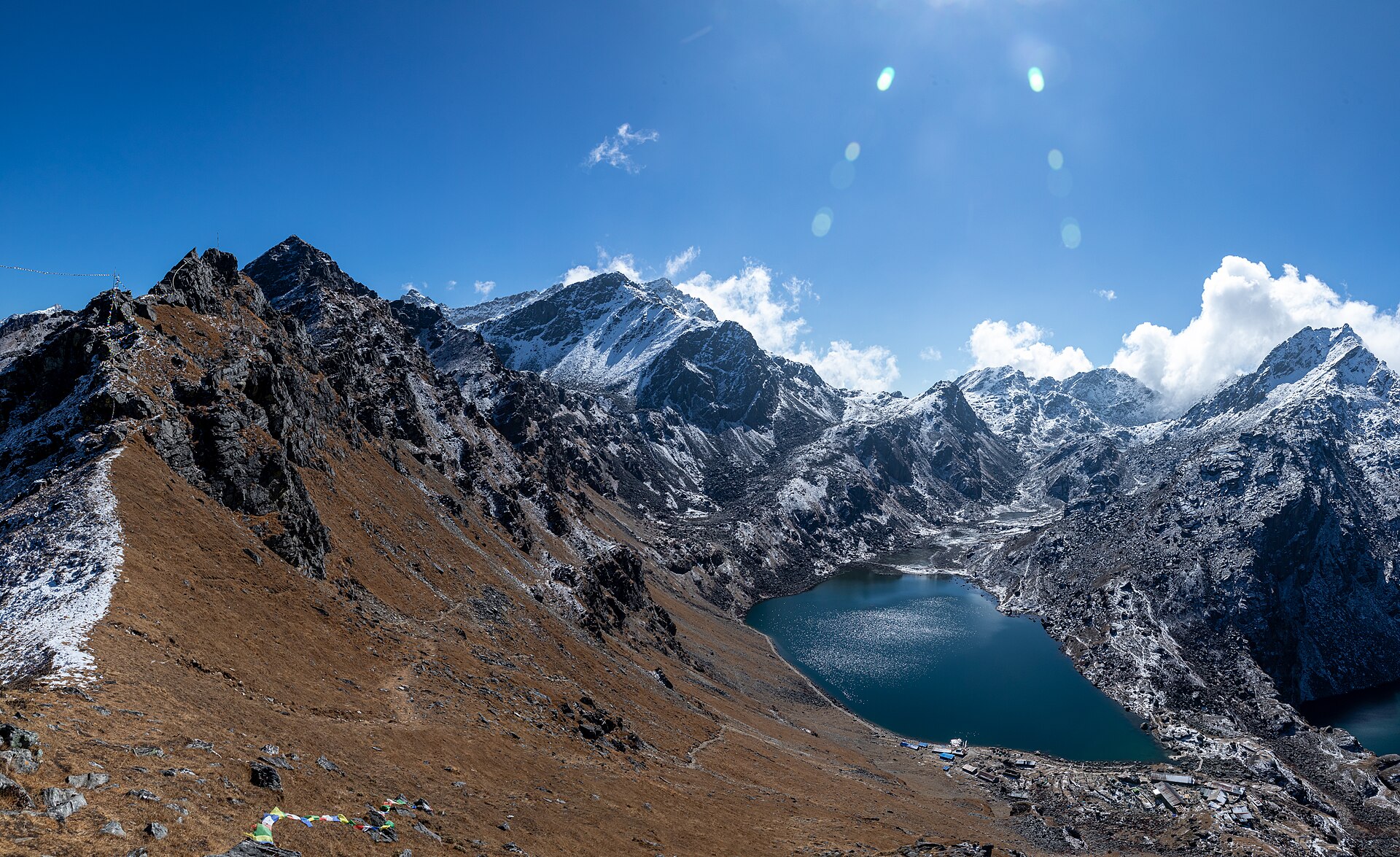
The route begins with a drive from Kathmandu to Machha Khola and then follows the Budhi Gandaki upstream through Machha Khola, Jagat, Deng, Namrung, Lho, Shyala and Sama Gaun. From Sama Gaun you climb toward Manaslu Base Camp and Birendra Lake, then continue to Samdo, the last settlement before the Larkya La. This is the high point of the walk.
On the classic circuit you would cross Larkya La at 5,106 m and descend to Bimthang and Dharapani. On the helicopter return, the valley around Samdo becomes your airstrip. The pilot meets you there and lifts you out over the range, so the pass crossing and the long walk-out are both replaced by a single, spectacular flight.
What Does the Manaslu Route Look Like Day by Day?
The first days are a gradual introduction. You drive from Kathmandu to Machha Khola, then trek through terraced fields and river gorges as the valley narrows. Villages such as Jagat, Deng and Namrung mark the transition from Hindu hill country into Tibetan Buddhist Manaslu, where mani walls, prayer flags and gompas line the trail.
Around the middle of the trek you reach Lho and Shyala, where the full south face of Manaslu first fills the sky. A short, gentle day brings you to Sama Gaun at 3,530 m, the region's main village and the natural place to acclimatise. From here a day hike climbs toward Manaslu Base Camp and Birendra Lake, reaching roughly 4,400 m, which helps your body adjust before the higher ground.
The trail then continues to Samdo at 3,865 m, a high, wind-scoured settlement of stone houses just below the Tibetan border. From Samdo the walking route turns toward Larkya La, but on this itinerary the helicopter is your exit. You end the trek among the highest permanent villages in the region rather than in a jeep on a dusty road.
Each stage is deliberately short enough to allow for the altitude. Rather than pushing through long days, the itinerary uses the natural rhythm of the valley: walk, eat, sleep, repeat, with an acclimatisation break built in where the body needs it most. Villages appear every few hours, which means you are never far from a lodge, a hot meal or a cup of butter tea.
The landscape shifts as you climb. Below Namrung the trail is green and agricultural, with corn drying on rooftops and children waving from terraces. Above Lho the forest thins into juniper and scrub, the river runs milky from glacial silt, and the mountain itself becomes the constant companion on the right bank.
How Hard Is the Manaslu Helicopter Return Trek?
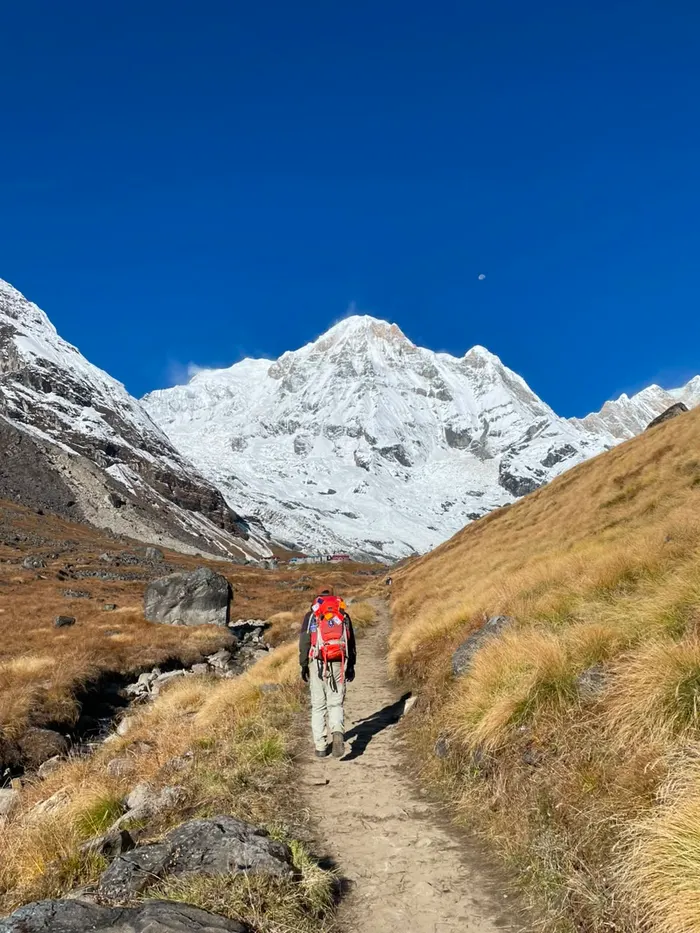
This is a Grade 4 trek, described as challenging. You need previous hiking experience, steady cardiovascular fitness and the ability to walk six to eight hours on some days at altitude. The terrain is not technical, there is no climbing involved, but the combination of long days, rough trails and thin air at more than 3,500 m is demanding.
Because the helicopter skips the descent, the hardest sustained effort is the climb into the high valley and the acclimatisation hike above Sama Gaun. Prepare with hill walking and stair training for several weeks beforehand, and treat the acclimatisation day as compulsory rather than optional.
When Is the Best Time for the Manaslu Helicopter Return Trek?
The two prime windows are spring, from March to May, and autumn, from late September to November. Autumn brings the clearest skies and the most stable weather, which also means the most reliable flying conditions for the helicopter. Spring is warmer, with rhododendron blooms lower down, though afternoon haze can build.
Winter trekking is possible but cold, with snow above Sama Gaun and a higher chance of flight delays. The monsoon months of June to August bring cloud, leeches on the lower trail and poor visibility, which is precisely the weather that grounds helicopters. If reliable flying matters to you, aim for October or November.
How Much Does the Manaslu Helicopter Return Trek Cost?
As a benchmark, the 10-day Manaslu helicopter return package with a heli exit from Samdo is priced from 5,200 US dollars per person. That figure reflects a restricted-area route, a licensed guide and porters, lodge accommodation, permits and the helicopter flight itself. It is a premium product rather than a budget trek.
By comparison, the 6-day Annapurna helicopter return trek starts from 2,818 dollars, and the Everest Base Camp helicopter trek with a fly-back starts from 3,300 dollars. Manaslu costs more because the restricted-area permits are higher and the logistics into the Budhi Gandaki valley are longer. Our Manaslu circuit cost guide breaks down the walking version if you want to compare line by line.
What Permits Do You Need for Manaslu?
Three permits are required. The Manaslu Restricted Area Permit is the key one, priced by season and by week, with higher rates from September to November. The Manaslu Conservation Area Permit, known as MCAP, covers the protected area, and an ACAP entry permit is collected on the Annapurna side where the route meets the wider trail network.
A licensed guide and a minimum of two trekkers are mandatory by law, so no one walks Manaslu solo. Your agency arranges the permits and the guide as part of the package. Our Manaslu permits guide explains current fees and the off-season rates in full.
Because fees change, treat any figure you read online as indicative and confirm the live rates when you book. Bring enough Nepali rupees for personal spending too, since there are no ATMs after Machha Khola.
Packing for a Manaslu Trek: What to Bring
Layering is everything. Start with moisture-wicking base layers, add a warm mid-layer and a heavy down jacket for the high villages, and finish with a waterproof outer shell for wind and snow. The temperature swings from warm valley afternoons to below-freezing mornings at Samdo, so a single heavy coat will not cover the range.
Bring broken-in trekking boots and a pair of spare camp shoes, a four-season sleeping bag for the lodges, trekking poles to spare your knees, and a 30 to 40 litre daypack. Add sunscreen, polarised sunglasses, a refillable bottle with purification tablets, and a basic personal first-aid kit. You can read more in our helicopter trek packing checklist.
Altitude, Acclimatization and Safety on Manaslu
Altitude is the real challenge on this route, not the terrain. The trail climbs steadily above 3,000 m, and the side trip toward Manaslu Base Camp and Birendra Lake takes you to roughly 4,400 m, more than enough to trigger symptoms in an unprepared trekker. Follow the classic rules: ascend slowly, hydrate constantly, and skip alcohol at altitude.
A rest and acclimatisation day at Sama Gaun is built into good itineraries for a reason. A trained guide watches for headache, nausea and breathlessness and carries an oximeter to monitor your oxygen saturation. If symptoms worsen, the correct response is to descend, which on the helicopter route is faster than on any walking itinerary. Emergency evacuation cover is mandatory, and your insurance must specifically include helicopter rescue above 4,000 m.
Lodges, Food and Daily Life on the Manaslu Trail
The accommodation on this route is a mix of family-run lodges and teahouses, and the quality rises the lower you go. Rooms are usually twin-sharing with wooden beds, blankets and a shared bathroom, and the dining room is the warm heart of every lodge, heated by a stove and filled with trekkers comparing the day.
Food is simple but filling. Dal bhat, the national dish of rice, lentils and vegetables, is the trekkers' staple because it is freshly cooked and usually comes with refills. You will also find noodles, soups, momos, potatoes and Tibetan bread. Above Sama Gaun the menu shortens and prices rise, because every ingredient arrives on someone's back or on a mule.
Electricity and Wi-Fi exist in the lower villages for a small fee but become unreliable higher up, and there are no ATMs after Machha Khola. Carry enough cash for drinks, snacks, hot showers and charging. Mornings are for walking, afternoons for resting and acclimatising, and evenings for the dining room. It is a slow, sociable rhythm that many trekkers miss once they are home.
How Does the Helicopter Exit Work?
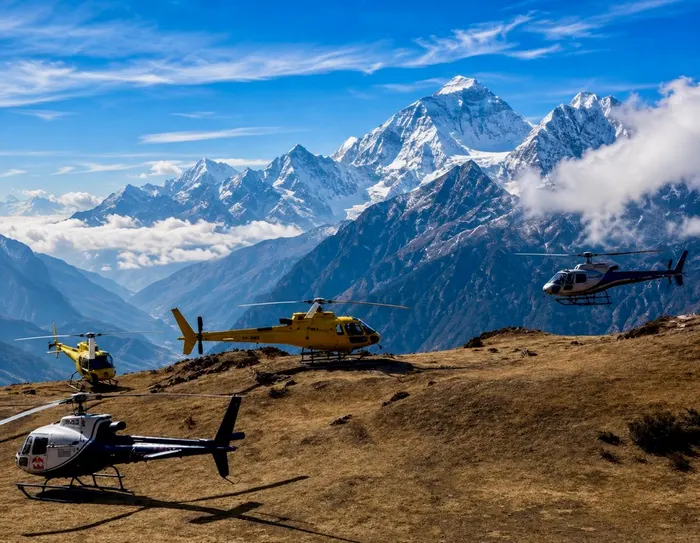
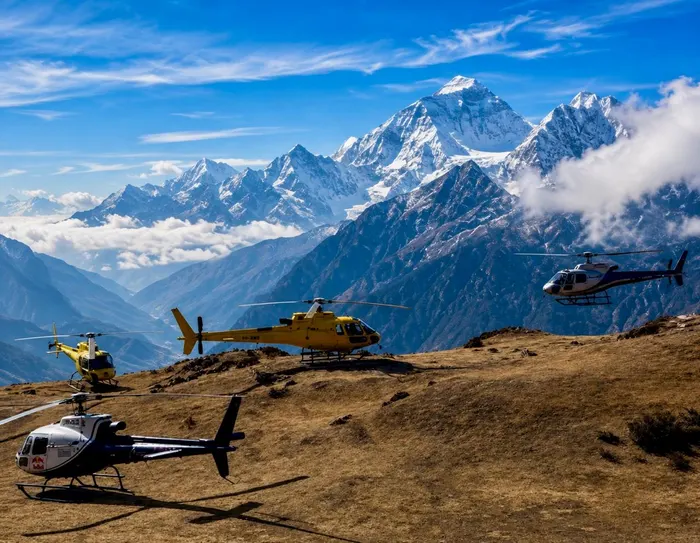
On the final trekking day you walk into the upper valley near Samdo, where the helicopter meets your group. The pilot sets down at a safe landing spot, you load up, and the aircraft climbs out over the range toward Kathmandu or Pokhara, giving you a last aerial look at Manaslu, Himalchuli and the Budhi Gandaki gorge. The flight itself usually takes well under an hour.
Helicopters fly only in suitable weather, so operators build in a margin. If clouds close the valley, the flight may shift to the next morning. This is not a sign of a poorly run trip, it is standard mountain aviation. On this route the heli exit is also the altitude safety valve, moving you off the high ground quickly if anyone feels unwell.
Who Is the Manaslu Helicopter Return Trek Best For?
It suits experienced hikers who want the Manaslu high country but cannot spare two full weeks, and travellers whose knees dislike long descents. Couples and small groups of friends are natural fits, since the two-trekker minimum is easy to meet. Photographers love it, because the helicopter adds aerial frames that walkers never get.
It is less suited to complete beginners. The trek demands real fitness and prior hiking experience, and the restricted-area rules mean you travel with a guide at all times. If you want a gentler introduction to Himalayan culture before committing to a hard trek, start with a cultural and spiritual tour of Nepal and build your confidence first.
What Your Manaslu Package Includes
A well-built package bundles the expensive logistics. Expect three permits, private or shared jeep transport from Kathmandu to Machha Khola and back, lodge and teahouse accommodation on a twin-sharing basis, a government-licensed English-speaking guide, the required porters, a first-aid kit and an oximeter. The helicopter flight out of the high valley is included in the return-trek price.
Not included are your travel insurance, personal trekking gear such as boots and a down jacket, lunch and dinner in Kathmandu, snacks and bottled water on the trail, and tips for guides and porters. Budget separately for these so the final bill holds no surprises.
How Does Manaslu Compare With Other Heli Returns in Nepal?
Nepal now offers several trek-up, fly-back itineraries, and they differ mainly in altitude and price. The Annapurna version is shorter and cheaper, suited to first-time trekkers with about six days. The Everest fly-back delivers the Khumbu and its famous villages at a higher altitude and price.
Manaslu sits between them. It is more remote and more culturally Tibetan than Annapurna, less crowded than Everest, and it carries the added appeal of a restricted-area permit that keeps numbers low. If you have already trekked Everest or Annapurna and want somewhere quieter, Manaslu is the natural next step. Our Nepal helicopter tours guide maps every aerial option in the country.
How to Book Your Manaslu Helicopter Return Trek
Booking is straightforward once you pick a window. Choose autumn for the clearest flying, or spring for warmer days and rhododendrons. Share your dates, fitness level and group size with the agency, and they will confirm permits, guide and the helicopter slot. A buffer day before and after the trek protects you against weather delays.
Use a licensed operator that is transparent about what the price covers and how the helicopter is arranged, and check that your insurance covers evacuation above 4,000 m before you pay. Book through a team that knows the valley, reads the weather and plans the flight as carefully as the walking. Our guide to choosing a trekking agency in Nepal walks through what to look for, and our step-by-step booking guide covers the helicopter side from first inquiry to takeoff.
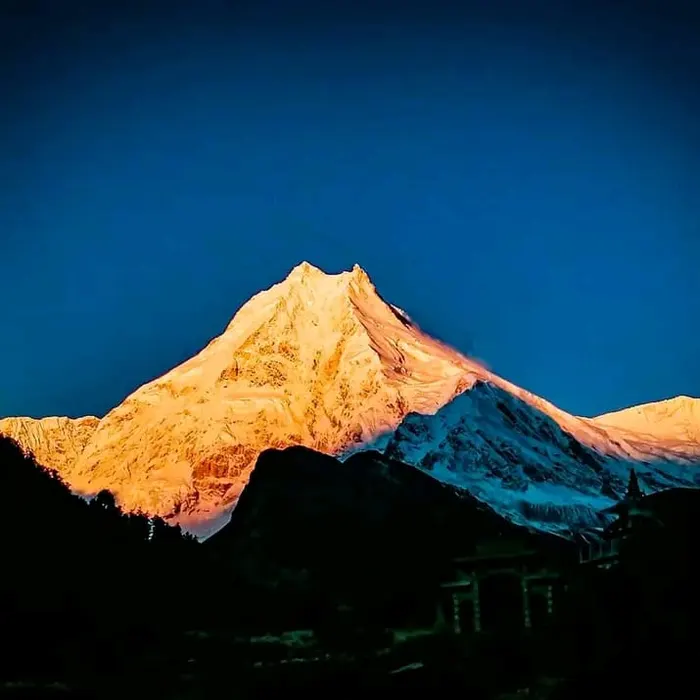
The Manaslu helicopter return trek is one of the very few ways to see an 8,000 m massif up close, sleep in Tibetan-influenced villages, and still be back in Kathmandu within ten days. Choose your season, respect the altitude, and let the helicopter turn the hardest part of the circuit into its most memorable view.