Booking a helicopter tour in Nepal is not like reserving a restaurant table. You are chartering an aircraft to fly into the world's highest mountains, often with a landing above 5,000 metres. The process involves operator vetting, permit checks, weather windows, and payment logistics that first-time bookers rarely anticipate. This guide walks you through every step - from the moment you type "helicopter tour Nepal" into a search bar to the moment the rotor blades spin up at Kathmandu airport.
We have published this guide because too many travellers arrive in Kathmandu, ask around, and book with whoever offers the lowest price - only to discover on the morning of the flight that the operator lacks a valid Air Operator Certificate, the aircraft is not insured for high-altitude landings, or the "Everest landing" they paid for is actually a fly-by with no touchdown. A helicopter tour in Nepal is a once-in-a-lifetime experience. Getting the booking right is worth the effort.
If you are still deciding which tour to book, start with our complete guide to Nepal helicopter tours for an overview of every route. If you want to understand pricing before you commit, our helicopter tour cost breakdown covers shared seats, private charters, and seasonal price swings in detail.

Step 1: Choose Your Route and Landing Option
Before you contact any operator, decide which mountain you want to see and whether you want to land. Nepal has four main helicopter tour routes, and the booking process differs slightly for each.
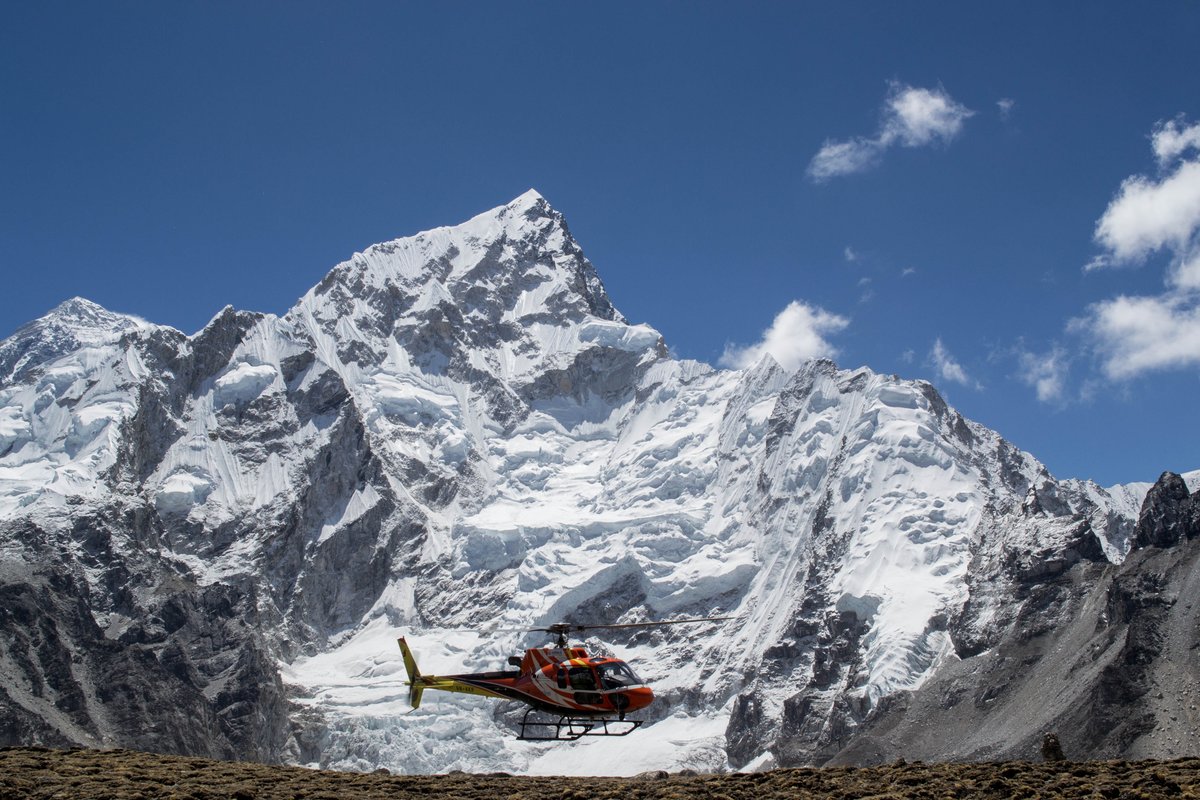
The Everest Base Camp helicopter tour is the most popular. It departs from Kathmandu, flies east past the Langtang range, and lands at Kala Patthar (5,545 m) or near Everest Base Camp for a 10-15 minute photo stop. Most itineraries include a breakfast stop at the Hotel Everest View in Syangboche. This is the flagship experience and the one most first-time visitors book. See our Everest Base Camp helicopter tour page for the full itinerary.
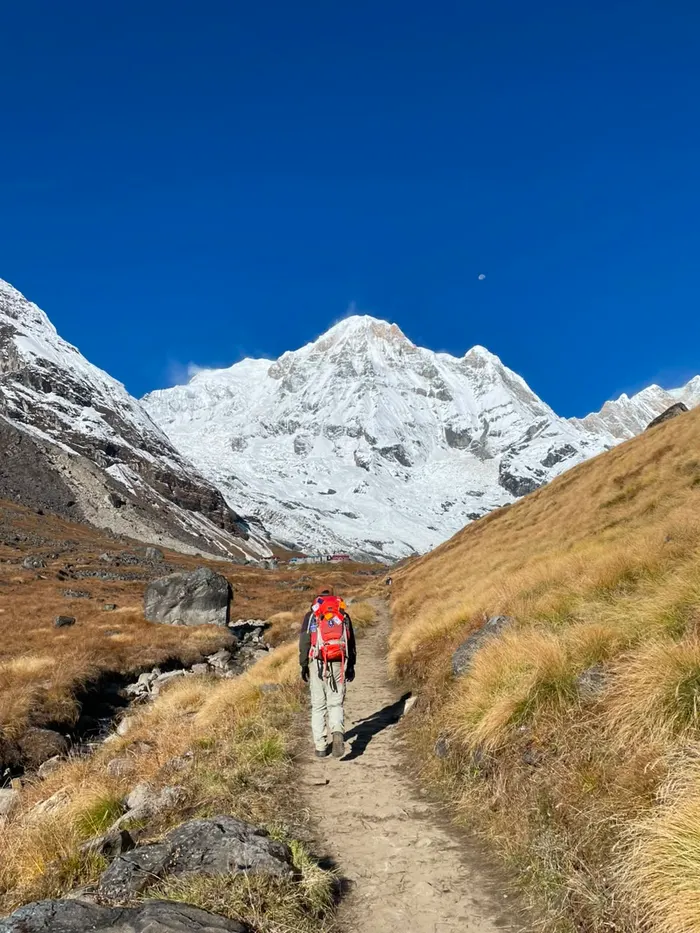
The Annapurna Base Camp helicopter tour flies west from Kathmandu or Pokhara into the Annapurna Sanctuary, landing at 4,130 metres with a 360-degree panorama of Annapurna I, Machhapuchhre, and Hiunchuli. It is shorter than the Everest flight and often less expensive. The Annapurna helicopter tour is a strong alternative if you have already seen Everest or want a different Himalayan perspective.
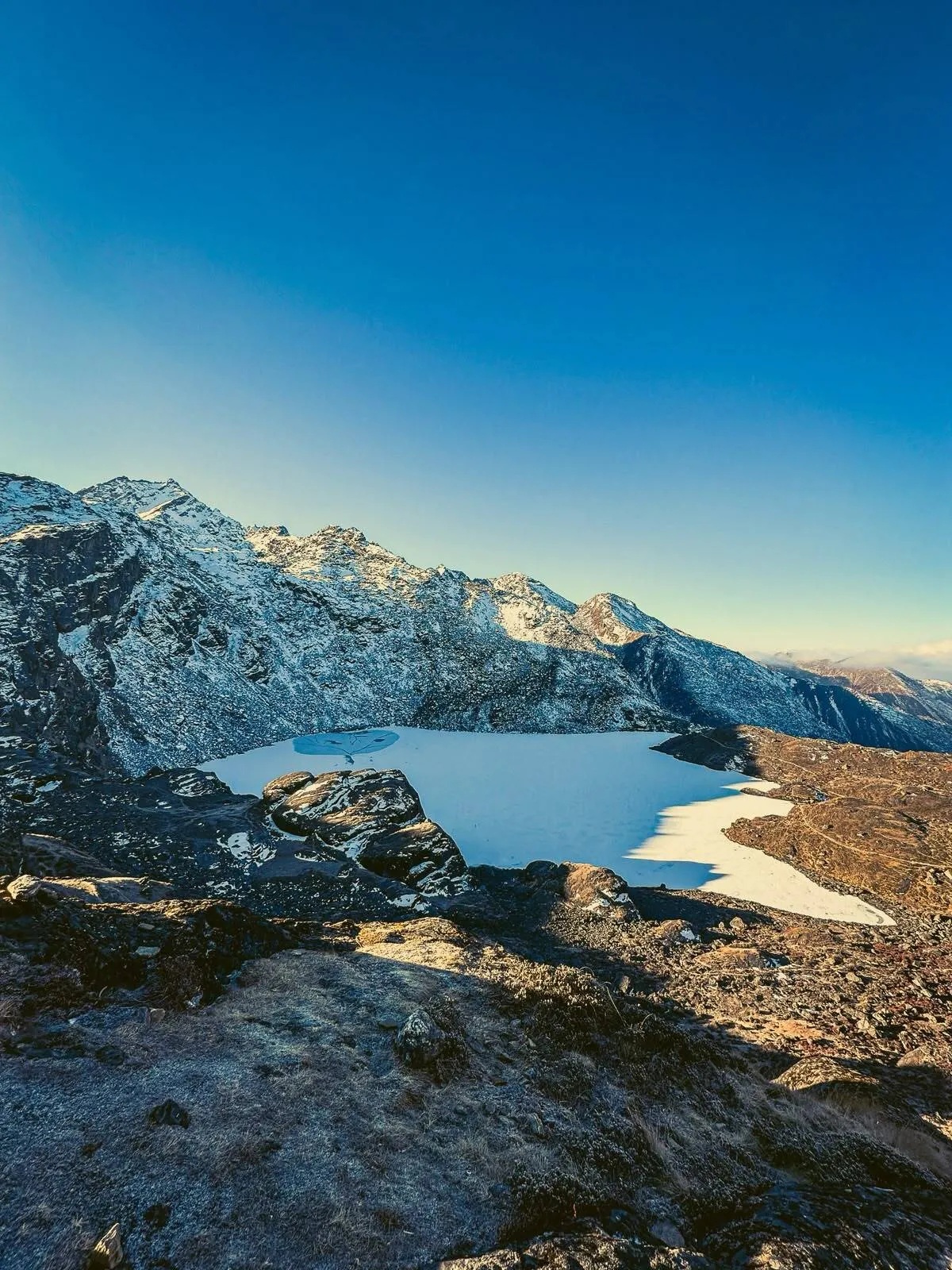 The Gosaikunda helicopter tour is a shorter, spiritual flight to a sacred alpine lake at 4,380 metres. It is popular with pilgrims and travellers who want a high-altitude landing without the long flight time of Everest. The Rara Lake helicopter tour flies to Nepal's largest lake in the remote far-west - a full-day expedition for travellers who want to see a part of Nepal few others reach.
Your route choice determines the operator pool. Not every company flies to Rara. Not every company has landing permits for Kala Patthar. Ask specifically: "Do you have a current landing permit for [route]?" before you pay anything.
Step 2: Vet the Operator - The Non-Negotiable Checklist
Nepal has dozens of helicopter companies, but only a subset are licensed for commercial high-altitude tourist flights. Here is the minimum you must verify before booking:
- Air Operator Certificate (AOC): Issued by the Civil Aviation Authority of Nepal (CAAN). Ask for the certificate number and verify it on the CAAN website. No AOC means the aircraft is not legally permitted to carry paying passengers.
- High-altitude insurance: Standard aviation insurance does not always cover landings above 5,000 metres. Confirm in writing that the policy covers the specific landing point on your route.
- Pilot experience: Mountain flying in the Himalaya requires specific ratings and hundreds of hours of high-altitude rotor time. Ask how many seasons the pilot has flown your specific route.
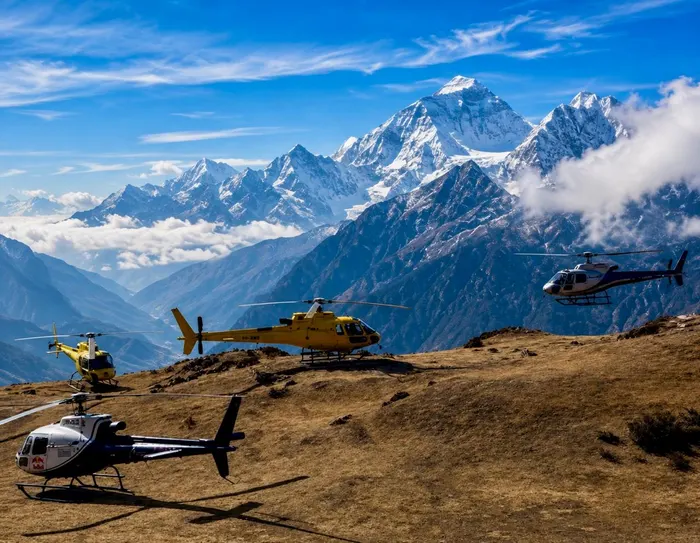
- Aircraft type and age: Most tourist flights use Airbus H125 (AS350 B3e) helicopters - the workhorse of high-altitude operations worldwide. Confirm the aircraft model and ask about its maintenance schedule.
- Reviews from the last 12 months: Look beyond the operator's own website. Check Google Reviews, TripAdvisor, and travel forums. Filter for reviews that mention your specific route, not generic "great experience" posts.
Our helicopter tour cost guide includes a section on how pricing correlates with operator quality - the cheapest quote is rarely the safest choice.
Step 3: Request a Quote - What to Include in Your Inquiry
A vague "how much for a helicopter tour?" email will get you a vague reply - or no reply at all. Operators in Nepal receive dozens of inquiries daily, and the ones that get prompt, detailed responses are the ones that look serious. Include these six pieces of information in your first message:
- Exact route: "Everest Base Camp helicopter tour with Kala Patthar landing and Hotel Everest View breakfast stop" is specific. "Everest helicopter" is not.
- Preferred date and flexibility: Give a date range of 3-5 days. Helicopter tours are weather-dependent, and a flexible window dramatically increases your chance of flying.
- Number of passengers and weights: Helicopters have strict weight limits. The AS350 B3e carries a maximum of 5 passengers plus pilot, but at high altitude the payload drops. Operators need passenger weights (in kilograms) to confirm the flight is possible.
- Shared or private: State clearly whether you want a shared seat (joining other travellers, lower cost) or a private charter (your group only, full control of timing and stops). Our shared vs private helicopter tour comparison breaks down the trade-offs.
- Departure city: Most Everest and Gosaikunda tours depart from Kathmandu. Annapurna tours can depart from Kathmandu or Pokhara. Specify which city you will be in.
- Any special requests: Proposals, photography equipment, mobility needs, or dietary requirements for the breakfast stop.
A complete inquiry signals to the operator that you are a serious booker, not a price-shopper. You will get a faster, more accurate quote.
Step 4: Compare Quotes - Beyond the Price Tag
When quotes arrive, do not sort by price and pick the cheapest. Compare these five dimensions:
What is included: Does the quote cover airport transfers, domestic terminal fees, the breakfast stop, and the national park entry permit? Some operators quote a base flight price and add these as extras. Ask for an all-inclusive figure.
Cancellation and weather policy: Helicopter tours in Nepal are cancelled roughly 15-20% of the time due to weather, even in peak season. A good operator offers a full refund or free reschedule if the flight is grounded. A bad operator keeps a "processing fee." Read the fine print before you pay.
Group size on shared flights: A shared flight with 2 other passengers is a very different experience from one with 4 others. Ask how many passengers will be on board. Fewer passengers means better window access and more room for photography.
Landing duration: Some operators advertise a "landing" that is actually a 3-minute touch-and-go for a photo. Others give you 15-20 minutes on the ground. Confirm the exact landing duration in minutes.
Communication responsiveness: If an operator takes 4 days to reply to your initial inquiry, they will take 4 days to reply when your flight is cancelled and you need a reschedule. Responsiveness during the booking phase is a reliable proxy for operational reliability.
Step 5: Confirm Permits and Documentation
Every helicopter tour that lands inside a national park or conservation area requires permits. The operator usually arranges these, but you should confirm which permits are needed and that they are included in your quote.
For the Everest region, you need a Sagarmatha National Park entry permit (approximately NPR 3,000 for foreign nationals) and a Khumbu Pasang Lhamu Rural Municipality permit (approximately NPR 2,000). For Annapurna, you need the Annapurna Conservation Area Permit (ACAP, approximately NPR 3,000). These are per-person fees and should be itemized in your quote.
Additionally, the operator must hold a valid landing permit for the specific helipad. Kala Patthar, Annapurna Base Camp, and Gosaikunda each require separate permits. A company that flies to Everest may not have the permit for Annapurna. Verify this specifically.
On your side, you need a valid passport (with at least 6 months remaining) and a Nepal visa. Most nationalities can get a visa on arrival at Kathmandu airport. If your helicopter tour is part of a longer Nepal trip, ensure your visa covers the full stay.
Step 6: Payment - How, When, and How Much Upfront

Payment is the step where most booking anxiety lives, and for good reason. Sending a large sum to a company in a country you may never have visited requires trust. Here is the standard practice among reputable operators:
Deposit: Expect to pay 20-30% of the total to confirm your booking. This secures your date, the aircraft, and the permits. The deposit is typically non-refundable if you cancel, but should be fully refundable if the operator cancels due to weather.
Balance payment: The remaining 70-80% is usually due 1-2 weeks before the flight date, or in some cases on arrival in Kathmandu (in cash or by card). Confirm the balance deadline in writing.
Payment methods: Most operators accept international bank transfers (SWIFT) and credit cards (with a 3-4% processing fee). Some accept Wise or PayPal. Cash in USD is widely accepted for balance payments in Kathmandu. Always get a receipt.
Red flags: An operator demanding 100% upfront with no weather refund policy. An operator who only accepts cash sent via Western Union. An operator who cannot produce an invoice with a company registration number. Walk away from all three.
Step 7: Pre-Flight Preparation - The Week Before
Once your booking is confirmed and paid, the week before your flight is about logistics and mindset.
Confirm the pickup: Your operator should send you the exact pickup time and location (usually your hotel in Kathmandu or Pokhara) 24-48 hours before the flight. Confirm it the evening before. Most Everest flights depart between 6:00 AM and 7:30 AM to catch the clearest morning air.
Check the weather: Use a reliable mountain weather forecast (Mountain-Forecast.com or Windy.com) for your route. If the forecast shows heavy cloud or precipitation, mentally prepare for a delay. Operators make the final go/no-go call based on real-time aviation weather data, not consumer apps, but checking yourself reduces surprise.
Pack for the cold: Even if it is 25 degrees Celsius in Kathmandu, Kala Patthar at 5,545 metres will be below freezing. Wear layers: thermal base, fleece mid-layer, windproof outer shell. Gloves, a warm hat, and sunglasses are essential. Our best time for helicopter tours guide includes a detailed packing list by season.
Eat light: A heavy breakfast before a high-altitude flight is a recipe for nausea. Eat something small and avoid dairy and greasy food. The breakfast stop at Hotel Everest View comes after the landing, not before.
Charge everything: Your phone, your camera, your backup battery. The cold at altitude drains batteries fast. Bring a power bank. You will take more photos than you think.
Step 8: Flight Day - What Actually Happens
Here is the real sequence, so you know what to expect:
5:30-6:00 AM: A driver picks you up from your hotel and takes you to the domestic terminal at Tribhuvan International Airport (or Pokhara Airport for Annapurna departures). The drive takes 15-25 minutes in early morning traffic.
6:00-6:30 AM: You go through a brief security check at the domestic terminal. Your operator's ground staff will meet you, handle the check-in, and escort you to the helipad. You will likely wait 15-30 minutes while the pilot completes the pre-flight inspection and receives the final weather clearance.
6:30-7:00 AM: Boarding. The pilot gives a safety briefing: seatbelt operation, headset use, emergency procedures. You are assigned a seat based on weight distribution - the operator arranges this for optimal balance. Window seats are not guaranteed on shared flights, but the pilot usually rotates passengers at the landing stop so everyone gets a photo opportunity.
7:00 AM onward: Takeoff. The flight to Lukla takes about 45 minutes, then another 15-20 minutes to Kala Patthar. The total flight time for an Everest tour is roughly 3-4 hours round-trip, including the landing and breakfast stop. Annapurna tours are about 2.5-3 hours. Gosaikunda is about 1.5 hours.
Landing: You get 10-20 minutes on the ground. The pilot monitors oxygen saturation and will cut the stop short if anyone shows signs of altitude sickness. Stay calm, breathe slowly, and do not run or jump - the air is thin and exertion hits fast.
Return: The flight back follows the same route in reverse. You land at the domestic terminal, where your driver takes you back to your hotel. Most travellers are back by 10:00-11:00 AM with the rest of the day free.
Common Booking Mistakes and How to Avoid Them
After years of helping travellers book helicopter tours in Nepal, we have seen the same mistakes repeat. Here are the top five, so you can avoid them:
1. Booking through an unvetted intermediary. Some travel agencies in Thamel sell helicopter tours they have never operated. They take your money, call a real operator, and pocket the margin - but when the flight is cancelled, they disappear. Book directly with the operator or through a licensed Nepal-based travel company with a physical office you can visit.
2. Ignoring the weight limit. A group of five adults weighing 90 kg each totals 450 kg. Add the pilot (80 kg), fuel for a high-altitude round trip, and the AS350's payload limit at 5,500 metres, and the math does not work. The operator will either refuse the flight or ask some passengers to stay behind. Provide accurate weights upfront.
3. Booking a single-day window. If you fly into Kathmandu on Tuesday and book your helicopter tour for Wednesday with no flexibility, you have a roughly 20% chance of disappointment. Build at least 2-3 buffer days into your itinerary. If the weather is clear on your first available day, you fly early and free up the buffer days for other activities.
4. Skipping travel insurance. Standard travel insurance does not always cover helicopter evacuations or high-altitude activities above 4,500 metres. Check your policy. If it excludes helicopter tours, buy a supplemental policy that covers them. The cost is small relative to the flight itself.
5. Assuming all operators are equal. A company that has been flying Everest tours for 15 years with zero incidents is not the same as a new entrant with one aircraft and a freshly printed brochure. Check the operator's track record. Our Everest Base Camp helicopter guide includes operator selection criteria in detail.
Booking Timeline: When to Start the Process
Here is a realistic timeline for booking a helicopter tour in Nepal during peak season (October-November and March-May):
- 2-3 months before: Research routes, shortlist 3-4 operators, send detailed inquiries.
- 6-8 weeks before: Compare quotes, vet operators, confirm your choice, pay the deposit.
- 2-4 weeks before: Pay the balance, confirm permits, book travel insurance, arrange Nepal visa.
- 1 week before: Confirm pickup time and location, check weather forecast, pack layers and camera gear.
- Day before: Reconfirm with the operator, charge all devices, eat a light dinner, go to bed early.
- Flight day: Wake up, drink water, skip the heavy breakfast, and enjoy the flight of a lifetime.
During the off-season (June-September monsoon and December-February winter), you can often book with 2-4 weeks of lead time, but the weather cancellation risk is higher. The seasonal guide covers month-by-month conditions in detail.
What If Your Flight Is Cancelled?
Weather cancellations are part of helicopter touring in the Himalaya. They are not a sign of a bad operator - they are a sign of a responsible one. A pilot who refuses to fly in marginal conditions is protecting your life. Here is what to do:
Same-day reschedule: If the morning weather is bad, ask if an afternoon slot is available. Afternoon flights are less common because clouds typically build after midday, but in some seasons a late-morning window opens.
Next-day reschedule: Most operators will automatically move you to the next available day. This is why buffer days matter. If you have no buffer, ask about a partial refund or a credit for a future trip.
Full refund: If the operator cannot fly you within your available window, a full refund of the flight cost should be issued. Permits are sometimes non-refundable (they are paid to the park authority, not the operator), but the flight cost itself should be returned. Confirm this policy in writing before you pay the deposit.
Alternative activity: If your helicopter tour is cancelled and you cannot reschedule, ask your operator or travel company about same-day alternatives. A mountain flight (fixed-wing aircraft along the Everest range) is a good Plan B that operates in similar weather windows and costs a fraction of the helicopter tour. The helicopter tour hub page lists all available aerial experiences.
Booking Through Enticing Himalayas
If you would rather have a local team handle the entire booking process - from operator vetting to permit coordination to weather-day rescheduling - Enticing Himalayas offers a managed booking service for all four major helicopter routes. We work exclusively with CAAN-licensed operators who meet our safety and insurance standards, and we handle the logistics so you focus on the experience.
Our team is based in Kathmandu and can meet you in person before your flight. We provide a single point of contact for the entire process, from your first inquiry to your post-flight hotel drop-off. Every booking includes a written weather guarantee: if your flight is cancelled due to weather and cannot be rescheduled within your available window, you receive a full refund of the flight cost.
To start the process, visit our contact page or browse the full list of helicopter tours to find the route that matches your itinerary.
Related Guides
Pair this booking guide with our other helicopter tour resources to plan every detail of your Himalayan flight:
- Nepal Helicopter Tours: The Complete Aerial Guide - overview of every route, operator, and what to expect
- Helicopter Tour in Nepal Cost Guide 2026/27 - shared seats, private charters, and seasonal pricing
- Everest Base Camp Helicopter Tour: The Definitive Guide - deep dive into the flagship route
- Best Time for Helicopter Tours in Nepal - month-by-month weather and visibility
- Shared vs Private Helicopter Tours - which option gives you the best value
- Helicopter Tours for Seniors - accessible Himalayan views for older travellers
- Everest vs Annapurna Helicopter Tour - which route should you choose
For the broader Nepal travel picture, see our guide to the best trekking agency in Nepal and our complete guide to cultural and spiritual tours.