Nestled on a ridge 1,030 meters above sea level in the Tanahun district of central Nepal, Bandipur is a beautifully preserved Newari hilltown that has quietly emerged as one of the country's most promising paragliding destinations. Far from the crowded launch sites of Pokhara and the commercial circuits of Kathmandu, Bandipur offers pilots and tandem passengers a rare combination of clean thermals, panoramic Himalayan vistas, and a charming cultural basecamp that feels frozen in time.
Quick Answer: Bandipur paragliding is a growing adventure tourism activity in central Nepal, launching from ridgelines above the historic Newari town of Bandipur at approximately 1,030 meters elevation. Flights offer unobstructed views of the Annapurna, Dhaulagiri, and Manaslu ranges, with tandem flights available from local operators. The best flying season is October through April, when thermal conditions are stable and visibility is at its clearest. Bandipur remains less crowded than Pokhara's Sarangkot launch, making it ideal for pilots seeking a quieter, culturally rich flying experience.
Why Bandipur Is a Paragliding Destination Worth Watching
Bandipur sits on a gently sloping ridge that runs roughly east to west, perfectly oriented for ridge soaring when the prevailing winds are from the south or southwest during the flying season. The town's elevation of 1,030 meters, combined with its position above the Marsyangdi River valley, creates a natural thermal generator. As the morning sun warms the south-facing slopes, warm air rises along the ridge, creating lift that paragliders can exploit for extended soaring flights.
Unlike Kathmandu's paragliding sites, which are limited by valley confinement and airspace restrictions, Bandipur's open ridge launch offers wide landing options in the terraced fields below. The Gurung and Magar villages surrounding Bandipur provide ample flat-ish landing zones, and the absence of dense urban infrastructure means pilots have more freedom to choose their approach patterns.
The town itself is a major draw. Bandipur was once a prosperous trading post on the Tibet-to-India salt route. When the modern highway bypassed it in the 1970s, Bandipur was largely forgotten, which inadvertently preserved its traditional Newari architecture. Today, the main street is lined with finely carved wooden windows, slate-roofed temples, and guesthouses that serve as comfortable basecamps for pilots and their families. After a morning flight, you can spend the afternoon exploring the Bandipur old town, visiting the Bindhyabasini Temple, or hiking to nearby viewpoints.
The Geography and Flying Conditions at Bandipur
The Annapurna and Dhaulagiri ranges from Bandipur. Photo: Wikimedia Commons (CC BY-SA 4.0).
Bandipur's ridge runs at roughly 1,030 meters elevation, with launch sites typically accessed by a short uphill walk or a 4WD road to slightly higher points on the ridge crest. The ridge faces south-southeast, which means it captures the morning thermals early. By mid-morning (around 10:00 AM), the sun has warmed the slope enough to generate consistent ridge lift. The best flying window is typically from 10:00 AM to 2:00 PM, after which the thermals can become too strong for beginner and intermediate pilots.
The Marsyangdi River valley to the north and the Seti River valley to the south create a natural thermal corridor. Pilots report that on a good day, it is possible to climb to 2,500 to 3,000 meters above the ridge, gaining enough altitude to glide toward the Annapurna range for closer views of the snow peaks. The sheer scale of the landscape, from subtropical valley floors to glaciated 8,000-meter summits, makes every flight visually extraordinary.
Wind conditions in Bandipur are generally more predictable than in Pokhara because the ridge is not hemmed in by larger mountains. The prevailing flying-season winds come from the southwest at 10 to 20 km/h, which is ideal for ridge soaring. Pilots should always check local conditions before launching, as valley winds can shift quickly in the afternoon, and the site does not yet have a formal wind-talk or weather station dedicated to paragliding operations.
Paragliding Season in Bandipur
The paragliding season in Bandipur closely follows the broader Nepal paragliding season. The most reliable months are October through April, with the shoulder months (September and May) offering occasional flyable days but with less predictable conditions.
| Season | Months | Conditions | Suitability |
|---|---|---|---|
| Autumn Peak | October to November | Clear skies, gentle thermals, post-monsoon visibility | All levels (beginner to advanced) |
| Winter | December to February | Cold but stable air, moderate thermals, excellent visibility | Beginner to intermediate |
| Spring | March to April | Warming thermals, occasional pre-monsoon instability | Intermediate to advanced |
| Monsoon (off-season) | June to September | Heavy rain, unstable air, poor visibility | Not recommended |
October and November are the golden months for Bandipur paragliding. The monsoon has cleared the dust from the air, visibility extends for hundreds of kilometers, and the Himalayan peaks from Annapurna to Dhaulagiri to Manaslu stand razor-sharp against the blue sky. Thermals are moderate and predictable, making it an ideal time for first-time tandem passengers.
Winter flying (December to February) is colder but equally rewarding. The air is dense and stable, meaning flights tend to be smoother and longer glides are possible. Pilots should bring warm layers, as temperatures at launch can drop to 5 to 10 degrees Celsius in the early morning, even though the valley below may be pleasantly warm.
Spring (March to April) brings stronger thermals as the land heats up rapidly. This is the season for experienced pilots who want to push for long cross-country flights toward the Annapurna foothills. The pre-monsoon instability in May can create overdeveloped conditions, so late April is generally the safe cutoff for the spring season.
What a Bandipur Paragliding Experience Looks Like
A typical paragliding day in Bandipur begins early. Pilots and tandem passengers meet at a designated spot in the old town, usually around 9:00 AM, when the air is still calm. From there, a short drive or walk takes the group to the launch site on the ridge above town. The launch area is a grassy slope with a clear takeoff run facing south or southeast, depending on the morning's wind direction.
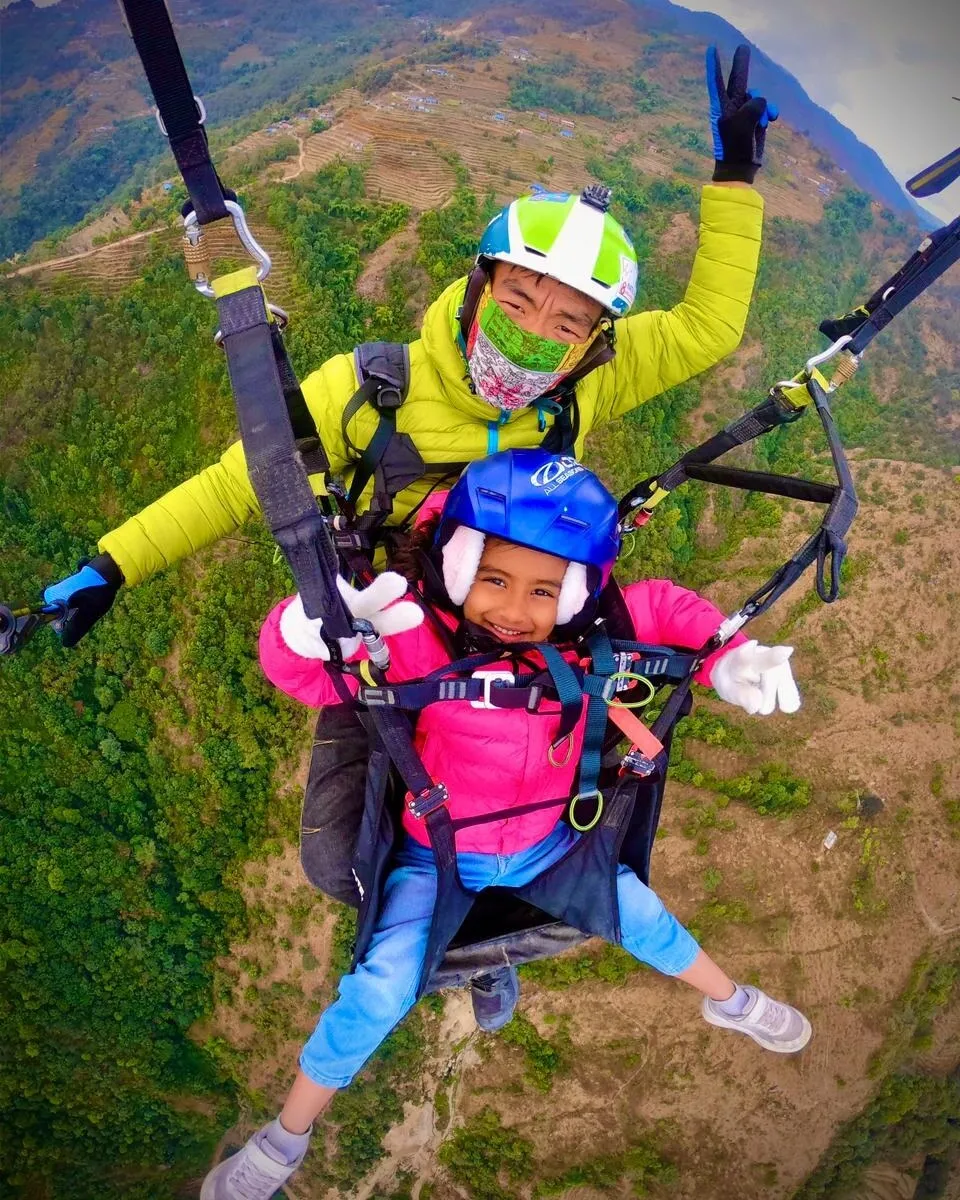
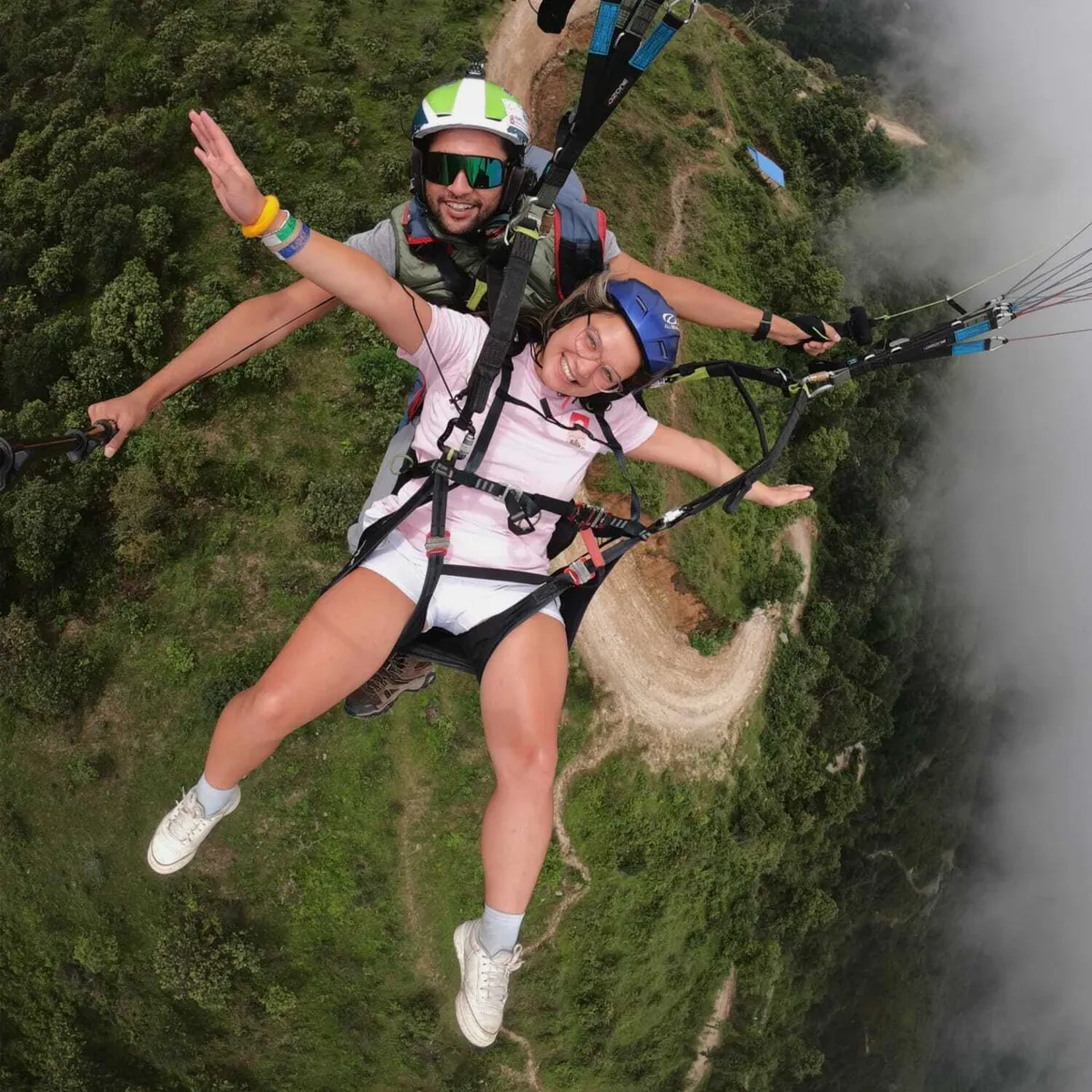
Before launching, the pilot-in-command checks wind speed and direction, lays out the wing, and briefs the tandem passenger on the takeoff procedure. The key instruction is simple: run. Do not sit down, do not jump, just keep running until the wing lifts you off the ground. This usually takes 10 to 15 meters of forward motion.
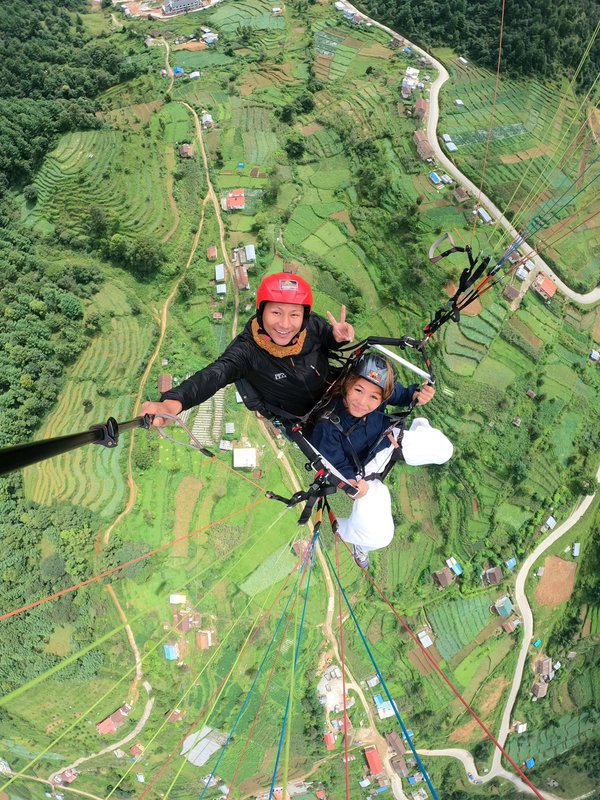
Once airborne, the flight typically lasts 20 to 40 minutes, depending on thermal conditions. The first sensation is one of gentle ascent as the ridge lift carries you upward. Within minutes, you are 200 to 500 meters above the launch, with the Bandipur ridge visible below as a green line cutting across the landscape. The old town appears as a cluster of red-roofed buildings strung along the hilltop, and the terraced fields below form a patchwork of greens and golds.
On a clear day, the panoramic view from the air includes the entire Annapurna massif to the north, the Dhaulagiri range to the northwest, and Manaslu to the east. The Marsyangdi River is visible as a silver thread winding through the valley. Depending on conditions, the pilot may spiral upward in a thermal, glide along the ridge for distance, or simply cruise gently to let the passenger absorb the views and take photographs.
Landing is in a designated field below the ridge, typically a flat terraced area near one of the surrounding villages. The approach is straightforward, with no obstacles. The pilot flares the wing at the right moment, and the landing is a soft step onto the grass, often gentle enough that passengers remark it was easier than getting off a bus.
Cost of Paragliding in Bandipur
Paragliding in Bandipur is generally less expensive than in Pokhara, primarily because it is a less commercialized destination with fewer operators competing. Pricing varies based on the operator, flight duration, and whether transportation and photography are included.
| Flight Type | Duration | Approx. Cost (USD) | Includes |
|---|---|---|---|
| Tandem Discovery | 15 to 20 minutes | 70 to 90 | Equipment, guide, basic transport |
| Tandem Extended | 30 to 45 minutes | 100 to 130 | Equipment, guide, transport, photos |
| Solo Pilot Fee | Per day | 20 to 30 | Launch access, local site briefing |
| Cross-country tandem | 45 to 60 minutes | 140 to 180 | Equipment, guide, transport, video, extended route |
Prices are approximate and should be confirmed with local operators at the time of booking. Some operators offer package deals that combine paragliding with a stay at a local guesthouse and a guided tour of the old town, which can represent good value for travelers who want to experience Bandipur's culture alongside its adventure offerings.
How to Get to Bandipur for Paragliding
Bandipur is located approximately 143 kilometers west of Kathmandu and 70 kilometers east of Pokhara, along the Prithvi Highway. The most common way to reach Bandipur is by road:
- From Kathmandu: Tourist buses and private vehicles take about 4 to 5 hours. The road follows the Trishuli River valley to Mugling, then continues west to Dumre, where a 8-kilometer paved road climbs to Bandipur.
- From Pokhara: The drive takes about 2 to 2.5 hours along the Prithvi Highway eastward to Dumre, then up the same access road to Bandipur.
- From Dumre: Local jeeps and taxis run the 8-kilometer stretch up to Bandipur throughout the day. The road is paved but narrow and winding.
Many travelers combine a Bandipur paragliding trip with a visit to Ghorepani Poon Hill Trek or a longer Annapurna trek, using Bandipur as a stopover. The town's position on the Kathmandu-to-Pokhara route makes it a natural cultural and adventure addition to any central Nepal itinerary.
Bandipur vs. Other Paragliding Sites in Nepal
How does Bandipur compare to Nepal's other paragliding destinations? Here is a quick comparison:
| Site | Elevation | Crowds | Cultural Appeal | Best For |
|---|---|---|---|---|
| Bandipur | ~1,030 m | Low | High (Newari old town, temples) | Quiet flights, cultural immersion |
| Sarangkot / Pokhara | ~1,592 m | High | Moderate (lakeside tourism) | First-timers, convenience |
| Kathmandu (Godavari) | ~1,500 m | Low to moderate | Moderate (valley temples) | Short trips from Kathmandu |
The key difference is atmosphere. In Pokhara, you launch from Sarangkot with dozens of other wings in the air, land on the shores of Phewa Lake surrounded by tourist infrastructure, and the experience is well-organized but busy. In Bandipur, you may be the only wing in the sky. The launch is intimate, the flight is peaceful, and the landing is in a farmer's field where you might be greeted by curious children and grazing water buffalo. For pilots who value serenity and a deeper cultural connection, Bandipur is the clear winner.
Safety Considerations for Bandipur Paragliding
Paragliding, like all adventure sports, carries inherent risks. Bandipur's relatively undeveloped paragliding infrastructure means pilots and passengers should take extra care to ensure safety:
- Use licensed pilots: Ensure your tandem pilot holds a valid paragliding license from a recognized body (such as the Nepal Air Sports Association or an international equivalent). Ask to see credentials before booking.
- Check equipment: Wings and harnesses should be in good condition, with current annual inspections. Reserve parachutes should be present and within repack intervals.
- Weather awareness: Never fly in unstable conditions. If the wind is gusting, if clouds are building rapidly, or if a thunderstorm is visible, stay on the ground. The best flying days are clear, calm mornings with light, consistent winds.
- Insurance: Ensure your travel insurance covers paragliding. Many standard policies exclude adventure sports, so check the fine print or purchase a supplementary policy that explicitly includes paragliding.
- Physical requirements: Tandem passengers should be in reasonable health, able to run a few meters for takeoff, and weigh under 100 kg. Pregnant women and individuals with heart conditions should not fly.
Exploring Bandipur Beyond Paragliding

The Bindhyabasini Temple in Bandipur's old town, a cultural landmark near the paragliding launch area. Photo: Wikimedia Commons (CC BY-SA 4.0).
One of the great advantages of choosing Bandipur for a paragliding trip is that the town itself is a destination. If the weather does not cooperate for flying, there is plenty to keep you occupied:
The Old Town: Bandipur's main street is a living museum of Newari architecture. The buildings, many dating to the 18th and 19th centuries, feature intricately carved wooden windows, doors, and struts. The street is pedestrian-only, making it a peaceful place to wander. Small shops sell local handicrafts, tea, and traditional Newari snacks.
Bindhyabasini Temple: At the eastern end of the main street, this temple is the spiritual heart of Bandipur. It is dedicated to the goddess Bindhyabasini, a form of Durga, and is visited by both Hindu and Buddhist devotees. The temple square offers excellent views of the Himalayan range.
Gurungche Hill: A short hike from town leads to Gurungche Hill, a viewpoint at approximately 1,400 meters that offers a 180-degree panorama of the Annapurna, Dhaulagiri, and Manaslu ranges. The sunrise view from here rivals the more famous Poon Hill, without the crowd or the multi-day trek.
Thani Mai Temple: Perched on a rocky outcrop above the town, this temple is especially beautiful at sunset. The short hike up takes about 20 minutes and offers a sweeping view of the old town below and the mountains beyond.
Caves and Waterfalls: The area around Bandipur has several limestone caves, including the Siddha Gufa, one of the largest caves in Nepal. A guided visit takes about 2 hours and involves crawling through narrow passages to reach large chambers with stalactites and stalagmites.
Accommodation and Food in Bandipur
Bandipur has a growing range of accommodation options, from budget guesthouses in traditional Newari homes to mid-range boutique lodges. Most are located along or near the main street, within walking distance of the paragliding meeting points. Prices range from 15 to 50 USD per night, depending on the season and the level of comfort.
The dining scene is modest but satisfying. Most guesthouses have their own restaurants serving a mix of Nepali and international dishes. Dal bhat (rice and lentil soup) is the staple and is always a good choice for energy before a flight. Local specialties include Newari dishes such as choila (spiced grilled meat) and yomari (steamed rice flour dumplings with sweet filling). There are also several small cafes along the main street that serve good coffee, a rarity in rural Nepal, thanks to the town's growing tourism profile.
The Future of Paragliding in Bandipur
Bandipur's paragliding scene is still in its early stages. Unlike Pokhara, which has a well-established paragliding industry with dozens of operators, formal training schools, and international competitions, Bandipur has only a handful of operators and no dedicated paragliding school as of 2026. This means the experience is more personal and less commercialized, but it also means facilities are basic.

The southern ranges from Bandipur, showing the dramatic relief that makes this site thermally active. Photo: Wikimedia Commons (CC BY-SA 4.0).
Local tourism authorities have expressed interest in developing Bandipur as a multi-sport adventure destination, combining paragliding with hiking, caving, and cultural tourism. The Bandipur Tourism Committee and the local municipality have been working to improve road access, signposting, and safety infrastructure. As word spreads among the paragliding community, it is likely that more operators and pilots will discover what Bandipur has to offer.
For now, Bandipur remains a destination for pilots who are willing to venture slightly off the beaten path to find uncrowded skies and a flying experience that feels like an adventure rather than a tourist conveyor belt. The combination of reliable ridge lift, stunning mountain views, and a town that feels like a step back in time makes Bandipur one of the most rewarding paragliding destinations in Nepal for those who seek it out.
Combining Bandipur Paragliding with Other Nepal Adventures
Bandipur's central location makes it an ideal addition to a broader Nepal adventure itinerary. Here are some popular combinations:
- Paragliding and Trekking: Fly in Bandipur in the morning, then continue to Pokhara for the start of a trek. The Ghorepani Poon Hill Trek is a 7-day moderate trek that offers sunrise views of the Annapurnas, and it pairs perfectly with a Bandipur paragliding stopover on the way to or from Pokhara.
- Paragliding and Cultural Tour: Combine a Bandipur flight with visits to Pokhara's lakeside, the old Newari cities of the Kathmandu Valley, and the birthplace of Buddha at Lumbini. This creates a circuit that showcases Nepal's cultural and natural diversity.
- Paragliding and Wildlife: Head south after your Bandipur flight to Chitwan National Park for a jungle safari, rhino spotting, and a Tharu cultural experience. The contrast between Himalayan ridge soaring and subtropical lowland wildlife makes for an unforgettable trip.
- Two-Site Paragliding Tour: For paragliding enthusiasts, a multi-site tour that includes flights in both Bandipur and Pokhara offers the best of both worlds: the quiet, cultural experience of Bandipur and the lively, well-equipped paragliding scene of Sarangkot. Total flying time across both sites can be 1 to 2 hours over 3 to 4 days.
Photography Tips for Bandipur Paragliding
The visual rewards of a Bandipur paragliding flight are immense, but capturing them requires some preparation. Here are practical tips for getting the best photos and videos during your flight:
Use a chest-mounted GoPro or action camera: The pilot can mount a camera on the harness or you can wear a chest strap. This keeps your hands free for the flight while capturing wide-angle footage of the scenery below. Ensure the camera is securely mounted and tethered with a secondary lanyard.
Shoot in the first 10 minutes: The initial ascent, when you are closest to the ridge and the town below is still detailed, offers the most interesting foreground and background composition. As you climb higher, the scale becomes harder to convey in a photo.
Golden hour flights: If you can arrange a late-morning or early-afternoon flight, the angled sunlight brings out the texture of the terraced fields and the snow on the high peaks. Avoid midday flights for photography, as the flat lighting washes out the mountain relief.
Ask the pilot for a wing-over: If you are comfortable in the air and your pilot is willing, a gentle wing-over maneuver creates a dramatic shot of the wing above with the mountains behind. This is not for everyone, as it involves some banking and altitude loss, but the result is a classic paragliding image.
Frequently Asked Questions About Bandipur Paragliding
Is Bandipur a good paragliding destination for beginners?
Yes, Bandipur is excellent for first-time tandem passengers. The ridge launch is gentle, the landing zones are open and obstacle-free, and the thermals during peak season (October to November) are moderate and predictable. The low number of simultaneous flights also means less air traffic to navigate, making the experience calmer and more personal than busier sites like Sarangkot.
How much does paragliding in Bandipur cost?
A tandem paragliding flight in Bandipur costs between 70 and 130 USD depending on duration. A 15 to 20 minute discovery flight starts around 70 USD, while a 30 to 45 minute extended flight with photos and transport costs 100 to 130 USD. Solo pilots pay a launch access fee of about 20 to 30 USD per day.
When is the best time to go paragliding in Bandipur?
The best paragliding season in Bandipur is October through April. October and November offer the clearest post-monsoon visibility and gentle, predictable thermals. Winter months (December to February) provide stable, smooth air but colder temperatures at launch. Spring (March to April) brings stronger thermals suited for experienced pilots. The monsoon season (June to September) is not suitable for flying.
How do I get to Bandipur from Kathmandu or Pokhara?
Bandipur is about 143 km west of Kathmandu (4 to 5 hours by road) and 70 km east of Pokhara (2 to 2.5 hours). Tourist buses and private vehicles travel along the Prithvi Highway to Dumre, where an 8 km paved road climbs to Bandipur. Local jeeps and taxis run regularly between Dumre and Bandipur throughout the day.
What should I wear for paragliding in Bandipur?
Wear layers. Morning temperatures at the 1,030 meter launch site can be cool (10 to 15 degrees Celsius). A light fleece or windbreaker over a t-shirt works well. Wear closed-toe shoes with good grip, long pants, and sunglasses. In winter, add a warm jacket and gloves. Avoid loose scarves or hats.
Can I combine Bandipur paragliding with a trek?
Yes, Bandipur is an ideal stopover on the way to or from Annapurna treks. Many travelers pair a morning paragliding flight in Bandipur with a Ghorepani Poon Hill Trek starting from Pokhara the next day. The town is also close to the Annapurna Circuit trailhead at Besisahar, making it a natural pre-trek adventure for those arriving from Kathmandu.
Is paragliding in Bandipur safe?
Paragliding in Bandipur is generally safe with a licensed pilot and properly maintained equipment. The site's open landing zones and predictable ridge lift contribute to safety. However, infrastructure is less developed than Pokhara, so verify pilot credentials, check equipment condition, avoid unstable weather, and ensure your travel insurance explicitly covers paragliding.
What mountains can you see while paragliding in Bandipur?
On a clear day, the panoramic view includes the Annapurna massif (Annapurna I, II, III, and IV), the Dhaulagiri range to the northwest, and Manaslu (8,163 m) to the east. The Marsyangdi River valley is visible below, with terraced fields and the Newari old town of Bandipur providing a striking foreground against the snow-capped Himalayan backdrop.