Canyoning in Nepal: Waterfall Adventure Guide 2026
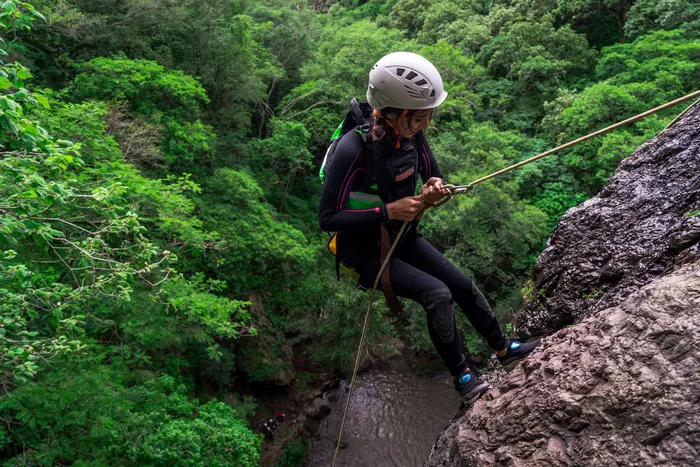
Most travellers come to Nepal for the mountains and never learn that the country also hides a sport built around its water. Canyoning in Nepal means travelling down a river gorge the hard and glorious way: rappelling beside a waterfall, sliding across polished rock, swimming through plunge pools and scrambling between narrow walls that shade you from the sun. It is the one adventure in the country where the landscape is not a view you look at but a route you move through.
Nepal is unusually well suited to it. Five thousand rivers and streams fall off the Himalaya, and where those streams cut through limestone and boulder fields they carve exactly the kind of tight, stepped canyons that the sport was invented for. The Nepal Tourism Board lists Jalbire Canyon, Panglang, Bhote Koshi, Charaundi Canyon and Pokhara among the places where canyoning is offered, which means you can arrange your first descent within an hour of Kathmandu or add one to a Pokhara itinerary without a long detour.
This guide covers what canyoning actually involves, the best canyons in the country, how a typical day runs from safety briefing to final pool, what gear and fitness you need, when to go, what it costs, and how to combine a canyon descent with rafting, bungee or a trek. If you are still shaping the wider journey, our complete guide to trekking in Nepal sets the context for active travel here, and the cultural and spiritual tours in Nepal guide explains the sacred geography that surrounds these rivers.



What Is Canyoning and Why Is It Nepal's Next Adventure Frontier?
Canyoning is the descent of a canyon using a mix of walking, scrambling, climbing, swimming, jumping, sliding and abseiling, and in Nepal it has quietly become the adventure that fills the gap between rafting and trekking. It combines the commitment of a technical descent with the playfulness of a water park, and it needs no prior experience on a beginner route.
The reason the sport fits Nepal so well comes down to geology and water. The middle hills are a lattice of steep, narrow stream beds, and during the dry seasons those beds carry clear, cold water through pools deep enough to swim and smooth rock slabs angled enough to slide. Unlike a trek, a canyon descent compresses an entire day of variety into four to six hours. Unlike rafting, it puts you inside the gorge rather than on the surface of a river, so you experience the water from every possible angle.
It is also an activity with a genuinely low barrier to entry. A guided beginner canyon needs no climbing skill, because the guides rig the ropes and coach each move. What it does ask for is a reasonable level of fitness, a willingness to get wet and a capacity to follow instructions precisely at the moments that matter. If you can hike for three hours and you are comfortable in moving water, you can canyon.
Canyoning in Nepal as an organised experience is offered as a half-day and full-day adventure, usually run by the same operators who run rafting and bungee on the same rivers. That overlap is a gift to travellers, because it means a single stop on the Kathmandu to Pokhara highway can deliver canyoning, rafting and a bungee jump in one or two days.
Is Canyoning in Nepal Safe for Beginners?
Yes, canyoning is safe for beginners when it is run by a licensed operator on a route matched to your ability, and the vast majority of Nepal's commercial canyons are beginner friendly. The risks that make canyoning sound extreme are managed by guide ratios, rigged ropes, helmets, harnesses and route selection rather than by the participant's own skill.
The honest caveat is that canyoning is a water sport in a mountain country, so conditions can change. Heavy monsoon rain raises water levels and turns clear pools into powerful currents, which is why operators pause or reroute during the wet months. Your job as a participant is simple and non-negotiable: disclose your swimming ability, disclose any medical condition, wear the equipment exactly as your guide fits it, and follow the hand signals the team agrees on at the briefing. Guides will also offer an easier line around any jump or slide you are not comfortable with, and taking that line is smart, not timid.
Fitness is the other variable. Canyoning asks for steady balance on wet rock, the ability to climb short scrambles and enough stamina to enjoy four to six hours of near-constant movement. Most people who hike occasionally clear that bar comfortably. Travellers with knee injuries, a fear of heights or very limited swimming experience should say so up front, because the right canyon exists for them too, just with gentler drops and more walking.
The Best Canyoning Sites in Nepal
Nepal's canyons cluster around two hubs: the Kathmandu valley rim and the hills along the Prithvi Highway toward Pokhara. Each has a different character, and choosing well is mostly about how much travel time you want to trade for how wild the gorge feels. The list below follows the sites recognised by the national tourism authority, plus the canyons that operators now run most often.
Sundarijal: The Closest Canyon to Kathmandu
Sundarijal sits less than an hour from Kathmandu's city centre on the edge of Shivapuri National Park, and it is the easiest place in the country to try canyoning. The ravine here carries cold, clear water through forest, boulders, plunge pools and narrow canyon sections, so a descent feels genuinely wild even though you can be back in the city for dinner. For a first-timer on a short trip, or anyone who would rather not spend a day on the highway, Sundarijal is the obvious starting point and the most popular choice among day trips from the capital.
Jalbire Canyon: The Classic Highway Stop
Jalbire lies along the Kathmandu to Pokhara travel corridor, which makes it the natural canyon to pair with rafting and a night at a riverside camp. Its position on the route means you can break the long drive west with a descent and still reach Pokhara the same evening. The canyon has carved a series of drops and pools through the local rock, and operators use it for both introductory and more demanding routes depending on the group.
Charaundi Canyon: Water and Whitewater Together
Charaundi, near the Trishuli river, is the canyon for travellers who want their descent and their whitewater in the same afternoon. The Trishuli itself is Nepal's most popular rafting river for families, and canyoning at Charaundi slots neatly alongside it. If you have read about Trishuli River rafting and wanted more time in the water, this is where to add it.
Bhote Koshi: The Adrenaline Corridor
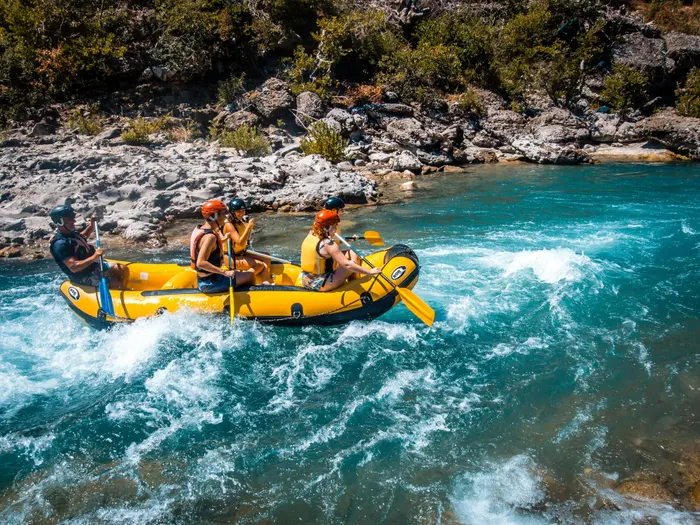
The Bhote Koshi valley, on the road to the Tibetan border, is already famous for the steepest commercial rafting in Nepal and for its bungee jump, and canyoning now sits in the same adrenaline cluster. Water here moves fast and cold, the gorge walls stand close, and the setting is more committing than the valley-floor canyons nearer Kathmandu. It suits travellers who have canyoned or rafted before and want a sharper edge to the day.
Panglang and the Pokhara Canyons
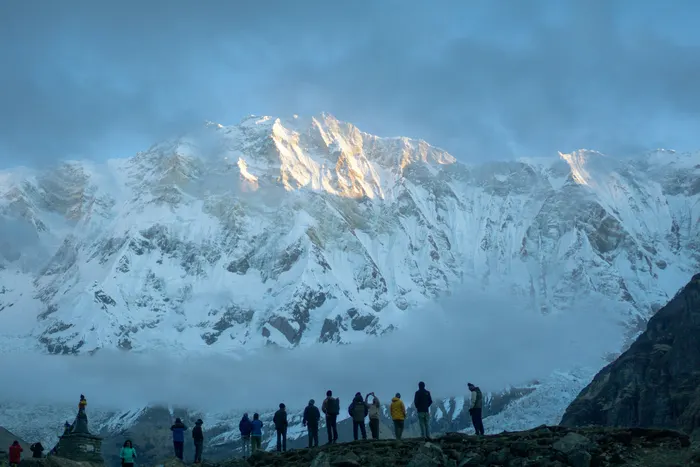
Pokhara promotes canyoning alongside its rafting, ziplining and bungee offerings, and the hills around the lake hide a handful of runnable gorges, with Panglang among the sites promoted nationally. The advantage of canyoning from Pokhara is that it folds straight into a longer Annapurna itinerary: a canyon day can follow a short trek or precede one, so the adventure and the mountains share a single base.
What Happens on a Typical Canyoning Day?
A typical Nepal canyoning trip runs four to six hours door to door and begins with a safety briefing and equipment fitting before anyone enters the water. From there you descend the canyon section by section, guided and roped, with the hardest moves saved for the middle of the route rather than the start. The shape of the day matters because it is deliberately designed to build confidence in the first hour.
The sequence usually goes like this. You meet your team, either at an operator base or at a riverside staging point, and you are kitted out with helmet, harness, wetsuit or protective layer, and a buoyancy aid. A guide walks the group through the route, the signals, the safe body position for slides and jumps, and how the rope system works on the abseils. Nothing technical is left to the participants to invent on the spot.
Then you walk into the gorge, often for twenty to forty minutes along a forest or riverbank trail, and the descent begins. The first features are gentle: a low slide into a pool, a short abseil beside a small fall, a swim across a calm reach. As the group warms up, the canyon opens into longer rappels, taller slides and, where the route allows, optional jumps into deep pools. Guides station themselves above and below each obstacle so that at every moment you are either on a rope, being spotted, or in water you can stand or swim out of.
Most descents pause at a pool or a ledge for a snack and photographs, and the day usually ends with a final swim, a change of clothes and a hot drink. Because the whole thing is over in half a day, canyoning is easy to bolt onto an itinerary that already has a trek or a city stay, and it will not cost you a night's sleep the way a hard high-altitude day would.
What Gear and Skills Do You Need for Canyoning?
You need no personal technical gear and no previous canyoning experience, because operators provide helmets, harnesses, ropes, wetsuits and buoyancy aids, and guide you through every rappel and slide. What you do need is a swimming ability you have honestly described, decent general fitness and the discipline to follow the guide's instructions exactly.
The skills that actually matter are not climbing skills. They are water confidence, the ability to keep your feet in the right position on a slide, the patience to wait at a ledge while the person ahead descends, and the judgement to take the easier option when a jump looks bigger from the top than it did from the briefing. Guides will teach all of these in the first half hour. Anyone who has swum in a river, worn a harness on a zipline or simply hiked on uneven ground will find the learning curve gentle.
Physical preparation is worth a little thought. Canyoning loads your knees and ankles on wet, angled rock, so a few weeks of stair walking, squats or hill hikes before you travel makes the day more comfortable. Bring a sense of what your body can do and disclose anything a guide would need to know, from a previous shoulder injury to a fear of putting your head underwater. The more the team knows, the better it can route you around the features that worry you.
When Is the Best Time for Canyoning in Nepal?
The best time to go canyoning in Nepal is the post-monsoon autumn from late September to November, with the spring window from March to May a close second. Both periods bring settled weather, lower water levels and clearer conditions, which is exactly what makes a canyon safe and enjoyable. The monsoon months from June to early September are the one season to avoid, because swollen, fast and muddy water shuts many routes entirely.
Autumn has the edge because the monsoon has just cleaned the gorges and the skies are at their clearest, so the forest around the canyon looks its best and photography is superb. Days are warm in the middle hills and the water is cold but manageable with a wetsuit. Spring is nearly as good, with rhododendron in bloom on the approach trails and comfortable temperatures, though haze can build before the rains arrive.
Winter from December to February is possible on lower-altitude canyons near Kathmandu and Pokhara, but water temperatures drop sharply and some operators run reduced schedules. If you are travelling in winter and canyoning is high on your list, ask specifically which canyons are running and whether a thicker wetsuit is supplied. The dry winter months do at least keep water levels low and predictable.
How Much Does Canyoning in Nepal Cost?
Canyoning in Nepal is priced per person, like every other guided day adventure, and the total is driven by group size, transport distance, gear provided and how many guides are on the rope. As a reference point, Enticing Himalayas' guided day adventures in and around the Kathmandu Valley currently range from about USD 75 to USD 199, and a commercial canyon descent sits comfortably inside that band.
What moves the number up or down is mostly logistics rather than difficulty. A canyon close to Kathmandu such as Sundarijal needs little travel and no overnight, so it costs less than a Bhote Koshi day that involves a long highway transfer, or a canyon stop that folds into an overnight at a riverside camp. Group size matters too, because private departures with a higher guide-to-participant ratio cost more per head than joining a scheduled group. Equipment hire, lunch and photography are often built into the price, but always confirm exactly what a quote includes.
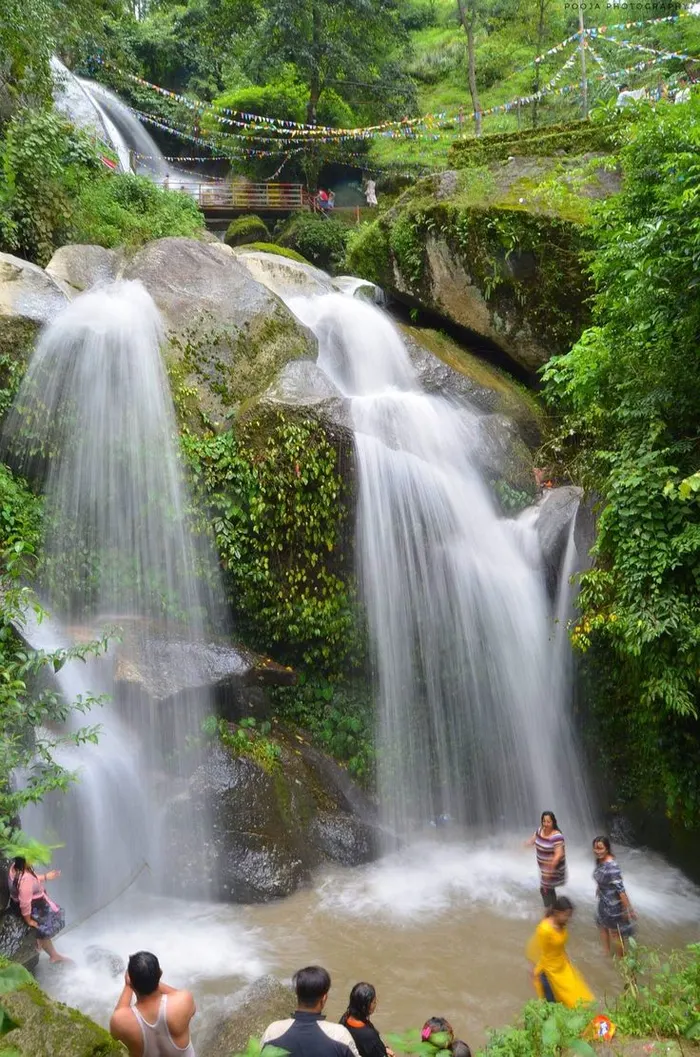
Two simple habits protect your budget. First, book the canyon as part of a wider package rather than as a standalone add-on, because operators bundle transport and accommodation far more efficiently than they price single activities. Second, confirm current rates before you commit, since river conditions and season affect availability. Our waterfall and river day near Kathmandu is a good low-cost introduction to Nepal's water, and rates for canyoning itself should always be confirmed with the operator at the time of booking.
Can You Combine Canyoning With Rafting, Bungee and Trekking?
Yes, and combining is the smart way to do it, because Nepal's canyons sit on the same rivers and highways as its rafting, bungee and trekking routes. A single stop on the Kathmandu to Pokhara corridor can deliver canyoning, a rafting descent and a bungee jump inside one or two days, and adding a canyon to a Pokhara-based trek takes only an extra day.
The classic pairing is canyoning plus rafting on the Trishuli, the country's most popular family whitewater river. You descend the canyon in the morning while the water is clear and the light is good, then float the river in the afternoon, staying at a riverside camp between the two. If you want the sharper version, move the whole plan to the Bhote Koshi, where the rafting is steeper and the bungee jump sits almost next door, making a concentrated adrenaline weekend that needs no trekking at all.
For trekkers, the natural fit is Pokhara. Arrive a day early, canyon one of the gorges above the valley, then begin your Annapurna walk from the same base. If you would rather build the canyon day into a longer fitness trip, a short route such as the 5-day Mardi Himal trek or the 7-day express Annapurna Base Camp trek pairs beautifully with an adventure day on the water before or after.
Is Canyoning Suitable for Families and Non-Swimmers?
Canyoning can suit families and cautious swimmers, but only on the gentlest routes, and the honest answer is that it depends entirely on the specific canyon and the guide-to-participant ratio. Beginner canyons with short drops, calm pools and plenty of walking are genuinely family friendly, while steep technical gorges are not, no matter how strong the swimmers are.
Non-swimmers should raise the point before booking rather than after arriving. Many operators can route a non-swimmer through a canyon that never requires a deep-water crossing or a jump into water beyond standing depth, keeping them on ropes and in shallow reaches. Others cannot, and will say so. There is no shame in hearing that answer and choosing a different adventure. Families with younger children should look for canyons marketed as family or introductory trips and should expect a lower age limit, often somewhere in the early teens.
If a canyon turns out to be too much for someone in your group, Nepal has alternatives on the same rivers. A gentle waterfall and river day near Kathmandu delivers the water, the scenery and the cool swim without any rappelling, and a forest hike such as the Jamacho hike and tree planting day keeps the whole family active on dry ground. Matching the activity to the person is how you make the trip work for everyone.

What Safety Standards Should Your Canyoning Operator Follow?
Your operator should brief the group before entering the canyon, fit everyone with a helmet, harness and buoyancy aid, rig ropes on fixed anchors, maintain a clear guide ratio and carry a first-aid kit and communication with the outside world. Any outfit that skips the briefing, hands out gear without checking the fit, or takes a group into rising water is not one to travel with.
Ask direct questions before you book, and treat the answers as your due diligence. How many guides will be on the route for the size of the group? Is the equipment inspected and replaced on a schedule? Who holds the rope at the bottom of each abseil? What is the plan if someone is injured in the gorge? What happens if the river rises while you are inside? A professional operator answers these quickly and specifically, and will happily describe the canyon's difficulty grade before you commit.
It also helps to travel with a company that runs its own guides on the same rivers across the season, because local knowledge of water levels is what keeps a canyon safe. The wider standard for how responsible operators treat staff and communities is set out in our guide to responsible and community tourism in Nepal, and it applies to adventure operators as much as to trekking companies.
Getting to Nepal's Canyoning Sites From Kathmandu and Pokhara
Kathmandu is the base for Sundarijal and the highway canyons, and Pokhara is the base for the gorges above the lake, which means almost every traveller can reach a canyon without a dedicated detour. The Kathmandu valley rim canyons are typically under an hour from the city, while those along the Prithvi Highway sit roughly two to four hours west, on the road to Pokhara.
From Kathmandu, Sundarijal is the closest and easiest, reachable by a short drive to the northern edge of the valley beside Shivapuri National Park. Jalbire, Charaundi and the Trishuli canyons lie further west along the main highway, and the standard approach is to travel there as part of a rafting or adventure package that includes the transfer, so you never have to organise a driver yourself. The Bhote Koshi canyons lie to the north-east on the road toward the Tibetan border, again usually reached as part of an organised day.
Pokhara makes the western canyons simple, because the city is the trail head for the Annapurna region and an adventure hub in its own right. Operators here run canyoning alongside rafting, ziplining and bungee, so a single booking desk can assemble your whole adventure day. Most travellers fly or bus between Kathmandu and Pokhara and pick up their canyon activities at the Pokhara end, which is far more efficient than trying to canyon both ends of the highway in one journey.
Canyoning Packing List: What to Bring and What to Leave
Pack light, bring nothing you are afraid to lose to the river, and let the operator supply the technical equipment. The essentials are a swimsuit worn under your clothes, a quick-dry towel, secure footwear that can get wet and a dry bag or change of clothes waiting at the end of the route.
- Worn: swimwear, a snug-fitting base layer if the water is cold, and secure water shoes or old trainers with grip.
- Brought: a quick-dry towel, a full change of clothes, a light fleece for the cooler hours, sunscreen and a refillable water bottle.
- Optional: a waterproof phone case on a lanyard, a small action camera with a secure mount, and a dry bag for valuables.
- Left behind: loose jewellery, drones where prohibited, expensive watches, and anything you would grieve if it slipped into a pool.
One practical note on footwear matters more than any other item on this list. Flip-flops fall off, bare feet slip on wet rock and heavy leather hiking boots become waterlogged anchors. A cheap pair of trainers with a decent tread, worn on the descent and thrown away afterwards, is the most comfortable and safest option for almost every canyon in Nepal.
Plan Your Nepal Canyoning and Adventure Trip
Canyoning slots into a Nepal trip more easily than almost any other adventure, because the canyons lie on the roads and rivers you are probably already travelling. Give it half a day near Kathmandu, or a full day on the highway west, and you will have seen the country from inside its water rather than only from above it. The rest of your trip can then lean into either the mountains or the culture, whichever pulls harder.
Enticing Himalayas builds canyoning and water adventures into custom itineraries, with licensed guides, verified safety equipment and transport arranged from your hotel. Whether you want a single wild day out of Kathmandu or a full active holiday stitched together with a trek, the team can shape a route that matches your fitness and your calendar. For a broader view of how to plan an active trip here, see our Nepal trekking planning guide, and browse the full program on the Nepal tours and adventures page.