On the southern rim of the Kathmandu Valley, just five kilometers from the city center yet remarkably untouched by the capital's sprawl, Kirtipur stands as a living museum of Newari culture. This ancient hill town, whose name means "glorious city" in Sanskrit, was once an independent kingdom that held out against Prithvi Narayan Shah's unification campaign longer than any other valley city. Today, Kirtipur rewards visitors with winding medieval lanes, centuries-old temples, traditional brick-and-timber houses, and some of the finest panoramic views of the Kathmandu Valley, all without the crowds that fill the more famous durbar squares.
A Kirtipur city walk is one of the most rewarding cultural experiences available within an hour of central Kathmandu. Unlike the valley's UNESCO-listed monument zones, which can feel curated and tourist-oriented, Kirtipur remains a living, working Newari town where traditional life continues largely unchanged. The Discovering Kirtipur's Hidden Treasures city walk pairs the full route with a licensed local guide, round-trip transport and a traditional Newari meal. This guide explores the hidden treasures of Kirtipur, from its hilltop temples to its artisan workshops, and explains why this ancient settlement deserves a place on every cultural and spiritual tour in Nepal.


What Makes Kirtipur's History So Remarkable?
Kirtipur was the last town in the Kathmandu Valley to fall to Prithvi Narayan Shah's unifying campaign, resisting three separate Gorkha invasions between 1757 and 1766. That defiance still shapes its identity, its dense defensive lanes and its fiercely preserved Newari traditions today.
Kirtipur's history is defined by resistance. When Prithvi Narayan Shah launched his campaign to conquer the Kathmandu Valley in the mid-18th century, the three Malla kingdoms of Kathmandu, Patan, and Bhaktapur were his primary targets. But Kirtipur, a fortified hill town controlling the southern approach to the valley, proved to be the toughest obstacle.
The Gorkha army attacked Kirtipur three times. The first two assaults, in 1757 and 1764, were repulsed with heavy losses. Prithvi Narayan Shah's brother, Surpratap Shah, was killed in the second battle, and an arrow struck the king himself. It was only on the third attempt, in 1766, after a prolonged siege that cut off the town's food and water supplies, that Kirtipur finally fell. The conquest was brutal: legend holds that the victorious Gorkhas cut off the noses and lips of every male inhabitant as punishment for their resistance, sparing only those who could play wind instruments.
This history of defiance is woven into Kirtipur's identity. The town's layout, with its narrow, easily defended lanes and its strategic hilltop position, reflects its military past. Walking through Kirtipur today, you can still feel the defensive logic of its urban design: every lane is a potential choke point, every square a potential rallying ground. The town's spirit of independence has survived the centuries, and Kirtipur retains a distinct identity within the Kathmandu Valley.
Where Does the Kirtipur City Walk Begin?
Most walks start at the base of the hill where the road from Kathmandu meets the old town, then climb steeply through brick lanes to the Bagh Bhairab Temple at the summit. The ascent takes 20 to 30 minutes and rewards you with expanding valley views at every turn.
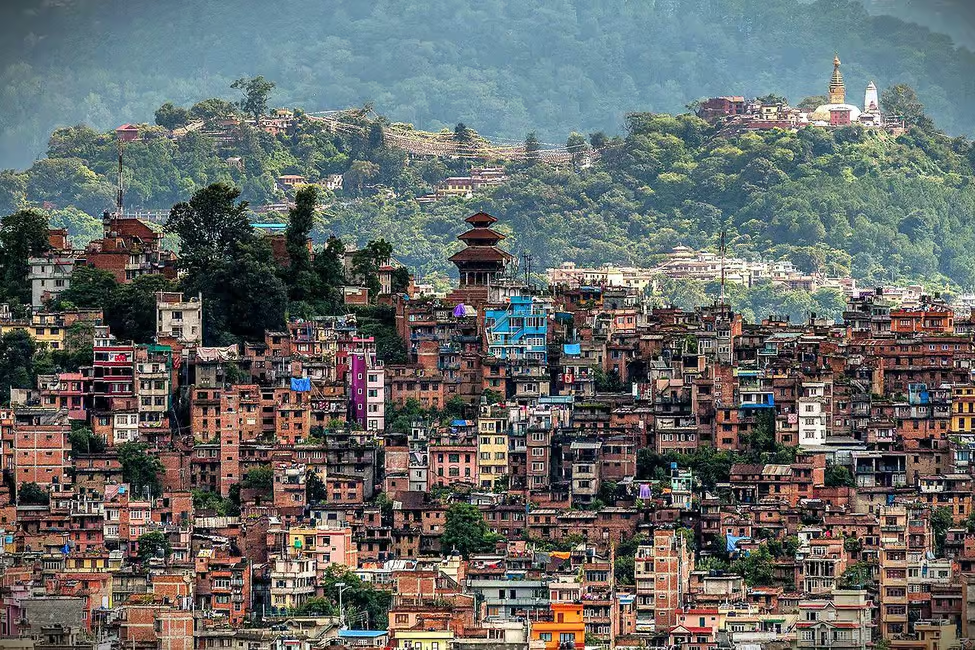
The approach is dramatic: Kirtipur rises steeply from the surrounding plain, its brick houses climbing the hillside in terraced layers, crowned by the white dome of the Bagh Bhairab Temple. The climb into the old town is the first test of the walk, a steep ascent through narrow lanes that rewards with increasingly expansive views of the valley below.
The Kirtipur city walk package includes a knowledgeable local guide who can navigate the maze of lanes and explain the history and significance of each site. A guide is highly recommended, as Kirtipur's treasures are often hidden behind unmarked doors or down alleys that a casual visitor would miss.
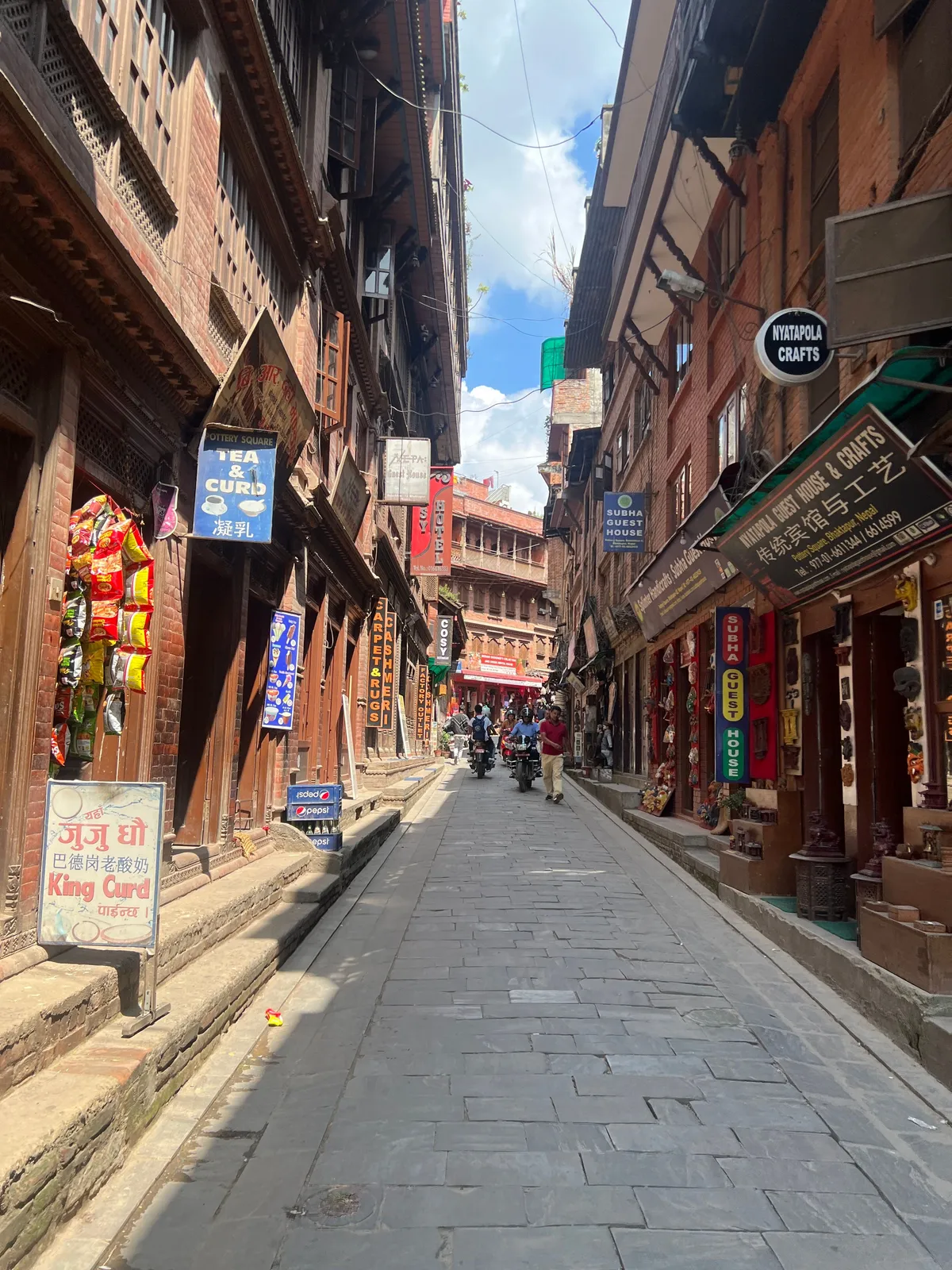
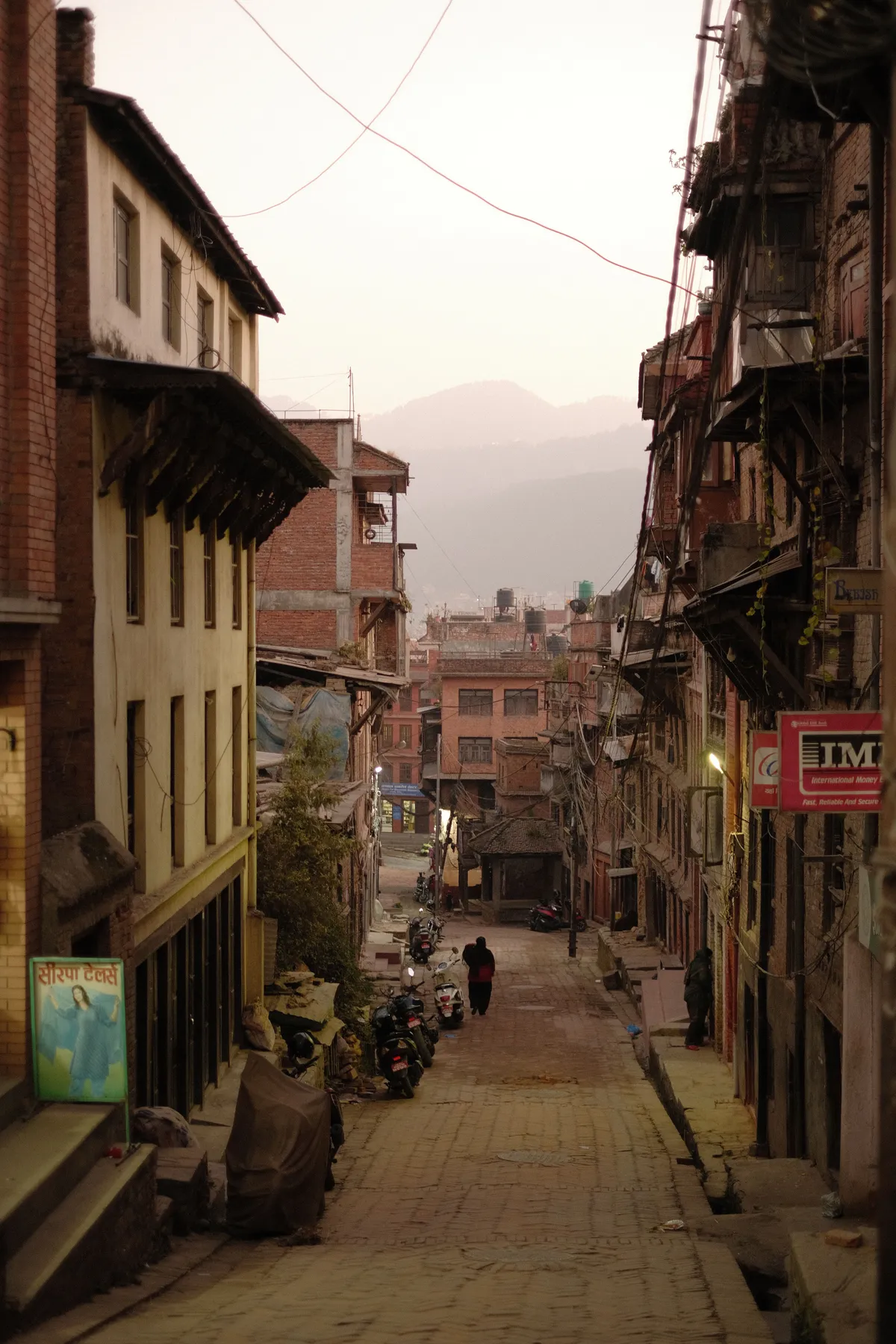
As you climb, notice the architecture. Kirtipur's houses are classic Newari construction: brick walls with carved wooden windows and doors, sloping tiled roofs, and internal courtyards that provide light and ventilation. Many of these houses are centuries old, and their carved details, deities on the window struts, protective symbols above the doorways, tell stories that a guide can decode.
What Will You See at the Bagh Bhairab Temple?
The Bagh Bhairab Temple is Kirtipur's guardian shrine, a three-tiered pagoda dedicated to Bhairab in his tiger form. Expect intricate woodcarving, a fearsome ceremonial mask revealed only during festivals, ancient weapons on display, and a courtyard with one of the finest panoramic views in the valley.
At the summit of the hill stands the Bagh Bhairab Temple, Kirtipur's most important shrine and one of the finest examples of Newari temple architecture in the valley. The temple is dedicated to Bhairab in his tiger (bagh) form, a fierce manifestation of Shiva who serves as the guardian deity of Kirtipur. The current structure dates from the 16th century, though the site has been sacred for much longer.
The temple is a three-tiered pagoda with intricate woodcarving on its struts, tympanums, and windows. The main shrine houses a mask of Bagh Bhairab, a fearsome image with bulging eyes and bared fangs, which is revealed to devotees only during special ceremonies. The temple courtyard is surrounded by smaller shrines, rest houses, and a collection of ancient weapons, including swords and firearms, that are displayed during the Bagh Bhairab Jatra festival.
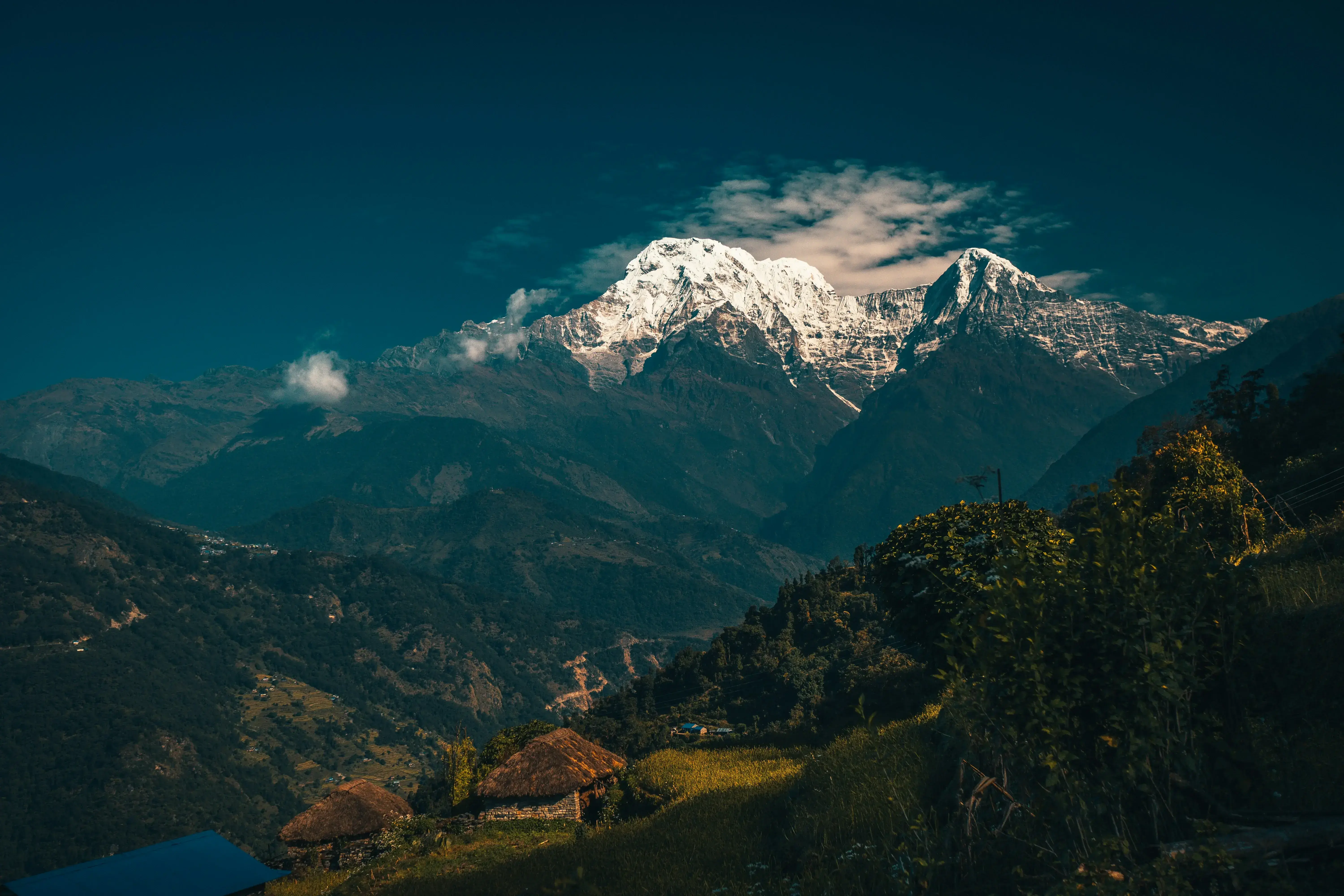
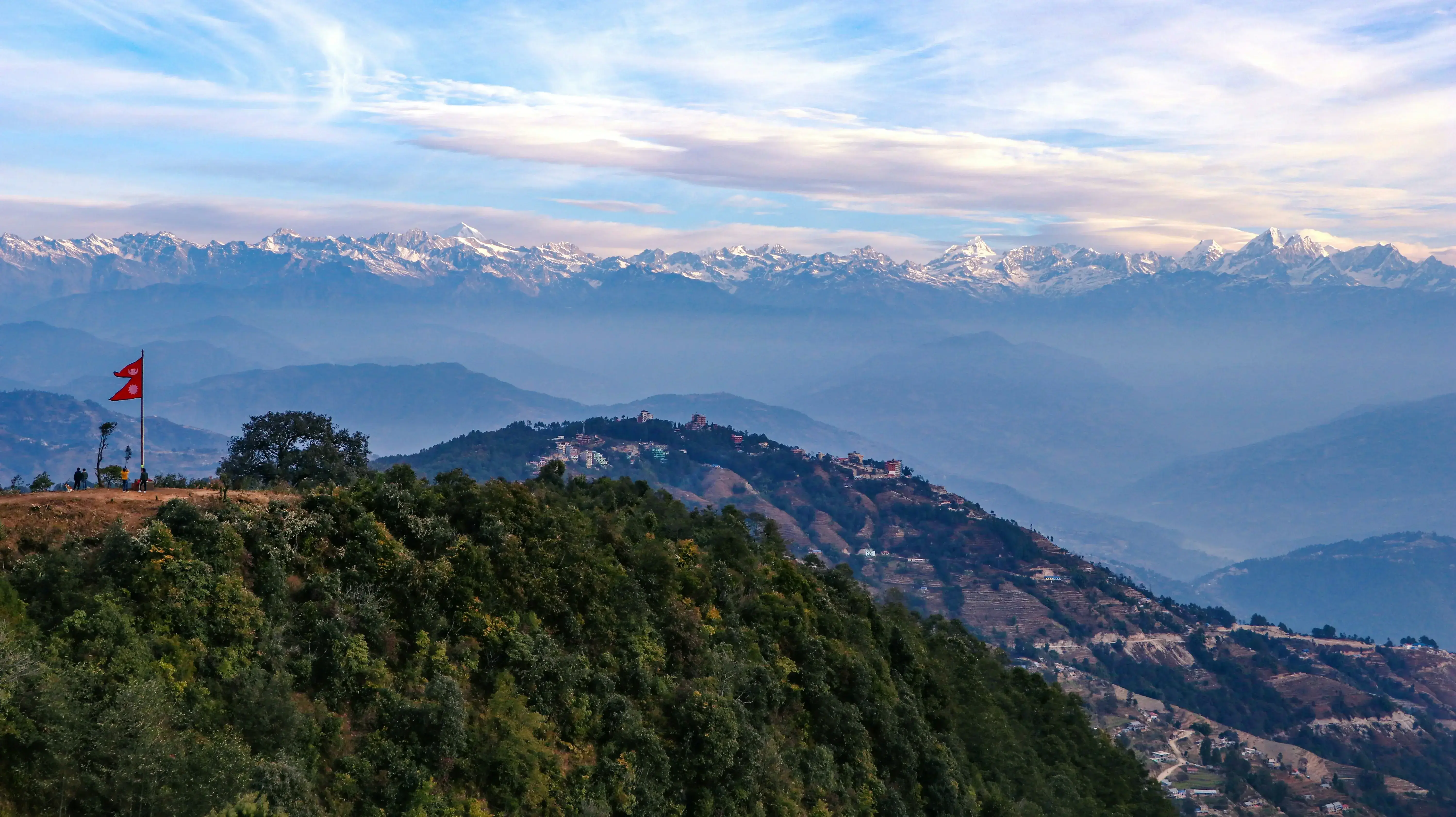
The temple's elevated position offers spectacular views. From the courtyard, you can see the entire Kathmandu Valley spread out below, from the Swayambhunath hill in the west to the Bhaktapur skyline in the east, with the Himalayas forming a distant northern wall on clear days. The view alone is worth the climb, and it provides a perspective on the valley's geography that is hard to get from ground level.
Chilancho Stupa: A Buddhist Jewel in a Hindu Town
\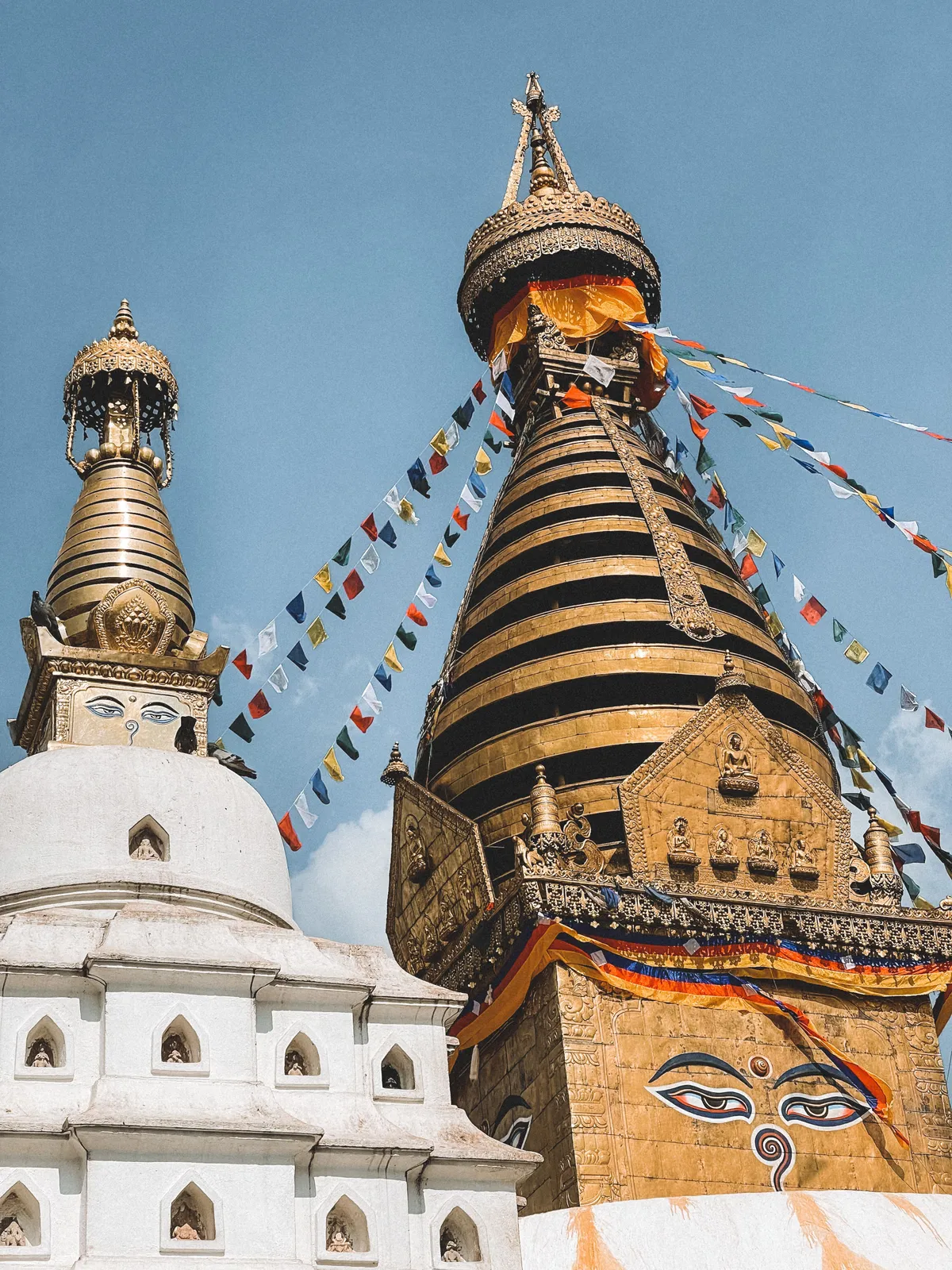
Just a short walk from Bagh Bhairab, the Chilancho Stupa is a reminder of Kirtipur's Buddhist heritage. This ancient stupa, believed to date from the Licchavi period (4th to 9th centuries), is one of the oldest Buddhist monuments in the Kathmandu Valley. Its design, a solid dome of brick and stone topped with a harmika and spire, is typical of early Nepali stupas and predates the more elaborate Tibetan-influenced stupas like Boudhanath.
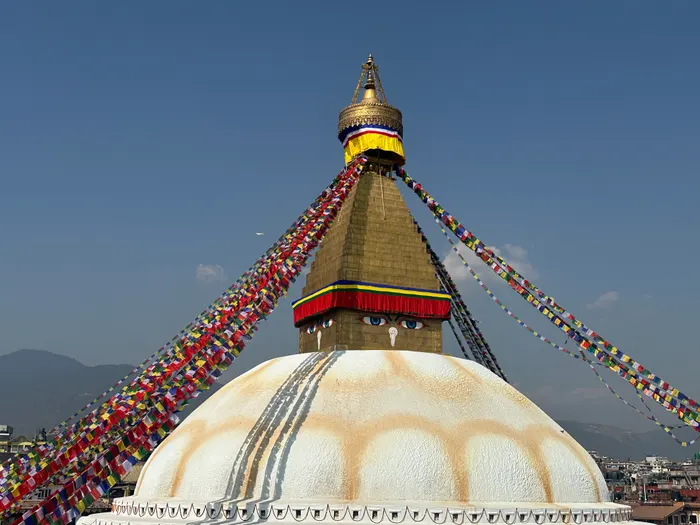
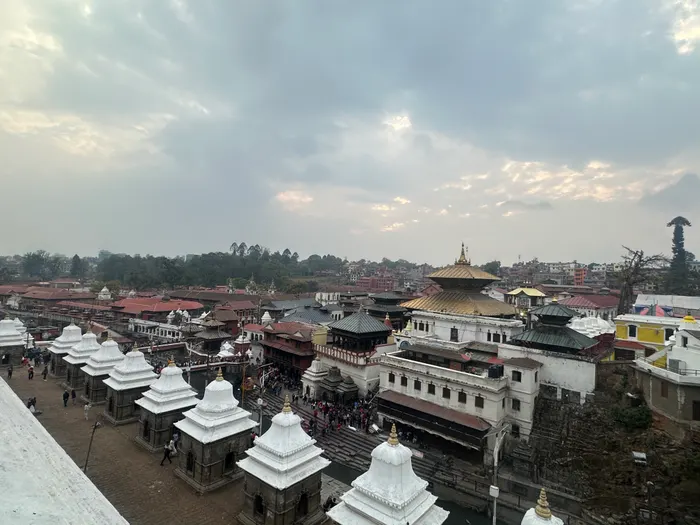
The stupa is surrounded by a cluster of smaller chaityas (votive stupas) and stone sculptures, some dating from the same Licchavi period. The site is quiet and contemplative, a contrast to the bustling temple courtyard at Bagh Bhairab. The coexistence of a major Hindu temple and an ancient Buddhist stupa within a few hundred meters of each other is characteristic of Nepal's syncretic religious culture, where the boundaries between Hinduism and Buddhism have always been porous.
The Chilancho complex also includes several stone inscriptions in the Licchavi script, which scholars have used to date the site and understand the history of Buddhism in the Kathmandu Valley. These inscriptions are among the oldest written records in Nepal, and they testify to Kirtipur's importance as a religious center long before the Malla period.
Why Do Photographers Love the Uma Maheshwar Temple?
The Uma Maheshwar Temple is a 17th-century three-tiered pagoda dedicated to Shiva and Parvati, framed against the sky on a raised platform above the old town. Weathered brick, carved struts and golden late-afternoon light make it the single most photogenic structure in Kirtipur.
Descending from the hilltop, the city walk continues to the Uma Maheshwar Temple, a three-tiered pagoda dedicated to Shiva and Parvati. This temple, built in the 17th century, is one of the most photogenic in Kirtipur, with its weathered brick facade, carved wooden struts, and a setting that frames it against the sky.
The temple's name refers to the divine couple Uma (Parvati) and Maheshwar (Shiva), and the carvings on the struts depict various aspects of their mythology. The temple is surrounded by a paved courtyard that serves as a gathering place for the local community. In the early morning and late afternoon, you may see elderly residents sitting on the temple steps, chatting and watching the world go by, a scene that has probably not changed much in centuries.
Near the Uma Maheshwar Temple is a stone water spout, or dhunge dhara, one of many that once supplied Kirtipur with water. These spouts, fed by underground channels, are marvels of medieval hydraulic engineering, and many are still in use today. The water is considered sacred, and the spouts are often adorned with carvings of deities and mythical creatures.
The Living Culture of Kirtipur: Artisans and Traditions
What makes a Kirtipur city walk special is not just the monuments but the living culture that surrounds them. Kirtipur is a working town, not a museum, and its streets are filled with the sounds and smells of daily life. In the narrow lanes, you will encounter artisans practicing traditional crafts: metalworkers shaping copper and brass vessels, woodcarvers chiseling intricate patterns, and weavers working at handlooms.
Kirtipur is particularly known for its textile tradition. The town has a long history of handloom weaving, and you can visit workshops where cotton and wool are woven into fabric using techniques passed down through generations. The distinctive Kirtipur dhaka, a handwoven fabric with geometric patterns, is prized throughout Nepal and makes an excellent souvenir.
Which Festivals Bring Kirtipur to Life?
The Bagh Bhairab Jatra in August or September is Kirtipur's biggest festival, when the temple mask is paraded through the streets and ancient weapons are displayed. The Indrayani Jatra features masked dancers embodying the eight mother goddesses in trance processions through the old lanes.
Kirtipur's festivals are among the most vibrant in the Kathmandu Valley, and visiting during one of them adds an entirely new dimension to the city walk. The Bagh Bhairab Jatra, held in August or September, is the town's most important festival. The mask of Bagh Bhairab is brought out of the temple and paraded through the streets on a chariot, accompanied by musicians, dancers, and thousands of devotees. The festival includes the display of the temple's collection of ancient weapons, a reminder of Kirtipur's martial history.
The Indrayani Jatra, dedicated to the mother goddess Indrayani, is another major celebration. It features masked dances depicting the eight mother goddesses (Ashta Matrikas), a tradition that dates back centuries. The dancers, possessed by the spirits of the goddesses, move through the streets in a trance, blessing devotees and driving away evil.
Even outside of festival times, Kirtipur's religious life is visible everywhere. Small shrines at street corners receive daily offerings of flowers and rice. The sound of temple bells and the smell of incense are constant companions on the city walk. The town's many Buddhist bahals (monastery courtyards) are quiet oases where monks and nuns go about their daily routines.
Practical Tips for Your Kirtipur City Walk
A Kirtipur city walk takes approximately three to four hours at a comfortable pace, including stops at the major sites and time for a meal. The walk involves significant climbing, as the town is built on a steep hill, so comfortable walking shoes are essential. The lanes are uneven in places, and some sections involve steps, so the walk is moderately strenuous.
Morning is when the temples are most active, with devotees making their daily offerings, and late afternoon offers golden light for photography and the chance to watch the sunset from the Bagh Bhairab courtyard. Carry a refillable water bottle, sun protection for the exposed summit courtyard, and small notes for temple donations and snacks. A light layer is useful in winter, when the hilltop wind can be sharp even when Kathmandu feels warm.
How Much Does a Kirtipur City Walk Cost?
A guided Kirtipur city walk costs from USD 100 per person, covering a licensed local guide, hotel pick-up and drop-off, and a traditional Newari meal. Independent travelers can do the walk for far less, budgeting roughly USD 15 to 25 for taxis and restaurant meals.
The guided Kirtipur city walk package is the simplest way to experience the town: it bundles a licensed local guide, round-trip hotel transport, the full walking route through the old lanes, and a sit-down Newari meal, all from USD 100 per person. For most visitors the guide is the difference between seeing a pretty hill town and actually understanding it, because most of Kirtipur's treasures carry no signs or explanations.
Independent travelers can keep costs low. A taxi from central Kathmandu to Kirtipur costs roughly NPR 800 to 1,200 each way depending on traffic and negotiation, a traditional Newari meal in the old town runs about NPR 400 to 800, and temple donations are optional and small. Done independently, the whole outing can cost under USD 25 while still including lunch, though you trade away the historical context, the hidden workshops and the logistics-free day that a guided walk provides.
How Do You Get to Kirtipur From Kathmandu?
Kirtipur sits about 5 kilometers southwest of central Kathmandu, a 30-minute drive by taxi or private vehicle. Public buses run from Ratna Park but are slow and crowded, so most visitors book a guided walk with round-trip hotel transport included.
By taxi, the run from Thamel or Ratna Park to the base of Kirtipur takes around 30 minutes outside rush hour and up to an hour in the evening peak. Agree on the fare before setting off or use a ride-hailing app, and ask the driver to drop you at the foot of the old town rather than the modern bazaar below, saving the flat stretch for the walk itself. Public buses and micros to Kirtipur depart from the Ratna Park area and cost a fraction of a taxi, but they are crowded, slow and best reserved for travelers with time and patience.
Kirtipur also sits beside Tribhuvan University, Nepal's oldest and largest university, whose campus spreads across the neighboring hill. Students give the town a relaxed, youthful energy, and several cafes near the university gate serve good coffee between the old lanes and the temple heights. If you are staying several days in the valley, Kirtipur combines naturally with a 5-day Kathmandu Valley tour or a half-day guided circuit that continues to other southern-rim sights.
Where Should You Eat in Kirtipur?
Eat in the traditional Newari restaurants around the main square, where recipes have been perfected over generations. Order samay baji, the ritual platter of beaten rice, roasted meat and spiced potatoes, alongside chhwela, spiced grilled meat, and bara, crisp lentil patties.
Kirtipur is famous for its Newari cuisine. The local restaurants serve some of the best traditional food in the valley, including dishes that are hard to find elsewhere. Samay baji, a ritual Newari meal of beaten rice, roasted meat, spiced potatoes, and fermented vegetables, is a specialty. The local version of chhwela, spiced grilled meat, is particularly renowned. A Kirtipur city walk should include a meal at one of the traditional eateries near the main square, where the recipes have been perfected over generations.
Go at lunch rather than dinner: the best family-run kitchens close by early evening, and midday is when the square is at its most animated. Beyond the classics, look for yomari, a sweet steamed dumpling of rice dough filled with molasses and sesame that is a winter specialty, and vegetarian versions of the samay baji platter built around soya beans, garlic and beaten rice. Many meals are served on woven palm-leaf plates with the traditional corner of salt and pickle, a small detail that signals a kitchen still cooking the old way.
Best Time to Visit Kirtipur: Seasons and Festivals
October to November offers the clearest Himalayan views and comfortable walking temperatures, making autumn the peak season. Spring from March to April brings warm days and festival color, winter mornings are crisp with good visibility, and the June to September monsoon makes the steep lanes slippery.
Autumn, from October to November, is the finest season for the walk: the air is clear after the monsoon, the mountain wall behind the valley is at its most visible, and daytime temperatures are ideal for the climb. Spring, from March to April, is nearly as good, with warmer days, blooming gardens along the lanes and a buildup of festival activity before the rains arrive.
Winter, from December to February, rewards early starters with sharp, exceptionally clear morning views and thin crowds, though the exposed summit courtyards get cold by late afternoon. The monsoon, from June to September, turns the brick lanes slick and the valley views hazy, but it is also when the Bagh Bhairab Jatra fills the streets with processions, so festival-focused travelers may find the trade worthwhile. Whenever you go, start in the morning: the light, the temple rituals and the temperature all favor it.
How Does Kirtipur Fit Into a Broader Nepal Itinerary?
Pair Kirtipur with the grand durbar squares of Kathmandu, Patan and Bhaktapur for a complete picture of Newari urban culture, or weave it into a wider circuit of sacred sites. It works equally well as a half-day add-on to a valley tour or as a quiet final day in Kathmandu.
Kirtipur is an excellent complement to the valley's more famous heritage sites. After visiting the grand durbar squares of Kathmandu, Patan, and Bhaktapur, a Kirtipur city walk offers a more intimate, less curated experience of Newari urban culture. The town's hilltop position and its panoramic views provide a perspective on the valley's geography that the ground-level durbar squares cannot offer.
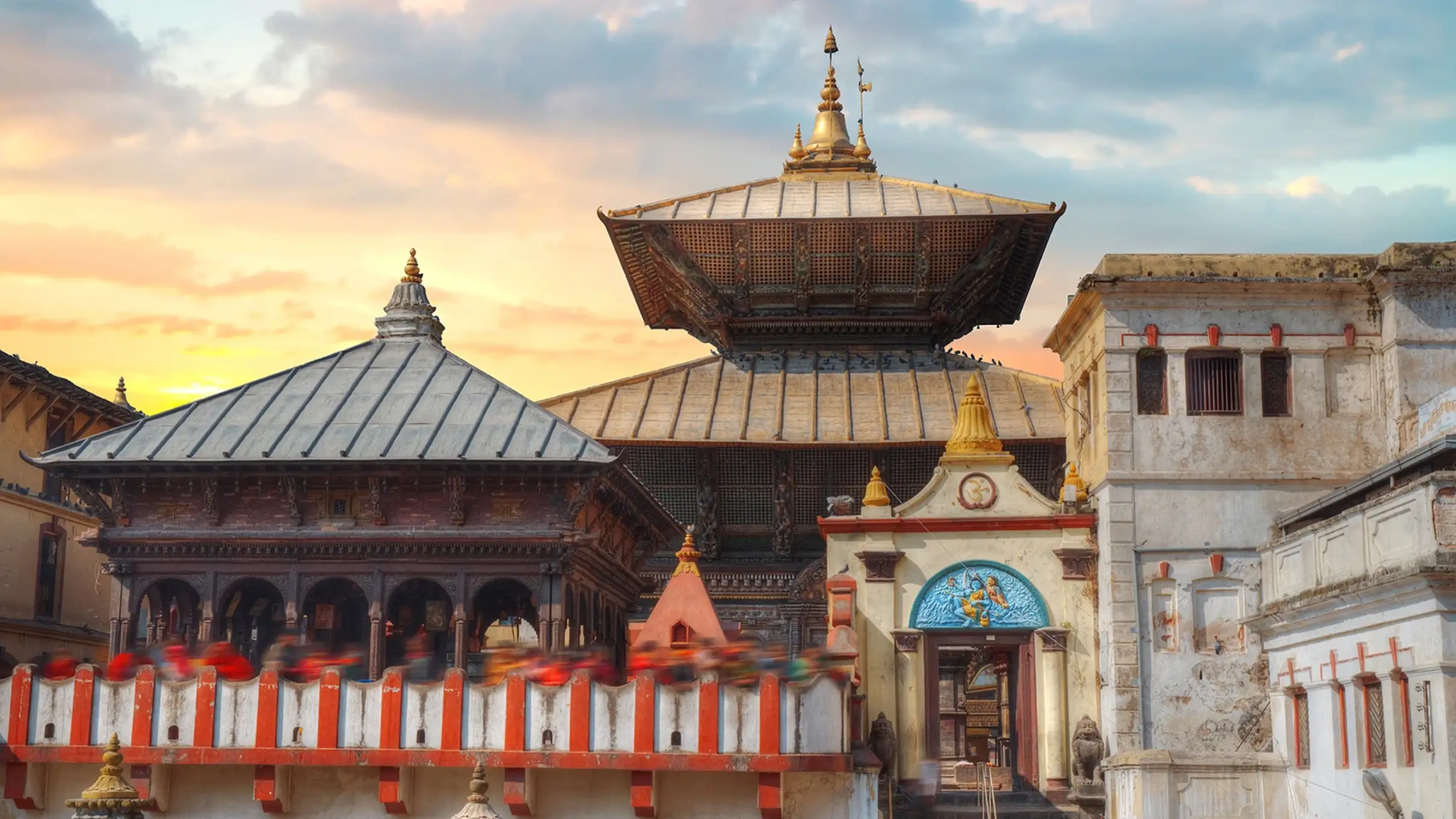
For travelers interested in Nepal's spiritual dimensions, Kirtipur's Bagh Bhairab Temple and Chilancho Stupa are part of a broader sacred geography. The spiritual tour in Nepal and the spiritual tour in Nepal 2026 guides explore the country's pilgrimage circuits, and Kirtipur's temples are linked to the larger network of sacred sites that includes Pashupatinath and Swayambhunath.


For those planning a comprehensive Nepal journey, the Nepal Unveiled tour and the 8-day Nepal highlights tour offer curated itineraries that cover the country's cultural, natural, and scenic highlights. The Nepal cultural heritage tour guide provides a comprehensive overview of the valley's temples, squares, and living traditions, and Kirtipur is one of several ancient Newari settlements that reward travelers willing to venture beyond the main tourist circuit.
For trekking enthusiasts, the Nepal trekking planning guide covers everything from choosing a route to selecting a reputable agency. The Kathmandu Valley rim trek, which passes through several traditional villages, can be combined with a Kirtipur visit for a multi-day cultural and natural experience.
The Nepal cultural scenic tour and the Sacred Valleys and Living Goddesses tour offer alternative itineraries that complement the Kirtipur experience.