
Pokhara is the paragliding capital of Nepal and one of the top five tandem paragliding destinations in the world. Flights launch from Sarangkot ridge (1,592 m) and soar over Phewa Lake with unobstructed views of the Annapurna range, Machhapuchhre (Fishtail), and Dhaulagiri. A standard tandem flight lasts 20 to 30 minutes and costs between NPR 8,500 and NPR 12,000 depending on the season and operator.
Of all the places to go paragliding in Nepal, Pokhara stands alone. The city has hosted paragliders since the early 2000s and today supports more than two dozen registered tandem operators running flights every clear morning. The combination of reliable thermals, a massive elevation drop from ridge to lake, a warm subtropical valley floor, and the sheer spectacle of 8,000-meter peaks at eye level makes Pokhara a destination that even seasoned pilots describe as unmatched anywhere in Asia.
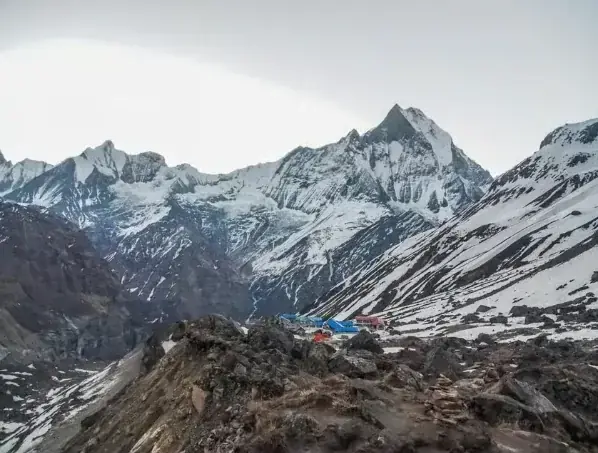
This guide covers everything you need to plan a paragliding trip to Pokhara: the launch sites, the best seasons, what happens on flight day, costs, what to wear, how to get incredible photos, and how to combine your flight with trekking and other adventures in the Annapurna region. Whether you are a first-time flier or a pilot planning a cross-country trip, this is the complete resource for Pokhara paragliding.
Why Pokhara Is the Best Place to Paraglide in Nepal
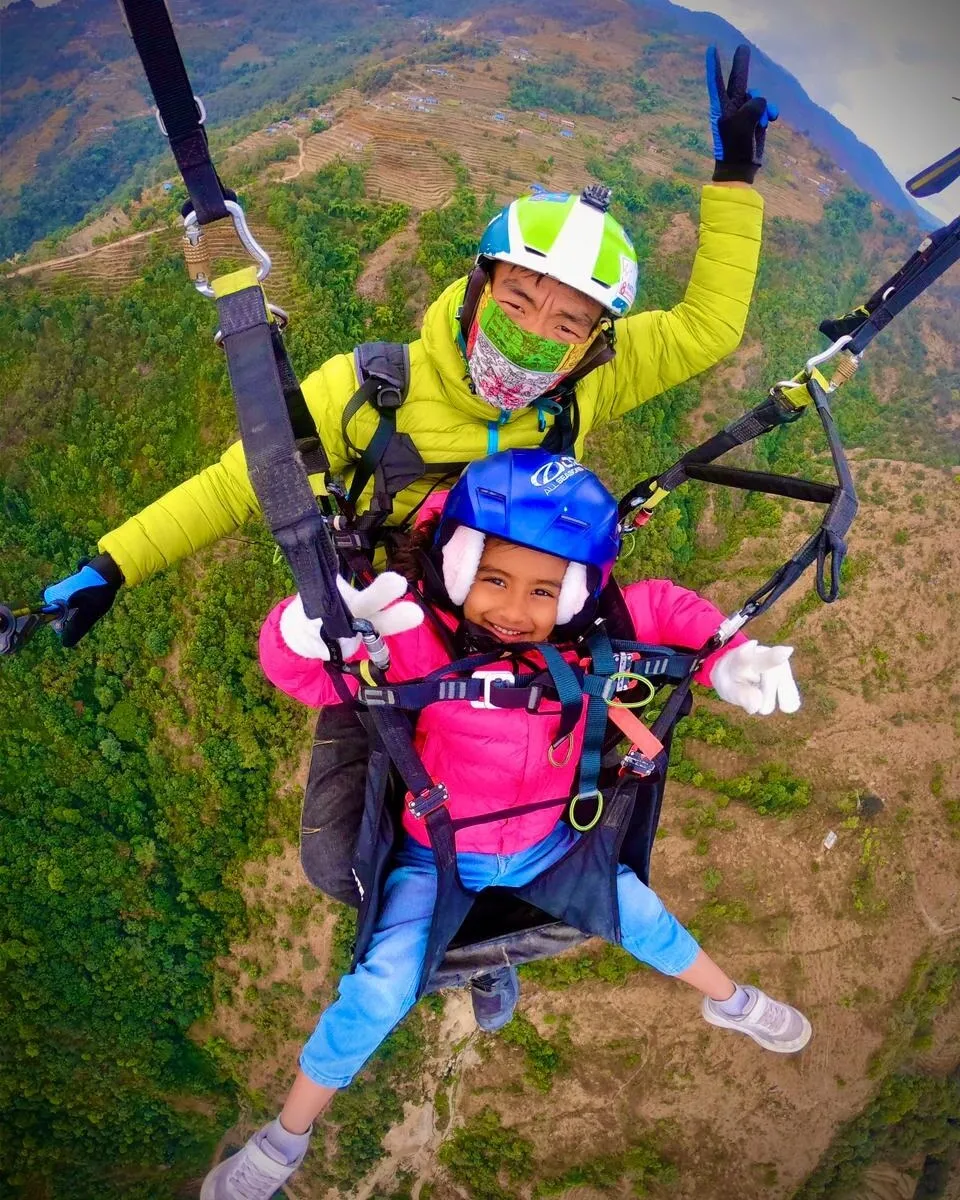 Three factors make Pokhara exceptional for paragliding. First, the topography: the city sits at 827 meters beside Phewa Lake, while Sarangkot ridge rises to 1,592 meters just 11 kilometers from the lakeside. That 765-meter vertical drop gives pilots over 2,500 feet of altitude to work with before they ever need a thermal. Second, the weather: Pokhara's subtropical valley generates consistent thermals from late morning through mid-afternoon, especially from September through May when pressure gradients between the Himalaya and the Indian plains are strongest. Third, the scenery: no other paragliding site on Earth offers front-row views of three 8,000-meter peaks (Annapurna I at 8,091 m, Dhaulagiri at 8,167 m, and Manaslu at 8,163 m) along with the iconic pyramid of Machhapuchhre at 6,993 m, all while soaring over a tropical lake.
The sport has deep roots here. Adam Hill, a British paraglider, pioneered tandem flights from Sarangkot in 1996. By 2007, the first Nepal Paragliding Championship brought international attention, and today Pokhara is a stop on the Paragliding World Cup circuit. The Civil Aviation Authority of Nepal registers every tandem operator, enforces equipment standards, and issues flight permits that pair every passenger with a licensed pilot. Unlike many adventure destinations, the regulatory framework here is mature and consistently enforced.
Sarangkot: The Main Launch Site for Pokhara Paragliding

The Annapurna range at dawn from Sarangkot, Pokhara's famous sunrise viewpoint. Photo: Wikimedia Commons.
Sarangkot is a 1,592-meter ridge on the northwestern edge of the Pokhara Valley, roughly 11 kilometers from Lakeside. The launch area is a grassy slope facing southeast, giving pilots direct exposure to morning sun and the prevailing valley breeze. On clear mornings you can see the full sweep of the Annapurna Sanctuary, the deep gorge of the Seti River, Phewa Lake spreading out below, and the forested hills rolling south toward the Terai plains. The drive from Lakeside takes 25 to 40 minutes by jeep depending on traffic and road conditions. A newer paved road has cut transit time significantly compared to the old dirt track.
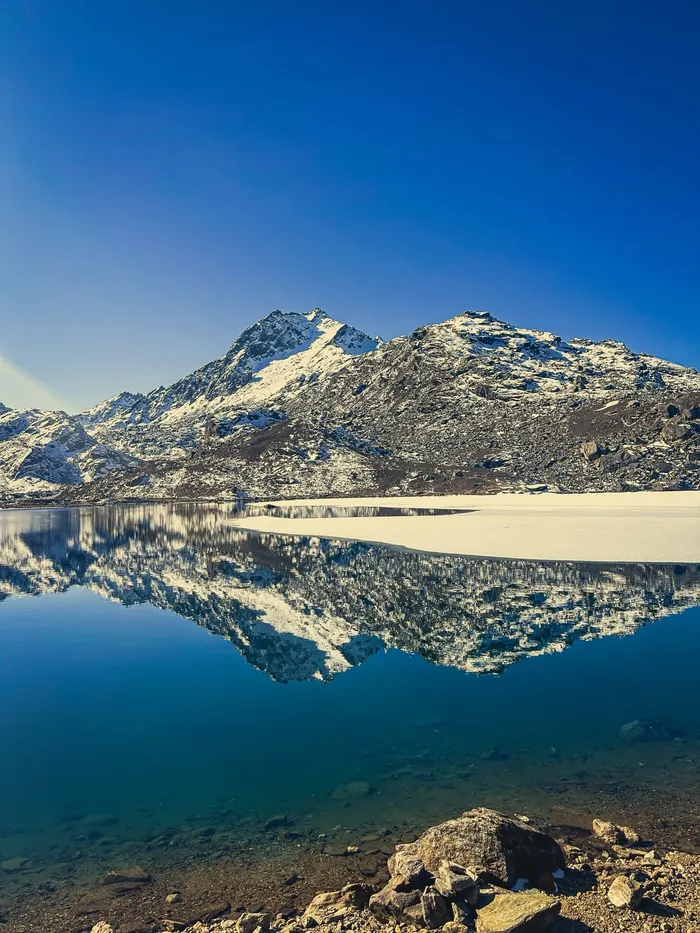
The site operates year-round but each season has a different character. Autumn (September to November) gives the cleanest air, strongest thermals, and best visibility of the high peaks. Winter (December to February) brings cooler temperatures, lighter winds, and a different kind of clarity, with snow-covered ridges at eye level. Spring (March to May) is warmer with increasing haze by afternoon but excellent thermal strength. The pre-monsoon months bring the strongest thermals of the year but also the highest chance of afternoon cloud buildup. Sarangkot is also the same ridge that hosts the famous sunrise viewpoint, so combining a sunrise visit with a morning flight is both possible and highly recommended.
The Tandem Flight Experience in Pokhara: What to Expect
A tandem paragliding flight from Sarangkot follows a predictable but thrilling arc. After the 25 to 40 minute jeep ride from Lakeside, you arrive at the launch area, a wide grassy ridge with a panoramic view of the entire valley. Your pilot, a licensed professional registered with CAAN (the Civil Aviation Authority of Nepal), gives a 10 to 15 minute briefing covering the launch procedure, in-flight body position, and landing technique. You clip into a comfortable passenger harness that sits you upright like a recliner chair once airborne.
The launch itself is the most adrenaline-rich moment. You and the pilot stand facing downhill with the glider laid out behind you. On the pilot's signal, you run together for a few steps as the wing inflates overhead, and then your feet leave the ground. The transition is smooth and surprisingly gentle; you are airborne within seconds. From that point, the pilot handles everything: steering, speed, and altitude.
A standard flight lasts 20 to 30 minutes. The pilot first gains height over the Sarangkot ridge using the morning thermals, then heads out over the valley. You soar past terraced farmland, villages, and forested hillsides before crossing over Phewa Lake. The landing zone is a grassy strip beside the lake at the southern end of the city. Extended thermal flights of 45 to 60 minutes are available on days with strong conditions; the pilot will offer this option if the thermals are particularly active.
The sensation is unlike anything else. You are suspended in a quiet harness with only the rush of wind, the occasional call of birds, and the pilot's voice. The views expand in every direction: the white wall of the Annapurna range to the north, the turquoise crescent of Phewa Lake below, and the green hills of the Pokhara Valley stretching to the south and east. Most passengers describe the experience as simultaneously thrilling and meditative.
Best Time of Year for Paragliding in Pokhara
Pokhara offers paragliding year-round, but the experience varies significantly by season. Understanding what each month brings will help you choose the right window for your trip.
| Season | Months | Conditions | Visibility | Verdict |
|---|---|---|---|---|
| Autumn | Sep to Nov | Strong thermals, stable mornings | Crystal clear | Best overall |
| Winter | Dec to Feb | Cooler, lighter winds, calm | Very good | Great choice |
| Spring | Mar to May | Strongest thermals, warming | Good, some haze | Very good |
| Monsoon | Jun to Aug | Limited windows, rain risk | Variable | Only if flexible |
Autumn is the peak season for a reason. After the monsoon clears in late September, the air over Pokhara becomes exceptionally clear, thermals are strong and predictable, and the mountain views are at their sharpest. October and November see the highest volume of flights. Winter is an underrated choice: the thermals are weaker but the air is bone-clear, crowds are thin, and pilots have more flexibility with flight times. Spring brings the strongest thermal activity of the year, making it the best window for extended cross-country flights, though afternoon cloud buildup can curtail flights by 1 or 2 PM in April and May. Monsoon operations are limited to occasional weather windows between rain systems. If your schedule is flexible, it is possible to fly during the monsoon, but the probability of a confirmed booking on any given day drops to roughly 30 to 40 percent.
"Flying in Pokhara in October is unlike anywhere I have flown in twenty years of paragliding. You launch from a green hillside and within five minutes you are at eye level with a wall of ice and rock that stretches to the horizon. It is not just a flight; it is an aerial tour of the entire Annapurna Sanctuary." , Rajan K.C., commercial tandem pilot since 2009
How to Book a Tandem Paragliding Flight in Pokhara
Booking is refreshingly simple. Walk along the Lakeside strip in Pokhara and you will pass a dozen paragliding booking offices within a few hundred meters. Every operator is registered with the Civil Aviation Authority and carries insurance. The prices at these walk-in offices are competitive, and you can often negotiate a discount for groups of three or more, or for booking within 24 hours.
When comparing operators, look beyond the price. A well-run company will have newer equipment (less than five years old), a fleet of certified EN-B or EN-C tandem wings, and pilots with a minimum of 500 tandem flights logged. Ask to see the pilot's CAAN license. Reputable operators also carry radio communication equipment and reserve a backup landing option in case weather changes mid-flight. For a reliable, government-registered experience, book through the paragliding in Nepal page on Enticing Himalayas or browse our tour packages to combine your flight with other activities.
Online booking in advance is possible and recommended during the peak October-November window, when same-day availability can be limited. A booking typically includes hotel pickup from Lakeside, transport to Sarangkot, the flight itself, insurance coverage, and photo/video files delivered digitally. Some premium operators include a short acclimatization walk at the Sarangkot viewpoint before launch, which doubles as a sunrise viewing experience.
What to Wear and Pack for Paragliding in Pokhara
Dress for temperatures 5 to 10 degrees Celsius cooler than the valley floor. At Sarangkot's 1,592-meter elevation, even a warm autumn morning can feel brisk when you factor in wind chill at altitude. A light windproof jacket or fleece is essential from October through April. In winter, add a warm mid-layer and consider a lightweight pair of gloves.
Closed-toe shoes are mandatory. Sneakers or hiking boots work well; sandals and flip-flops are not accepted at launch. Tight-fitting footwear is important because loose shoes can catch on the harness straps. A secure pair of sunglasses will protect your eyes from both glare and wind, which tends to increase at altitude.
Long pants are recommended regardless of the season. The takeoff and landing involve sitting in a harness and occasionally sliding, so thin shorts leave your legs exposed. Leave expensive jewelry, watches, and loose hats at the hotel; anything that can blow off at altitude is a hazard. Most operators have lockers or a secure vehicle at the landing site where you can store a small daypack.
Getting the Best Photos and Videos of Your Flight

A paraglider high above the Pokhara Valley. Photo: Wikimedia Commons.
Every tandem operator in Pokhara includes photo and video documentation as part of the package. Your pilot flies with a GoPro or similar action camera mounted on a selfie stick that extends outward and backward, capturing both your face and the landscape behind you. The typical package includes 20 to 40 still photos and a 3 to 5 minute video edit, usually delivered via a download link the same day.
For the best results, fly between 9 and 11 AM in autumn and winter when the light is soft, the air is clear, and the peaks catch the golden morning sun. In spring, earlier launches (8:30 to 10 AM) produce the sharpest photos before haze builds. If you are serious about photography, bring a compact camera or a phone with a wrist strap. The pilot can usually accommodate your own device in a chest mount or handheld position. Drones require a separate permit from CAAN and are not commonly used by commercial operators in Pokhara due to airspace regulation.
Combining Paragliding in Pokhara with Trekking and Other Adventures
One of Pokhara's greatest advantages is that it serves as the gateway to the Annapurna region. Many travelers combine their paragliding flight with one of several world-class treks that depart from the Pokhara Valley. A popular pairing is an early morning tandem flight from Sarangkot followed by a drive to Nayapul and the start of the Ghorepani Poon Hill trek, a 4 to 5 day route through rhododendron forests to one of Nepal's most famous viewpoints. The two experiences complement each other perfectly: you soar above the same ridges you will walk the next day.
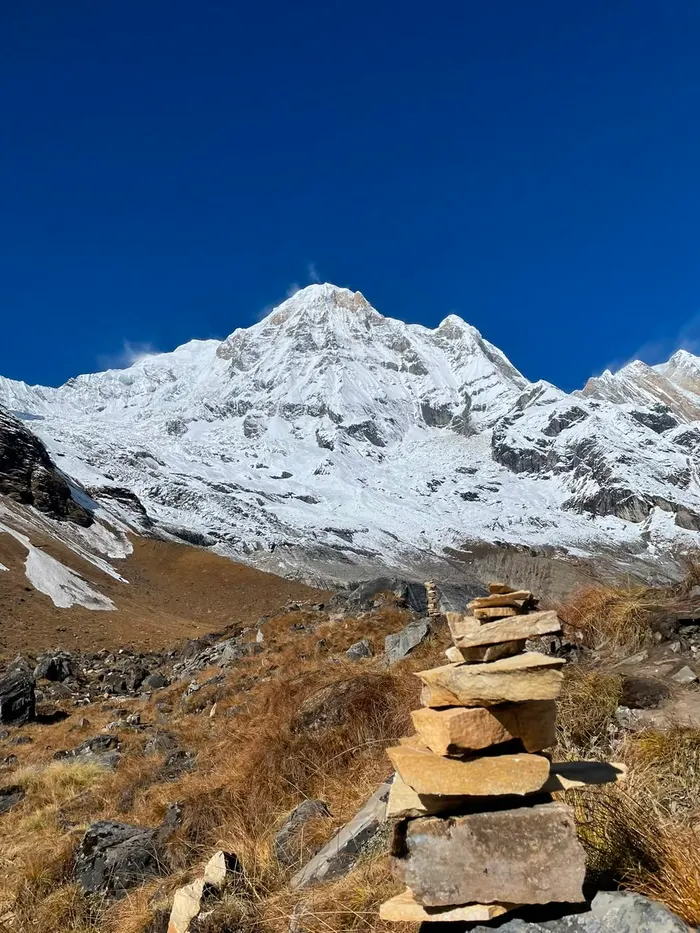
For those with more time, the Annapurna Base Camp trek is a 10-day journey that takes you deep into the heart of the Annapurna Sanctuary, ending at 4,130 meters surrounded by a 360-degree amphitheater of peaks. Many Base Camp trekkers add a Pokhara paragliding flight at the beginning or end of their trip as an aerial bookend to the overland experience. The complete Annapurna trekking guide covers all the routes, permits, and logistics in detail.
Other popular combinations include paragliding plus bungee jumping at a riverside site 3 to 4 hours from Pokhara, paragliding plus whitewater rafting on the Seti or Trishuli rivers, and paragliding followed by an evening cable car ride or cultural tour of Pokhara's temples and caves. For a complete menu of options, browse the full tour list.

Paragliders share the sky with Annapurna's south face. Photo: Wikimedia Commons.
Frequently Asked Questions About Paragliding in Pokhara
How much does paragliding cost in Pokhara?
A standard tandem paragliding flight in Pokhara costs between NPR 8,500 and NPR 12,000 (roughly USD 65 to 95) depending on the season, duration of the flight, and operator. This price typically includes hotel pickup in Lakeside, transport to Sarangkot, the flight itself (20 to 30 minutes standard), insurance, and digital photo/video files. Extended thermal flights of 45 to 60 minutes cost NPR 12,000 to NPR 15,000.
Is paragliding in Pokhara safe for beginners?
Yes, tandem paragliding in Pokhara is designed specifically for beginners with no experience. Every pilot holds a license from the Civil Aviation Authority of Nepal (CAAN) and carries reserve parachute equipment. Safety statistics from the past decade show an excellent record, attributable to mature regulation, reliable weather patterns, and experienced pilots who log hundreds of flights per season. The passenger harness is comfortable and there is no freefall sensation during launch or landing.
What is the weight limit for paragliding in Pokhara?
The standard passenger weight limit for tandem paragliding in Pokhara is between 30 kg (66 lbs) and 100 kg (220 lbs). These limits are set by the certified weight range of the tandem wing and are enforced for safety. Passengers at the heavier end should inform the operator at booking so they can assign an appropriate wing. Passengers at the lighter end (children) should also confirm availability, as some operators set their own minimums.
How long is a paragliding flight in Pokhara?
A standard tandem flight from Sarangkot lasts 20 to 30 minutes. Extended thermal flights can go 45 to 60 minutes when conditions allow strong thermal activity to sustain altitude. The actual flight time depends on weather, wind speed, and thermal strength on the day. The door-to-door experience, including hotel pickup, transport to Sarangkot, briefing, the flight itself, and return to Lakeside, takes approximately two to two and a half hours.
Can I fly if I am afraid of heights?
Many people with a fear of heights find paragliding surprisingly comfortable. The harness holds you securely in a seated position, there is no sensation of falling, and the launch is more of a gentle lift-off than a drop. The views tend to captivate rather than frighten. However, some apprehension before the launch is completely normal. If you have an extreme phobia, consider visiting the Sarangkot viewpoint first to see the launch, or speak with the pilot about your concerns before booking.
What happens if the weather is bad on my booking day?
Every operator offers a full refund or free rescheduling if weather conditions make flying unsafe. Weather in Pokhara is usually predictable in the mornings, and pilots will not launch in strong winds, rain, fog, or when visibility is poor. The decision to cancel is never taken lightly but is always made with safety as the priority. If your flight is cancelled, you can typically rebook for the next clear morning or receive a complete refund with no penalty.
Ready to Soar Over the Himalayas?
Book your tandem paragliding flight from Sarangkot today and experience the Annapurna range from the sky. Our pilots are CAAN-licensed, fully insured, and ready to make your Pokhara trip unforgettable.
Book Your Paragliding Flight