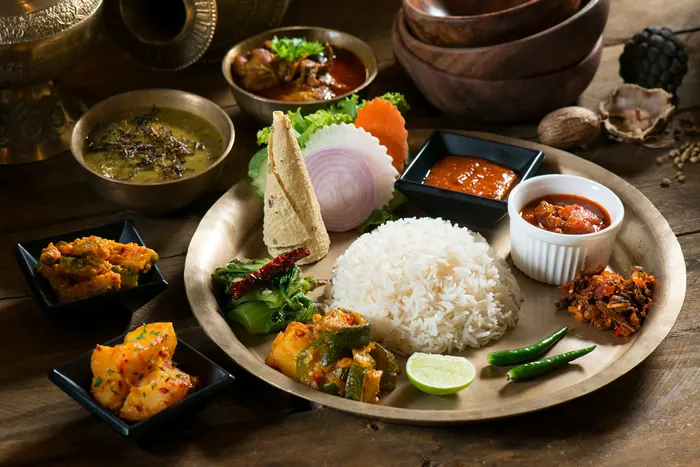
Nepal is a country of breathtaking landscapes, ancient temples, and deeply rooted culinary traditions. Among the many regional food cultures that shape the Nepali palate, one stands above the rest in both reputation and reach: Thakali cuisine. Originating from the Kali Gandaki valley in the Mustang region, Thakali food has traveled far beyond its high-altitude homeland to become the gold standard of Nepali dining. Walk into any restaurant in Kathmandu, Pokhara, or along a remote trekking trail, and you will find a "Thakali set" on the menu. But what makes this cuisine so special, and why has it become synonymous with Nepali food itself? This guide takes you deep into the history, ingredients, techniques, and cultural significance of Thakali cuisine, the true soul of Nepali food culture.
Who Are the Thakali People?
The Thakali are an ethnically Tibetan-Burmese people native to the Kali Gandaki river valley in the Mustang district of northern Nepal. For centuries, they controlled the salt trade route between Tibet and India, a position that brought wealth, cultural exchange, and a sophisticated culinary tradition. The Thakali adapted high-altitude ingredients with spices and produce from the lowlands, creating a cuisine that is both hearty and refined. Their trading heritage also explains why Thakali food spread across Nepal: they operated tea houses and lodges along every major trade and trekking route, feeding travelers the dishes they cooked at home. Today, the Thakali community numbers around 30,000 people, yet their culinary influence extends to every corner of the country.
What Makes Thakali Cuisine Unique Compared to Other Nepali Regional Cuisines?
Thakali cuisine stands apart from other Nepali food traditions through its precise balance of flavors, its use of rare Himalayan herbs, and its elaborate multi-dish presentation. While Newari food from the Kathmandu Valley emphasizes fermented foods and festive buff dishes, and Limbu and Rai cuisines from the eastern hills focus on fermented millet and pork, Thakali cooking combines subtle spice layering with seasonal variety. The Thakali thali (plate) is not a single dish but a carefully orchestrated spread of dal, bhat (rice), seasonal vegetables, gundruk (fermented leafy greens), achar (pickle), ghee, and sometimes meat curry. Every element is seasoned with ingredients unique to the Himalayan trans-Himalayan zone, especially jimbu and timur, which give Thakali food its unmistakable aroma and taste.
What Is a Thakali Thali and What Does It Contain?
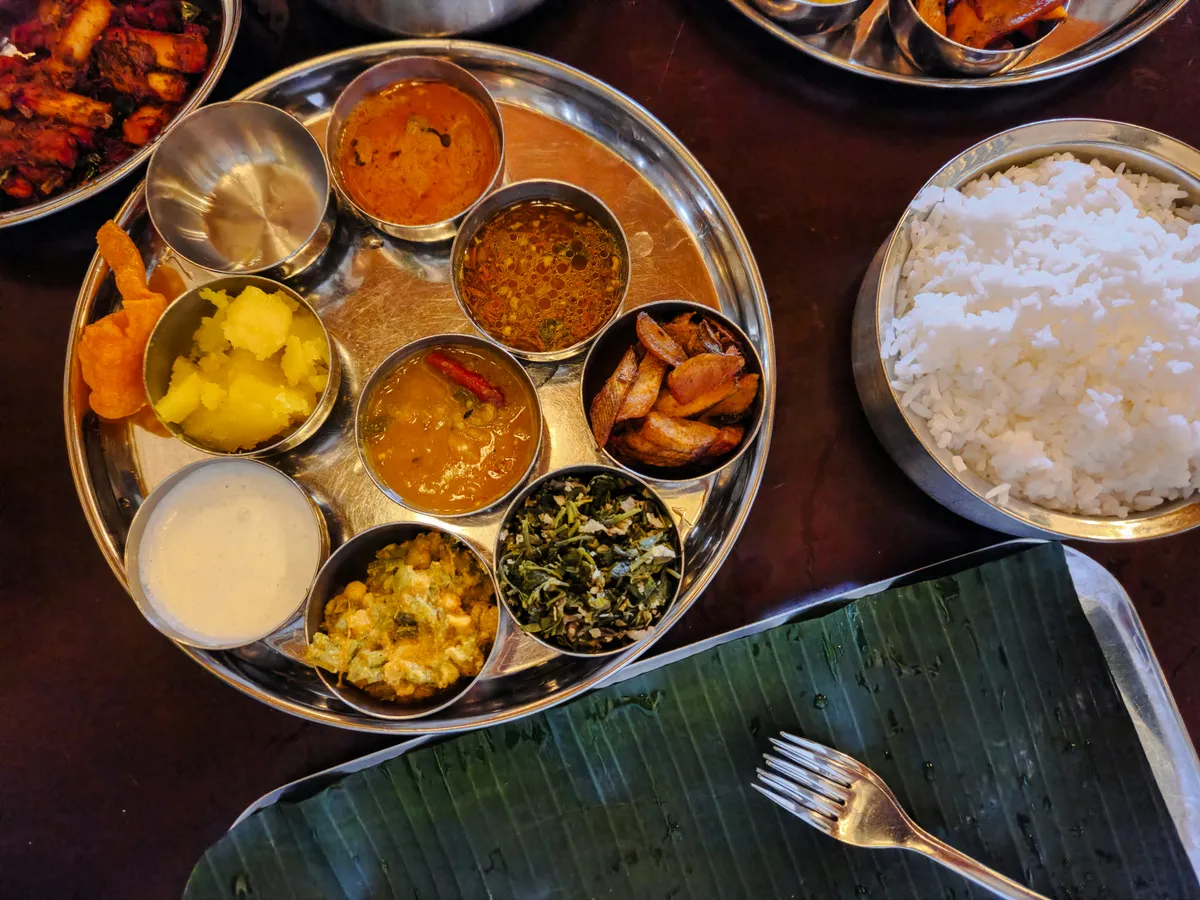
A Thakali thali is a complete meal served on a brass or copper plate with small bowls (bati) arranged around a mound of white rice. The thali typically includes black or yellow dal cooked with ghee and jimbu, two or three seasonal vegetable preparations (tarkari), gundruk or sinki (fermented greens and radish), a tangy achar (pickle made from tomato, potato, or lapsi), fresh homemade ghee, papad (crispy lentil crackers), and a meat curry if desired. The meal is designed to offer all six rasas (flavors) recognized in Ayurvedic tradition: sweet, sour, salty, bitter, pungent, and astringent. This balance is not accidental but reflects centuries of dietary wisdom passed down through Thakali families.
The dal in a Thakali set is its centerpiece. Unlike the simple yellow dal served in many Nepali homes, Thakali dal is often a blend of multiple lentils, slow-cooked with ghee, cumin, garlic, and the prized Himalayan herb jimbu. The vegetables change with the seasons: in spring, you might find fiddlehead ferns (niuro) and fresh greens; in autumn, pumpkin and beans; in winter, radish and mustard greens. The achar provides a sharp, acidic counterpoint that cleanses the palate between bites. Gundruk, the fermented sun-dried leafy vegetable, adds a sour, umami depth that no other component can replicate. When meat is served, it is usually goat or chicken, slow-cooked in a rich gravy with timur, garlic, and local spices.
What Are the Key Ingredients That Define Thakali Cooking?
The soul of Thakali cuisine lies in a handful of ingredients that are either unique to the Himalayan region or used in distinctive Thakali ways. These ingredients are what separate a genuine Thakali meal from an imitation, and understanding them is essential to appreciating the cuisine.
Jimbu: The Himalayan Herb That Defines Thakali Flavor
Jimbu is a dried Himalayan herb (from the Allium family, related to onions and garlic) that grows wild in the high pastures of Mustang and Dolpa. It is harvested, sun-dried, and stored for year-round use. When tempered in hot ghee, jimbu releases a deeply savory, slightly sweet aroma that is the signature scent of Thakali dal. No other cuisine in the world uses this herb in the same way. Jimbu is so closely tied to Thakali identity that a Thakali dal without jimbu is considered incomplete by purists. You can find jimbu in markets across Nepal, but the best quality still comes from the Mustang highlands, where it is gathered by hand during the brief alpine growing season.
Timur: The Sichuan Pepper of Nepal
Timur (Zanthoxylum armatum), often called Nepali Sichuan pepper, is a prickly ash shrub whose dried berries produce a citrusy, numbing heat quite different from chili pepper. Timur is used in Thakali achar, meat marinades, and dry spice mixes (masura). The tingling sensation it creates on the tongue is prized in Thakali cooking and is considered essential for authentic Thakali pickles. Timur grows wild across the mid-hills of Nepal, but the Thakali were among the first to incorporate it systematically into their cuisine, using it to preserve food on long trade journeys and to add complexity to simple dishes.
Buckwheat and Barley: Highland Grains of Mustang
In the high-altitude valleys of Mustang, rice does not grow. The traditional staples were buckwheat (kodo or phapar), barley (uwa), and millet. Thakali cuisine includes buckwheat pancakes (dhido or roti), buckwheat noodles (champa), and barley-based dishes that predate the widespread availability of white rice. Today, most Thakali sets in restaurants serve white rice, but in Mustang itself and in traditional Thakali homes, buckwheat dhido remains a beloved comfort food. Its earthy, slightly nutty flavor pairs beautifully with ghee and dal, and it is far more nutritious than polished white rice. The growing interest in ancient grains and gluten-free diets has brought renewed attention to buckwheat as a healthy alternative.
Local Produce and Seasonal Vegetables
The Thakali respect for seasonality is one of the cuisine's defining principles. In a traditional Thakali household, the vegetables on the plate change every few weeks, reflecting what is available from the garden, the local market, or the wild. Fiddlehead ferns in spring, fresh soybeans in summer, pumpkin and squash in autumn, and dried vegetables in winter: each season brings its own flavors. This rotation ensures nutritional variety and keeps the cuisine dynamic. Even in Kathmandu restaurants, the best Thakali kitchens adjust their vegetable offerings seasonally rather than serving the same dishes year-round.
How Did Thakali Cuisine Spread Across Nepal?
The spread of Thakali cuisine across Nepal is a story of trade, migration, and entrepreneurship. The Thakali people controlled the salt trade route along the Kali Gandaki river, which connected Tibet to the Indian plains. This route, one of the most important trans-Himalayan trade corridors, required networks of lodges, tea houses, and supply stations. Thakali families built and operated these establishments, cooking their home recipes for traders, pilgrims, and later, trekkers. As tourism grew in the 1960s and 1970s, the Annapurna Circuit and other trekking routes brought thousands of foreign visitors through Thakali-run tea houses. Travelers remembered the food.
By the 1980s and 1990s, Thakali entrepreneurs had opened restaurants in Kathmandu and Pokhara, serving the same dal bhat and thali sets that had made their tea houses famous on the trails. The "Thakali set" became a brand in itself, synonymous with generous portions, authentic flavor, and quality ingredients. Today, you can find Thakali restaurants in every major city in Nepal, and the term "Thakali" on a menu carries the same weight as "gourmet" does in Western dining: it signals care, tradition, and excellence. The cuisine has become so embedded in Nepali food culture that many Nepalis think of Thakali dal bhat as the national dish, even though it originated in a specific regional tradition.
What Is the Cultural Significance of Thakali Dining?
Thakali dining is not just about food; it is a cultural ritual that reflects values of hospitality, community, and respect. In a traditional Thakali home, meals are served on the floor, with family members and guests seated on woven mats (gundri). The food is placed on brass or copper plates (thal) and bowls (bati), which are believed to enhance the flavor and keep the food warm longer. Eating with the right hand is customary, as it is across South Asia, and the act of mixing dal, ghee, vegetables, and rice on the plate is considered part of the dining experience.
Hospitality is central to Thakali identity. A guest in a Thakali home is always offered food, and refusing it is considered impolite. The host will typically serve multiple helpings, encouraging the guest to eat until fully satisfied. This generosity has roots in the trade culture: feeding travelers was both a duty and a sign of prosperity. The Thakali also have specific food traditions for festivals such as Losar (Tibetan New Year) and Yartung (the harvest festival), when special dishes like buckwheat bread, dried meat stews, and kheer (rice pudding) are prepared. These festival foods are deeply tied to the agricultural calendar and the spiritual life of the community.
The brass and copper vessels used in Thakali dining are themselves cultural artifacts. Many Thakali families own sets that have been passed down for generations, and the vessels are polished and maintained with great care. In restaurants, you will often see these same brass plates and bowls, a visual link to the cuisine's roots in Mustang. The clinking of metal bowls, the aroma of jimbu-tempered ghee, and the sight of colorful vegetables arranged on a golden plate create a multi-sensory experience that goes far beyond taste alone.
How Are Traditional Thakali Cooking Techniques Different from Modern Methods?
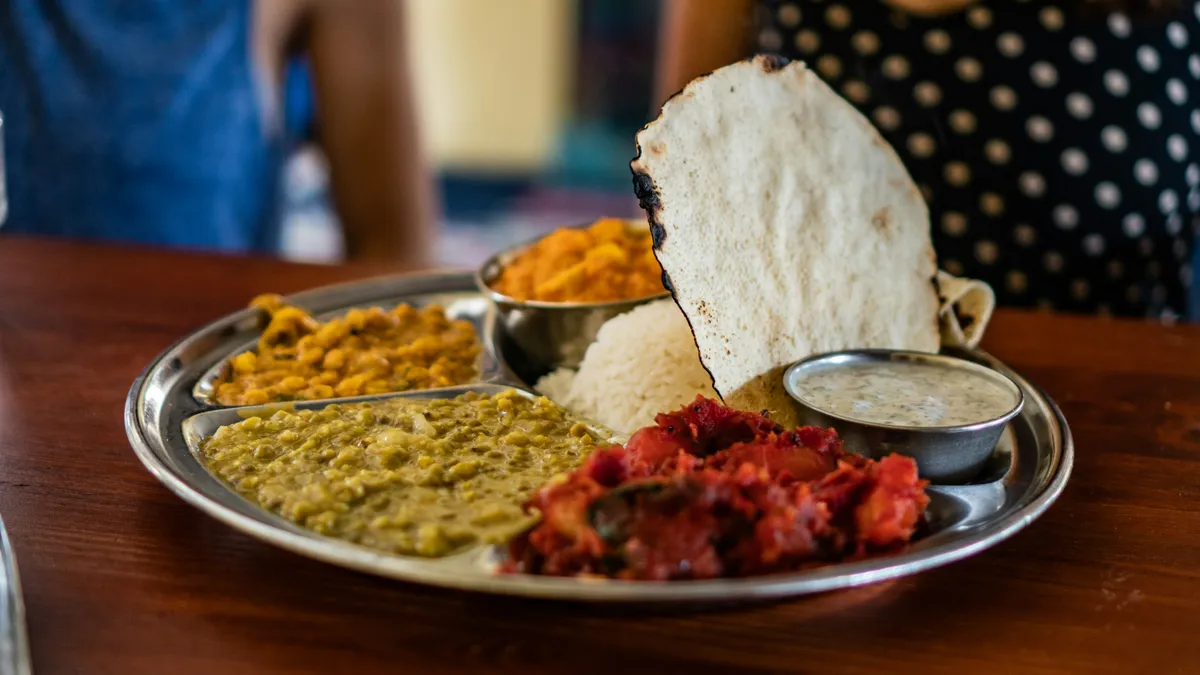
Traditional Thakali cooking relies on slow methods that develop deep flavor over time. Dal is simmered for hours in clay pots over wood fires, allowing the lentils to break down fully and absorb the tempering spices. Vegetables are often steamed or stir-fried briefly to retain their texture and nutritional value. Gundruk is made by fermenting leafy greens in earthen pots for several weeks, a process that predates refrigeration and preserves the harvest for the long Mustang winter. Meat is typically slow-cooked in iron vessels with minimal water, relying on the natural juices of the meat and the fat from bones to create a rich gravy.
In modern restaurant kitchens, pressure cookers and gas stoves have replaced clay pots and wood fires, but the best Thakali restaurants still adhere to traditional principles: tempering spices in hot ghee at the last minute (tadka or jhan), using fresh-ground spices rather than pre-packaged powders, and making achar by hand daily. The difference is noticeable. A dal that has been tempered with fresh jimbu in smoking ghee just before serving has a fragrance that no shortcut can replicate. This attention to technique is one reason Thakali food maintains its reputation for quality even as it has been commercialized across Nepal.
Where Can You Experience Authentic Thakali Food in Kathmandu?
Kathmandu is the best place outside Mustang to experience authentic Thakali cuisine. The city has dozens of Thakali restaurants, ranging from simple eateries to upscale heritage dining experiences. In Thamel and Patan, you will find dedicated Thakali kitchens where the cooks are often from Mustang families who have been preparing these dishes for generations. Look for restaurants that make their own gundruk, grind their spices fresh daily, and use real jimbu and timur rather than substitutes. The best Thakali restaurants in Kathmandu often display their brass plates and bowls prominently, a sign of commitment to authenticity.
For travelers who want more than just a meal, there are heritage dining experiences that combine a full Thakali set with a cultural show featuring traditional Nepali music and dance. These experiences are designed to immerse you in the atmosphere of a Thakali feast: floor seating (or the option of chairs), brass plates, multi-course service, and performances that celebrate the cultural context of the food. The traditional Nepali culinary food tour offered by Enticing Himalayas is one such experience, combining hotel pick-up, a heritage venue, and a live cultural performance with an authentic Thakali dinner. At USD 30 per person (reduced from USD 35), it is an accessible way to taste Thakali cuisine in its fullest cultural context.
How Does Thakali Food on Trekking Routes Differ from Restaurant Versions?
The Thakali food you eat on a trekking route in the Annapurna or Mustang region is arguably the most authentic version you will find anywhere. The tea houses along these trails are often family-run by Thakali descendants who cook the same recipes their grandmother used. Ingredients are sourced locally: vegetables from village gardens, gundruk made in the household, and jimbu gathered from nearby high pastures. The dal bhat served at a tea house in Tatopani or Marpha has a simplicity and directness that city restaurants sometimes lose in the quest for presentation.
Restaurant versions in Kathmandu tend to be more elaborate, with a wider variety of side dishes, fancier plating, and the addition of items like papad and salad that are not traditionally part of a trail-side meal. They also tend to use more ghee and spices to cater to urban and tourist palates. Neither version is "better" than the other: they serve different contexts. On the trail, the food is fuel for a day of walking, and the simplicity is part of its appeal. In the city, the food is an experience to be savored, and the elaboration is part of the enjoyment. For a deeper understanding of how trekking and food culture intersect in Nepal, the complete guide to trekking in Nepal covers the tea house dining experience in detail.

Why Is Gundruk So Important in Thakali Cuisine?
Gundruk is the fermented leafy vegetable that is the backbone of Thakali and broader Nepali rural cuisine. It is made by wilting leafy greens (mustard leaves, radish leaves, or cauliflower leaves), packing them tightly into earthen pots or bamboo containers, and leaving them to ferment for several weeks. The result is a sour, slightly pungent, deeply savory ingredient that can be stored for months without refrigeration. In Thakali cooking, gundruk is typically cooked as a soup (gundruk ko jhol) or stir-fried as a dry side dish, and it is a staple of the Thakali thali.
The importance of gundruk goes beyond flavor. It is a preservation technique that allowed families in the high Himalayas to maintain a source of vegetables through the long winter when nothing grew. It is also rich in probiotics and nutrients, making it one of the healthiest elements of the Thakali diet. Sinki, a similar fermented product made from radish, is also common in Thakali meals. Both gundruk and sinki represent a food preservation tradition that is thousands of years old, predating modern canning and refrigeration by millennia. Eating gundruk in a Thakali set is not just a culinary pleasure; it is a connection to the survival ingenuity of Himalayan people.
What Role Does Ghee Play in a Thakali Meal?
Ghee, or clarified butter, is the lifeblood of Thakali cuisine. It is used for tempering spices (the crucial tadka or jhan step that finishes a dal), for cooking vegetables, for drizzling over rice, and for making achar. In a traditional Thakali set, a small bowl of fresh homemade ghee is placed on the plate so diners can add it to their rice and dal to taste. The quality of the ghee can make or break a Thakali meal: fresh, well-made ghee has a nutty, caramel-like aroma that elevates every dish it touches.
In Mustang, where cattle are scarce at high altitudes, traditional ghee was often made from yak milk, which has a higher fat content and a richer flavor than cow milk ghee. Yak ghee is still used in some Mustang households and is considered a delicacy. In Kathmandu restaurants, cow milk ghee is more common, but the best establishments still make their own rather than buying commercial versions. The liberal use of ghee in Thakali cooking is one reason the cuisine is so satisfying: it provides satiety, flavor, and a sense of indulgence that makes a Thakali meal feel like a feast, even when the ingredients are simple.
How Has Thakali Cuisine Influenced Modern Nepali Dining?
The influence of Thakali cuisine on modern Nepali dining is difficult to overstate. The concept of the "set meal" or thali, now ubiquitous in Nepali restaurants, was popularized largely by Thakali establishments. The idea of serving multiple small portions of different dishes on a single plate, with unlimited refills, is a Thakali convention that has been adopted by restaurants serving Newari, Indian, and even continental food in Nepal. The emphasis on seasonal vegetables, homemade pickles, and fresh-ground spices that defines quality dining in Kathmandu can be traced directly to Thakali culinary standards.
Thakali cuisine has also influenced how Nepalis think about hospitality and the dining experience. The expectation that a good meal should be generous, varied, and served with care comes from Thakali tea house culture. Even the phrase "dal bhat power 24 hour," the popular saying that describes the sustaining energy of a Nepali meal, is most accurately applied to a Thakali dal bhat, which is specifically designed to provide balanced nutrition for a full day of work or travel. For a broader exploration of how food shapes cultural travel in Nepal, the complete guide to cultural and spiritual tours in Nepal covers culinary traditions as part of the heritage travel experience.


Can You Learn to Cook Thakali Food Yourself?
Yes, and learning to cook Thakali food is one of the most rewarding ways to connect with Nepali culture. The techniques are not overly complex, but they require attention to detail: the timing of the tadka, the freshness of the spices, the balance of flavors in the achar. A good Thakali cooking class will teach you how to make dal with jimbu tempering, how to prepare seasonal tarkari, how to make gundruk soup, and how to mix achar from scratch. You will also learn about the ingredients themselves, where to source them, and how to substitute if jimbu or timur are not available where you live.
Enticing Himalayas offers a hands-on Nepali cooking class in Kathmandu where you can learn to prepare momos, dal bhat, and traditional Thakali recipes with a local family. The class is designed for travelers who want to take a piece of Nepal home with them, not just in photographs but in their kitchen. Cooking Thakali food yourself also gives you a deeper appreciation for the skill and patience that goes into every element of the thali, from the slow-simmered dal to the hand-pounded spices.
What Should First-Time Diners Know Before Trying a Thakali Set?
If you are trying a Thakali set for the first time, there are a few things that will help you get the most out of the experience. First, come hungry. A Thakali set is generous, and refills are typically included for dal, rice, and vegetables. Second, do not be afraid to mix everything together on your plate. That is how it is meant to be eaten. Take a scoop of rice, add dal, a piece of vegetable, a dab of ghee, a pinch of achar, and a bit of gundruk, then combine them and eat with your right hand. Third, pace yourself. The variety of flavors is designed to be enjoyed slowly, not rushed. Fourth, if you are not accustomed to eating with your hands, it is perfectly acceptable to ask for a spoon, but try the hand method at least once: it changes the way you experience the food.
Fifth, pay attention to the achar. Thakali achar is one of the most distinctive elements of the meal, and the type changes daily. You might get a tomato achar with timur, a boiled potato achar with sesame, or a lapsi (Nepali hog plum) achar that is simultaneously sweet, sour, and spicy. Each one is a small masterpiece. Sixth, if you want meat, ask for the khasi ko masu (goat curry) or kukhura ko masu (chicken curry). Goat is the more traditional choice and has a deeper, richer flavor that pairs best with the other elements of the thali.
How Is Thakali Cuisine Preserved in a Changing Nepal?
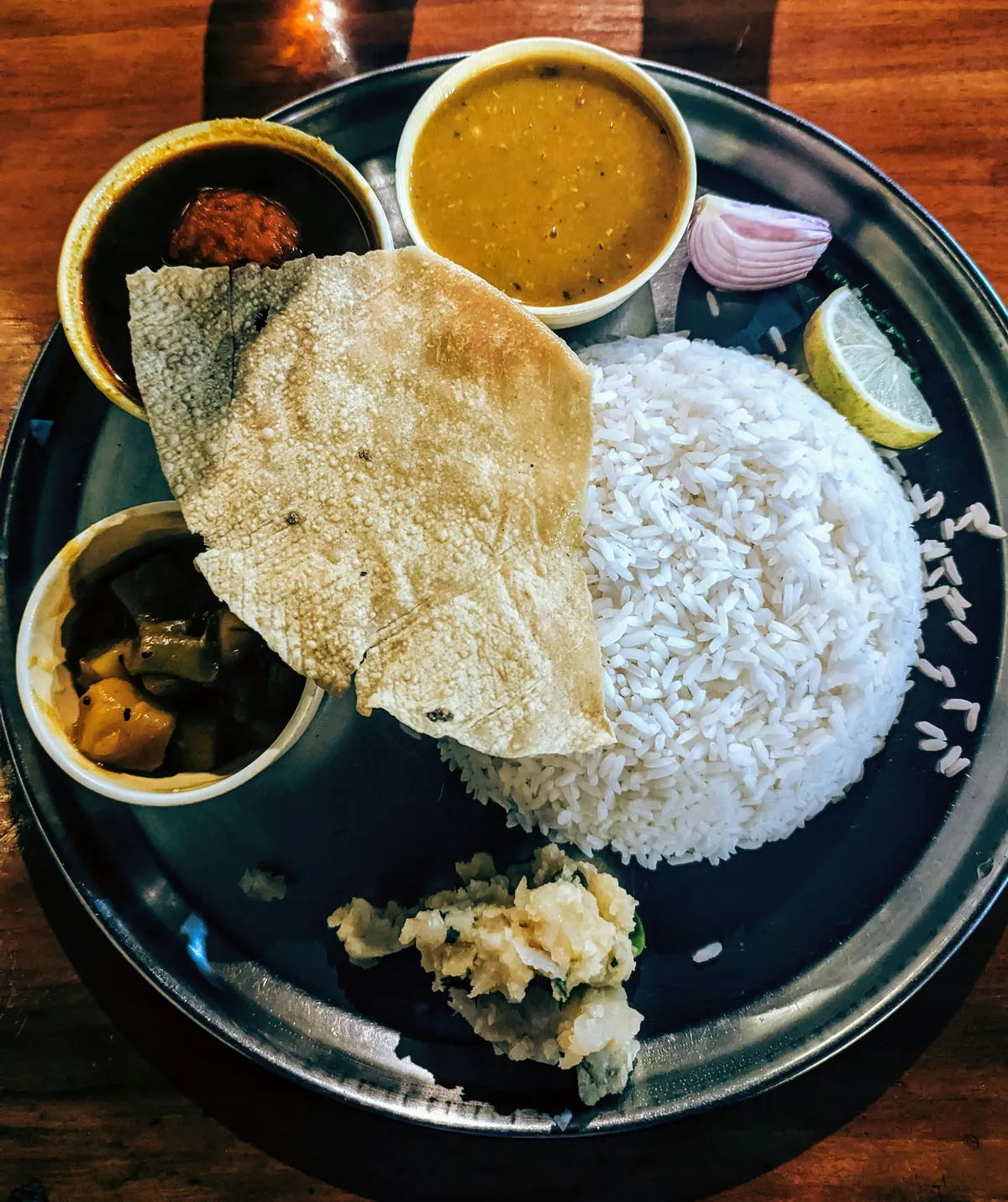
As Nepal modernizes and globalizes, preserving traditional food cultures like Thakali cuisine becomes both more challenging and more important. Young Thakali people who move to Kathmandu or abroad for education and work may not learn the full repertoire of their grandmother's kitchen. Commercial Thakali restaurants, while spreading the cuisine's popularity, sometimes simplify recipes or substitute ingredients to cut costs. Real jimbu is expensive, and some establishments use onion powder as a stand-in. Authentic gundruk requires weeks of fermentation, and some restaurants buy mass-produced versions that lack the depth of homemade batches.
Despite these pressures, there are strong forces working to preserve Thakali culinary heritage. Thakali community organizations in Kathmandu and Pokhara hold cultural events where traditional dishes are prepared and shared. Food writers and documentary filmmakers have brought national and international attention to Mustang's food traditions. The growing interest in heritage tourism, slow food, and indigenous ingredients has created a market for authentic Thakali experiences that rewards restaurants and cooks who maintain traditional standards. When you choose to eat at an authentic Thakali restaurant or join a heritage dining experience, you are supporting the preservation of one of Nepal's most precious cultural traditions.
What Does the Future Hold for Thakali Cuisine?
The future of Thakali cuisine is bright but requires conscious effort to maintain its integrity. As more international visitors discover Nepal through food tourism, the demand for authentic Thakali experiences will only grow. This creates an opportunity for Thakali families and communities to share their heritage on their own terms, ensuring that the cuisine is represented accurately and that the economic benefits flow back to the people who created it. There is also growing interest in Thakali ingredients like jimbu and timur in the global culinary world, as chefs search for new flavors and indigenous superfoods.
Buckwheat, a traditional Thakali staple, is already gaining recognition as a nutritious, gluten-free grain. Gundruk and other fermented foods are being studied for their probiotic properties. Timur is finding its way into international spice blends. These trends suggest that Thakali cuisine, far from being a relic of the past, is a living tradition with relevance to modern food culture. The key to its future is balance: sharing the cuisine widely while protecting the ingredients, techniques, and cultural context that make it authentic. For travelers who want to be part of this story, experiencing Thakali food in Nepal is not just a meal but a contribution to keeping a remarkable culinary heritage alive.