Ten years ago, hiring a trekking guide in Nepal meant landing in Kathmandu, walking into a Thamel office, and hoping the person behind the desk had someone free for your dates. Today most trekkers book a guide in Nepal online before their flights are even ticketed. Profiles list license numbers, languages, specialties, and daily rates, and a written confirmation lands in your inbox while you are still packing at home.
The shift is genuinely positive. Digital booking lets you compare guides instead of accepting whoever happens to be available, and it creates a paper trail that street-corner arrangements never had. But the same openness that makes online hiring convenient also attracts operators you should never send money to. Every trekking season, a handful of travelers lose deposits to unlicensed "guides" who exist only on social media.
This guide walks through where to book, what to verify before you pay, how much a deposit should be, and what happens between clicking confirm and meeting your guide in person. If you are brand new to guided trekking in Nepal, start with our step-by-step guide to how to hire a guide in Nepal, then come back here for the online-booking specifics. You can also browse verified guide profiles on the EHT marketplace at any point to see real license numbers, rates, and specialties.

Why Do Trekkers Now Book Guides Online Instead of on Arrival?
Most trekkers book online because the strongest licensed guides are reserved months before peak season, digital profiles make license and rate checks straightforward, and a written booking removes the first-day scramble in Kathmandu. Pre-arranged guides also let you plan acclimatization days with someone who already knows your route.
Nepal's two main trekking windows, mid-September through November and March through May, concentrate enormous demand into a few months. Guides who have led twenty Everest Base Camp seasons, or who speak fluent Spanish or Japanese, are booked first, and by the time peak season arrives the leftovers are exactly that. Booking four to twelve weeks ahead is the difference between choosing a guide and taking whoever is free.
There is also a cost-transparency argument. When you hire on arrival, you negotiate from jet lag, in a hurry, with no benchmark. Online, you can compare several quoted daily rates against the published ladder in our trekking guide cost in Nepal guide, and any quote that drifts far from it tells you something before money is involved.
Finally, online booking produces records. A written itinerary, a named guide, a receipted deposit, and a cancellation policy in your inbox are protections that a verbal agreement in a Kathmandu office cannot match if something goes wrong later.
Where Can You Book a Licensed Guide in Nepal?
The four main channels are dedicated guide marketplaces that list DOT-licensed profiles, registered trekking agencies, independent guides with their own websites, and international booking platforms. Marketplaces and agencies are the safest starting points because they verify licenses before listing anyone and stand behind the booking if plans change.
Local guide marketplaces. The EHT marketplace at enticinghimalayas.com/guides lists every active guide with their region specialty, languages spoken, seasons of experience, daily rate range, and Department of Tourism license number on the profile itself. You can hire a licensed guide in Nepal from the marketplace the same way you would compare hotels: filter for what matters to you, shortlist, and inquire. Because the platform is operated by a registered agency, each profile has already been through license and insurance verification.
Registered trekking agencies. Booking through an agency bundles the guide with permits, transport, teahouse coordination, and a porter if you want one. Our guide to the best trekking agency in Nepal explains what a registered operator must hold, from the license itself to the legal obligations around staff insurance. Agencies suit first-time trekkers who want one accountable counterparty for the whole trip.
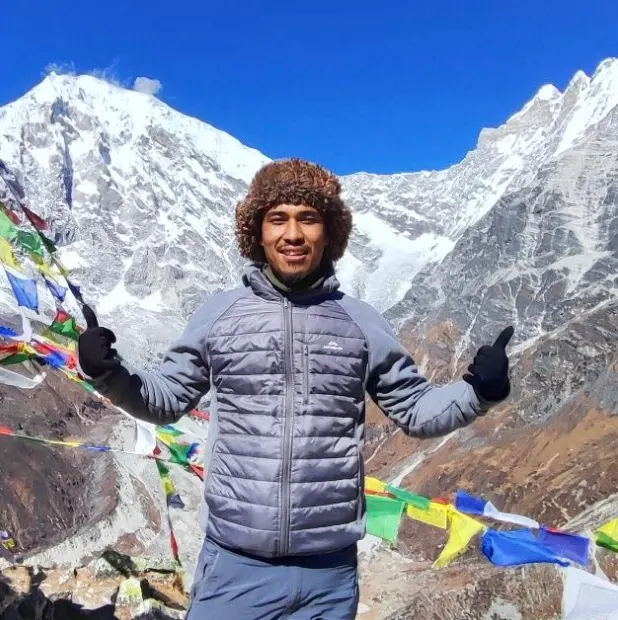
Independent guides. Many senior guides run their own sites or Instagram pages. This route can be excellent value, but you inherit all of the verification work yourself: the license check, the insurance question, the reference calls. Treat an independent guide the way you would treat any freelancer, and use the vetting steps later in this article.
International platforms. Sites like GetYourGuide and Viator list Nepal day tours and some treks. They are convenient and safe to pay through, but they come with real trade-offs, which we cover in a dedicated section below.
How Does Booking Through a Guide Marketplace Work?
You shortlist two or three profiles that match your route, dates, and language, send one inquiry describing your trek window and group, and receive a written quote with the daily rate, inclusions, and cancellation terms. A small deposit locks the guide's calendar, and the balance is paid when you arrive in Kathmandu.
- Filter by region and language. Everest specialists, Annapurna circuit regulars, and Langtang locals are different skills. If your group speaks Spanish or Mandarin, filter for guides who list that language fluently.
- Send one detailed inquiry. Include your route, rough dates, group size, ages, and fitness level. Good guides reply with questions of their own, which is a healthy sign.
- Review the written quote. It should show the daily rate, the rate ladder for any porter or porter-guide, what is included, and the total. Compare it against the full price breakdown of guide costs so nothing surprises you later.
- Confirm with a modest deposit. Ten to thirty percent is the professional norm. Pay through the platform or agency gateway so there is a receipt.
- Receive your confirmation. It should name your guide, list their DOT license number, and include a phone contact and emergency protocol. If any of those are missing, ask before you pay anything more.
If comparing individual guides feels like more admin than you want, an alternative is to book a fixed-departure itinerary where the guide is already assigned. The guided tour collection lists treks with vetted guides, permits, and logistics bundled, and the Annapurna Circuit budget group trek is a good example of a small-group joining basis that solo trekkers use to get a built-in crew.
What Should You Check Before You Pay Any Deposit?
Before any money changes hands, confirm four things: the guide's DOT license number, a written day-by-day itinerary, exactly what the daily rate includes, and the cancellation and refund terms. A professional guide or agency answers all four in a single reply without being asked twice.
- A verifiable license number. It should appear on the profile or quote so you can check it against the national register, not be promised "after booking".
- The guide's own insurance. Licensed guides in Nepal are required to hold accident and rescue coverage for themselves. A guide who cannot evidence it is a liability on a remote trail.
- High-altitude or first-aid training. Ask whether the guide holds wilderness first aid or high-altitude medicine training. The strongest answers name the certifying body and the year.
- References on similar routes. Reviews from trekkers who did your route, in your season, beat five-star ratings from day tours.
- A written emergency plan. Who calls the helicopter, who carries the group's satellite communication, and what the evac decision rule is. Good guides answer this before you ask.
- Clear inclusions. The quote should state whether the rate covers the guide's own meals, accommodation, insurance, and ground transport while on trek, or whether those appear as separate line items.
None of this is exotic. These are the questions Nepali guides answer every week, and an experienced guide will usually volunteer most of it in the first reply. Hesitation on any item is information.
How Do You Verify a Guide's License Before Booking?
Nepal's Department of Tourism runs a free online register at apps.dot.gov.np. Open the guide verification page, select the license type, enter the license number from the profile or quote, and search: the register returns the holder's name, license category, and validity dates in under a minute.
Match the name on the register to the name on the confirmation. If the number returns a different person, or the license shows as expired, stop the booking and ask. Licenses are renewed periodically, so an honest guide can be mid-renewal, but they will show you the receipt for the renewal rather than dodge the question.
You do not need to become a forensic investigator. One portal search plus one insurance question filters out nearly every unlicensed operator posing as a guide, because both are genuinely hard to fake.
Red Flags to Avoid When Hiring a Guide Online
Some warning signs end the conversation on their own. If you see any of the following, walk away, because Nepal has hundreds of licensed guides and no reason to accept risk.
- Demand for full prepayment. A booking that insists on one hundred percent before arrival, especially to a personal wallet or bank account, is the classic pattern.
- "License applied for." Applying is not holding. If the license is not yet issued, the person is not yet a guide in the legal sense, and your permits may be invalid in their name.
- No written itinerary. Verbal-only plans with "we will sort it out when you arrive" leave you with nothing to enforce and nothing to compare.
- Refusal of a video call. Ten minutes on a call confirms the person, the language level, and the vibe. Refusal after two requests is a hard no.
- Rates far below the market. A quote dramatically under the published rate ladder is either a bait rate that grows on the trail or a guide with no other clients. Neither is who you want at 4,500 meters.
- Pressure tactics. "Three other groups want the same dates" may be true once. Repeated urgency plus a deadline is a sales technique, not a trek.
- Permit shortcuts. Anyone suggesting the group understate its size on TIMS or national park forms is committing fraud in your name. End it there.
How Much Should You Pay Up Front When Booking Online?
A fair deposit is 10 to 30 percent of the total guide fee or package price, with the balance due when you arrive in Kathmandu. Anything above a third, or any request for the full amount before arrival, should end the conversation.
Deposits exist for a reason. When a guide blocks ten days of peak October for you, they are turning away other groups, so a modest commitment is fair to both sides. What matters is proportion and channel. Pay by card or through a platform gateway operated by a registered company, so there is a receipt, a refund path, and no ambiguity about who received the money. Never wire funds to a personal account for a guide you have not verified, and treat requests for cash transfers to individuals as a closed case.
Cancellation norms are simple: the earlier you cancel, the more comes back. Most operators return the deposit in full or minus a small admin fee if you cancel several weeks out, and keep progressively more as your dates approach, because the guide's blocked calendar can no longer be resold. Ask for the policy in writing before paying, not after. For context on what a fair all-in number looks like, our guide cost breakdown lists current daily rates for guides, porter-guides, and porters, plus the language and season premiums.
Is It Safe to Book a Nepal Guide Through International Platforms?
International platforms are generally safe to pay through, but they typically cost 30 to 50 percent more than booking the same licensed guide locally, and most do not display the guide's DOT license or let you choose a specific person. They suit day tours and last-minute activities; for multi-day treks, direct local booking wins on price, transparency, and continuity.
The mechanics explain the gap. An international platform sits between you and a local operator, takes a commission on every booking, and often assigns whichever local partner has availability rather than the guide you read about in the listing. You get consumer protections and a familiar checkout, which is genuinely worth something, but you also get a mark-up on the same roster of licensed guides you could reach directly.
Where international platforms shine is short, single-day experiences: a Kathmandu heritage walk, a Bhaktapur food tour, a sunrise drive. For those, the convenience premium is small and the risk is low. For a 14-day Everest trek, where the guide relationship is the product, most trekkers are better served choosing a named, licensed person through a local channel, then applying the trekking in Nepal planning guide for everything around the booking.
What Happens After You Book Your Guide?
Within a day or two of the deposit, you receive a confirmation naming your guide, a permit checklist, and an invitation to a packing or planning call. Most itineraries then include two buffer days in Kathmandu for the trek briefing, TIMS and national park permits, a gear check, and a route chat over dinner with your guide before the trail starts.
A typical booking-to-trail timeline looks like this:
- Six to twelve weeks out: send inquiries, compare quotes, verify the license, and confirm with a deposit. Peak-season guides disappear here first.
- Four weeks out: lock flights and buy travel insurance that covers trekking to your maximum altitude and helicopter evacuation. Confirm the policy altitude figure in writing.
- Two to three weeks out: packing call with your guide. Bring up boots, layers, sleeping bag rentals, and anything medical: allergies, medications, knees.
- Arrival: buffer day in Kathmandu. Briefing at the office, permit paperwork, gear shakedown, SIM and cash sorted.
- Day before the trek: final dinner with the guide to walk the route, set daily distances, and agree on the acclimatization and turnaround rules.
The buffer days are not padding; they are when the trek actually gets personalized. A guide who meets you 36 hours before departure can adjust daily stages to your pace and appetite in a way that no amount of email can.
Five Questions to Ask on Your First Video Call
A short call settles more than a week of messaging. These five questions reliably separate experienced professionals from smooth talkers.
- How many times have you guided this exact route in this exact month?
- What is your plan if someone in my group shows altitude sickness symptoms on day three?
- Which teahouses do you usually use on this route, and why those?
- What exactly does the daily rate cover, and what will I pay for separately?
- If weather delays us by two days, what changes?
Listen for specificity. "I watch for headaches and loss of appetite and I carry diamox and a pulse oximeter" is an answer. "I take very good care of my clients" is not.
Choosing a Region Specialist vs a General-Purpose Guide
Everest region guides are altitude managers first: acclimatization pacing, weather windows, and evacuation judgment at altitudes where small mistakes compound. Annapurna specialists are route networkers who know which teahouse in which village has the heated dining hall in November. Langtang guides, working the valley closest to Kathmandu, are often the strongest on culture and community recovery stories. None of these are marketing labels; they reflect what each trail actually demands.
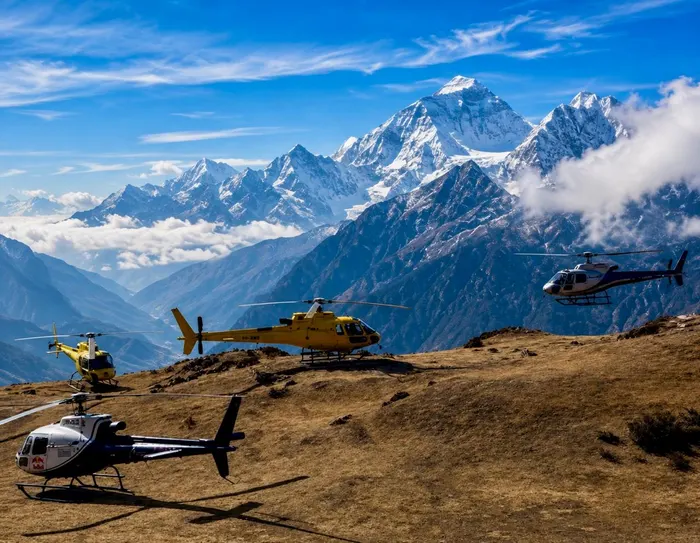
When you book online, the specialty is printed on the profile, which is precisely why digital booking beats arrival-day luck. A general-purpose guide can absolutely lead you up Poon Hill; the same guide may not be the person you want managing a group across three passes above 5,000 meters. Trekkers short on time sometimes split the difference with an Everest Base Camp helicopter day tour instead of a second week on the trail. Budget planning differs by region too, so pair your choice with the Everest Base Camp trek cost breakdown or the Annapurna trek cost guide for the route you are weighing.

If you are still deciding between going alone and hiring, our piece on the solo trek vs guided trek trade-off in Annapurna lays out the honest decision factors, from permit rules to trail navigation to teahouse bargaining.
Related Guides for Hiring and Trekking in Nepal
Booking is one step in a longer plan. These guides cover the decisions around it:
- How to hire a guide in Nepal: the step-by-step guide - the full hiring workflow from defining your trek to confirming insurance
- Trekking guide cost in Nepal: daily rates explained - the current rate ladder for guides, porter-guides, and porters with season and language premiums
- Solo trek vs guided trek in Annapurna - the honest trade-off analysis if you are still undecided
- Everest Base Camp trek cost 2026 - the complete budget breakdown for the Everest route
- Annapurna trek cost guide: independent vs guided - what the Annapurna region costs both ways
- Cultural and spiritual tours in Nepal - pair your trek with heritage days in Kathmandu Valley and beyond
- The complete guide to trekking in Nepal - the umbrella planning guide for permits, seasons, and regions
Final Thoughts: Book Early, Book Verified
The safest online booking is a boring one: a licensed guide from a marketplace or registered agency, a written quote you compared against the published rates, a license number you checked on the DOT portal, and a modest deposit through a receipted channel. Every step takes minutes, and together they filter out virtually every bad outcome trekkers report.
Then the interesting part starts. Meet your guide, walk the map over dinner, and let the plan bend around your pace. If you are ready to look at real profiles with published rates and license numbers, see all verified guide profiles on the EHT marketplace and shortlist two or three. The mountain will be there either way; the guide who gets you there safely is worth choosing carefully.