Nepal is the world's only Hindu kingdom in spirit, if no longer in constitutional form, and its landscape is saturated with sacred sites that have drawn pilgrims for millennia. From the ancient Shiva temple of Pashupatinath on the banks of the Bagmati to the high-altitude shrine of Muktinath in the Mustang desert, from the alpine lakes of Gosaikunda to the Janaki Mandir in the plains of Janakpur, Nepal's Hindu pilgrimage circuit is one of the richest and most diverse in South Asia. For the devout, these are not tourist attractions but tirthas, crossing points where the divine and the human draw close.
This guide maps the major Hindu pilgrimage sites of Nepal, explains their significance and the rituals associated with each, and provides practical information on how to plan a pilgrimage that honors both the outer journey and the inner one. Whether you are a practicing Hindu seeking darshan or a traveler drawn to the spiritual culture of the Himalayas, this circuit offers an encounter with a living tradition that has shaped Nepal for thousands of years.
Why a Hindu Pilgrimage in Nepal
Hinduism in Nepal is not a museum piece. It is a daily reality: the morning puja at neighborhood shrines, the vermilion and rice offerings at crossroads, the festivals that shut down entire cities for days at a time. Nepal is home to Pashupatinath, one of the four most important Shiva temples in South Asia, and to Muktinath, a site sacred to both Hindus and Buddhists that sits at the roof of the world. The country's Hindu pilgrimage sites span an extraordinary range of altitudes, climates, and cultural contexts, from the subtropical plains of Janakpur to the arid trans-Himalayan valleys of Mustang.
Pilgrimage in the Hindu tradition is not merely sightseeing. It is an act of devotion, a form of tapas (austerity), and a way of accumulating punya (spiritual merit). The journey itself, with its hardships and uncertainties, is as much a part of the practice as the arrival. In Nepal, that journey can take you from the heat and dust of the Terai to the thin air of a 4,380-meter mountain pass, and each step is understood as an offering. For a broader context on how Hindu pilgrimage fits into Nepal's spiritual landscape, see our spiritual tour in Nepal 2026 guide.

Pashupatinath: The Lord of the Animals
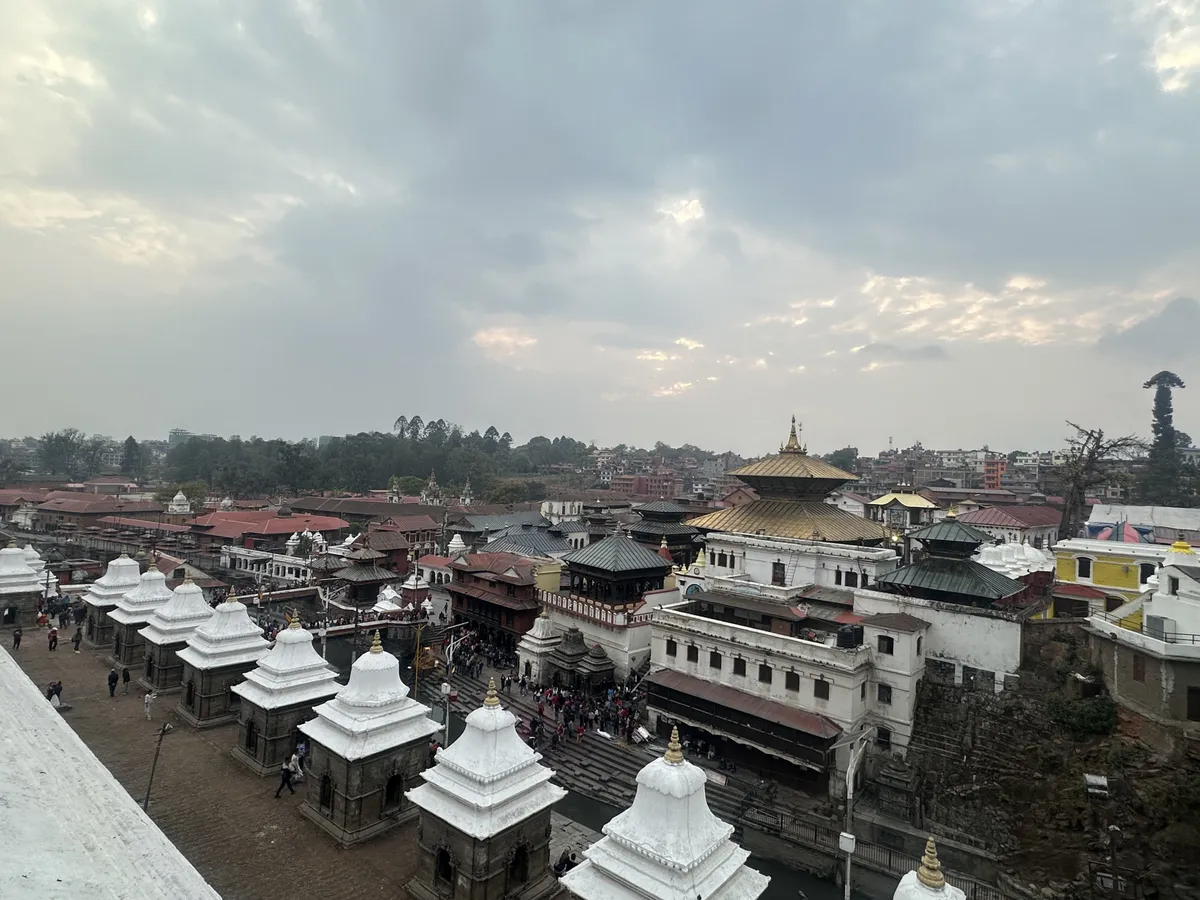
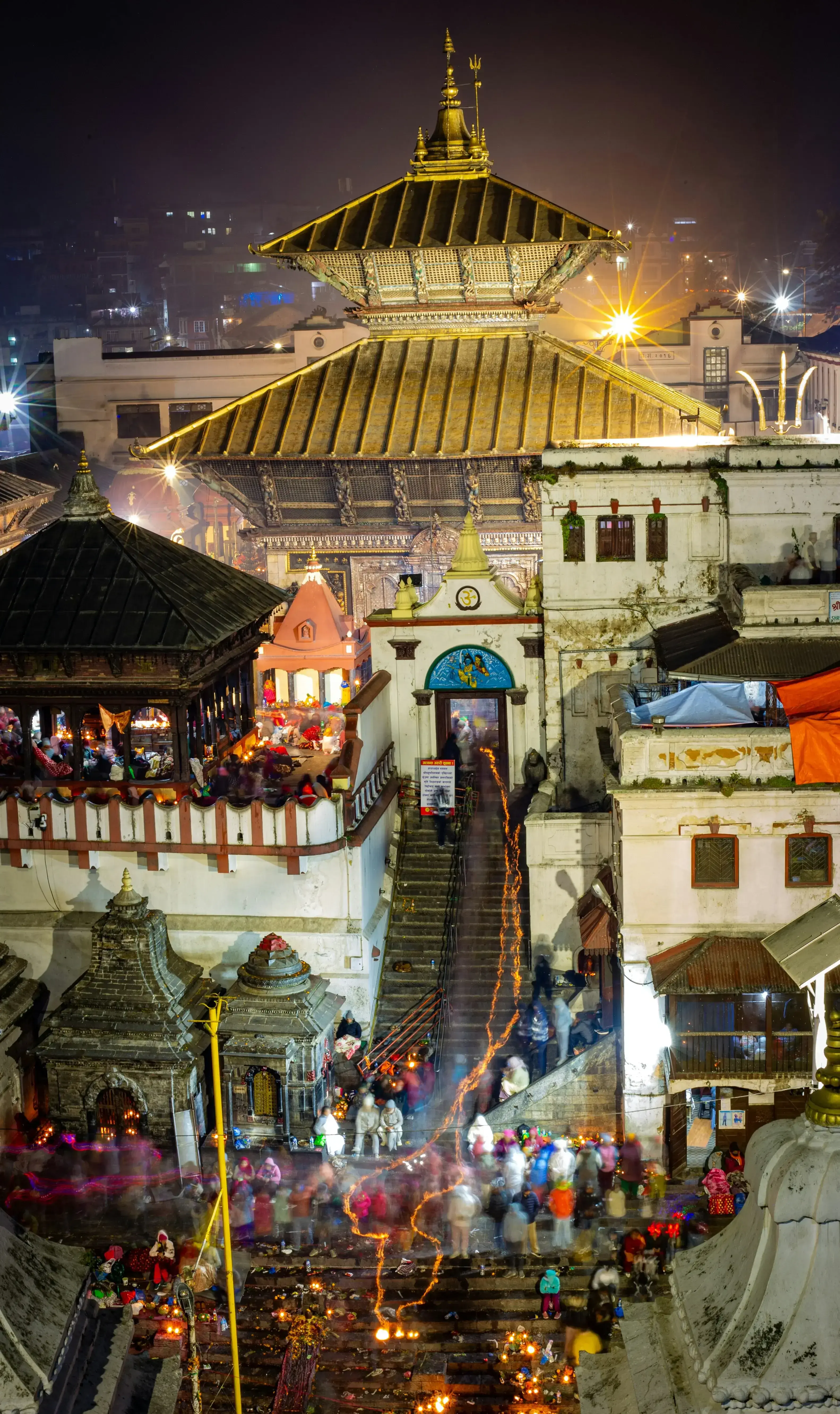
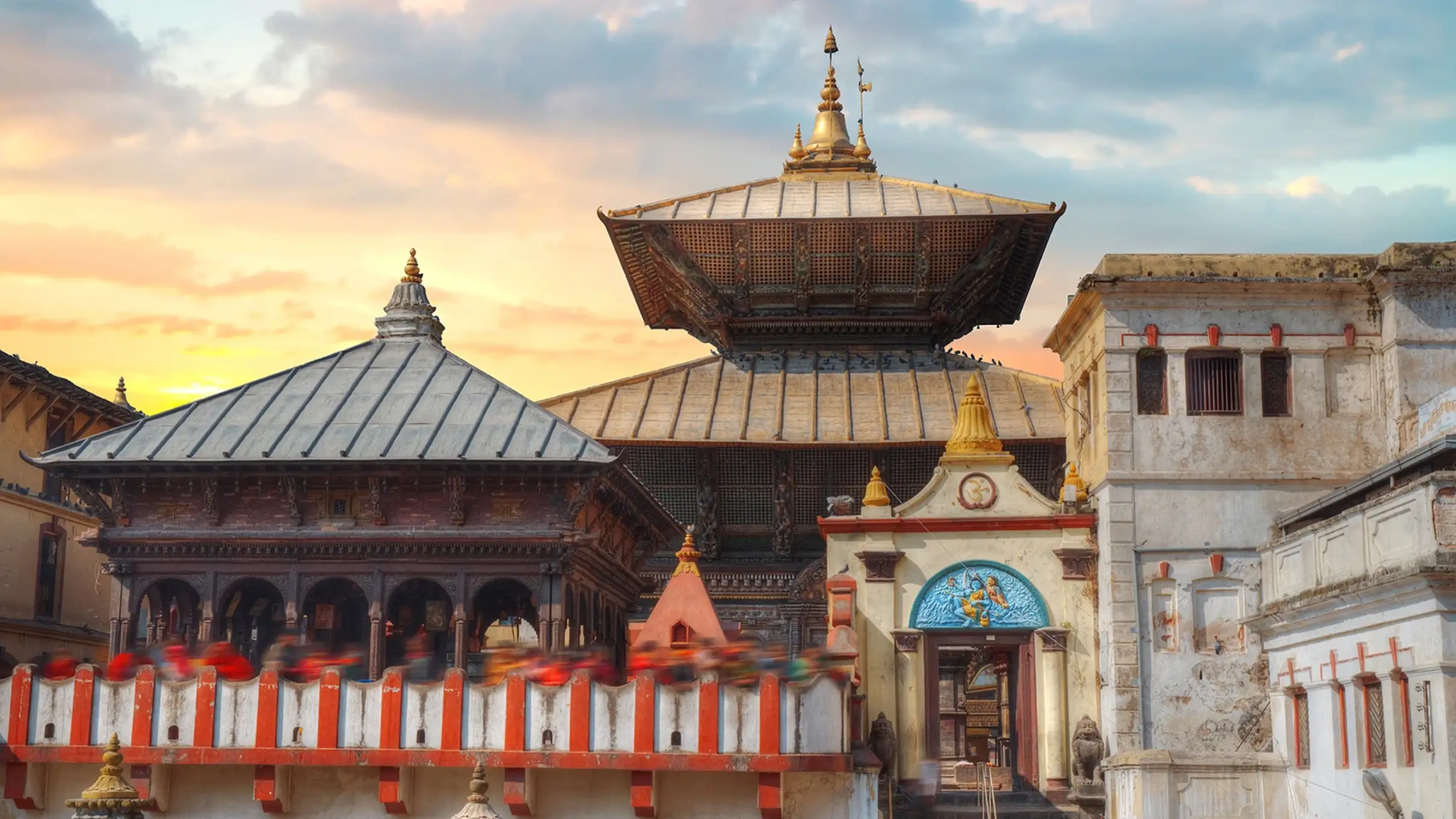
Pashupatinath, on the eastern edge of Kathmandu along the banks of the Bagmati River, is the most important Hindu temple in Nepal and one of the most significant Shiva temples in the world. The temple complex, a UNESCO World Heritage Site, sprawls across both banks of the river and includes hundreds of smaller shrines, ashrams, and cremation ghats. The main temple, a two-tiered pagoda with a gilded roof, dates to the 5th century, though the site has been sacred for far longer.
The lingam inside Pashupatinath is a chaturmukha (four-faced) Shiva lingam, and only Hindus are permitted to enter the main temple. Non-Hindu visitors can view the temple from the opposite bank of the Bagmati and explore the surrounding complex, which is rich with sadhus (holy men), pilgrims, and the constant rhythm of ritual life. The cremation ghats along the river are a powerful reminder of the Hindu understanding of death as a transition, not an end, and witnessing the rites is a profound experience for those who approach it with respect.
The best times to visit Pashupatinath are early morning, when the mist rises off the Bagmati and the first aarti (fire offering) is performed, and evening, when the Bagmati aarti draws hundreds of devotees to the riverbank for a ceremony of fire, chanting, and bells. The temple is particularly crowded during Maha Shivaratri (February or March), when tens of thousands of pilgrims descend on the complex for a night of vigil and worship. The Kathmandu spiritual circuit package combines Pashupatinath with Boudhanath and Swayambhunath in a convenient two-day itinerary.
Muktinath: Salvation in the High Desert
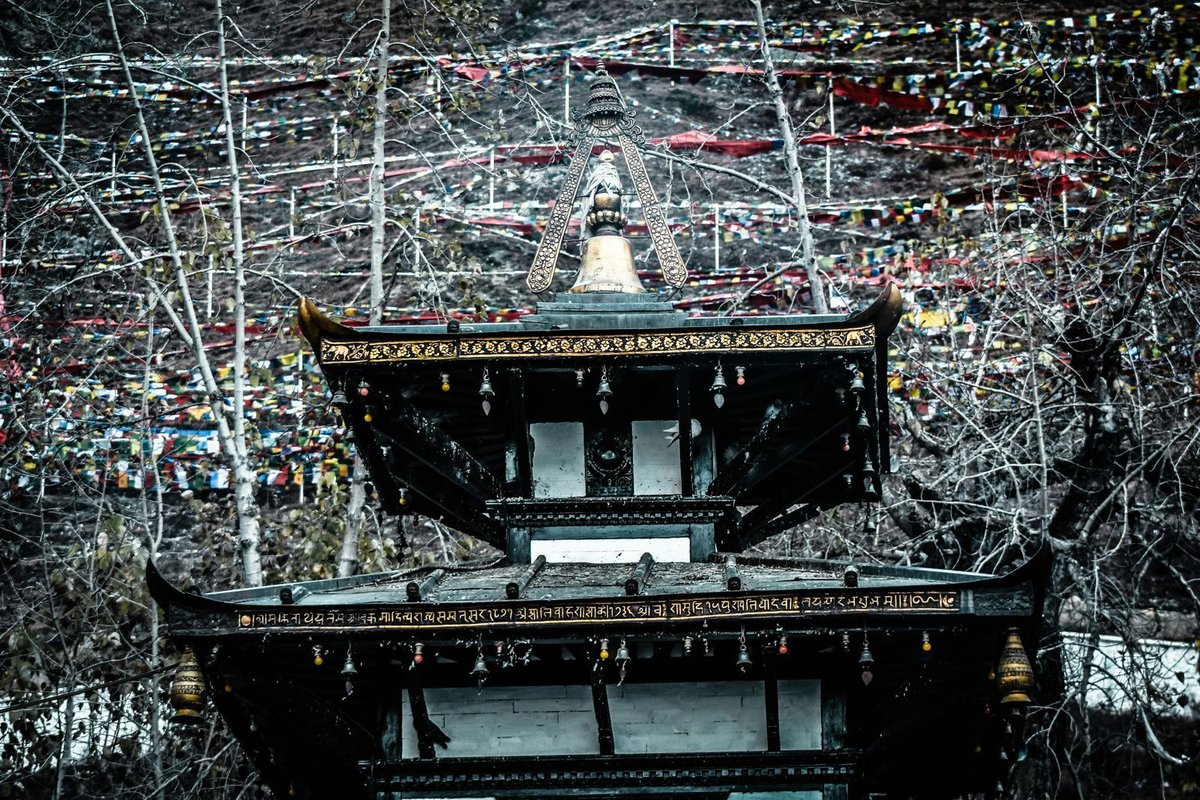
Muktinath, at 3,710 meters in the Mustang district, is one of the most remote and revered pilgrimage sites in the Hindu world. The name means place of liberation, and Hindus believe that bathing in the 108 waterspouts that line the temple courtyard washes away the sins of a lifetime. The site is also sacred to Buddhists, who know it as Chumig Gyatsa, and the coexistence of Hindu and Buddhist worship here is a powerful expression of Nepal's syncretic spiritual culture.
The Muktinath temple is a modest structure compared to the great temples of the plains, but its setting is extraordinary: a high desert valley ringed by snow peaks, with the Kali Gandaki River, one of the deepest gorges on earth, cutting through the landscape below. Inside the temple courtyard, an eternal flame burns from a fissure in the rock, fed by natural gas seeping from the earth. The combination of fire, water, and earth at this altitude has made Muktinath a place of elemental power for centuries.
Reaching Muktinath traditionally requires a trek of 5 to 7 days through the Kali Gandaki Valley, following the Annapurna Circuit trail. In recent years, a road has been built to the nearby village of Ranipauwa, and jeeps now make the journey from Pokhara in 10 to 12 hours, though the road is rough and the journey demanding. For those with limited time, helicopter pilgrimages from Pokhara or Kathmandu can reach Muktinath in under two hours, allowing a visit of several hours before returning. Our Muktinath pilgrimage guide covers the site, the journey, and the rituals in detail. The Muktinath helicopter pilgrimage package offers a streamlined option for those who cannot commit to the trek.

Gosaikunda: The Sacred Alpine Lakes
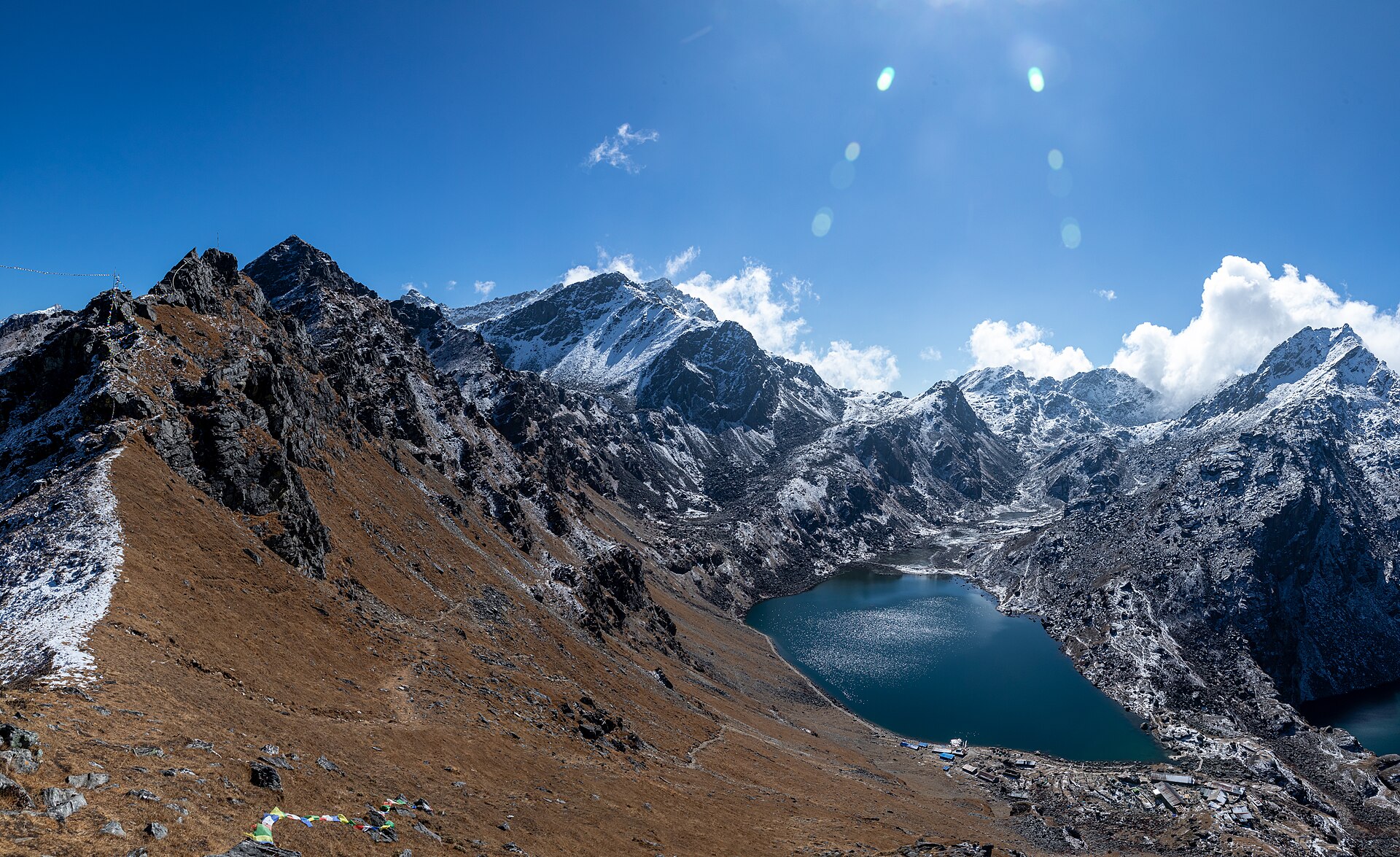
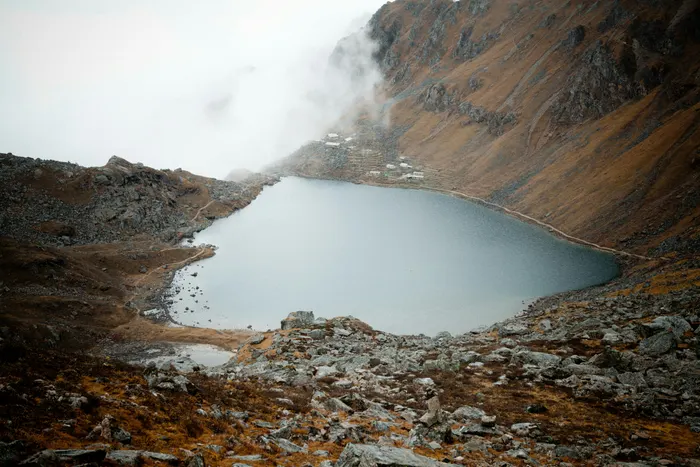
Gosaikunda, at 4,380 meters in the Langtang National Park, is a cluster of high-altitude lakes that are among the most sacred bodies of water in the Hindu tradition. According to legend, the lakes were created when Shiva thrust his trident into the mountain to quench his thirst after swallowing the poison that emerged from the churning of the cosmic ocean. The water of Gosaikunda is believed to have healing properties, and a bath in the lake during the full moon of August (Janai Purnima) is considered especially auspicious.
The Gosaikunda trek is a pilgrimage as much as a hike. The trail climbs through rhododendron and pine forests, past yak pastures and stone chautaras (resting platforms), to a stark alpine landscape of rock, ice, and water. The lake itself, set in a bowl of black rock with snow peaks rising behind it, has a raw, elemental beauty that feels far removed from the ornate temples of the Kathmandu Valley. During Janai Purnima, thousands of pilgrims make the ascent, and the shores of the lake fill with tents, cooking fires, and the sound of bhajans (devotional songs).
The trek to Gosaikunda typically takes 4 to 5 days round-trip from Dhunche, the roadhead in the Langtang Valley. The trail is well-marked and passes through several villages with teahouse accommodation. The final ascent to the lake is steep and the altitude is significant, so acclimatization and a reasonable level of fitness are essential. The Gosaikunda Lake trek package covers the full pilgrimage route with guide, permits, and accommodation. For those who want to combine the trek with yoga and meditation, the Gosaikunda yoga retreat package adds daily practice sessions to the pilgrimage experience.
Janakpur: The City of Sita
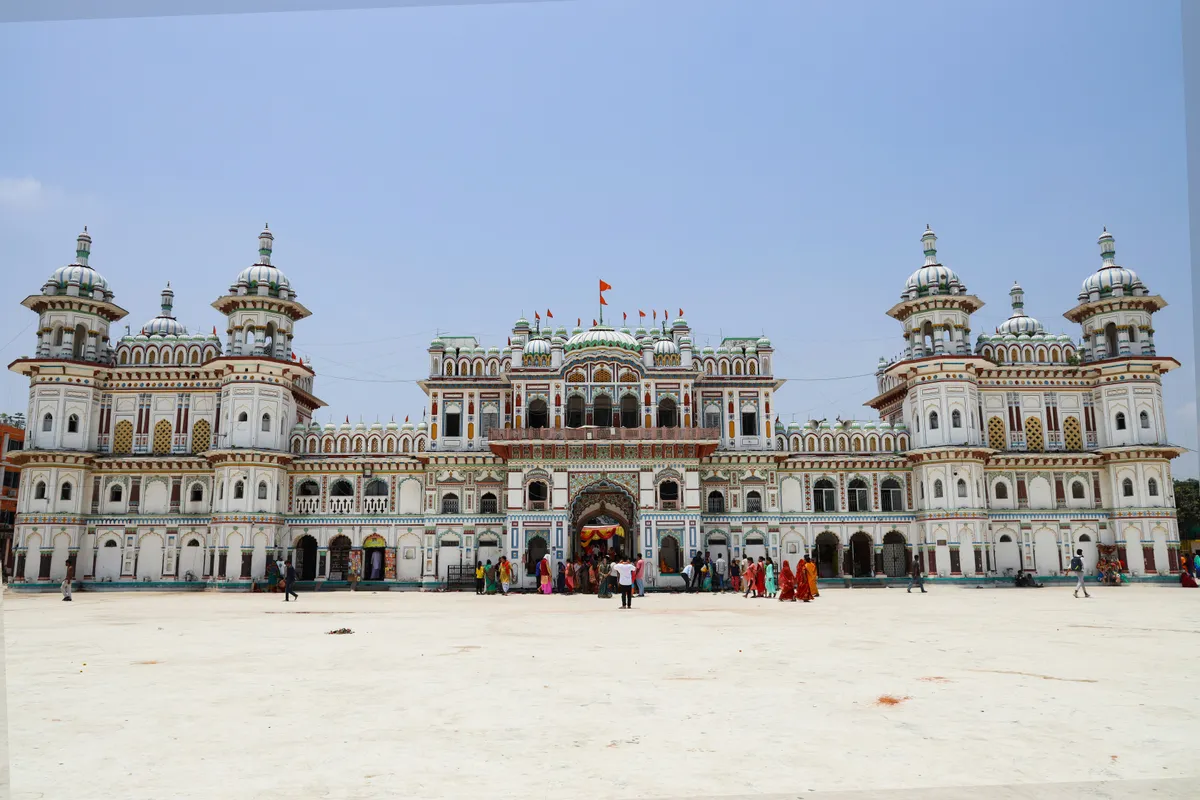
Janakpur, in the southeastern Terai plains, is the legendary capital of the ancient kingdom of Mithila and the birthplace of Sita, the consort of Lord Rama. The Janaki Mandir, a sprawling marble temple built in the Rajput-Mughal style in 1910, is the centerpiece of the city and one of the most architecturally distinctive Hindu temples in Nepal. Its white domes, arched windows, and ornate courtyards feel more like a Rajasthani palace than a Nepali temple, and the effect is striking against the flat green landscape of the Terai.
Janakpur is particularly vibrant during Vivaha Panchami (November or December), a festival that reenacts the wedding of Rama and Sita with processions, music, and rituals that draw pilgrims from across Nepal and India. The city is also a center of Maithili culture, with its own language, script, and artistic traditions, including the famous Madhubani paintings that adorn the walls of many homes.
Janakpur is accessible by road from Kathmandu in 8 to 10 hours, or by a 25-minute flight to Janakpur Airport. The town has several mid-range hotels and guesthouses, and the temple complex is within walking distance of most accommodation. Plan at least one full day to explore the Janaki Mandir, the surrounding sacred ponds (including Dhanush Sagar and Ganga Sagar), and the local markets, which are known for their Maithili crafts and paintings.
Pathibhara: The Goddess of the Eastern Hills
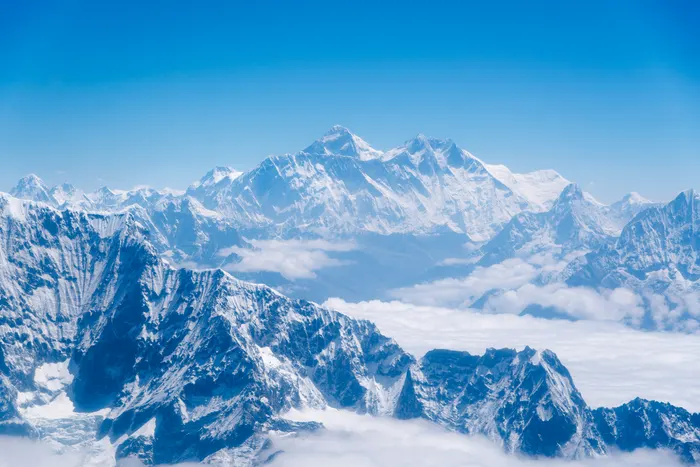
Pathibhara Devi, at 3,794 meters in the Taplejung district of eastern Nepal, is one of the most important Shakti Peethas in the country. The temple, a small stone shrine perched on a knife-edge ridge with views of Kanchenjunga, the world's third-highest mountain, is dedicated to the goddess Pathibhara, who is believed to grant the wishes of those who make the difficult journey to her shrine.
The pilgrimage to Pathibhara is demanding. From the roadhead at Suketar, it is a steep 4 to 5 hour climb through rhododendron forest to the temple. The trail is well-maintained, with stone steps for much of the way, but the altitude and the gradient make it a serious undertaking. Pilgrims typically stay overnight at the simple lodges near the temple, attending the morning puja before descending. The best seasons are March to May and October to November; winter brings snow and the temple may be inaccessible.
Pathibhara is less visited than Pashupatinath or Muktinath, and the journey feels correspondingly more like a true pilgrimage. The eastern hills are among the most beautiful and least developed regions of Nepal, and the combination of the physical challenge, the mountain views, and the sense of remoteness makes Pathibhara a powerful destination for those willing to make the effort.
Manakamana: The Wish-Fulfilling Goddess
Manakamana, perched on a ridge at 1,302 meters above the Trishuli River, is the temple of the goddess who fulfills wishes. It is one of the most popular pilgrimage sites in Nepal, drawing devotees who come to ask for blessings in matters of health, marriage, fertility, and prosperity. The temple is a three-tiered pagoda in the Newari style, and the goddess, an incarnation of Parvati, is represented by a sacred image that is bathed and adorned daily by the temple priests.
The journey to Manakamana was once a steep 3 to 4 hour climb from the river valley, but since 1998 a cable car has connected the base station at Kurintar to the temple in just 10 minutes, making the site accessible to pilgrims of all ages and fitness levels. The cable car ride itself is an experience, gliding over terraced fields, forested hillsides, and the Trishuli River far below. At the top, the temple complex includes the main shrine, several smaller temples, and a viewing platform with panoramic views of the Annapurna and Manaslu ranges.
Manakamana is busiest on Saturdays and during the festival of Dashain (September or October), when animal sacrifices are offered at the temple. The site is a day trip from Kathmandu (about 3 hours by road to Kurintar) or from Pokhara (about 2 hours). The Nepal sacred Kathmandu heritage tour can be extended to include Manakamana as a day excursion.

Other Notable Hindu Sites
Budhanilkantha (Sleeping Vishnu)
At the northern edge of Kathmandu, the temple of Budhanilkantha houses a 5-meter-long stone image of Vishnu reclining on the cosmic serpent Shesha, floating on a pool of water. The statue, carved from a single block of black basalt, dates to the 7th century and is one of the finest examples of Licchavi-era sculpture in Nepal. The temple is a peaceful alternative to the crowds of Pashupatinath and is particularly atmospheric in the early morning.
Dakshinkali
About 22 kilometers south of Kathmandu, the temple of Dakshinkali is dedicated to the goddess Kali in her fierce aspect. Animal sacrifices are performed here on Tuesdays and Saturdays, and the temple draws devotees seeking protection, justice, and the removal of obstacles. The atmosphere is intense and not for the faint-hearted, but it is an authentic expression of a form of Hindu worship that predates the more sanitized temple culture of the city.
Changunarayan
The temple of Changunarayan, on a hilltop near Bhaktapur, is the oldest temple in the Kathmandu Valley, with an inscription dating to 464 CE. Dedicated to Vishnu, the temple is a masterpiece of early Nepali architecture, with exquisite stone, wood, and metal carvings that have survived for over 1,500 years. The setting, surrounded by traditional Newari villages and with views of the valley, is serene and beautiful.
Rituals and Practices at Hindu Pilgrimage Sites
Understanding the basic rituals of Hindu pilgrimage will deepen your experience and help you participate respectfully. Here are the most common practices you will encounter:
- Darshan: The act of seeing and being seen by the deity. At each temple, approach the inner sanctum, gaze upon the image or lingam, and receive the priest's blessing. This is the central act of Hindu worship.
- Puja: A ritual offering of flowers, fruit, incense, and light to the deity. You can perform a simple puja yourself or ask a priest to perform one on your behalf. Offerings are available at stalls near every temple entrance.
- Abhishekha: The ritual bathing of the deity or lingam with water, milk, honey, or ghee. At Pashupatinath and other major temples, you can sponsor an abhishekha through the temple office.
- Parikrama (Circumambulation): Walking clockwise around the temple or shrine, keeping the deity on your right. This is done with a focused mind, often while reciting a mantra.
- Aarti: The evening fire ceremony, in which lamps, incense, and bells are offered to the deity. The Bagmati aarti at Pashupatinath is the most famous, but most major temples have an evening aarti that is open to all.
- Prasad: Food or flowers that have been offered to the deity and are then distributed to devotees as a blessing. Accept prasad with your right hand and consume it reverently.
Sample Itineraries
One-Week Hindu Pilgrimage Circuit
- Day 1: Arrive Kathmandu. Evening aarti at Pashupatinath.
- Day 2: Morning at Pashupatinath (darshan, explore the complex). Afternoon at Budhanilkantha and Swayambhunath.
- Day 3: Day trip to Manakamana by cable car. Return to Kathmandu.
- Day 4: Fly to Pokhara. Afternoon at leisure by Phewa Lake.
- Day 5: Fly or drive to Jomsom, then jeep to Muktinath. Visit the temple, bathe in the 108 waterspouts. Overnight in Ranipauwa or Jomsom.
- Day 6: Morning puja at Muktinath. Return to Pokhara.
- Day 7: Fly Pokhara to Kathmandu. Depart or extend.
Two-Week Extended Pilgrimage
- Days 1-3: Kathmandu Valley (Pashupatinath, Budhanilkantha, Changunarayan, Dakshinkali).
- Day 4: Day trip to Manakamana.
- Days 5-9: Gosaikunda trek (5 days round-trip from Dhunche).
- Days 10-11: Fly to Pokhara, then to Jomsom. Two days at Muktinath.
- Days 12-13: Fly to Janakpur. Visit Janaki Mandir and sacred ponds.
- Day 14: Fly Janakpur to Kathmandu. Depart.
Practical Information
Best Time to Go
The best months for a Hindu pilgrimage in Nepal are October to November (clear skies, comfortable temperatures, major festivals including Dashain and Tihar) and March to April (spring, moderate weather). The monsoon (June to September) makes mountain travel difficult and obscures views, though the Terai sites like Janakpur are accessible year-round. Winter (December to February) is cold at altitude but the Kathmandu Valley sites are pleasant and uncrowded.
If you want to experience a major festival, time your pilgrimage for Maha Shivaratri (February or March) at Pashupatinath, Janai Purnima (August) at Gosaikunda, or Vivaha Panchami (November or December) at Janakpur. The festivals of Nepal guide covers the major celebrations and their dates.
Getting Around
Domestic flights connect Kathmandu to Pokhara, Jomsom (for Muktinath), and Janakpur. Roads connect most sites, though the journey to Muktinath by road is long and rough. The Gosaikunda trek and the Pathibhara pilgrimage require multi-day hikes. For trekking logistics, permits, and guide requirements, consult our guide to choosing a trekking agency in Nepal.
What to Pack
- Modest clothing: Shoulders and knees covered at all temples. A shawl or dupatta is useful for covering the head where required.
- Comfortable walking shoes: You will be on your feet for hours, and temple complexes are large.
- Layers: The temperature difference between Janakpur (hot plains) and Muktinath (near freezing) is extreme.
- Cash: Small denominations for temple donations, offerings, and priest fees.
- Offerings: You can buy flowers, incense, and prasad at stalls near every temple, but carrying a small supply is convenient.
- Passport photos: Required for trekking permits if you are trekking to Gosaikunda or Pathibhara.
Etiquette at Hindu Temples
- Remove shoes before entering any temple or shrine area.
- Dress modestly: shoulders and knees covered. Some temples require head covering for women.
- Do not point the soles of your feet at the deity or at priests.
- Non-Hindus are not permitted inside the main Pashupatinath temple but can explore the surrounding complex.
- Photography is often restricted inside temple sanctums. Look for signs or ask permission.
- Accept prasad with your right hand. The left hand is considered impure in Hindu culture.
- Do not touch the deity images or lingams unless explicitly invited to do so by a priest.
- Maintain silence or speak quietly within temple precincts.
Deepening Your Pilgrimage
A Hindu pilgrimage is not a checklist. The outer journey to the tirthas is meant to mirror and support an inner journey of devotion, reflection, and purification. Many pilgrims observe vratas (vows) during their pilgrimage: fasting on certain days, abstaining from alcohol and meat, maintaining silence for periods, or reciting a specific number of mantras each day. These practices are not required, but they can deepen the experience for those who choose to undertake them.
Consider carrying a small journal to record your experiences at each site. The impressions of a pilgrimage, especially one as intense as the Nepal circuit, can be overwhelming, and writing helps to integrate them. Many pilgrims also bring a mala (prayer beads) and a specific mantra to recite throughout the journey, using the rhythm of the beads to anchor the mind as the body moves from place to place.
For those who want a fully supported pilgrimage experience, Enticing Himalayas offers several packages that handle all logistics. The Nepal cultural pilgrimage experience covers Kathmandu Valley sites with guided visits and comfortable accommodation. The Sacred Valleys and Living Goddesses journey offers a deeper dive into the spiritual culture of the Kathmandu Valley. For a comprehensive overview of all spiritual travel options, see our complete guide to cultural and spiritual tours in Nepal.