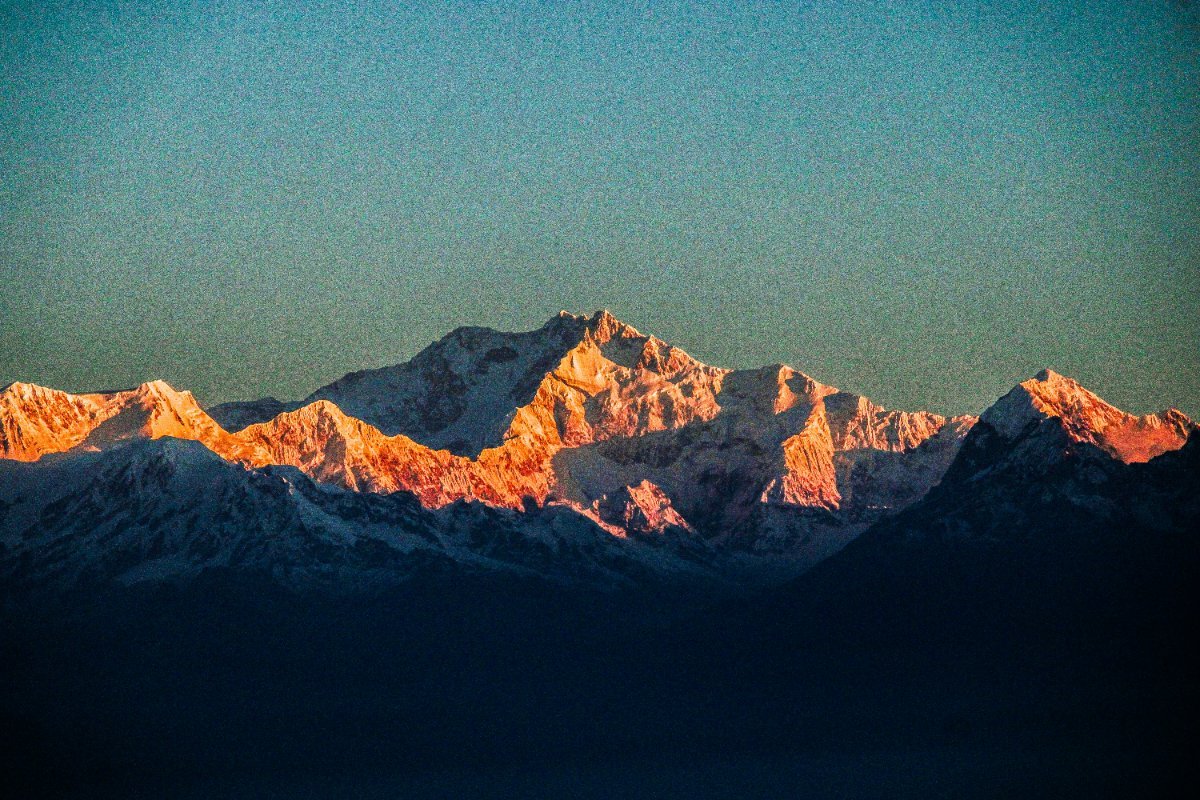
Introduction to the Kanchenjunga Circuit Trek
The Kanchenjunga Circuit Trek is one of the most remote, spectacular, and rewarding trekking adventures in Nepal. Located in the far eastern corner of the country, this trek takes you to the base of Mount Kanchenjunga, the third highest mountain in the world at 8,586 meters. Unlike the more popular routes in the Annapurna and Everest regions, the Kanchenjunga Circuit remains a wild, less-traveled path through pristine valleys, ancient forests, and traditional villages where time seems to stand still. For trekkers seeking solitude, raw wilderness, and a genuine sense of exploration, this is the ultimate Himalayan journey.
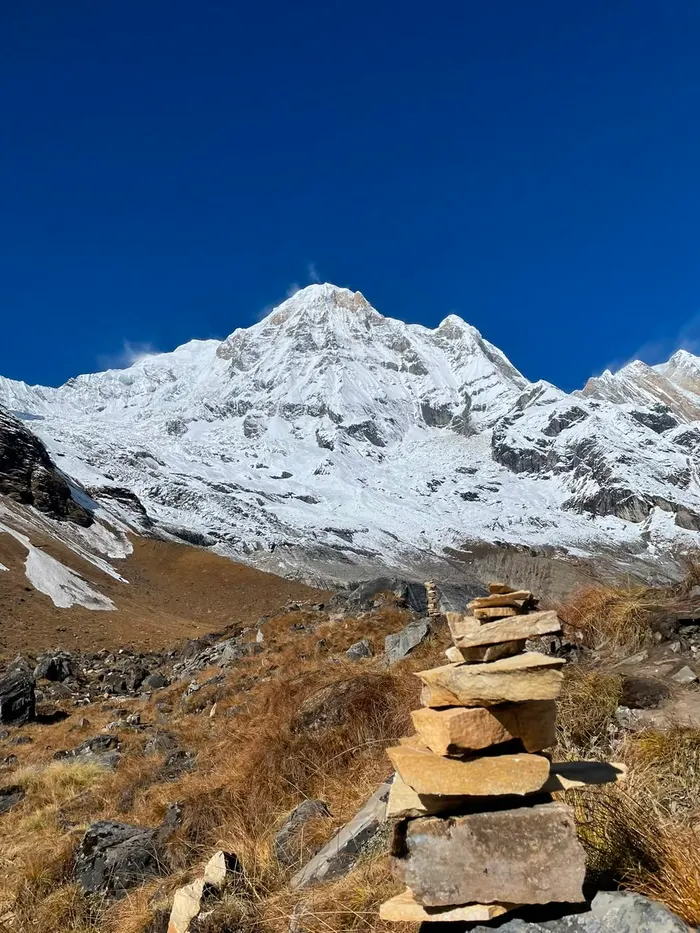
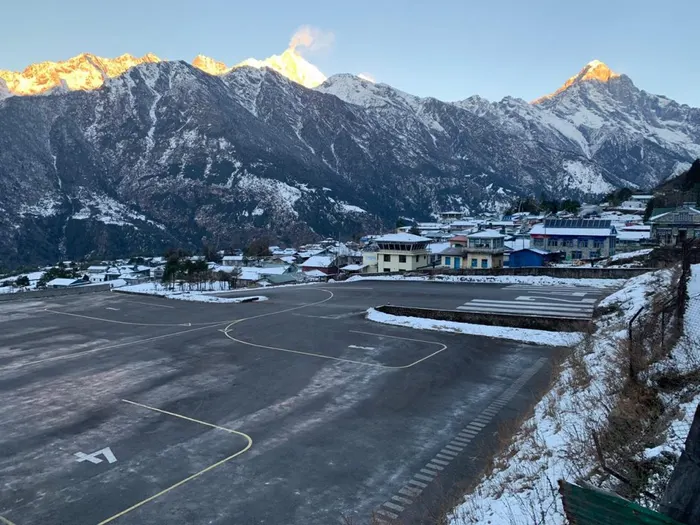
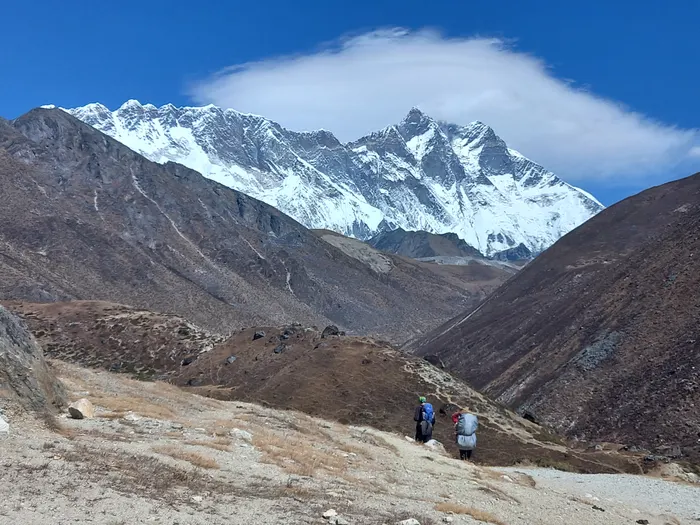
The trek circles the Kanchenjunga massif, visiting both the North Base Camp at Pangpema (5,143 meters) and the South Base Camp at Yalung Glaciers (4,500 meters). Along the way, you will cross high mountain passes, walk through rhododendron and pine forests, encounter glaciers and turquoise lakes, and experience the rich cultural heritage of the Limbu, Rai, Sherpa, and Gurung communities. The Kanchenjunga Conservation Area, which encompasses the entire trekking region, is a biodiversity hotspot home to rare wildlife including the snow leopard, red panda, and Himalayan black bear.
This comprehensive guide covers everything you need to know to plan your Kanchenjunga Circuit Trek in 2026, from route details and day-by-day itineraries to permits, costs, packing lists, and practical travel advice.
About Mount Kanchenjunga: The Third Highest Peak
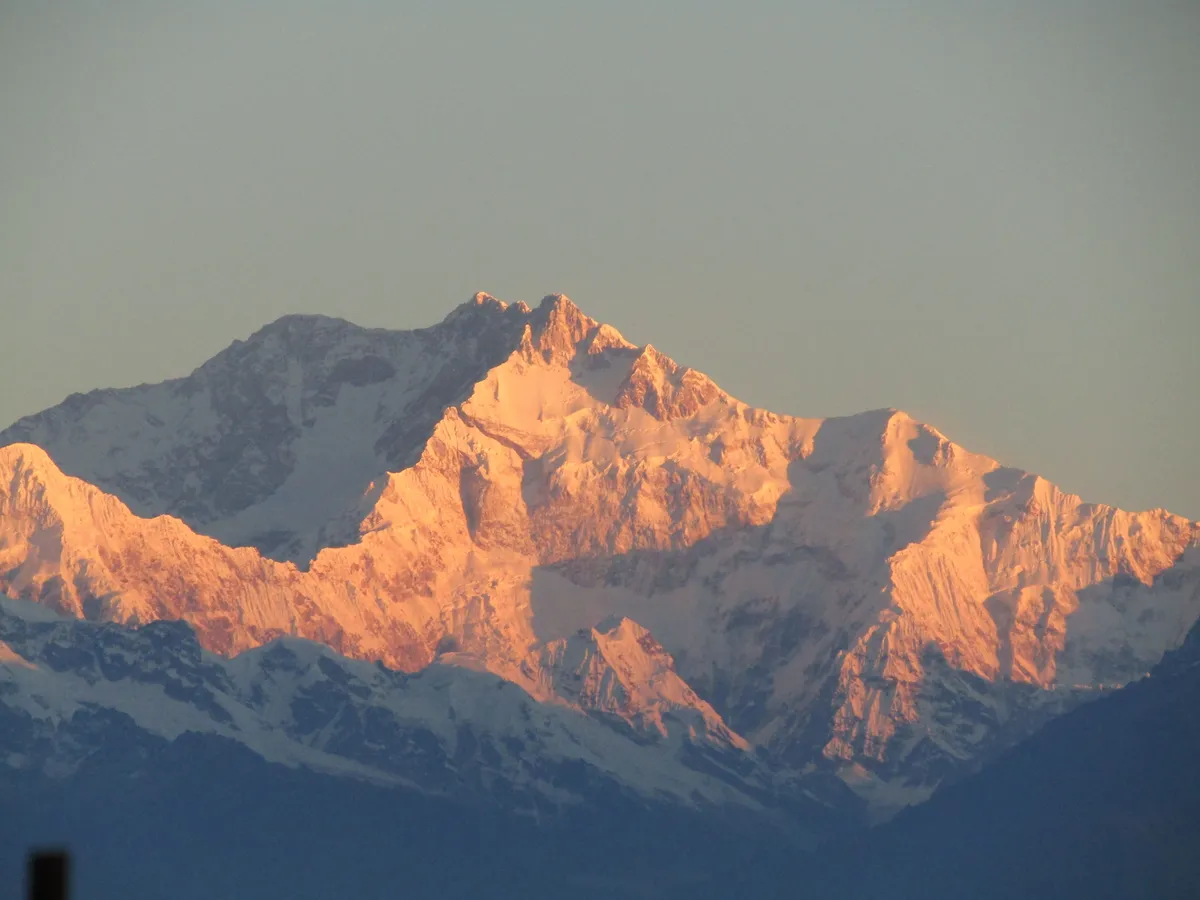
Mount Kanchenjunga stands at 8,586 meters (28,169 feet), making it the third highest mountain in the world after Mount Everest and K2. The name Kanchenjunga translates to "Five Treasures of the Great Snow," a reference to its five distinct summits, four of which exceed 8,000 meters. The mountain straddles the border between Nepal and the Indian state of Sikkim, and its massive presence dominates the skyline of eastern Nepal.
For centuries, local communities have revered Kanchenjunga as a sacred mountain. The indigenous Limbu and Sherpa people believe the mountain is the abode of powerful deities, and climbing to its summit has historically been discouraged out of respect for these beliefs. In fact, the first successful ascent of Kanchenjunga was only achieved in 1955 by Joe Brown and George Band of a British expedition, and they stopped short of the true summit in deference to local religious sentiments, a tradition that subsequent climbing teams have largely followed.
The Kanchenjunga massif features five main peaks: Kanchenjunga Main (8,586m), Kanchenjunga West (8,505m), Kangbachen (7,902m), Kanchenjunga Central (8,482m), and Kanchenjunga South (8,476m). The mountain is also the source of several major glaciers, including the Kanchenjunga Glacier, Yalung Glacier, and Zemu Glacier, which feed important river systems in both Nepal and India.
Kanchenjunga Circuit Trek Route Overview
The Kanchenjunga Circuit Trek begins from Taplejung, a district headquarters in far eastern Nepal accessible by a short flight from Kathmandu to Suketar Airport or by a long overland drive from Kathmandu via Biratnagar. From Taplejung, the trail follows the Tamur River valley through subtropical forests and terraced farmland before climbing steadily into the alpine zone.
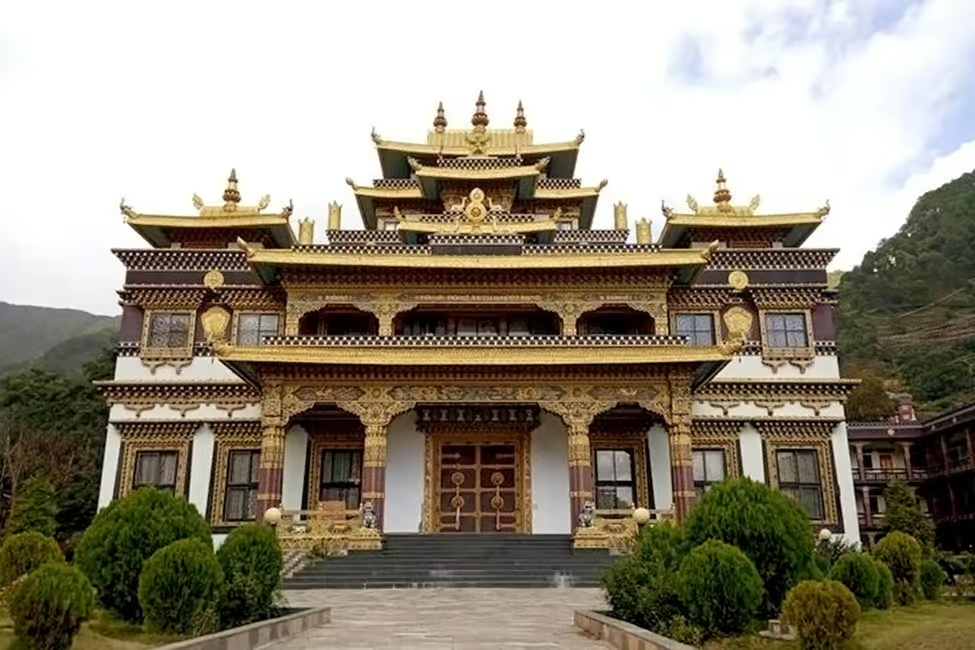
The classic circuit route combines both the northern and southern approaches to Kanchenjunga. Trekkers typically begin by heading north through the villages of Mitlung, Chirwa, Sekathum, and Amjilosa, following the Ghunsa Khola river. After reaching the village of Ghunsa, a important Tibetan settlement, the trail continues north to Kambachen and then to Lhonak before arriving at the North Base Camp at Pangpema. From here, you are rewarded with breathtaking views of the Kanchenjunga North Face and surrounding peaks.
The circuit then crosses high mountain passes, most notably the Sele La pass (4,290 meters) and the Sinion La pass (4,646 meters), to transition from the northern valley to the southern valley. The southern approach leads through the villages of Tseram, Torongden, and Ramche before reaching the South Base Camp at the Yalung Glacier. From the South Base Camp, trekkers can visit the Oktang viewpoint, which offers a stunning panorama of the Kanchenjunga South Face.
The return journey follows the Tamur River valley back through Yamphudin, Mamangkhe, and Khebang before concluding at Taplejung. The full circuit covers approximately 200 kilometers of trail and ranges in elevation from 1,200 meters at the starting point to over 5,100 meters at the North Base Camp.
North Base Camp: Pangpema (5,143m)
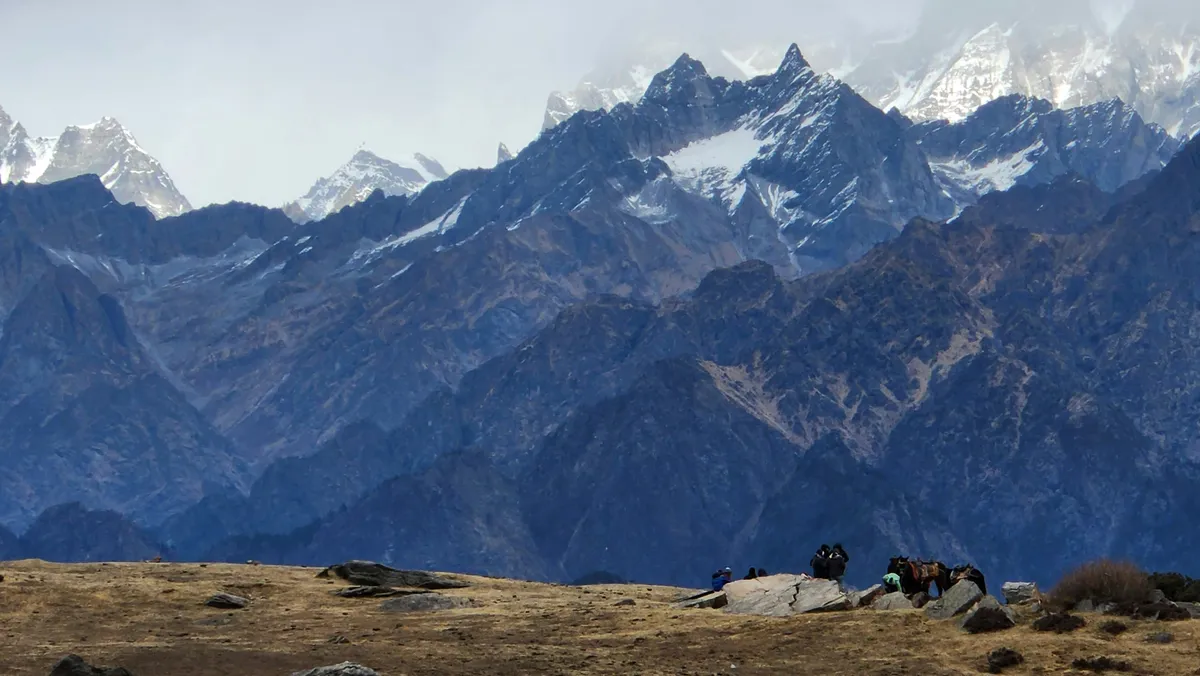
The Kanchenjunga North Base Camp, known as Pangpema, sits at an elevation of 5,143 meters and is one of the two highlight destinations on the circuit trek. Pangpema is a wide, open plain at the snout of the Kanchenjunga Glacier, surrounded by a dramatic amphitheater of snow-capped peaks. From here, the North Face of Kanchenjunga rises majestically, along with views of Chang Himal, Nepal Peak, and Twin Peaks.
The journey to Pangpema from Lhonak takes approximately 4 to 5 hours, covering rocky terrain and moraine fields. The landscape becomes increasingly barren and otherworldly as you ascend, with the last vestiges of vegetation giving way to a stark, glacial environment. At Pangpema, you are at the foot of one of the most impressive mountain walls on the planet, and the sense of isolation and grandeur is overwhelming.
Most trekkers spend a full day at or near Pangpema for acclimatization and exploration. A popular side trip is to hike further up the glacier toward the advanced base camp used by mountaineering expeditions attempting Kanchenjunga from the north. The views from these higher vantage points are even more spectacular, though the terrain requires careful navigation over loose rocks and ice.
South Base Camp: Yalung Glacier (4,500m)
The Kanchenjunga South Base Camp is located at the Yalung Glacier at approximately 4,500 meters elevation. This is the second major highlight of the circuit trek and offers a completely different perspective of the Kanchenjunga massif. From the South Base Camp and the nearby Oktang viewpoint (4,730 meters), trekkers are treated to a sweeping panorama of the South Face of Kanchenjunga, widely considered one of the most beautiful mountain faces in the world.
The southern approach is characterized by dramatic glacier views, turquoise glacial lakes, and towering ice seracs. The trail from Ramche to the South Base Camp follows the Yalung Khola through alpine meadows and moraine deposits. A short climb from the base camp brings you to the Oktang ridge, where the full South Face of Kanchenjunga reveals itself in all its glory, along with views of Kanchenjunga South, Kanchenjunga Central, and Rathong Peak.
Many trekkers find the South Base Camp to be even more visually stunning than the North Base Camp, as the South Face of Kanchenjunga is a massive, nearly vertical wall of ice and rock that rises dramatically from the glacier. The sense of being deep in the heart of the Himalayan wilderness is profound at this location.
Day-by-Day Trek Itinerary Summary
The following is a typical 22-day itinerary for the Kanchenjunga Circuit Trek, including travel days to and from Taplejung. Actual durations may vary depending on weather, acclimatization needs, and trail conditions.
Day 1: Kathmandu to Taplejung (Suketar) - Fly from Kathmandu to Suketar Airport in Taplejung district. If the flight is not operating due to weather, take a drive from Kathmandu to Taplejung via Biratnagar, which takes approximately 1 to 2 days.
Day 2: Taplejung to Mitlung (921m) - Begin trekking from Taplejung, descending through terraced fields and subtropical forest to the village of Mitlung along the Tamur River. Approximately 4 to 5 hours of walking.
Day 3: Mitlung to Chirwa (1,271m) - Follow the Tamur River through cardamom farms and small villages. Cross suspension bridges and pass through lush forests. Approximately 5 to 6 hours.
Day 4: Chirwa to Sekathum (1,660m) - The trail follows the Tamur and then turns north into the Ghunsa Khola valley. Pass through the village of Sinwa and cross a suspension bridge to reach Sekathum. Approximately 5 to 6 hours.
Day 5: Sekathum to Amjilosa (2,510m) - Climb steadily through dense bamboo and rhododendron forest along the Ghunsa Khola. Cross a high ridge and descend to the small Tibetan settlement of Amjilosa. Approximately 6 to 7 hours.
Day 6: Amjilosa to Gyabla (2,730m) - Continue through forest, crossing streams and climbing over ridges. The forest gradually thins as you gain altitude. Reach the village of Gyabla, which was partially destroyed by a flood in recent years. Approximately 5 to 6 hours.
Day 7: Gyabla to Ghunsa (3,415m) - Trek through pine and birch forest to reach Ghunsa, a major Tibetan village and the last permanent settlement on the northern route. Ghunsa has a small gompa (monastery) and is an important acclimatization stop. Approximately 4 to 5 hours.
Day 8: Acclimatization Day in Ghunsa - Rest and acclimatize in Ghunsa. A recommended acclimatization hike is to the Lapsang La viewpoint or to the nearby hills for panoramic views. Explore the village and visit the monastery.
Day 9: Ghunsa to Kambachen (4,050m) - The trail climbs through open valley and sparse vegetation. Cross a bridge over the Ghunsa Khola and pass waterfalls. Reach the small settlement of Kambachen with views of Jannu (Kumbhakarna) peak. Approximately 5 to 6 hours.
Day 10: Acclimatization Day in Kambachen - Rest and acclimatize. Optional hike toward Jannu Base Camp or up the ridge behind the village for views of Kanchenjunga and surrounding peaks.
Day 11: Kambachen to Lhonak (4,790m) - Trek through a wide, barren valley along the Kanchenjunga Glacier. The landscape becomes increasingly rocky and glacial. Reach the temporary settlement of Lhonak with views of Nepal Peak and Kanchenjunga. Approximately 4 to 5 hours.
Day 12: Lhonak to Pangpema North Base Camp (5,143m) - Continue along the glacier moraine to Pangpema, the North Base Camp. Spend time exploring and enjoying the magnificent views of the Kanchenjunga North Face. Approximately 3 to 4 hours.
Day 13: Pangpema to Ghunsa - Retrace your steps back down the valley to Ghunsa. Approximately 6 to 7 hours.
Day 14: Ghunsa to Sele Le (4,290m) - Begin the crossing of the high passes. Climb through forest and alpine meadows to reach the Sele Le camp area. Approximately 5 to 6 hours.
Day 15: Sele Le to Tseram (3,870m) via Sinion La and Mirgin La Passes - Cross the Sinion La (4,666m) and Mirgin La (4,646m) passes, which offer spectacular views of both the northern and southern valleys. Descend to the village of Tseram in the southern valley. Approximately 7 to 8 hours.
Day 16: Tseram to Torongden (4,140m) - Follow the Simjua Khola through rhododendron and juniper forest. Pass the small settlement of Ramche. Approximately 5 hours.
Day 17: Torongden to Yalung South Base Camp (4,500m) and Oktang (4,730m) - Trek along the Yalung Glacier moraine to the South Base Camp area. Climb to the Oktang viewpoint for magnificent views of the Kanchenjunga South Face. Return to Ramche or Torongden for the night. Approximately 6 to 7 hours.
Day 18: Ramche to Yamphudin (2,080m) - Descend steeply through forest and farmland, crossing the Simjua La pass (3,735m) and losing significant altitude. Reach the mixed-community village of Yamphudin. Approximately 7 to 8 hours.
Day 19: Yamphudin to Mamangkhe (1,810m) - Continue descending through subtropical forest, passing waterfalls and small villages. Reach the Limbu village of Mamangkhe. Approximately 5 to 6 hours.
Day 20: Mamangkhe to Khebang (1,910m) - Walk through terraced fields and villages, experiencing the rich culture of the lower hills. Reach Khebang. Approximately 5 to 6 hours.
Day 21: Khebang to Taplejung - Final day of trekking, climbing back to Taplejung through farmland and forest. Approximately 5 to 6 hours.
Day 22: Taplejung to Kathmandu - Fly from Suketar Airport back to Kathmandu, or begin the overland journey if flights are not available.
Trek Difficulty and Physical Preparation
The Kanchenjunga Circuit Trek is classified as a challenging to strenuous trek. It is significantly more demanding than popular routes like the Annapurna Base Camp Trek or the Everest Base Camp Trek due to several factors: the long duration (20 to 24 days), the remote location with limited infrastructure, the high altitude (reaching above 5,100 meters), the need for multiple acclimatization days, and the crossing of high mountain passes above 4,600 meters.
Trekkers should be in excellent physical condition and have prior experience with multi-day trekking at altitude. The daily walking distances range from 4 to 8 hours, and the terrain includes steep ascents and descents, rocky moraine fields, river crossings, and high pass crossings. The cumulative elevation gain and loss over the course of the trek is substantial.
Physical preparation should begin at least 3 to 4 months before the trek. Focus on cardiovascular endurance through running, cycling, swimming, or hiking. Strengthen your legs with squats, lunges, and step-ups. Practice hiking with a loaded backpack on uneven terrain. Flexibility training, particularly for the hips, knees, and ankles, will help prevent injuries on the trail.
Acclimatization is critical on this trek. The itinerary includes built-in acclimatization days in Ghunsa and Kambachen, but trekkers must also pay attention to their body and be prepared to adjust the pace. Altitude sickness can affect anyone regardless of fitness level, and the remote nature of the Kanchenjunga region means that emergency evacuation is more difficult and time-consuming than in more popular trekking areas.
Best Time to Trek Kanchenjunga Circuit
The best time to undertake the Kanchenjunga Circuit Trek is during the two main trekking seasons in Nepal: spring (March to May) and autumn (September to November).
Spring (March to May): Spring is an excellent time for the Kanchenjunga trek. The weather is gradually warming, and the skies are generally clear. One of the highlights of trekking in spring is the spectacular display of rhododendron blooms, which blanket the lower and middle elevation forests in shades of red, pink, and white. Mountain views are excellent in the mornings, though afternoon clouds can develop as the season progresses. Temperatures at higher altitudes are cold but manageable.
Autumn (September to November): Autumn is widely considered the best trekking season in Nepal, and this holds true for Kanchenjunga as well. The monsoon rains have cleared the atmosphere of dust, resulting in crystal-clear mountain views. The weather is stable, with crisp mornings and mild daytime temperatures. The trails are dry and in good condition. This is the most popular time for the Kanchenjunga trek, though "popular" is relative, as you will still encounter very few other trekkers compared to the major routes.
The winter months (December to February) are not recommended for the Kanchenjunga Circuit due to heavy snowfall at high altitudes, which can block the high passes and make the trail dangerous. The summer monsoon season (June to August) brings heavy rainfall, leeches, and slippery trails, along with obscured mountain views, making trekking difficult and less enjoyable.
Permits Required for Kanchenjunga Trek
The Kanchenjunga region is a restricted area in Nepal, and special permits are required to trek here. Unlike the Annapurna and Everest regions, which require only standard TIMS cards and conservation area permits, the Kanchenjunga trek requires additional documentation.
Kanchenjunga Restricted Area Permit: This is the primary permit required for the trek. The Kanchenjunga region is designated as a restricted area by the Nepalese government, and trekkers must obtain a Restricted Area Permit (RAP) through a registered trekking agency. The permit fee is USD 20 per person per week for the first four weeks and USD 25 per person per week thereafter. Most trekkers will need the permit for approximately 3 to 4 weeks. This permit cannot be obtained individually; it must be arranged through a licensed trekking company.
Kanchenjunga Conservation Area Permit (KCAP): In addition to the restricted area permit, trekkers must also purchase a Kanchenjunga Conservation Area Permit. The fee is NPR 2,000 (approximately USD 15) per person for non-SAARC nationals and NPR 1,000 for SAARC nationals. This permit supports the conservation efforts of the Kanchenjunga Conservation Area, which is managed by the World Wildlife Fund (WWF) in partnership with the Nepalese government.
TIMS Card: Trekkers must also have a Trekkers Information Management System (TIMS) card. For organized treks through a registered agency, the TIMS card fee is included in the overall package. Individual trekkers can obtain the TIMS card in Kathmandu, though independent trekking in the Kanchenjunga restricted area is not permitted.
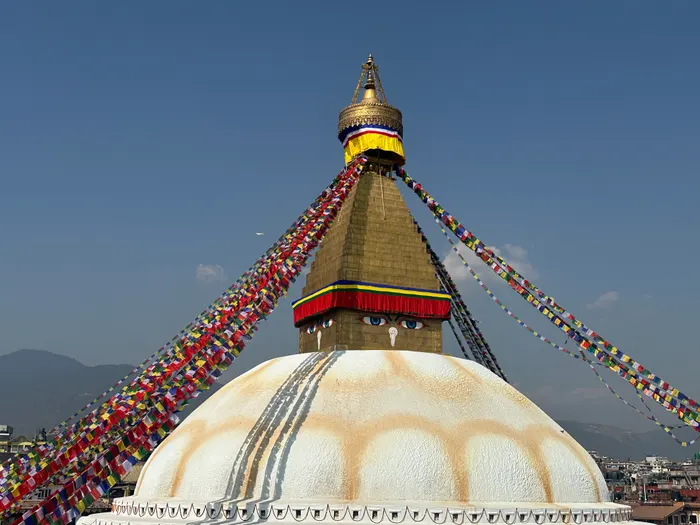
All permits are typically arranged by your trekking agency as part of the overall package. Ensure that your permits are verified and carried with you throughout the trek, as checkpoints are located along the route.
Cost of the Kanchenjunga Circuit Trek
The Kanchenjunga Circuit Trek is more expensive than popular trekking routes in Nepal due to its remote location, the requirement for a registered trekking agency, the restricted area permit fees, and the need for camping equipment and support staff. A typical all-inclusive package through a reputable trekking agency costs between USD 2,500 and USD 3,800 per person, depending on the level of service, group size, and duration.
Breakdown of estimated costs:
- Restricted Area Permit: approximately USD 60 to USD 100 per person (depending on duration)
- Kanchenjunga Conservation Area Permit: approximately USD 15 per person
- TIMS Card: approximately USD 10 per person
- Domestic flights (Kathmandu to Suketar and return): approximately USD 300 to USD 400 round trip
- Trekking guide: approximately USD 25 to USD 35 per day
- Porters: approximately USD 15 to USD 25 per day per porter
- Accommodation and meals: approximately USD 30 to USD 45 per day (where teahouses are available)
- Camping equipment and supplies: variable, included in organized packages
- Travel insurance (must cover helicopter evacuation above 5,000m): approximately USD 100 to USD 200
Trekkers should also budget for personal expenses such as hot showers, charging devices, snacks, and beverages at higher altitudes, where prices increase significantly due to the cost of transporting goods to remote locations. Tipping for guides and porters is customary and expected, typically amounting to 10 percent of the total trek cost.
Accommodation: Camping and Teahouses
Accommodation on the Kanchenjunga Circuit Trek is a mix of basic teahouses and organized camping. Unlike the Annapurna and Everest regions, where comfortable lodges are available throughout the route, the infrastructure in the Kanchenjunga region is much more limited.
Teahouses: Basic teahouse lodges are available in the lower elevation villages such as Taplejung, Mitlung, Chirwa, Sekathum, Ghunsa, and Yamphudin. These teahouses offer simple rooms with twin beds and shared bathrooms. Food is prepared in a communal kitchen, and dining is around a central stove. The rooms are basic but adequate, with foam mattresses and blankets provided, though a sleeping bag is essential for warmth. Above Ghunsa on the northern route and above Tseram on the southern route, teahouse options become increasingly limited or non-existent.
Camping: For much of the high-altitude portion of the trek, organized camping is necessary. Trekking agencies provide tents, dining tents, kitchen equipment, and all food supplies carried by porters. Camping allows access to the remote sections of the trail where no lodges exist, including the North and South Base Camp areas. A typical camping setup includes two-person sleeping tents, a dining tent with tables and chairs, a kitchen tent, and toilet tent. Meals are prepared fresh by a trekking cook.
The camping experience on the Kanchenjunga trek is part of the adventure, allowing you to sleep under the stars in some of the most remote and beautiful locations in the Himalayas. The support crew, including guides, cooks, and porters, are an integral part of the trekking experience and often become friends and companions along the journey.
Flora and Fauna of the Kanchenjunga Conservation Area
The Kanchenjunga Conservation Area (KCA) is one of the most biologically diverse regions in Nepal. Established in 1998 and covering an area of 2,035 square kilometers, the KCA ranges in elevation from approximately 1,200 meters to over 8,500 meters, encompassing subtropical forests, temperate forests, alpine meadows, and glacial zones. This wide range of ecological zones supports an extraordinary variety of plant and animal life.
Flora: The lower elevations are dominated by subtropical broadleaf forests featuring chestnut, oak, and magnolia species. As you ascend, these give way to temperate forests of rhododendron, birch, and pine. The rhododendron forests are particularly impressive, with several species including the iconic Rhododendron arboreum, which is the national flower of Nepal. In spring, these forests burst into color with mass blooms. Above 4,000 meters, the forest thins into alpine meadows carpeted with wildflowers in the warmer months, including blue poppies, gentians, and primulas. The highest zones are characterized by lichen-covered rocks, cushion plants, and hardy grasses.
Fauna: The KCA is home to over 250 species of birds and 30 species of mammals. The most iconic and sought-after species is the snow leopard, which inhabits the high-altitude regions above 3,500 meters. Though sightings are extremely rare, evidence of their presence can be found in tracks and scrapes along the trail. The red panda, an endangered species, is found in the bamboo and rhododendron forests at middle elevations. Other notable mammals include the Himalayan black bear, musk deer, blue sheep (bharal), Himalayan tahr, and the Himalayan wolf. Birdlife is abundant, with species including the Himalayan griffon, lammergeier (bearded vulture), blood pheasant, satyr tragopan, and the brightly colored impeyan pheasant, which is the national bird of Nepal.
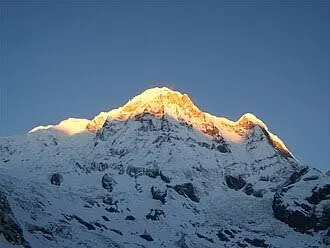
The conservation area is also home to several culturally significant species. The blue sheep, known locally as naur, are commonly spotted on the high slopes and are a primary prey species for the snow leopard. The presence of such a rich ecosystem in a relatively undisturbed state is a testament to the protection afforded by the conservation area designation and the respect that local communities have for their natural environment.
Packing List for the Kanchenjunga Circuit Trek
Packing for the Kanchenjunga Circuit Trek requires careful planning due to the wide range of temperatures and conditions you will encounter, from subtropical heat in the lower valleys to extreme cold and wind at high altitude. The following is a comprehensive packing list.
Clothing:
- Base layer tops and bottoms (moisture-wicking, 2 sets)
- Mid-layer fleece jacket or pullover (1 to 2)
- Insulating down jacket (rated to -20C or colder)
- Hard shell waterproof jacket with hood
- Waterproof pants (side zips recommended)
- Trekking pants (2 pairs, lightweight and quick-drying)
- Trekking shirts (3 to 4, long and short sleeve)
- Thermal underwear bottoms (2 pairs)
- Woolen trekking socks (4 to 5 pairs)
- Warm hat or beanie
- Sun hat with wide brim
- Neck gaiter or buff
- Lightweight gloves and heavy insulated mittens
Footwear and Gear:
- Sturdy trekking boots (broken in, waterproof, with good ankle support)
- Camp shoes or sandals for evenings
- Four-season sleeping bag (rated to -20C)
- Trekking poles (1 pair, adjustable)
- Backpack (50 to 65 liters) with rain cover
- Daypack (20 to 30 liters) if using a porter
- Headlamp with extra batteries
- Sunglasses with UV protection and side shields
Essentials and First Aid:
- Water purification tablets or filter system
- Water bottles or hydration bladder (2 to 3 liters capacity)
- Basic first aid kit including blister treatment, bandages, antiseptic
- Prescription medications and a course of Diamox for altitude
- Sunscreen (SPF 50+) and lip balm with SPF
- Insect repellent
- Toiletries and quick-dry towel
- Hand sanitizer and wet wipes
- Camera, memory cards, and power bank
- Passport, permits, insurance documents, and cash (NPR)
For camping-supported treks, the trekking agency provides tents, dining equipment, cooking gear, and food. Trekkers need to bring only their personal gear and sleeping bag.
Getting to Taplejung: Starting Point of the Trek
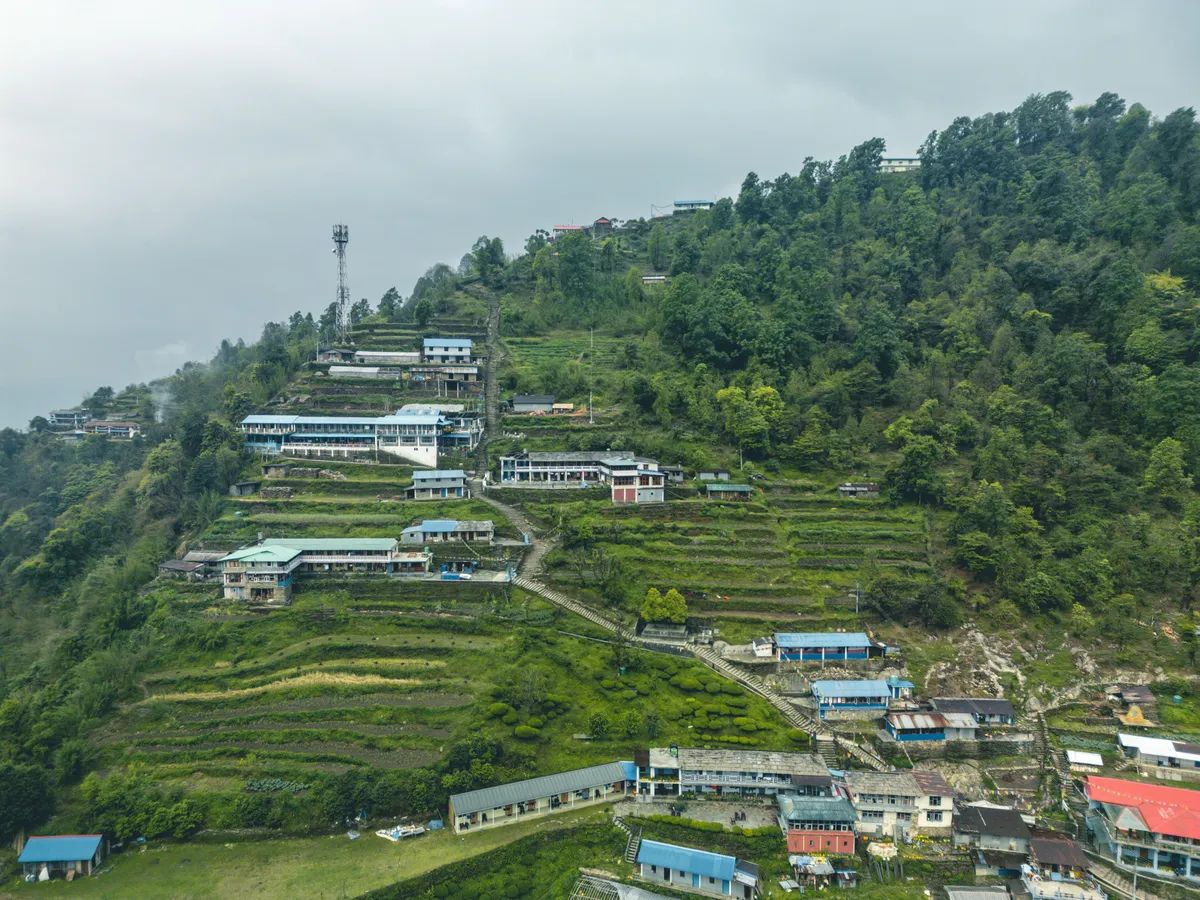
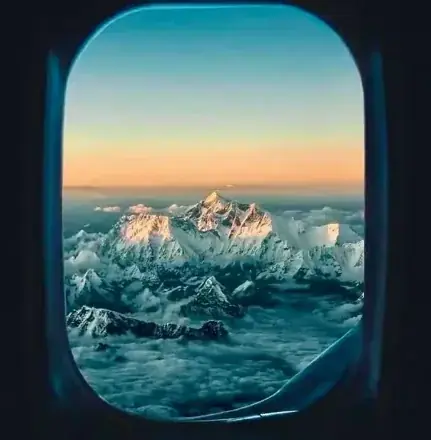
Taplejung district in far eastern Nepal is the gateway to the Kanchenjunga trek. The most convenient way to reach Taplejung is by a domestic flight from Kathmandu to Suketar Airport, which serves the Taplejung area. The flight takes approximately 45 minutes and offers stunning aerial views of the eastern Himalaya. However, Suketar is a small mountain airstrip, and flights are frequently delayed or cancelled due to weather conditions, particularly during the transition seasons.
If the flight to Suketar is not available, the alternative is an overland journey from Kathmandu. This involves a bus or private vehicle drive to Biratnagar (approximately 10 to 12 hours), followed by another drive to Taplejung (approximately 8 to 10 hours on mountain roads). Some trekkers also choose to fly from Kathmandu to Biratnagar and then drive to Taplejung, which reduces the overland travel time. The overland route, while longer, offers a fascinating glimpse into the diverse landscapes and cultures of eastern Nepal.
It is advisable to build buffer days into your itinerary for travel to and from Taplejung, as flight delays and road closures are common, especially during the trekking seasons when weather can be unpredictable in the mountains.
Travel Insurance for Remote Trekking
Comprehensive travel insurance is mandatory for the Kanchenjunga Circuit Trek. Given the remote location, high altitude, and limited rescue infrastructure, your insurance policy must specifically cover trekking at altitudes above 5,000 meters and must include helicopter evacuation and emergency medical repatriation.
Standard travel insurance policies often exclude trekking above 3,000 or 4,000 meters, so it is essential to verify that your policy covers the full altitude range of this trek. Several specialist adventure travel insurance providers offer policies that cover high-altitude trekking in Nepal, including World Nomads, IMG Global, and other adventure sports insurers.
In the event of a medical emergency at high altitude, a helicopter rescue is the only viable evacuation method. The cost of a helicopter rescue from the Kanchenjunga region can exceed USD 5,000, so adequate insurance coverage is critical. Your trekking agency will typically assist in coordinating a rescue if needed, but the insurance arrangements must be in place before the trek begins. Carry a copy of your insurance policy and emergency contact numbers with you at all times during the trek.
Cultural Highlights Along the Trail
The Kanchenjunga Circuit Trek is not just about mountains and nature. It is also a journey through the rich cultural landscape of eastern Nepal. The region is home to several ethnic communities, each with their own distinct traditions, languages, and ways of life.
The lower valleys are predominantly inhabited by the Limbu and Rai communities, who practice subsistence agriculture and are known for their unique cultural traditions, including the Limbu script and the worship of nature deities. As you ascend, the cultural landscape shifts to Tibetan Buddhist communities, particularly in the village of Ghunsa, which features a beautiful monastery and traditional Tibetan architecture. The Sherpa and Bhote communities in the higher valleys practice Tibetan Buddhism, and you will encounter prayer flags, mani walls, and chortens along the trail.
Visitors are encouraged to respect local customs and traditions. This includes dressing modestly, asking permission before photographing people or religious sites, and participating respectfully in any cultural activities. The warmth and hospitality of the local people are one of the most memorable aspects of the Kanchenjunga trek, and building connections with the communities you encounter adds immeasurable depth to the experience.
Why Choose the Kanchenjunga Circuit in 2026
The Kanchenjunga Circuit Trek remains one of the last true wilderness trekking experiences in Nepal. While other popular routes have seen significant infrastructure development and increasing visitor numbers, Kanchenjunga has retained its remote, unspoiled character. For 2026, this trek offers an opportunity to experience the Himalaya as it has been for centuries, with minimal commercialization and maximum natural beauty.
The Nepalese government and local conservation authorities continue to invest in sustainable tourism in the Kanchenjunga region, balancing the needs of local communities with environmental protection. Improvements in trail conditions and basic infrastructure have made the trek more accessible in recent years, while still preserving the sense of adventure and isolation that defines the experience.
Whether you are an experienced trekker looking for your next great challenge or a nature enthusiast seeking to explore one of the most biodiverse regions on the planet, the Kanchenjunga Circuit Trek in 2026 promises an unforgettable adventure. From the towering heights of the third highest mountain on Earth to the vibrant forests and warm communities of the eastern Nepal hills, this is a journey that will transform the way you see the world.
Final Thoughts on Trekking Kanchenjunga
The Kanchenjunga Circuit Trek is not just a trek. It is a profound journey into one of the most magnificent and least-explored corners of the Himalaya. Standing at the North Base Camp at Pangpema, gazing up at the massive North Face of the third highest mountain in the world, or watching the sunset paint the South Face in golden light from the Oktang viewpoint, are experiences that stay with you for a lifetime.
This trek demands respect, preparation, and a spirit of adventure. The rewards, however, are extraordinary. The combination of pristine wilderness, cultural richness, breathtaking mountain scenery, and the rare privilege of near-solitude on the trail makes the Kanchenjunga Circuit one of the finest trekking experiences available anywhere in the world. If you are ready for the challenge, 2026 is an excellent year to embark on this epic journey into Nepal's remote eastern Himalaya.