The Heartbeat of the Valley: Introduction to Newar Culture
To understand the spiritual essence of Nepal, one must first immerse themselves in the world of the Newars. The Newars are the original inhabitants of the Kathmandu Valley, a group whose identity is a sophisticated weave of indigenous traditions, artistic brilliance, and profound spiritual devotion. For centuries, they have served as the custodians of the valley's urban landscape, transforming the plains between the hills into a sanctuary of temples, shrines, and courtyards. Their legacy is not merely found in the monuments they built, but in the living traditions they maintain, where every street corner holds a story and every ritual is a bridge to the ancestors.
The Newar civilization flourished in the fertile basin of the valley, leveraging its strategic position as a trade hub between the Tibetan plateau to the north and the plains of India to the south. This intersection of geography fostered a unique intellectual environment where diverse ideas on philosophy, metallurgy, and governance converged. The Newars did not just trade in goods, they traded in wisdom. They absorbed the best of the surrounding cultures and synthesized them into a distinct identity that prioritized both material prosperity and spiritual enlightenment. This duality is the cornerstone of Newari life, where a merchant's success is seen as a blessing from the gods, and a sculptor's precision is an act of prayer.
The spiritual heritage of the Newars is characterized by an extraordinary level of syncretism. While many cultures draw a hard line between different faiths, the Newars have traditionally viewed Hinduism and Buddhism not as opposing forces, but as complementary paths to the same enlightenment. This fluid spiritual boundary is evident in the way a single Newari family might worship both a Buddhist stupa and a Hindu deity, seeing both as essential components of their cosmic order. When you book a spiritual tour in Nepal, the Newar elements of the journey often provide the most intimate glimpse into this harmonious coexistence.
Exploring the Newar traditions is more than a sightseeing exercise, it is an invitation to experience a lifestyle where the sacred and the profane are inextricably linked. From the meticulously carved windows of a traditional house to the rhythmic clanging of temple bells at dawn, the Newar way of life is a continuous act of devotion. By delving into their history, we uncover a civilization that mastered the arts of metallurgy, pottery, and architecture, all driven by a desire to honor the divine. This blog explores the depths of this heritage, guiding you through the physical and spiritual landmarks that define the Newar soul and the enduring wisdom they offer to the modern world.
When planning your spiritual journey, the best trekking agency in Nepal can help you navigate the intricate paths between these ancient cities, ensuring you experience the full depth of Newar heritage while also discovering the natural beauty that surrounds the valley.
The Sacred Triad: Kathmandu, Patan, and Bhaktapur
The Kathmandu Valley is anchored by three royal cities, each representing a different facet of Newar brilliance. Together, they form a spiritual triangle that has attracted pilgrims and seekers for millennia. These cities were not merely administrative centers, they were designed as mandalas, physical representations of the spiritual universe. To walk through these cities is to navigate a sacred geometry where every square and alleyway is aligned with celestial energies, intending to bring the resident and the visitor into alignment with the divine.
Kathmandu, the bustling capital, serves as the administrative and spiritual hub, home to the towering Pashupatinath temple and the enigmatic Swayambhunath. Here, the Newar influence is seen in the narrow alleys of the old city, where ancient shrines are tucked away in hidden courtyards, creating a labyrinth of faith that rewards the patient explorer. In Kathmandu, the energy is electric, a mix of ancient devotion and modern ambition. The city's shrines often act as community anchors, where the local Newar population gathers for daily prayers, ensuring that the spiritual pulse of the city remains strong despite the pressures of globalization.
Patan, known as the city of fine arts, is perhaps the purest expression of Newari craftsmanship. The Patan Durbar Square is a testament to the community's mastery of metalwork and stone carving. Walking through Patan is like stepping into a living gallery, where the intricate facades of the houses reflect a deep commitment to aesthetic perfection. The city is famous for its bronze casting, a skill passed down through generations of Newar artisans. From the colossal statues of the Buddha to the delicate bells of the temples, Patan's art is a visual prayer, intending to evoke a sense of peace and reverence in all who behold it.
For those seeking a more intimate encounter with this heritage, a Temple Aarti and Evening Heritage Walk in Kathmandu offers the perfect opportunity to see these cities as they transition from the noise of the day to the serenity of the evening, where the spirit of the Newars is most palpable. As the sun sets, the oil lamps are lit, and the chanting becomes more rhythmic, the modern world fades away, and the timeless essence of the valley emerges.
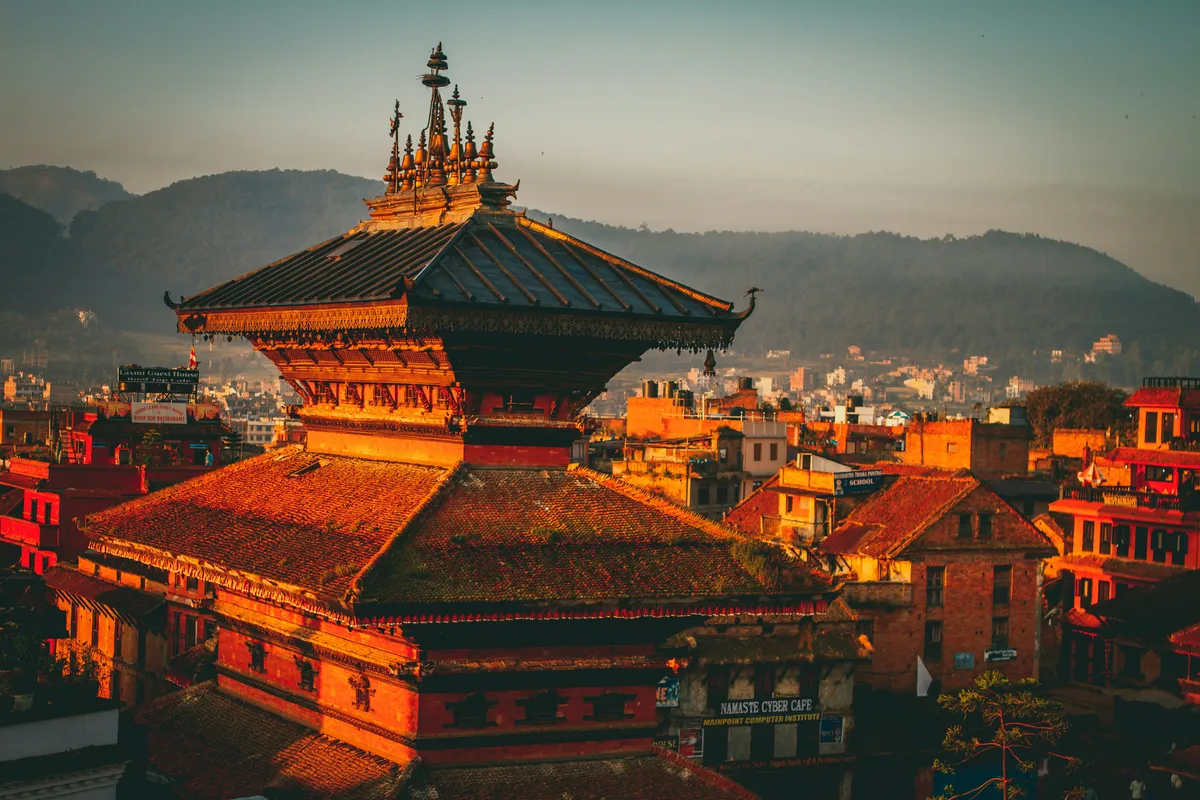
Bhaktapur, the city of devotees, remains the most well-preserved of the three. Its car-free streets and traditional pottery squares transport visitors back in time. In Bhaktapur, the Newar tradition of community living is still vibrant, with residents maintaining their ancestral homes and continuing the age-old practice of clay molding. The 55-Window Palace and the Nyatapola Temple stand as towering achievements of Newari engineering, symbolizing the strength and stability of their spiritual convictions. The Nyatapola, with its five tiers, is not just an architectural marvel but a spiritual ladder, each level representing a stage of enlightenment. Each city provides a unique layer of understanding, making them essential stops for anyone interested in cultural and spiritual tours in Nepal.


Divine Geometry: Newari Architecture and the Pagoda Style
Newari architecture is not simply about shelter, it is about the manifestation of the cosmos in physical form. The most iconic contribution of the Newars to world architecture is the multi-tiered pagoda style. These structures, with their sloping roofs and intricate wood carvings, were designed not only to withstand the heavy monsoon rains of the Himalayas but to create a hierarchical ascent toward the divine. The use of red brick, darkened timber, and gilded copper creates a visual harmony that blends seamlessly with the natural environment of the valley, reflecting a deep respect for the materials provided by the earth.
Every element of a Newari building is laden with symbolism. The "Tiki-jhyal" or carved windows are more than just decorative, they are spiritual filters that manage the flow of energy between the inner sanctum of the home and the outer world. The carvings often depict deities, mythical creatures, and floral motifs, each serving as a reminder of the interconnectedness of all living beings. The precision of these carvings, often executed without the aid of modern machinery, speaks to the patience and devotion of the Newari artisans who viewed their work as a form of meditation. A single window may take months to complete, with every curve and line designed to invoke a specific spiritual state in the viewer.
Beyond the great temples, the "Bahals" or monastic courtyards represent the social and spiritual heart of Newar communities. These enclosed spaces provide a sanctuary for meditation and communal gathering, fostering a sense of intimacy and shared purpose. The layout of the Bahal, with its central shrine surrounded by residential dwellings, mirrors the Newar belief in the integration of spiritual practice into daily life. These spaces are not just for monks, but for the entire community, where the boundaries between the monastic and the layperson are intentionally blurred.
We must also consider the "Sattals" or traditional rest houses, which were built to provide shelter to pilgrims traveling through the valley. These structures exemplify the Newar spirit of hospitality, viewing the care of a stranger as a divine duty. The architecture of the Sattal, with its open porches and shaded interiors, reflects a philosophy of openness and generosity. By studying these structures, we see a society that understood the importance of community support as a spiritual practice. To truly appreciate this architecture, one should look beyond the famous monuments and explore the smaller, family-run shrines that dot the landscape, each reflecting a personal devotion to the ancestors and a commitment to maintaining the spiritual integrity of their neighborhood.
Sacred Artistry: Thangka Painting and Wood Carving
For the Newars, art is a vehicle for enlightenment. Thangka painting, the creation of intricate scroll paintings on cotton or silk, is a discipline that requires years of training and a profound understanding of Buddhist iconography. Each Thangka is a map of the spiritual journey, guiding the practitioner through various stages of consciousness toward ultimate liberation. The process begins with the preparation of the canvas, which is treated with a mixture of lime and glue to create a smooth, luminous surface. The use of natural pigments, derived from minerals and plants, ensures that these works of art remain vibrant for centuries, serving as timeless beacons of faith.
The symbolism in Thangka painting is incredibly precise. The colors are not chosen for aesthetic appeal alone, but for their spiritual resonance. Blue represents purity and the infinite, yellow symbolizes humility and the earth, red denotes power and passion, and white stands for the purity of the mind. The proportions of the deities are governed by strict geometric rules, ensuring that the image is a perfect reflection of the divine essence. Engaging with this art form is a deeply transformative experience, as it requires the viewer to slow down and contemplate the layers of meaning embedded in every stroke.
By participating in a Thangka and Handicraft Workshop with Local Artisans, travelers can move beyond the role of a spectator and become a student of the sacred. Learning the precise proportions of a deity or the symbolic meaning of a specific color reveals the intellectual rigor behind the beauty. It is in these workshops that the continuity of Newar heritage is ensured, as master artisans pass their secrets to the next generation, maintaining a lineage of creativity that stretches back over a thousand years. This transmission of knowledge is not just about technique, it is about the transmission of a spiritual state.
Complementing the fluidity of Thangka painting is the structured brilliance of Newari wood carving. From the massive struts of the temples to the delicate lattices of the windows, wood carving is the skeletal strength of the valley's heritage. The motifs used, such as the lotus, the kalash, and various incarnations of the Buddha, are not merely decorative but are intended to bless the structure and those who enter it. The Newari carver does not just shape wood, they breathe life into it, transforming a piece of timber into a divine presence that watches over the city. The relationship between the carver and the wood is one of mutual respect, where the artist listens to the grain of the timber to determine the form that will emerge.
The Living Museum: Newar Festivals and Rituals
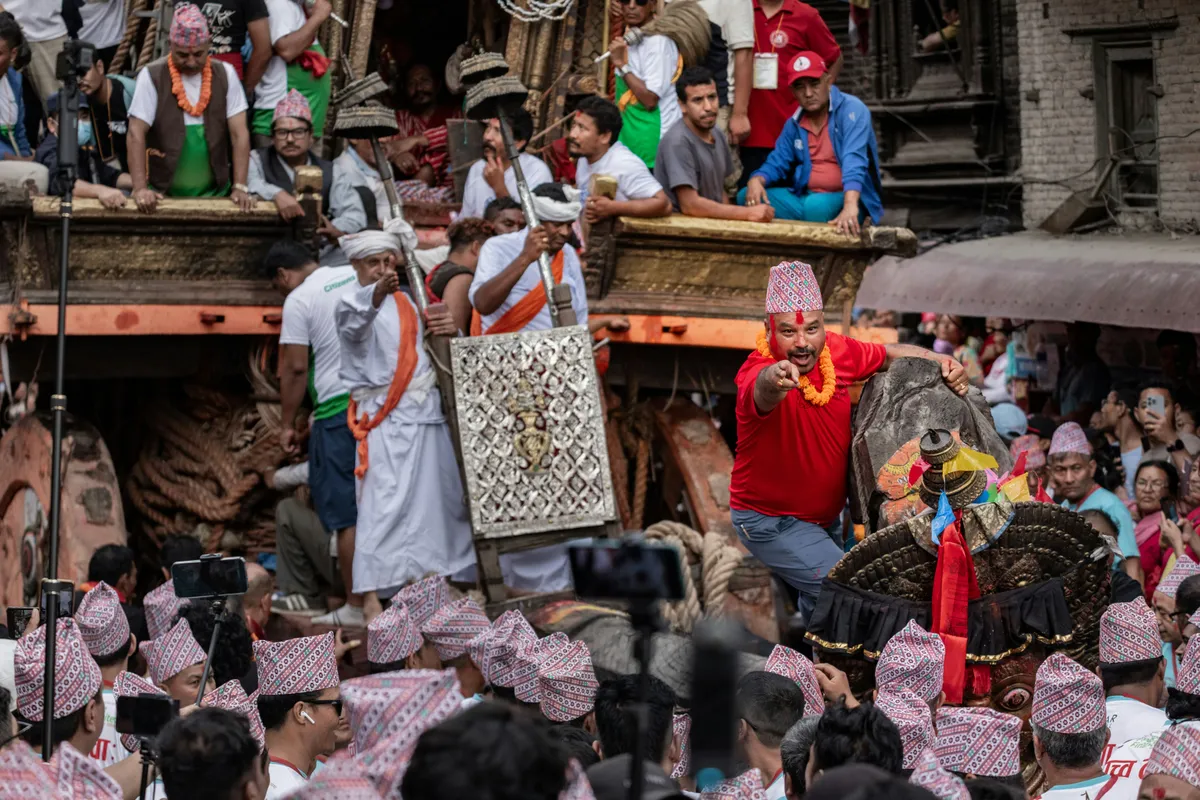
If the architecture of the valley is the body of Newar culture, the festivals are its soul. The Newar calendar is a dense tapestry of celebrations, each timed to coincide with the agricultural cycles and astrological alignments. These festivals are not merely public spectacles, they are essential communal rituals that cleanse the city, honor the deities, and reinforce social bonds. The streets of the valley transform into open-air theaters, where the air is thick with the scent of incense and the sound of traditional drums. For the Newars, these celebrations are a way of renewing the cosmic contract between humanity and the divine.
One of the most spectacular examples of this is the Indra Jatra festival. Dedicated to the god of rain and heaven, Indra Jatra is a dazzling display of masked dances, chariot processions, and the unveiling of the Living Goddess, Kumari. This festival exemplifies the Newar ability to merge the royal, the divine, and the popular into a single, coherent experience. The sight of the massive chariot of Kumari moving through the narrow streets of Kathmandu is a powerful reminder of the intersection of human and divine authority. For those who wish to witness this vibrancy firsthand, an Indra Jatra Festival Experience in Kathmandu provides an insider's perspective, allowing visitors to understand the complex symbolism and the deep emotional resonance the event holds for the local community.
Beyond Indra Jatra, other festivals like Bisket Jatra and Gai Jatra play critical roles in the spiritual life of the valley. Bisket Jatra, marking the Newari New Year, is characterized by the pulling of a massive chariot and the celebration of the arrival of spring. Gai Jatra, the Festival of Cows, serves as a poignant reminder of the impermanence of life, where families honor deceased relatives through humor and ritual, transforming grief into a communal act of healing. These festivals ensure that the spiritual lessons of life, death, and rebirth are constantly reinforced within the community, preventing the wisdom of the ancestors from being forgotten.
The Newars also maintain a countless number of smaller, daily rituals. The lighting of the butter lamps at dusk, the offering of fresh flowers to the neighborhood shrine, and the rhythmic chanting of mantras are all part of a spiritual ecosystem that keeps the valley alive. These rituals are not seen as burdens but as joys, providing a sense of stability and predictability in an ever-changing world. The persistence of these traditions in the face of modernization is a testament to the resilience of the Newar spirit and their unwavering commitment to their ancestral path. By integrating these rituals into their daily routine, the Newars create a sanctuary of peace within the chaos of urban life.
The Spiritual Taste: Newari Cuisine as a Ritual Offering
In Newar culture, the act of eating is elevated to a spiritual practice. Newari cuisine is renowned for its diversity, complexity, and deep connection to the land. Every dish is designed to balance the elements of taste, from the spicy and salty to the sour and sweet. This culinary philosophy is rooted in the belief that food should not only nourish the body but also harmonize the mind and spirit. More importantly, food is the primary medium through which the Newars interact with the divine. Many of the most celebrated dishes are created specifically as offerings for the deities during festivals, later shared among the community as a form of blessed sustenance.
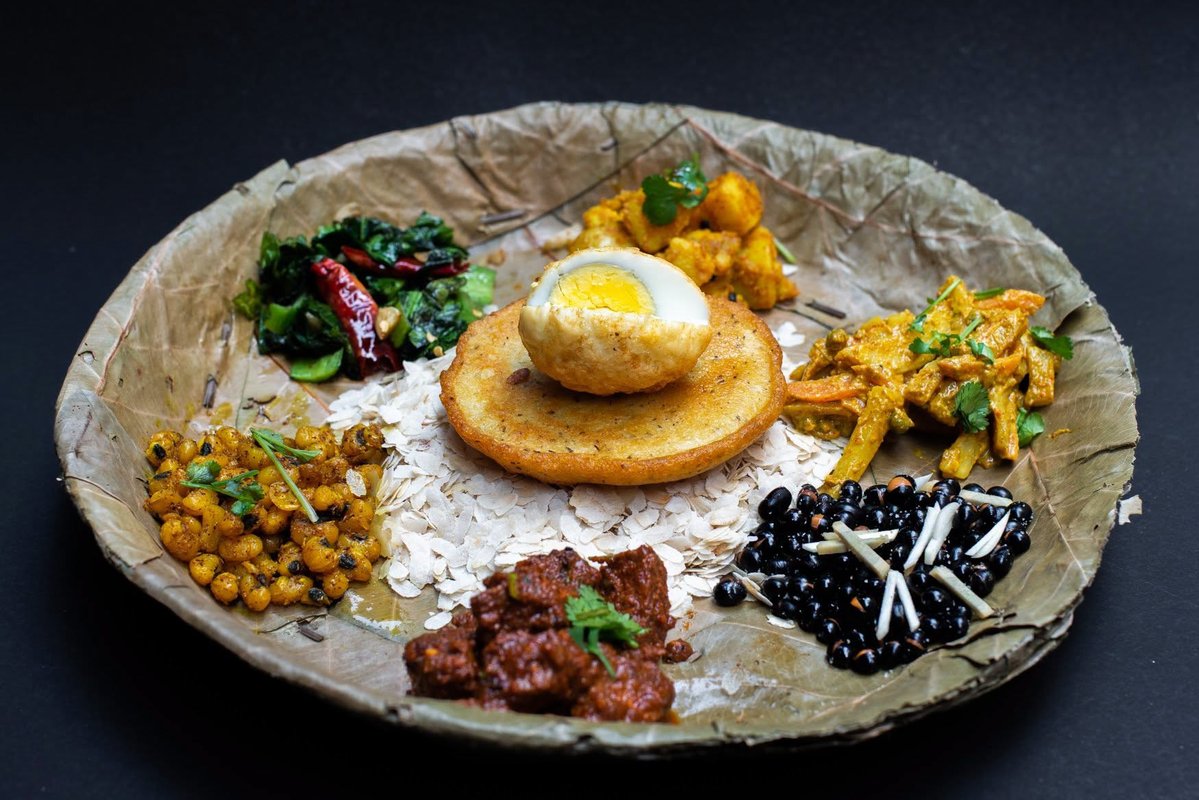
The "Samay Baji" set is perhaps the most iconic representation of this culinary heritage. Consisting of beaten rice, roasted soybeans, ginger, garlic, and various meats, it is a balanced meal that mirrors the holistic approach the Newars take to life. The combination of textures and flavors is designed to stimulate all the senses, preparing the body for spiritual practice. The preparation of these foods is a slow, mindful process, often involving the entire family and emphasizing the importance of purity and intention. The act of cooking is seen as a form of alchemy, where simple ingredients are transformed into a spiritual experience through the power of devotion.
To discover the secrets of these flavors, a Nepali Cooking Class in Kathmandu with a Local Family allows travelers to enter the private sanctums of Newari homes and learn how spiritual devotion is translated into gastronomic delight. Beyond the recipes, these classes offer a glimpse into the Newari home, where the kitchen is often the most sacred space in the house, dedicated to the ancestral spirits and the goddess of the hearth. Learning to make authentic Newari delicacies is an exercise in patience and respect, requiring the student to understand the rhythm of the ingredients and the history of the dishes.
Newari cuisine also reflects the valley's unique geography and the community's agricultural ingenuity. The use of fermented vegetables, local grains, and a sophisticated array of spices creates a flavor profile that is distinct from any other in the Himalayas. Fermentation, in particular, is used not only for preservation but to enhance the probiotic qualities of the food, reflecting an ancient understanding of gut health and spiritual clarity. The communal nature of Newari dining, where large groups share food from common platters, reinforces the social cohesion that is so vital to the preservation of their culture. In every bite of a Newari delicacy, there is a taste of history, a hint of ritual, and a profound sense of hospitality that welcomes the stranger as a guest of the divine.
A Symphony of Faiths: The Union of Buddhism and Hinduism
The most remarkable aspect of Newar spiritual heritage is the seamless integration of Buddhism and Hinduism. While these two great traditions are often viewed as distinct in other parts of Asia, in the Kathmandu Valley, they flow together like two rivers merging into one. This syncretism is not a result of forced compromise, but a natural evolution of thought. The Newars recognize that the goals of both paths, the cessation of suffering and the realization of the divine, are fundamentally the same. This fluid approach to faith allows them to embrace the richness of both traditions without feeling a conflict of identity, creating a spiritual landscape that is inclusive and expansive.
This union is most visible in the shared worship of deities. It is common to find shrines where a Buddhist Bodhisattva and a Hindu goddess are honored side by side, with the same devotees offering prayers to both. The Newars have developed their own unique forms of practice, such as the Newar Buddhism of the Kathmandu Valley, which incorporates elements of Tantra and local folk beliefs. This hybrid spirituality creates a supportive environment where different perspectives are welcomed and integrated, fostering a culture of peace and tolerance that is rare in the modern world. The Newar approach teaches us that faith is not a set of rigid rules, but a living relationship with the divine that can evolve and adapt.
A central figure in this spiritual tapestry is the Kumari, the Living Goddess. The tradition of selecting a young girl from the Newar community to serve as the earthly manifestation of the goddess Taleju is a profound example of how the Newars merge royal authority with divine presence. The Kumari is revered by both Buddhists and Hindus, symbolizing the unity of the valley's diverse spiritual streams. Her existence is a reminder that the divine is not distant or abstract, but can manifest in the most humble and innocent of forms, bridging the gap between the celestial and the terrestrial.
For the spiritual seeker, this duality offers a profound lesson in inclusivity. By observing the Newar way, one learns that truth is not a monolith, but a prism with many facets. Whether you are meditating in a silent monastery or witnessing the energetic chaos of a Hindu temple, the underlying current of devotion remains the same. This is why the Spiritual Tour in Nepal focuses so heavily on the Newar experience, as it provides the most complete map of how different faiths can coexist in a state of mutual respect and shared love, reminding us that the path to enlightenment is paved with tolerance and understanding.
Preserving the Legacy: The Future of Newar Heritage
As the world moves toward an increasingly digital and homogenized future, the preservation of Newar traditions has become a matter of urgency. The rapid urbanization of the Kathmandu Valley poses a threat to the physical structures of the past, while the lure of globalized culture can tempt the younger generation away from their ancestral practices. The challenge is not just to save the buildings, but to save the living knowledge that gives those buildings meaning. A temple without a ritual is merely a pile of bricks, and a carving without a story is just a piece of wood. The true preservation of Newar heritage lies in the continuity of the practice.
The devastating earthquake of 2015 served as a brutal wake-up call for the valley. Many of the ancient monuments that defined Newar identity were reduced to rubble in a matter of seconds. However, the aftermath of the tragedy revealed the incredible resilience of the Newar people. Rather than succumbing to despair, the community rallied to rebuild their shrines using traditional methods. By insisting on the use of ancestral techniques and materials, they ensured that the restoration process was itself a spiritual act, a way of reconnecting with the ancestors and reaffirming their commitment to their heritage. The rebuilding of the valley is a testament to the enduring power of the Newar soul.
Sustainable tourism plays a critical role in this preservation. When visitors choose experiences that support local artisans and respect traditional norms, they provide the economic incentive for the community to keep their crafts alive. By focusing on authenticity over spectacle, we can ensure that the Newar heritage remains a living, breathing entity rather than a static museum exhibit. The commitment to "Explore, Heal, Thrive" at Enticing Himalayas is reflected in this approach, encouraging travelers to engage with the culture in a way that is both enriching for the visitor and supportive of the host. We believe that travel should be a force for preservation, not a cause of erosion.
Ultimately, the survival of the Newar spiritual heritage depends on the willingness of the world to value the slow, the handmade, and the sacred. In a world of instant gratification, the Newar way of life offers a necessary alternative, reminding us that the most meaningful experiences are those that require patience, devotion, and a deep connection to one's roots. By honoring these traditions today, we ensure that the spiritual light of the Kathmandu Valley continues to guide future generations of seekers across the globe, offering a timeless blueprint for a life lived in harmony with the divine and the community.
Comparison: The Three Royal Cities of the Valley
While all three cities share the same Newar soul, they each offer a distinct atmosphere and spiritual focus. The following table helps you decide which city aligns best with your spiritual goals for your upcoming trip, allowing you to tailor your journey to your own inner needs.
| Feature | Kathmandu | Patan | Bhaktapur |
|---|---|---|---|
| Primary Vibe | Dynamic & Diverse | Artistic & Refined | Traditional & Serene |
| Spiritual Highlight | Swayambhunath / Pashupatinath | Golden Temple / Patan Museum | Nyatapola / 55-Window Palace |
| Artistic Focus | Diverse Handicrafts | Metalwork & Bronze | Pottery & Wood Carving |
| Best Activity | Evening Heritage Walk | Art Gallery Tour | Traditional Pottery Class |
| Crowd Level | High | Moderate | Low to Moderate |
Related Spiritual Journeys in Nepal
To deepen your exploration of Nepal's spiritual landscape, we recommend these complementary guides that cover the full spectrum of pilgrimage, meditation, and cultural heritage experiences across the Himalayas:
- Lumbini Pilgrimage Guide: Buddha's Birthplace and the Monasteries
- Muktinath & the Mustang Spiritual Circuit: Hindu-Buddhist Pilgrimage in the Kali Gandaki
- Treks with a Spiritual Side: Monasteries, Stupas & Pilgrimage on the Trail
- Helicopter Pilgrimage and Trek Combos in Nepal
- Festivals of Nepal: Dashain, Tihar, Holi and Indra Jatra
- Boudhanath Stupa: Best Spiritual Hub on Any Kathmandu City Tour
- Spiritual Tour in Nepal 2026: Complete Guide
- Spiritual Wellness Travel in Nepal: The Ultimate Guide to Healing Journeys