Helicopter Tour in Nepal Safety: Pilot Qualifications, Aircraft, Weather Protocols and Insurance
When you picture a helicopter tour in Nepal, your mind likely fills with images of snow-capped peaks, glaciers spilling down valleys, and the sheer thrill of hovering at eye level with Everest. What rarely makes the highlight reel is the safety infrastructure that makes those moments possible. Yet for anyone considering a Himalayan helicopter flight, safety is the single most important factor in choosing an operator and planning the experience.
Nepal's helicopter tourism industry has matured significantly over the past decade. The Civil Aviation Authority of Nepal (CAAN) now enforces rigorous standards for commercial helicopter operations, and the best operators exceed those minimums by a wide margin. This guide walks you through every layer of helicopter tour safety in Nepal: pilot qualifications, aircraft maintenance, weather decision-making, insurance coverage, and the practical steps you can take to verify an operator before you book.
How Nepal Regulates Commercial Helicopter Operations
All commercial helicopter flights in Nepal operate under the authority of the Civil Aviation Authority of Nepal (CAAN), which issues Air Operator Certificates (AOCs) to qualified companies. An AOC is not a one-time rubber stamp. Operators must pass annual audits covering aircraft airworthiness, pilot currency, maintenance records, and safety management systems. Companies that fail an audit lose their certificate and cannot legally carry paying passengers.
CAAN's regulatory framework draws heavily from International Civil Aviation Organization (ICAO) standards, adapted for Nepal's unique high-altitude operating environment. The mountain-specific requirements are among the strictest in the world because the stakes are higher: thin air reduces rotor performance, weather changes in minutes, and landing zones sit above 5,000 metres where every kilogram of payload matters.
When researching a helicopter tour in Nepal, ask the operator for their AOC number. A legitimate company will provide it without hesitation. You can cross-check it against CAAN's published list of approved air operators. If an operator deflects or cannot produce an AOC, walk away. That single question filters out the unlicensed operators that still operate on the margins of Nepal's tourism industry.
Pilot Qualifications: What to Look For
The person in the left seat of your helicopter holds more responsibility than any other single factor in your safety. Nepal's commercial helicopter pilots must hold a Commercial Pilot Licence (Helicopter) issued by CAAN, which requires a minimum of 150 flight hours. But the minimum is just the starting line. The pilots you want flying you into the high Himalaya have thousands of hours, much of it logged in mountain terrain.
Mountain Rating and High-Altitude Endorsements
Flying a helicopter at sea level and flying one at 5,500 metres are fundamentally different disciplines. At high altitude, the air is thinner, which means the rotor blades generate less lift, the engine produces less power, and the margin between safe flight and a performance envelope exceedance shrinks dramatically. Nepal requires pilots operating above 10,000 feet to hold a mountain rating, which involves additional training in high-altitude aerodynamics, confined-area landings, and emergency procedures specific to mountain flying.
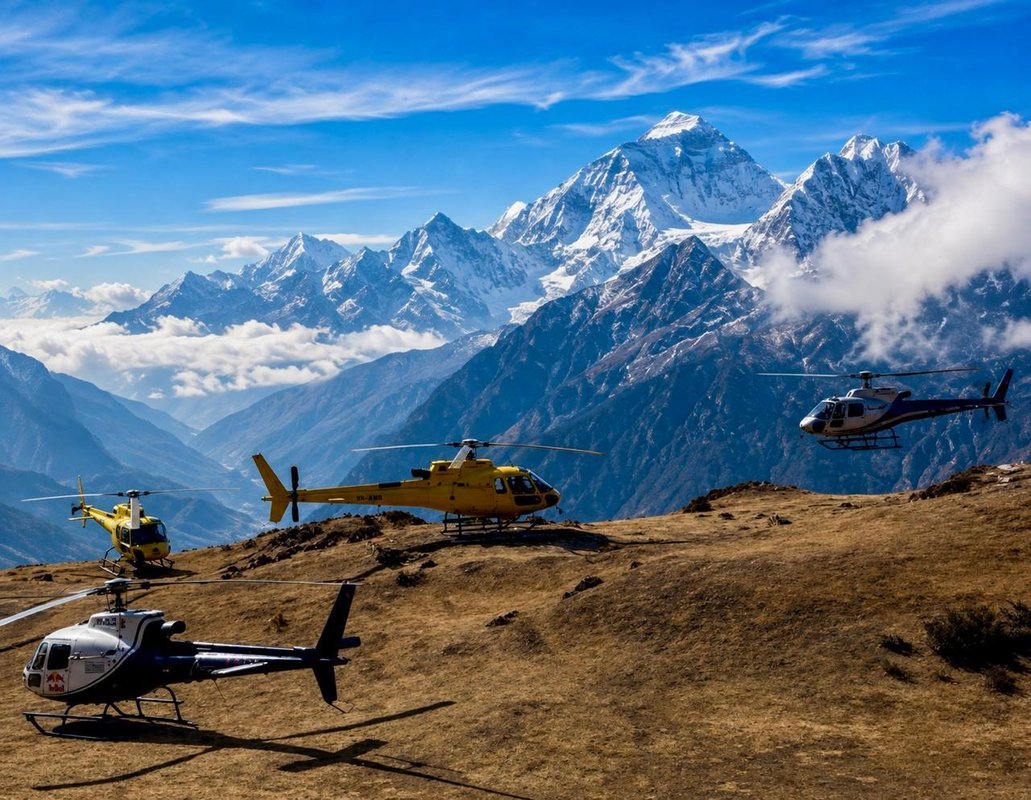
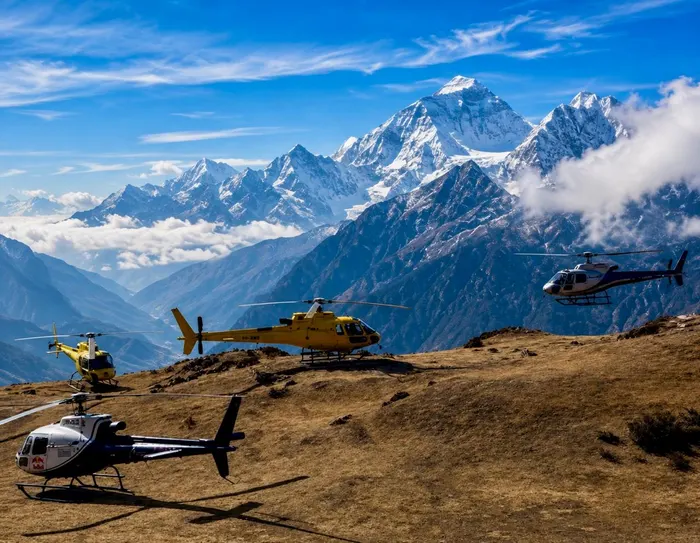
The best operators go further. Their senior pilots hold type ratings on the specific aircraft they fly (typically the Airbus H125 or AS350 B3e, the workhorse of Himalayan helicopter operations) and have logged hundreds of hours on the exact routes you will fly. When you book an Everest Base Camp helicopter tour with landing, the pilot has likely flown that route dozens of times and knows every ridge, every wind pattern, and every alternate landing zone along the way.
Experience Benchmarks That Matter
Here are the numbers to ask about when evaluating a pilot:
- Total flight hours: Look for 3,000+ hours. The CAAN minimum of 150 is irrelevant for high-mountain commercial work.
- Mountain hours: At least 1,000 hours in terrain above 10,000 feet. This is where the real skill develops.
- Route-specific hours: For an Everest flight, ask if the pilot has flown the Khumbu corridor 50+ times. Familiarity with the specific route is irreplaceable.
- Type hours: 500+ hours on the specific helicopter model being used. Different aircraft have different emergency procedures and handling characteristics.
These numbers are not industry secrets. Reputable operators are proud of their pilots' experience and will share these figures. If an operator is vague about pilot hours, treat it as a red flag.
Aircraft: The Machines That Fly the Himalaya\
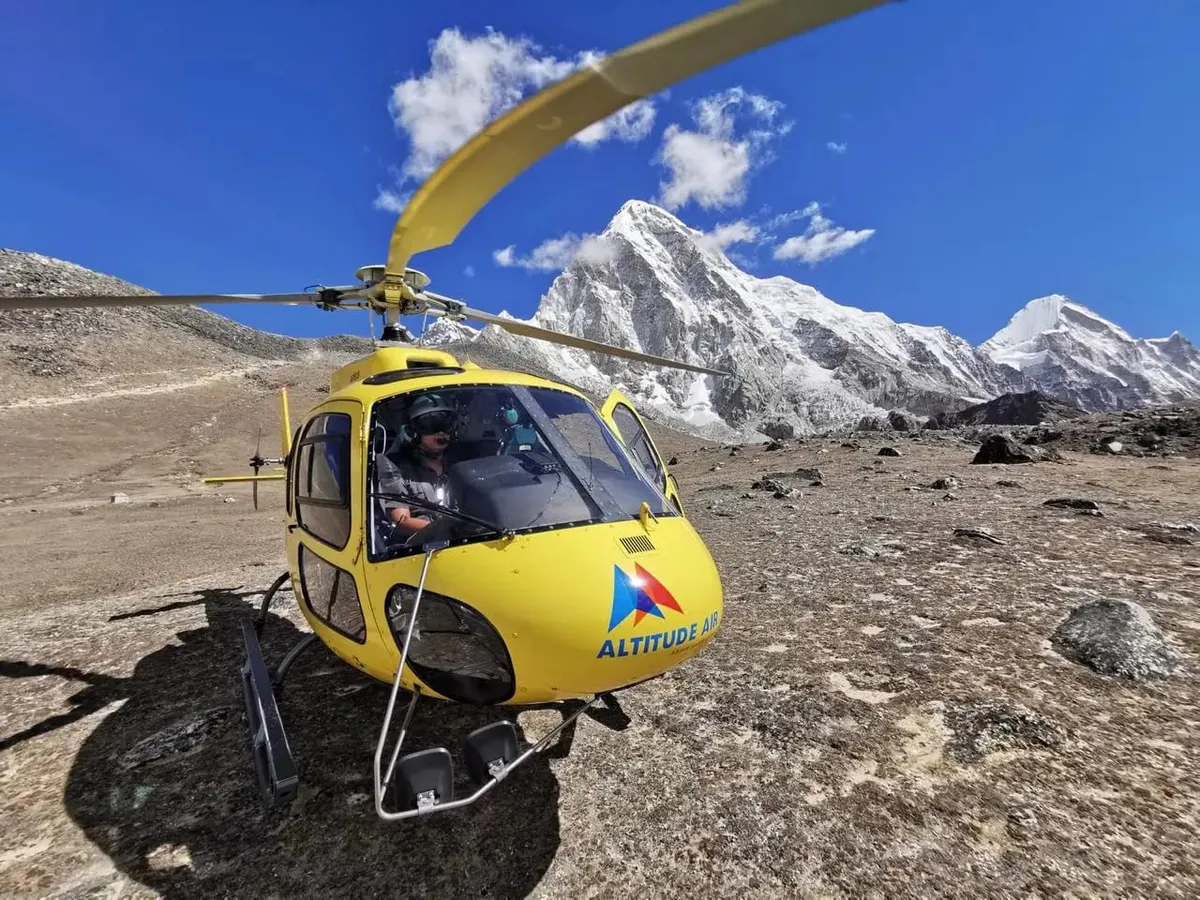
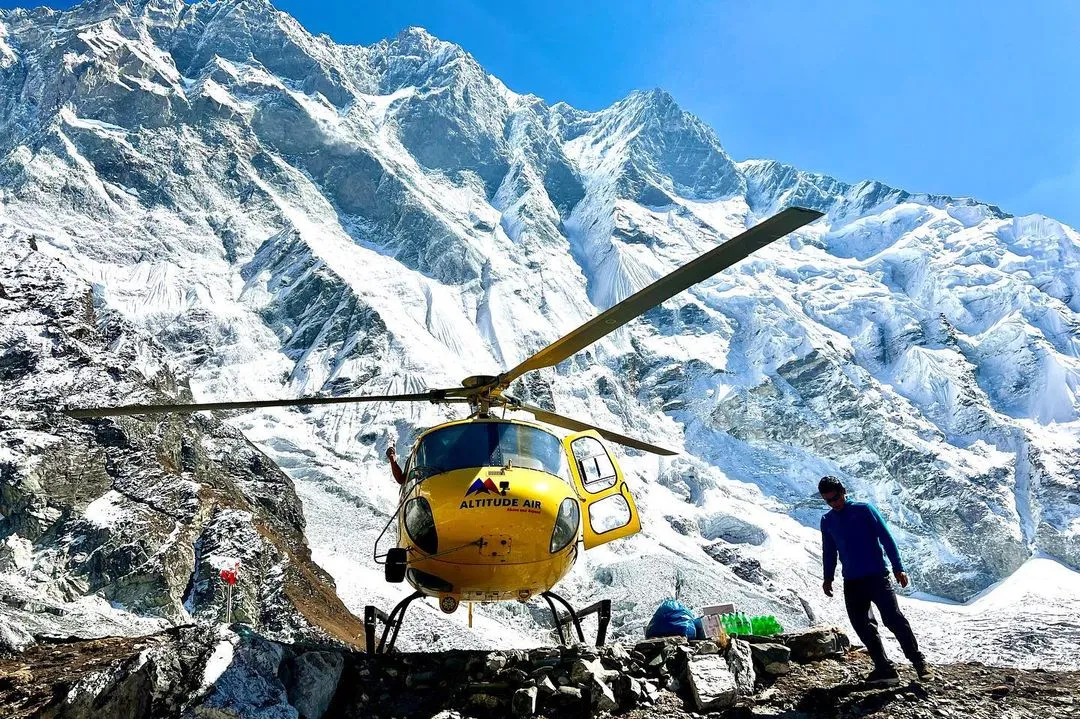
The helicopter you board for a Himalayan tour is almost certainly an Airbus H125 (formerly the AS350 B3e), and there is a reason for that. The H125 holds the world record for the highest helicopter landing, set on Everest in 2005 at 8,848 metres. It is purpose-built for high-altitude operations, with a powerful Turbomeca Arriel 2D engine, a Fenestron tail rotor for reduced noise and improved safety, and dual-channel FADEC (Full Authority Digital Engine Control) that automatically adjusts fuel flow for altitude and temperature changes.
Why the H125 Dominates Nepal's Skies
The H125's dominance in Nepal is not about brand loyalty. It is about physics. At 5,500 metres, the air density is roughly half of what it is at sea level. A helicopter that performs well at sea level may be unable to hover at altitude. The H125's power-to-weight ratio, combined with its advanced rotor system, gives it a genuine performance margin in the thin air above base camp. Other helicopters operate in Nepal (the AS350 B2 and the Bell 407 appear on some routes), but the H125 is the standard for flights above 4,500 metres.
Maintenance: The Paper Trail That Keeps You Safe
Every commercial helicopter in Nepal follows a manufacturer-mandated maintenance schedule measured in flight hours and calendar intervals. After every 100 flight hours, the aircraft undergoes a detailed inspection. At 500-hour and 1,000-hour intervals, more invasive checks are performed, often requiring partial disassembly. These inspections are documented in the aircraft's technical log, which CAAN inspectors can demand at any time.
You have the right to ask about an aircraft's maintenance status. A reputable operator will tell you the helicopter's total airframe hours, the date of its last major inspection, and whether any deferred maintenance items are outstanding. The answer should be clear and specific. "Everything is fine" is not an answer. "The aircraft completed its 500-hour inspection on June 15 and has 42 hours since then" is the answer you want.
Fleet Age and Modernisation
Helicopter age matters less than maintenance quality, but it is still worth asking. A well-maintained 15-year-old H125 with a recent engine overhaul is safer than a 5-year-old machine with deferred maintenance. That said, the newest H125s (2020 and later) include upgraded avionics, improved engine monitoring, and enhanced crashworthiness features. The best operators in Nepal run mixed fleets of 5 to 10 aircraft, with an average age under 12 years.
For a deeper look at what different helicopter tours cost and what you get at each price point, see our helicopter tour cost guide, which breaks down pricing by route, operator tier, and season.

Weather Protocols: The Decision That Grounds Flights
Weather is the single largest cause of helicopter tour cancellations in Nepal, and that is a good thing. A responsible operator cancels or delays a flight when conditions are marginal, even if the sky looks clear at the helipad. Mountain weather is localised and fast-moving. A valley that is sunny at 7 AM can be socked in with cloud by 7:30, and a pilot who pushes into deteriorating visibility in the Khumbu has no safe options.
How Operators Assess Weather
Professional helicopter operators in Nepal use multiple weather data sources before every flight:
- CAAN meteorological reports: Official aviation weather briefings for the flight route, updated every three hours.
- Satellite imagery: Real-time cloud cover maps showing conditions over the entire Himalayan range.
- Ground reports: Radio check-ins with lodges, park rangers, and other pilots already in the target area.
- Personal reconnaissance: On morning flights, the pilot often does a visual assessment of the route before picking up passengers.
The go/no-go decision rests with the pilot-in-command, and no commercial pressure from the operator or passengers can override it. This is a legal requirement under CAAN regulations, and it is enforced. A pilot who flies into known hazardous weather risks their licence, not just their aircraft.
Seasonal Safety Patterns
Each season in Nepal presents different weather challenges for helicopter operations:
Spring (March to May): Generally the most stable flying season, with clear mornings and predictable afternoon cloud build-up. Most Everest flights launch at first light and are back in Kathmandu by mid-morning. The safety risk in spring is complacency: the weather is so consistently good that pilots and operators can be tempted to push marginal afternoons.
Monsoon (June to September): The most challenging season. Heavy cloud cover, reduced visibility, and sudden thunderstorms make helicopter flying unreliable. Many operators suspend high-mountain flights entirely during July and August. Those that continue flying do so with strict weather minimums and a higher cancellation rate. If you book during monsoon, expect flexibility.
Autumn (October to November): The second-best flying season, with crisp air and excellent visibility. The post-monsoon atmosphere is clean of haze, and the mountains appear sharper than at any other time of year. The main safety consideration in autumn is the shortening daylight window: afternoon flights must be planned to return before dusk.
Winter (December to February): Cold, clear, and stable, but with shorter days and occasional winter storms that can close the high mountains for days at a time. Helicopter performance actually improves in cold dense air, but passenger comfort and the risk of sudden snow squalls require careful planning.
For a month-by-month breakdown of flying conditions, read our best time for helicopter tour guide, which covers visibility patterns, temperature ranges, and the optimal booking windows for each route.
Insurance: What Is Covered and What You Need to Know
Insurance is the safety net that most travellers hope they never need but should never fly without. In Nepal, commercial helicopter operators are required to carry third-party liability insurance, which covers damage to persons or property on the ground. But the insurance landscape for passengers is more nuanced, and understanding it before you board is essential.
Operator Insurance: What the Law Requires
CAAN mandates that every commercial helicopter operator carry:
- Hull insurance: Covers damage to the aircraft itself. This is the operator's concern, not yours, but it is a signal of financial responsibility.
- Third-party liability: Covers injury or damage to people and property on the ground. Required by law.
- Passenger liability: Covers injury or death to paying passengers. The minimum coverage amount is set by CAAN and varies by aircraft seating capacity.
The passenger liability minimum in Nepal is lower than what you would find in Europe or North America. For this reason, most international travellers supplement the operator's coverage with their own travel insurance policy that specifically includes helicopter flights and high-altitude activities.
Travel Insurance: What Your Policy Must Include
Standard travel insurance often excludes helicopter flights, especially those above a certain altitude. Before booking a helicopter tour in Nepal, call your insurer and confirm three things in writing:
- Helicopter flights are covered: Many policies exclude "general aviation" or "non-scheduled flights." A commercial helicopter tour falls into a grey area. Get explicit confirmation.
- Altitude limits: Some policies cap coverage at 4,000 or 5,000 metres. An Everest Base Camp helicopter tour reaches 5,500 metres at Kala Patthar. Confirm your policy covers the maximum altitude of your specific flight.
- Emergency evacuation: If a medical emergency occurs at a remote landing zone, helicopter evacuation is the only practical option. Ensure your policy covers helicopter rescue and medical repatriation, not just ground ambulance transport.
Policies from World Nomads, SafetyWing, and Global Rescue are popular among Nepal travellers because they explicitly cover helicopter activities and high-altitude rescue. Read the fine print regardless of the brand.
What Happens If a Flight Is Cancelled
Weather cancellations are common in Nepal, and a responsible operator's cancellation policy is itself a safety feature. The best operators offer full refunds or free rescheduling for weather cancellations, with no administrative fees. This removes the financial pressure on the pilot to fly in marginal conditions. If an operator has a strict no-refund policy for weather cancellations, that creates an incentive structure that works against your safety.
Before booking, ask: "What is your weather cancellation policy?" The answer should be immediate and clear: full refund or free reschedule. If the operator hesitates or mentions "partial refund" or "credit only," consider that a warning sign.
Safety Management Systems: The Invisible Infrastructure
Beyond pilots, aircraft, and insurance, the most sophisticated safety layer in modern helicopter operations is the Safety Management System (SMS). An SMS is a formal, documented framework for identifying hazards, assessing risks, and implementing mitigations before they become incidents. CAAN now requires SMS implementation for all AOC holders, though the quality of implementation varies widely.
A mature SMS includes:
- Hazard reporting: Every pilot, engineer, and ground crew member can file a confidential hazard report without fear of reprisal. These reports are reviewed weekly and feed into operational changes.
- Flight data monitoring: Modern H125 helicopters record dozens of parameters per second. Operators with a strong SMS analyse this data to spot trends (hard landings, exceedances, unusual attitudes) and address them through training.
- Fatigue risk management: Pilots flying multiple high-altitude sectors per day face genuine fatigue risk. A good SMS includes flight-time limitations stricter than CAAN's minimums, mandatory rest periods, and a system for pilots to self-declare fatigue without penalty.
- Emergency response planning: A documented plan for every conceivable emergency, from an engine failure at altitude to a medical event at a remote landing zone, with contact numbers, procedures, and designated responsibilities.
You cannot audit an operator's SMS as a passenger, but you can ask whether they have one and when it was last reviewed by CAAN. An operator that can describe their SMS in plain language, with specific examples of recent safety improvements, is operating at a higher standard than one that cannot.
How to Vet a Helicopter Operator Before You Book
You do not need to be an aviation expert to assess an operator's safety culture. Here is a practical checklist you can run through in a five-minute phone call or email exchange:
- Ask for the AOC number and verify it against CAAN's published list.
- Ask about the pilot's experience: total hours, mountain hours, hours on type, and hours on your specific route.
- Ask about the aircraft: model, year of manufacture, date of last major inspection, and total airframe hours.
- Ask about insurance: request the passenger liability coverage amount and the insurer's name.
- Ask about the weather cancellation policy: full refund or free reschedule is the standard you want.
- Ask about the safety briefing: a reputable operator provides a pre-flight safety briefing covering emergency exits, seatbelt operation, communication procedures, and what to do in an emergency landing.
- Read reviews with a safety lens: look for comments about pilot professionalism, pre-flight briefings, weather decision-making, and how cancellations were handled. A pattern of reviews praising the pilot for "getting us there despite the weather" is actually a red flag.
For a comprehensive overview of what different helicopter experiences entail and how to choose the right one, see our complete Nepal helicopter tours guide, which covers every major route, landing option, and operator tier.
Emergency Procedures: What Happens If Something Goes Wrong
Helicopter emergencies in Nepal are rare, but every professional operator prepares for them as if they are inevitable. Understanding the emergency infrastructure gives you confidence in the system, even as you hope never to need it.
Engine Failure at Altitude
A helicopter does not fall out of the sky if the engine fails. It enters autorotation: the pilot lowers the collective, and the upward flow of air through the rotor keeps it spinning, generating enough lift for a controlled descent. Every commercial helicopter pilot in Nepal practices autorotation landings regularly in a simulator and in the aircraft. The H125's autorotation performance is well-documented, and at the altitudes where most Nepal helicopter tours operate, there are viable landing zones within gliding distance along every major route.
Medical Emergencies at Remote Landing Zones
If a passenger experiences a medical emergency at a high-altitude landing zone like Kala Patthar (5,550 metres) or Annapurna Base Camp (4,130 metres), the helicopter itself is the primary evacuation vehicle. The pilot carries supplemental oxygen on every high-altitude flight, and the standard procedure is to load the affected passenger and descend immediately to a lower altitude, typically Lukla (2,860 metres) or Pokhara (820 metres), where medical facilities are available.
This is why the operator's emergency response plan matters. A good plan includes pre-identified medical facilities at every waypoint, satellite phone or radio contact with ground support, and a clear chain of communication from the pilot to the operator's base to the receiving medical team.
Communication and Tracking
Every commercial helicopter in Nepal carries a VHF radio for communication with air traffic control and other aircraft, and most carry a satellite phone or satellite tracker for areas beyond VHF range. The operator's base tracks every flight in real time and expects position reports at designated waypoints. If a flight misses a scheduled check-in, the emergency response plan activates immediately.
Comparing Helicopter Tour Safety Across Nepal's Major Routes
Not all helicopter routes in Nepal carry the same safety profile. Here is how the major routes compare:
| Route | Max Altitude | Key Safety Consideration | Cancellation Rate |
|---|---|---|---|
| Everest Base Camp with Landing | 5,550 m | Thin air performance margin; rapid weather changes in the Khumbu | ~15-20% |
| Annapurna Base Camp with Landing | 4,130 m | Afternoon cloud build-up in the Modi Khola valley | ~10-15% |
| Gosaikunda Sacred Lake | 4,380 m | High-altitude lake landing zone with limited alternates | ~10% |
| Muktinath Helicopter Pilgrimage | 3,710 m | Mustang wind patterns; dust and visibility in dry season | ~5-10% |
| Rara Lake | 2,990 m | Remote location; long transit over sparsely populated terrain | ~5% |
The Everest route has the highest cancellation rate because it operates at the highest altitude and in the most dynamic weather environment. A 20% cancellation rate is not a sign of a bad operator; it is a sign of a cautious one. For a detailed comparison of the two most popular high-altitude routes, read our Everest vs Annapurna helicopter tour comparison.
Special Considerations for Different Traveller Types
Seniors and Travellers with Medical Conditions
Helicopter tours are among the most accessible ways to experience the high Himalaya, and they are particularly well-suited to older travellers and those with mobility limitations. The key safety consideration for seniors is not the flight itself but the altitude exposure at landing zones. At 5,550 metres, even a 20-minute stop at Kala Patthar can trigger altitude sickness in susceptible individuals.
If you are over 65 or have a cardiovascular or respiratory condition, discuss the altitude profile with your doctor before booking. Choose a route with a lower maximum altitude (Annapurna Base Camp at 4,130 metres or Muktinath at 3,710 metres) if altitude tolerance is a concern. Our guide to helicopter tours for seniors covers route selection, medical preparation, and what to expect at each landing zone.
Families with Children
Most helicopter operators in Nepal welcome children, though minimum age policies vary (typically 2 to 5 years). Children are more susceptible to altitude sickness than adults, and they may find the noise and vibration of a helicopter cabin unsettling. Choose a shorter flight duration (under 2 hours total) and a lower-altitude route for a first helicopter experience with children. The Gosaikunda helicopter tour and the Rara Lake helicopter tour are excellent family-friendly options with moderate altitudes and spectacular scenery.
What a Professional Safety Briefing Looks Like
Before your helicopter tour, you should receive a safety briefing that covers at minimum:
- Seatbelt operation: How to fasten, tighten, and release the four-point harness used in most H125 cabins.
- Emergency exits: Location and operation of all exits, including the sliding doors and emergency window releases.
- Communication: How to use the headset and intercom, and the hand signals for "I am okay" and "I need help" in case of intercom failure.
- Loading and unloading: Always approach and leave the helicopter from the front or side, never from the rear (tail rotor hazard). Keep low when near the aircraft. Wait for the pilot's signal before approaching.
- In-flight behaviour: No sudden movements, no opening doors or windows without pilot permission, and no throwing objects out of the aircraft.
- Emergency landing procedure: Brace position, exit order, and assembly point away from the aircraft.
If your operator skips the safety briefing or rushes through it in 30 seconds, speak up. A thorough briefing takes 5 to 10 minutes and is delivered with the seriousness it deserves. The pilot or ground crew should make eye contact, ask if you have questions, and confirm that you understand each point.
Red Flags: When to Walk Away from a Helicopter Operator
Most helicopter operators in Nepal are professional and safety-conscious. But the tourism industry attracts its share of cost-cutters, and in aviation, cost-cutting and safety are incompatible. Here are the red flags that should make you walk away:
- No AOC or refusal to share the AOC number. This is non-negotiable. No AOC means no legal right to carry passengers.
- Vague answers about pilot experience. "Our pilots are very experienced" is not an answer. You want numbers.
- Pressure to fly in marginal weather. A reputable operator cancels proactively. One that says "it should be fine" when clouds are building is gambling with your safety.
- No pre-flight safety briefing. If they cannot spare 5 minutes for safety, what else are they skipping?
- Prices significantly below market. An Everest helicopter tour costs $1,000 to $1,200 per person for a group-joining flight. If someone offers it for $400, they are cutting corners somewhere: maintenance, insurance, pilot experience, or all three.
- No insurance documentation. A legitimate operator can produce their insurance certificate on request.
- Poor aircraft condition. You do not need to be a mechanic to spot peeling paint, cracked seat upholstery, or a cabin that smells of fuel. These are surface indicators of deeper neglect.
For a practical guide to the booking process and what to expect at each step, read our step-by-step helicopter tour booking guide, which covers operator vetting, payment, and pre-flight preparation.
Why Nepal's Safety Record Is Improving
Nepal's helicopter safety record has improved steadily over the past decade, driven by several converging factors. CAAN's regulatory oversight has strengthened, with more frequent audits and stricter enforcement. The transition to modern aircraft like the H125 has raised the technical floor. Insurance requirements have pushed marginal operators out of the market. And the growth of online reviews has made safety performance more transparent: an operator with a pattern of incidents cannot hide behind a glossy brochure anymore.
The result is that a helicopter tour in Nepal, booked through a licensed operator with an experienced pilot and a well-maintained aircraft, is a safe and extraordinary experience. The safety infrastructure is real, it is auditable, and it is improving every year. The key is knowing what to ask and having the confidence to walk away from any operator that cannot answer those questions clearly.
For the definitive overview of helicopter touring in Nepal, including route comparisons, pricing, and operator selection, see our Everest Base Camp helicopter tour guide and our shared vs private helicopter tour comparison.