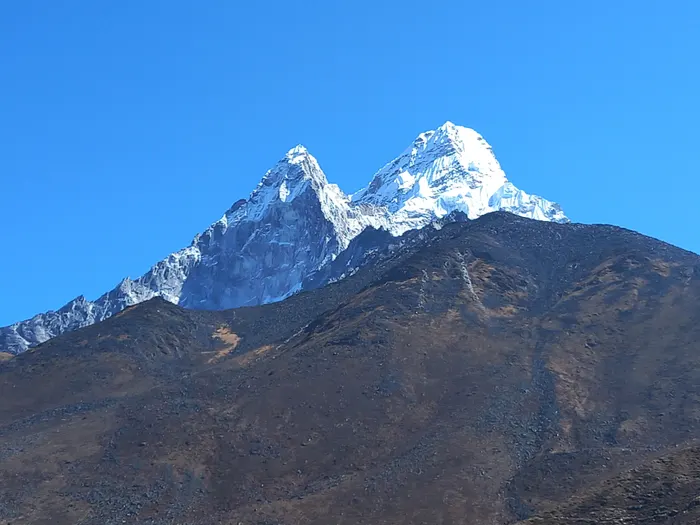
Most Everest Base Camp trekkers fly into Lukla and start walking at 2,860 metres. A smaller group of walkers takes the long way: a bus from Kathmandu to the hill town of Jiri at 1,905 metres, then eighteen to twenty-one days on foot through the Solu and Khumbu valleys to Everest Base Camp. This is the classic Hillary route, the trail walked by the 1953 expedition that carried Edmund Hillary and Tenzing Norgay to the first ascent of the world's highest mountain. In 2026 it remains the most gradual, most complete and most quietly rewarding way to reach Base Camp entirely under your own power.
The Everest Base Camp via Jiri trek adds roughly 130 extra kilometres of walking compared with the standard itinerary. In exchange you get a cross-section of Nepal that few trekkers ever see: rice terraces and orange groves in the lower Solu, rhododendron forests over the Lamjura La, stone Sherpa villages around Junbesi, and the first spine-tingling sight of Everest from a ridge above the monastery trail. Because your sleeping altitudes climb slowly from under 2,000 metres, your body arrives in the Khumbu better acclimatised than almost anyone who flew. Our 14-day Everest Base Camp itinerary covers the classic Lukla section in detail, and the Everest region guide explains how the whole valley fits together.
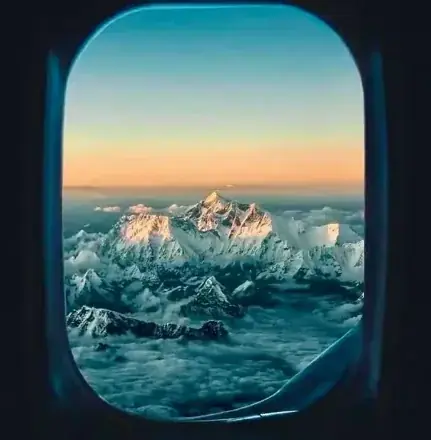
This guide walks you through everything you need to plan the classic route in 2026: the history, a stage-by-stage route description, realistic timelines, an honest difficulty assessment, current costs, permits, seasons, teahouse standards, packing notes, the Sherpa culture you will pass through, and a clear-eyed verdict on whether the walk-in is right for you. If you would rather have every detail handled, the fully supported Everest Base Camp via Jiri 21-day classic Hillary route trek runs the complete itinerary with guides, porters and every teahouse booked ahead.
Why Trek to Everest Base Camp from Jiri?
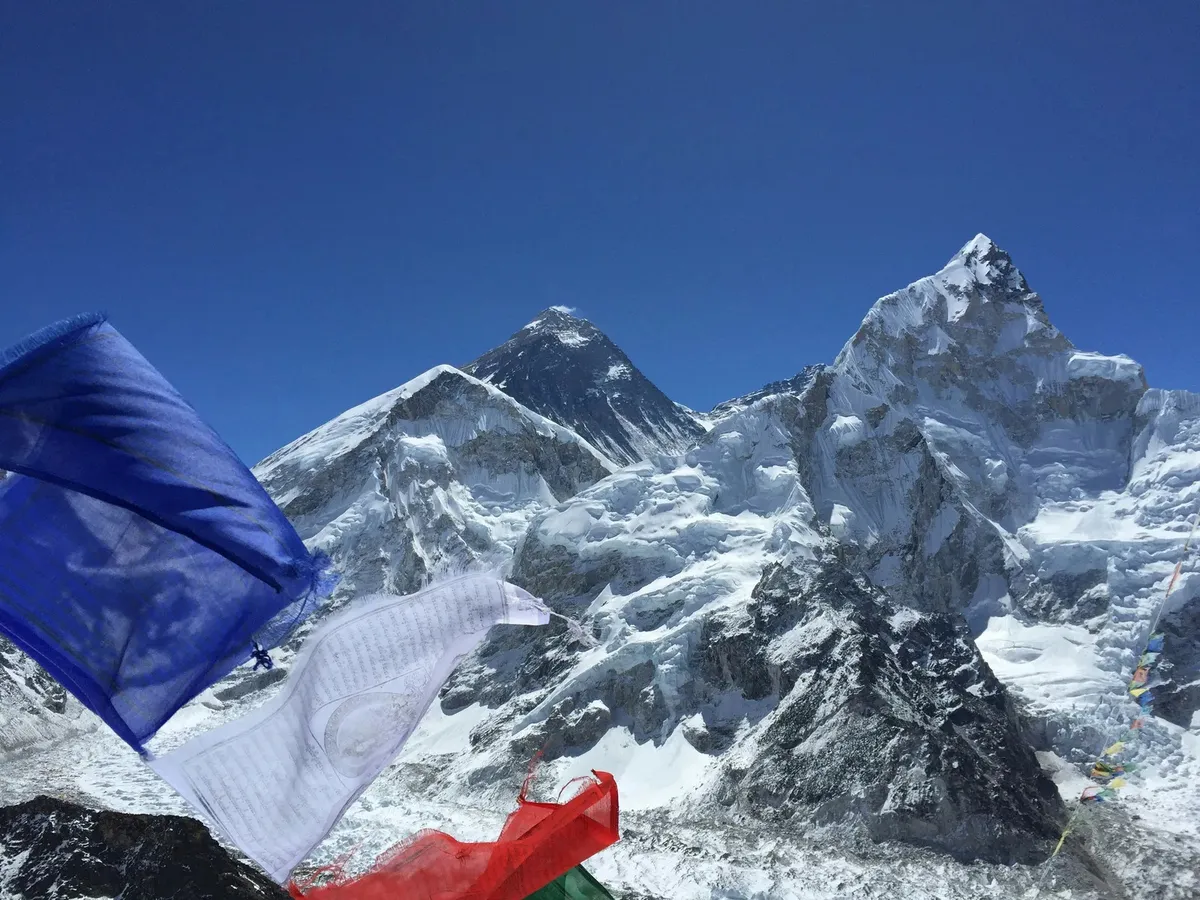
Trekking to Everest Base Camp from Jiri trades the drama of the Lukla flight for a gradual, culturally rich walk-in through the Solu valley. You gain gentler acclimatisation, lower trip costs, quiet trails and the exact same Base Camp finish, at the price of about one extra week on your feet.
The first reason walkers choose Jiri is solitude. On the classic walk-in days you can walk for hours between teahouses, sharing the trail with schoolchildren, mule caravans and the occasional yak train rather than a conga line of trekkers. Even in peak October, the Solu stages feel like trekking in a different decade. The crowds only appear after you cross below Lukla and join the main trail at Chheplung, and by then you have already earned your Khumbu legs.
The second reason is physiology. A Lukla start puts you on the sleeping-altitude rollercoaster: 2,860 metres on night one, 3,440 in Namche by night three. Walk in from Jiri and your sleeping profile climbs gently over a full week, from 1,900 metres to 2,600, with a couple of well-placed pass days that teach your body to recover. Trekkers who struggle with altitude on the standard route often cruise the same Khumbu stages after a Solu warm-up. Our guide on how to prevent altitude sickness on the Everest Base Camp trek explains why the acclimatisation curve matters so much.
The third reason is simply that it is the real thing. Before the Lukla airstrip existed, everyone walked this way: the surveyors, the climbers, the traders, the expeditions. Choosing Jiri in 2026 is a deliberate nod to the way the mountain was always approached, and the trail remembers it.
What Is the Classic Hillary Route?
The classic Hillary route is the 1953 Everest expedition's approach: by road from Kathmandu to Jiri, then on foot over the passes at Shivalaya, the Lamjura La, Junbesi, the Traksindo La and the Dudh Koshi villages to join the main trail at Chheplung above Phakding. John Hunt's team, with Edmund Hillary, Tenzing Norgay and more than 300 porters, walked these stages in the spring of 1953 before making the first ascent on 29 May.
In March 1953 the British expedition left Kathmandu on foot. There was no road beyond the valley rim and no airstrip anywhere in the Khumbu. For weeks the team ferried loads up the very trail you will walk: up from Jiri over the Lamjura La to Junbesi, across the Traksindo La, down the endless stone steps to the Dudh Koshi, then the long climb into the high valley to Thyangboche and beyond. When Hillary and Tenzing finally stood on the summit, every item on that mountain, from ropes to tins of sardines, had been carried on a porter's back from Jiri.
The route stayed the only practical access to the Everest region until 1964, when Edmund Hillary himself directed the construction of the short takeoff and landing strip at Lukla, originally built to ferry supplies for his schools. From that point the walk-in faded from fashion. Within a generation, "Everest Base Camp trek" came to mean a flight and a twelve-day circuit, and the classic route became the road less travelled.
That is its appeal today. The trail is the same width, the passes the same height, and the map Tenzing used is recognisably your map. Walking the classic route in 2026 connects you to seventy years of Everest history in a way no airport arrival can. For the wider story of the region, from trading roots to today's routes, our Everest region guide from Lukla to Kala Patthar is the companion read.
How Does the Jiri Route Compare with Flying to Lukla?
Flying to Lukla puts you on the Everest Base Camp trail within an hour of Kathmandu, but it starts you at 2,860 metres with zero warm-up. Walking from Jiri adds five to eight days, begins at 1,905 metres, and turns the trek into a complete cross-section of Nepal, from subtropical terraces to the glacier moraine of the Khumbu.
Here is how the two approaches stack up for 2026 planners:
| Factor | Via Jiri (classic) | Via Lukla flight (standard) |
|---|---|---|
| Starting altitude | 1,905 m at Jiri | 2,860 m at Lukla |
| Total trekking distance | roughly 188 km one way | roughly 130 km round trip |
| Typical duration | 18 to 22 days | 12 to 14 days |
| Highest pass before EBC trail | Lamjura La, 3,530 m | none before Namche |
| Flights required | none (road transfer only) | Lukla round trip |
| Trail traffic | quiet on walk-in days | busy in peak seasons |
| Acclimatisation profile | gradual over a week | compressed into 3 days |
| Weather-cancel risk | very low | moderate to high |
The last row deserves emphasis. Lukla's short runway sits in a notch of weather that closes it without warning, and in peak season thousands of trekkers watch departure boards for days. Our complete guide to Lukla flights explains the schedules, the Ramechhap diversion and what happens when the clouds roll in. Walking in from Jiri deletes that entire category of stress. Your only scheduling risk is whether your own legs show up in the morning.
The Route Stage by Stage: Jiri to the Khumbu Trail
The classic route unfolds in two halves: the Solu walk-in from Jiri to the trail junction at Chheplung, then the familiar Khumbu circuit from Phakding to Base Camp and back. Here are the stages as most 2026 itineraries run them.
Kathmandu to Jiri: The Road Journey
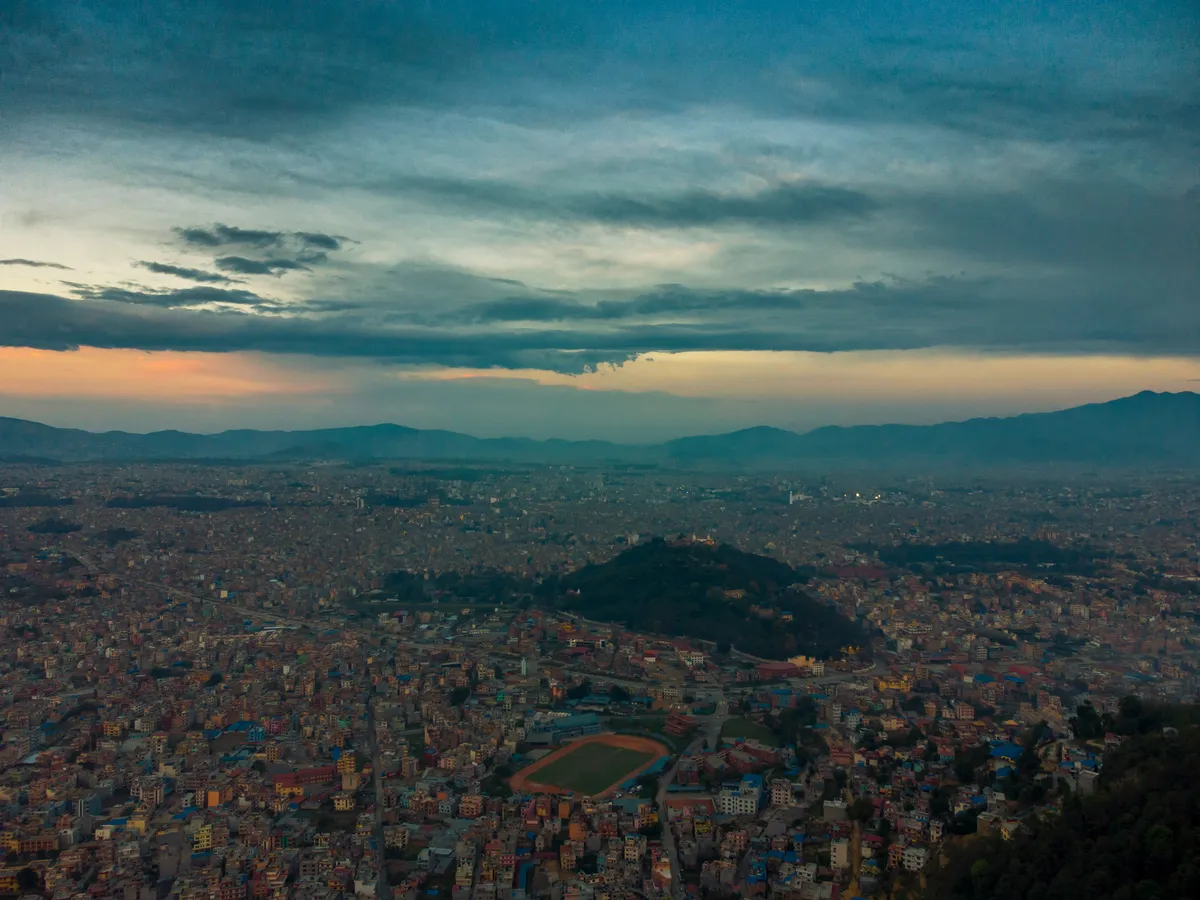
The trip begins with a road transfer of roughly 180 kilometres, six to nine hours depending on roadworks and monsoon damage, through the mid-hill switchbacks. Local buses are the budget classic; private jeeps split the difference between cost and comfort. You sleep in Jiri at 1,905 metres, a bazaar town founded as a Swiss development project centre in the 1960s, where the last real shops before the hills stock everything from gas canisters to chocolate bars.
Jiri to Shivalaya: First Pass, First Views
The trail leaves Jiri climbing northeast through potato fields and stands of pine, over the small ridge at about 2,700 metres, then drops steeply to Shivalaya at 1,767 metres on the Shivalaya Khola. It is a short, gentle first day of around six hours that sets the rhythm: climb a pass, descend to a river, repeat. The teahouses in Shivalaya are simple and warm, and the evening air feels like camping in a garden rather than beginning an Everest trek.
Shivalaya to Sete: Into the Deep Solu
Day two crosses the Khimti valley, passes the cheese-factory hamlet of Bhandar, and climbs through terraces to Sete at 2,521 metres, where the first rhododendron appear and the air begins to cool at night. Expect six to seven hours with a long, conversational gradient. This is the day most walkers fall in love with the walk-in: no dust, no crowds, just a mule bell somewhere below and a valley that keeps opening.
Sete to Junbesi over the Lamjura La: The Big Pass
Day three is the walk-in's ceiling: a steady forest climb from Sete to the Lamjura La at 3,530 metres, the highest point before the Khumbu, then a long descent through fir and hemlock to Junbesi at 2,675 metres. Junbesi is the Solu's jewel, a broad, quiet Sherpa village of painted doorframes and barley fields, with a cluster of monasteries in walking distance. Budget seven to eight hours with breaks; a cup of salted Tibetan butter tea in Junbesi is a rite of passage.
Junbesi to Nunthala over the Traksindo La
Day four climbs past Junbesi's hilltop viewpoint, where Everest first peeks over the eastern ridge, to the stone-paved Traksindo La at 3,071 metres, then drops on one of Nepal's most famous stone staircases to Nunthala at 2,320 metres. The descent is a knee tax that you pay in full, so plant your poles and take the tea houses at the bottom seriously. Six to seven hours.
Nunthala to Kharikola: The Dudh Koshi Descent
Day five drops to the roaring Dudh Koshi, crosses the high suspension bridge near Jubing, and climbs again through walnut and millet terraces to the ridge village of Kharikola, with its monastery perched on the skyline. The valley heat in the middle of the day is real: this is the stage where you appreciate that the classic route starts low. Six to seven hours.
Kharikola to Chheplung and the Main Trail
Day six roller-coasters over the Laama ridge through Puiyan and Surke, with Lukla's airstrip audible in the distance on busy days, and ends at Chheplung at 2,660 metres, where the classic route merges with the main Lukla to Everest Base Camp trail above Phakding. From this point the route is the one described in our day-by-day Everest Base Camp itinerary: Phakding at 2,610 metres, the Sagarmatha National Park gate at Monjo, the tough pull to Namche Bazaar at 3,440 metres, the acclimatisation days, Tengboche at 3,860 metres, Dingboche at 4,410 metres, Lobuche at 4,940 metres, Gorak Shep at 5,164 metres, and finally Everest Base Camp at 5,364 metres with the dawn climb of Kala Patthar at 5,545 metres for the panorama that seals the trip.
How Long Does the Jiri to Everest Base Camp Trek Take?
Full Jiri itineraries run 18 to 22 days. The walk-in from Jiri to Chheplung takes six to eight days depending on pace, the standard Lukla to Base Camp circuit adds another ten to twelve, and realistic plans keep one spare day on each end for the Kathmandu road transfer and any rest day you need.
The 21-day guided Everest Base Camp via Jiri package is the most popular shape: it walks the complete classic route with two acclimatisation days built in, reaches Base Camp and Kala Patthar, and flies back from Lukla to save your knees the repeat performance of the Solu staircases. Twenty-one days sounds enormous until you are on it; most walkers describe the second week as the fastest of their lives.
Shorter variations exist. Time-pressed walkers with 16 to 17 days can drive the first road legs as far as Salleri, the district roadhead, and start walking from there, skipping the first three to four Solu days while keeping the Dudh Koshi stages and the acclimatisation benefits of the middle route. Purists note that a Salleri start is not the 1953 line, and they are right, but it is a legitimate compromise for 2026 calendars. If your window is truly fixed at two weeks, the honest answer is to fly to Lukla and run the classic 14-day circuit instead, then come back for the walk-in another year.
How Hard Is the Jiri Route Compared with the Standard EBC Trek?
Day for day, the Jiri route is easier than the standard trek: lower sleeping altitudes, gentler daily climbs and a much softer start. The difficulty is cumulative. Twenty walking days demand sturdy knees, patient pacing and a fitness base built on back-to-back long walks rather than occasional gym sessions.
The honest comparison has two halves. On paper, the individual Solu days are moderate: five to eight hours of walking with 400 to 900 metres of climbing, on good trails, in warm weather, sleeping low. The Khumbu days are the same hours but colder, higher and thinner. What makes the classic route feel hard is not any single day, it is day fifteen, when your legs already carry two weeks of walking and the trail to Kala Patthar is still 700 vertical metres above your bed. Our honest assessment of how hard the Everest Base Camp trek is covers the Khumbu-side difficulties in depth.
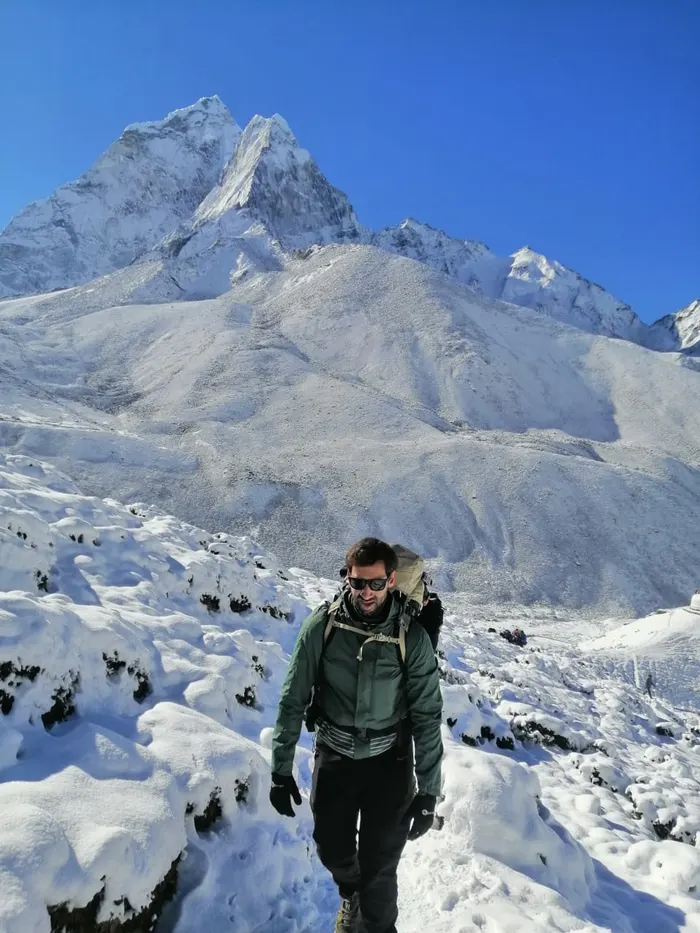
Where the Jiri route is genuinely easier is altitude. Walkers who start at 1,905 metres and climb gradually spend a full week above 2,000 and below 3,000 before the high valley, which is close to a textbook acclimatisation schedule. The same altitude insurance that protects your summit week also protects your enjoyment: fewer headache nights, better sleep, better appetite. Train with six to eight consecutive day walks carrying your trek weight, and the classic route is comfortably within reach of any reasonably fit hill walker. The altitude rules themselves matter more than any training plan, and they are laid out clearly in our altitude sickness prevention and acclimatisation guide.

What Does the Jiri Route Cost in 2026?
Independent trekkers complete the Jiri route for roughly USD 1,400 to 1,800 all in: teahouse food and lodging at USD 30 to 45 per day, permits, road transport and a little margin for error. Fully supported guided treks run from around USD 3,320, which covers the guide, porter support, every teahouse bill, permits and the flight home from Lukla.
| Item | Independent (USD) | Guided 21-day package (USD) |
|---|---|---|
| Permits and TIMS | around 40-55 | included |
| Kathmandu to Jiri transport | 25-60 | included |
| Teahouse lodging and food (19-20 days) | 650-900 | included |
| Guide plus porter | 0 or 50-65 per day | included |
| Lukla to Kathmandu flight (return leg) | 90-100 | included |
| Total typical spend | roughly 1,400-1,800 | from 3,320 |
Two structural savings offset the longer duration. First, you skip the Lukla flight in one direction, worth roughly USD 90 to 100, and with it the real risk of multi-day weather delays that can quietly add hotel nights in Ramechhap. Second, Solu teahouse prices run noticeably below Khumbu prices for the same plate of dal bhat, so your cheapest week of the trek is also your longest. For the full line-by-line budget of the Khumbu side, including permit fee changes and tipping norms, read our Everest Base Camp trek cost breakdown. Guided options also come in cheaper and faster shapes than the full classic: a 14-day group-joining Everest Base Camp budget trek covers the standard route if you decide the walk-in can wait.
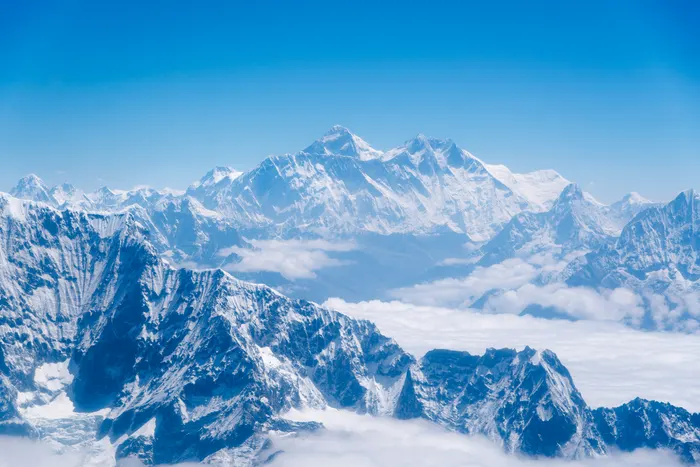
Which Permits Do You Need on the Classic Route?
From Jiri you need a TIMS card, the Sagarmatha National Park entry permit at around NPR 3,000, and the Khumbu Pasang Lhamu rural municipality fee at around NPR 2,000. A guided trek includes all three in the package price; independent walkers can buy them in Kathmandu before the road transfer, with the park permit also available at the checkpoint in Monjo.
The permit picture differs slightly depending on your entry point, and the details change from season to season as fees are revised, so treat the numbers above as planning figures and confirm current prices before you travel. The full breakdown of TIMS categories, national park fees, municipality charges and what each document actually checks is in our Nepal trekking permits and TIMS guide. One practical note for the classic route: carry passport photos for the permit counters, and keep paper copies separate from your phone, because several checkpoints along the Dudh Koshi stages still stamp paper rather than scan screens.
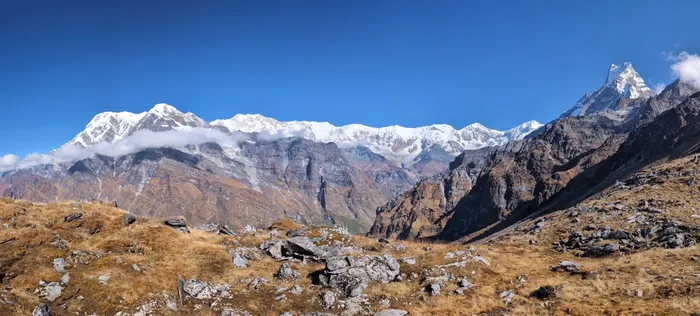
When Is the Best Time to Trek from Jiri?
Spring, from March to May, and autumn, from October to November, are the two classic windows for the Jiri route. Because the walk-in starts low and warm, late February and early December are also genuinely comfortable on the Solu stages, while the monsoon from June to August turns the mid-hills muddy, leech-prone and cloud-sealed.
Spring brings the Solu's best show: whole hillsides of rhododendron in bloom between Sete and Junbesi, warming valley days, and stable pre-monsoon skies in the high season weeks of April. Autumn counters with the clearest air of the year, freshly washed by the monsoon, and trail conditions at their driest, which matters on the long stone staircases of the Traksindo descent. The month-by-month detail, including temperature expectations at Base Camp and crowd patterns, is in our best time for the Everest Base Camp trek guide and the companion Everest Base Camp weather by month breakdown.
Two seasonal notes are specific to the classic route. Winter walking from Jiri is quieter and cheaper than the Lukla-side winter, because the Solu teahouses stay open all year to serve local traffic, but you should confirm ahead which high Khumbu lodges are running before committing past Namche. And if rhododendron season tempts you toward a viewpoint pilgrimage instead of the full walk, the spring flowers of the lower Solu are also the star of our Pikey Peak trek guide, the region's finest short Everest viewpoint.
Where Do You Sleep and Eat in the Solu Valley?
Teahouses line the entire classic route, offering twin rooms from a few dollars a night and menus built on dal bhat, fried rice, noodles, soups and endless rounds of tea. Standards in the Solu are simpler than in the Khumbu: rooms are often unheated plywood with a shared bathroom, and many lodges heat only the dining room, so the social evening around the stove is the real living room of the route.
Food advice for the walk-in is the same as for any long trek: eat the dal bhat. It is the biggest plate, the best fuel, endlessly repeatable, and it arrives with unlimited refills in most Solu kitchens. Snack supplies get thinner as you climb, so buy biscuits, peanuts and chocolate in Jiri's bazaar rather than betting on trail shops later. Charging and hot showers are usually available for a small fee, though power can vanish in bad weather. Our teahouse and lodge guide to the Everest Base Camp trek tells you what to expect night by night on the Khumbu side, where the standards, and the prices, step up a level.
What Should You Pack for a 21-Day Jiri Trek?
Pack for two climates in one trip: the warm, humid mid-hills of the first week, where you will trek in a t-shirt and sweat through afternoon heat, and the frozen high camps of the final week, where minus 15 nights are routine. The core list is broken-in boots, a four-season sleeping bag, a real down jacket, dependable rain protection, and enough layers to strip down or stack up as the route climbs.
Two packing notes are specific to the classic route. First, laundry is realistic on the walk-in: teahouses will wash and dry clothes in the valley heat, so you can carry fewer trekking clothes than a cold-route list suggests and refresh your kit in Junbesi or Nunthala. Second, if you are using a porter, remember the road start changes nothing about duffel discipline: 10 to 12 kilograms per trekker keeps everyone honest on the staircases. The complete season-by-season checklist, including electronics, first aid and what to rent rather than buy in Kathmandu, is our Everest Base Camp packing list for every season.
Sherpa Culture Along the Classic Route
The Solu valley is the quieter half of Sherpa country, and the walk-in is a slow introduction to its culture rather than a shortcut past it. In the lower stages you pass through Jirel, Sunwar, Rai and Magar farming villages; from Junbesi upward the mani walls, chorten and fluttering prayer lines are unmistakably Sherpa Buddhist, and the spoken language on the trails changes with the architecture.
Junbesi itself deserves a slow morning. The village clusters around several active monasteries, and a short walk from the teahouses brings you to prayer-wheel corridors turned by villagers who have walked that loop every day for decades. Further along, the great monastic community near the Traksindo stages is among the largest in the region, and trekkers who time a rest day around morning puja come away describing it as the spiritual heart of the whole route, not just a landmark. Further up the valley, Tengboche monastery hosts the Mani Rimdu festival in autumn, when the mountain communities gather for days of masked cham dance, and even outside festival season its terrace is the most famous viewpoint between Namche and Base Camp.
The classic route is also a living memorial to its own history. Edmund Hillary's Himalayan Trust built schools and hospitals across the Sherpa lands starting in the 1960s, and the classrooms and clinic you pass near Junbesi and Khumjung are part of that legacy, funded by the mountain the expedition made famous. If the cultural layers of Nepal draw you as much as the summits, our guide to cultural and spiritual tours in Nepal maps the monasteries, festivals and pilgrimage routes that pair naturally with a Khumbu trek.
Is the Jiri Route Right for You?
Choose the Jiri route if you have twenty-plus days, you genuinely enjoy long-distance walking, and you want the gentlest acclimatisation profile available on an Everest trek. Choose a Lukla start instead if your holiday caps at fourteen days, or if twenty consecutive trekking days would tax your knees more than the altitude taxes your lungs. The Base Camp finish is identical, so the choice is entirely about the journey.
The classic route rewards a certain temperament. You need to like walking for walking's sake, because six of your days are spent in valleys where Everest is not even visible. You need patience with basic teahouses in the Solu, and comfort with the fact that hot showers will be occasional rather than nightly. In exchange you get an intimacy with Nepal that the fly-in crowd never experiences, and a Base Camp arrival that feels like the end of a real expedition rather than the end of a long weekend.
A few decision aids from our library: the solo versus guided Everest Base Camp comparison helps you decide on support, and it applies double on the Jiri route, where remote Solu stages reward a guide's local contacts; the first-timer guide to the Everest Base Camp trek is honest about beginner expectations; and if you are weighing a different first Himalayan trek entirely, our Annapurna versus Everest Base Camp comparison lays out the trade-offs side by side.
Shorter and Easier Alternatives for Seeing Everest
Not every Everest ambition needs a 21-day walk-in. If the classic route inspires you but your calendar or knees disagree, the region offers graduated alternatives that keep the Sherpa culture and lose the mileage.
The Pikey Peak trek, four to six days from Kathmandu, is the natural first step: it climbs the finest Everest viewpoint in the lower Solu, the very hills the classic route crosses, and delivers a sunrise panorama from Everest to Kanchenjunga without committing to Base Camp altitude. Our Pikey Peak guide covers it stage by stage. One step further, the five-day Everest view short trek to the Namche panorama reaches the famous viewpoint above Namche Bazaar, and the eight-day Everest panorama senior trek at a gentle pace is built for walkers 50 and over who want maximum scenery for minimum strain.
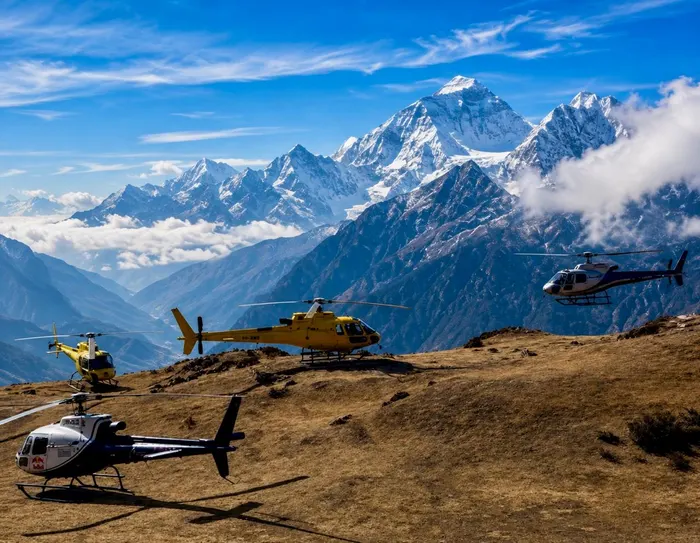
The reverse compromise is worth stating plainly: you can walk in and fly out. The Everest Base Camp helicopter trek that walks up and flies back runs exactly this shape, trekkers earn the full walk-in and then board a helicopter at Gorak Shep or Lukla for the fast, spectacular ride home over the passes they spent a week climbing. For comfort-focused walkers who want the classic route with upgraded lodges, the Everest comfort trek with upgraded lodges covers the Lukla side at a moderate pace. And if your interest in Everest is primarily visual, a mountain flight from Kathmandu or a full helicopter tour of the Himalaya shows you the range in a single morning, no boots required.
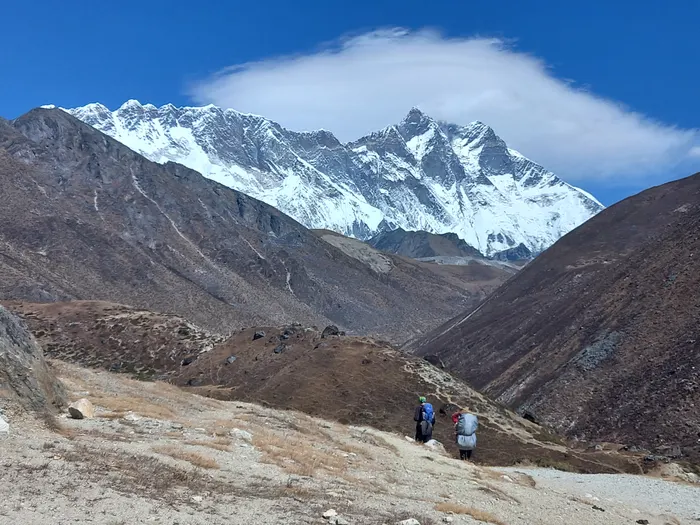
Conclusion: Walk In Like the 1953 Expedition
The Everest Base Camp via Jiri trek is the slowest, oldest and most complete way to answer the question every trekker eventually asks: what is this mountain country actually like? The answer does not begin at 2,860 metres with a queue for the trailhead. It begins on a hill road, with a bus ride into terraced country that looks nothing like the postcards, and it unfolds village by village, pass by pass, until the day you round a corner above Gorak Shep and the glacier delivers you to the foot of the highest mountain on Earth, walked there by your own feet over the same stones the 1953 expedition carried its hopes on.
Plan it honestly. Give it eighteen to twenty-two days, train on consecutive long walks, respect the altitude rules no matter how strong you feel, and let the Solu weeks be what they are: not the approach to the trek, but the first half of the trek. The reward is not only the photograph at Base Camp. It is the strange, quiet confidence of having crossed Nepal on foot, at walking pace, the way the mountain was first approached, and the certainty that you would do it again.
When you are ready to plan the classic route, start with the fully supported 21-day Everest Base Camp via Jiri classic Hillary route trek, pair it with our day-by-day Base Camp itinerary for the Khumbu stages, and read the guide to choosing the best trekking agency in Nepal before you commit to any operator. The classic route has waited seventy years for you. It is not going anywhere.