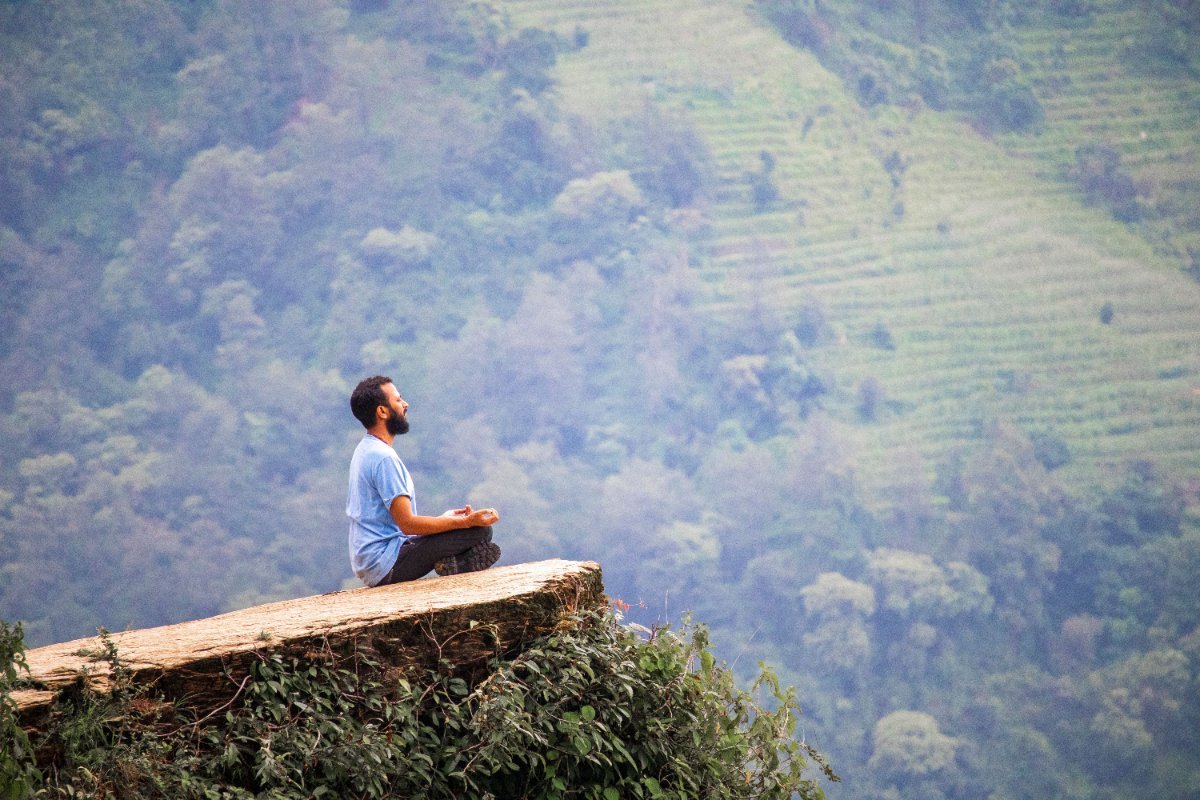
The classic dilemma of wellness travel: you want to deepen your yoga practice, but you also want to see the country you traveled so far to reach. A seven-day yoga retreat with sightseeing in Nepal solves this elegantly. Mornings are for practice: asana, pranayama, meditation. Afternoons are for exploration: ancient temples, mountain viewpoints, hidden courtyards, and the living culture of the Kathmandu Valley. You return home not just more flexible and centered but genuinely enriched by Nepal's extraordinary heritage.
This guide covers the 7-day yoga retreat with sightseeing in Nepal in detail. You will learn about the daily rhythm, the yoga styles taught, the cultural sites you will visit, how the program balances inner work with outer exploration, and why this format has become one of the most popular offerings in the wider wellness travel in Nepal movement. Whether you are a dedicated practitioner or a curious beginner, this retreat offers a complete Nepal experience that nourishes body, mind, and spirit.


Why Seven Days? The Perfect Duration
Seven days is the sweet spot for a combined yoga and sightseeing retreat. It is long enough for your practice to deepen noticeably. By day three, the initial stiffness and mental chatter begin to settle, and by day five, you are moving with a fluidity and presence that feels almost effortless. At the same time, seven days is short enough to fit into a standard holiday allowance, and it leaves room for the cultural exploration that makes the experience uniquely Nepali.
Shorter retreats of three or four days can feel rushed. You are just beginning to settle when it is time to leave. Longer retreats of ten or fourteen days offer deeper immersion but require more time off work and can feel monastic for travelers who also want to explore. Seven days strikes the balance: enough practice to create real change, enough sightseeing to satisfy your curiosity, and a pace that leaves you energized rather than exhausted. The 4-day yoga retreat with Reiki is a good alternative if you have less time, but for the full experience, seven days is ideal.
What Does a Typical Retreat Day Look Like?
A retreat day runs on a gentle dual rhythm. Ninety minutes of morning yoga start at seven o'clock, breakfast follows by nine, and guided sightseeing fills the afternoon until you return for free time, a restorative evening practice, dinner, and an early bedtime.
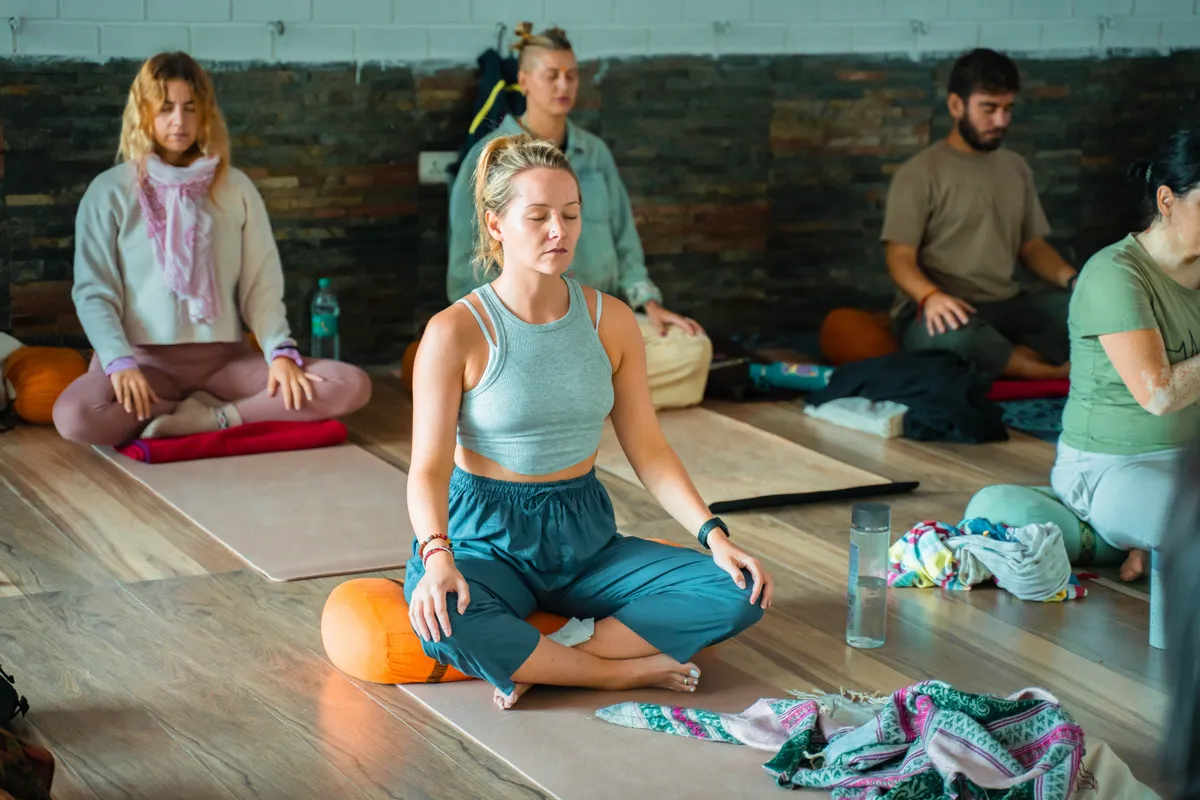
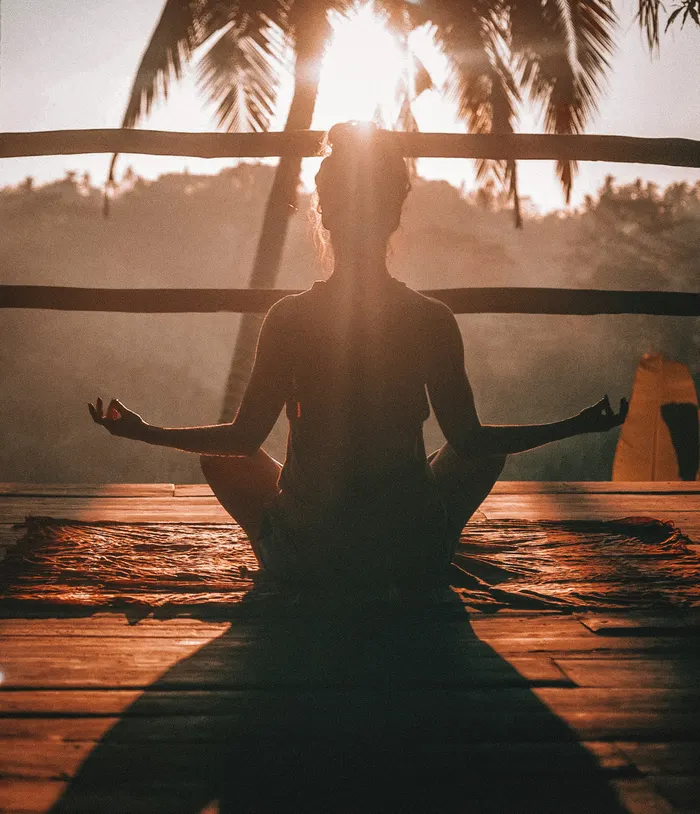
Your day begins early, but not punishingly so. Wake at six-thirty, herbal tea, then a ninety-minute yoga session starting at seven. The morning practice is the heart of the retreat. It typically includes asana, the physical postures, pranayama, breath control techniques, and a period of guided meditation. The style is Hatha-based, emphasizing alignment, breath awareness, and mindful movement rather than athletic intensity. Beginners are welcome, and instructors provide individual modifications.
Breakfast follows practice, a nourishing vegetarian meal prepared with Ayurvedic principles in mind. By nine-thirty, you are ready for the day's excursion. This might be a guided tour of a UNESCO World Heritage site, a walk through a traditional neighborhood, a visit to a monastery or temple, or a short hike to a viewpoint. Lunch is taken during the excursion, often at a local restaurant serving authentic Nepali cuisine. You return to the retreat center by late afternoon for free time, rest, journaling, or an optional treatment. The day concludes with a gentle evening practice, restorative yoga or yoga nidra, followed by dinner and an early bedtime.
Which Yoga Styles Will You Practice?
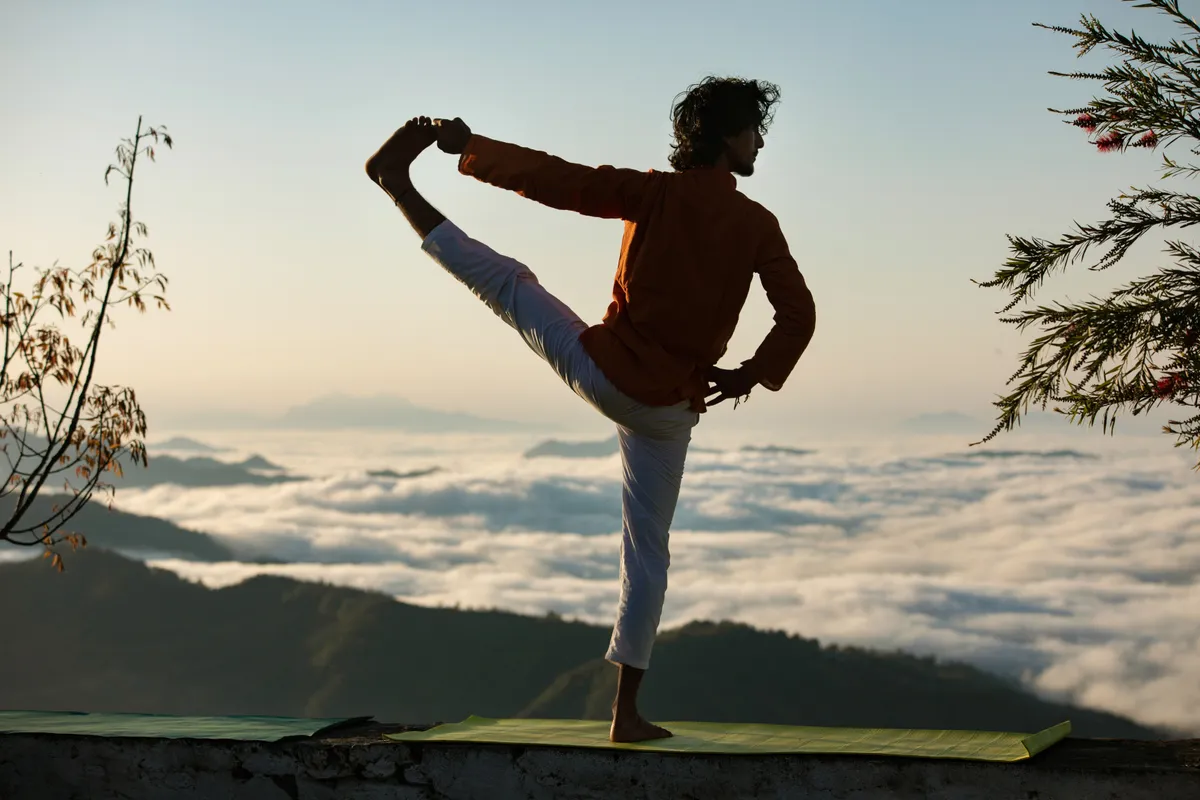
The retreat teaches traditional Hatha yoga: held postures with an alignment focus, three core pranayama techniques, and seated mindfulness meditation. Every session is beginner-friendly, with instructors offering individual modifications, so practitioners of any level can join the full program.
The yoga taught on this retreat is traditional Hatha yoga, the foundation from which most modern styles derive. Hatha emphasizes holding poses with awareness rather than flowing quickly between them, making it accessible to all levels and particularly suitable for a retreat setting where depth matters more than speed. Each session includes asana, pranayama, and meditation, giving you a complete practice that you can continue at home.
You will learn several pranayama techniques, including Nadi Shodhana (alternate nostril breathing) for balancing the nervous system, Kapalabhati (skull-shining breath) for energizing, and Ujjayi (ocean breath) for calming and focusing the mind. These are not esoteric practices. They are physiological tools with documented effects on heart rate variability, blood pressure, and stress hormones. The meditation instruction covers mindfulness of breath, body scanning, and loving-kindness practice, giving you a toolkit of techniques to suit different moods and needs.
Which UNESCO Heritage Sites Will You Visit?
Expect four to five of the Kathmandu Valley's great monuments: Swayambhunath, Boudhanath, Pashupatinath, and at least one royal durbar square. Guided tours include entrance fees, and every visit is paired with a cultural explanation that connects the site to your practice.
The sightseeing component of this retreat focuses on the Kathmandu Valley's celebrated UNESCO World Heritage monuments, a concentration of cultural treasures unmatched anywhere in the world. Over the course of the week, you will visit several of these sites, each offering a different window into Nepal's history, art, and spiritual life. The tours are guided, providing context that transforms beautiful buildings into living stories.
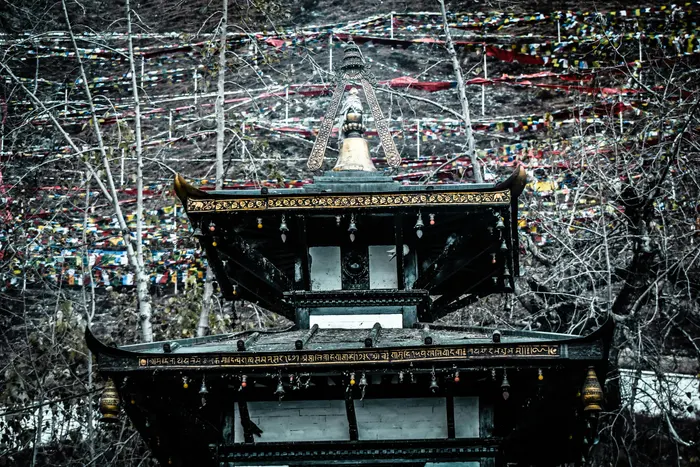
Swayambhunath, the Monkey Temple, sits on a hilltop west of the city center, its white dome and golden spire visible from across Kathmandu. The site is sacred to both Buddhists and Hindus, and the view from the top, across the entire valley to the Himalayan wall beyond, is worth the climb. Boudhanath Stupa, one of the largest spherical stupas in the world, is the heart of Kathmandu's Tibetan community. Walking the kora, the circumambulation path, among monks, pilgrims, and fluttering prayer flags, is a meditation in itself. Pashupatinath, Nepal's most sacred Hindu temple complex, offers a glimpse into the cycle of life and death along the Bagmati River, where cremation ghats operate continuously and sadhus, holy men, meditate in ash-smeared devotion.
The durbar squares of Kathmandu, Bhaktapur, and Patan showcase the architectural genius of the Newari civilization: intricately carved wooden windows, multi-tiered pagoda temples, stone sculptures of deities and mythical beasts, and courtyards where daily life continues as it has for centuries. These are not museums. They are living urban spaces where people worship, trade, celebrate festivals, and raise families. Walking through them with a knowledgeable guide reveals layers of meaning that casual visitors miss.
Can You Base the Retreat in Pokhara?
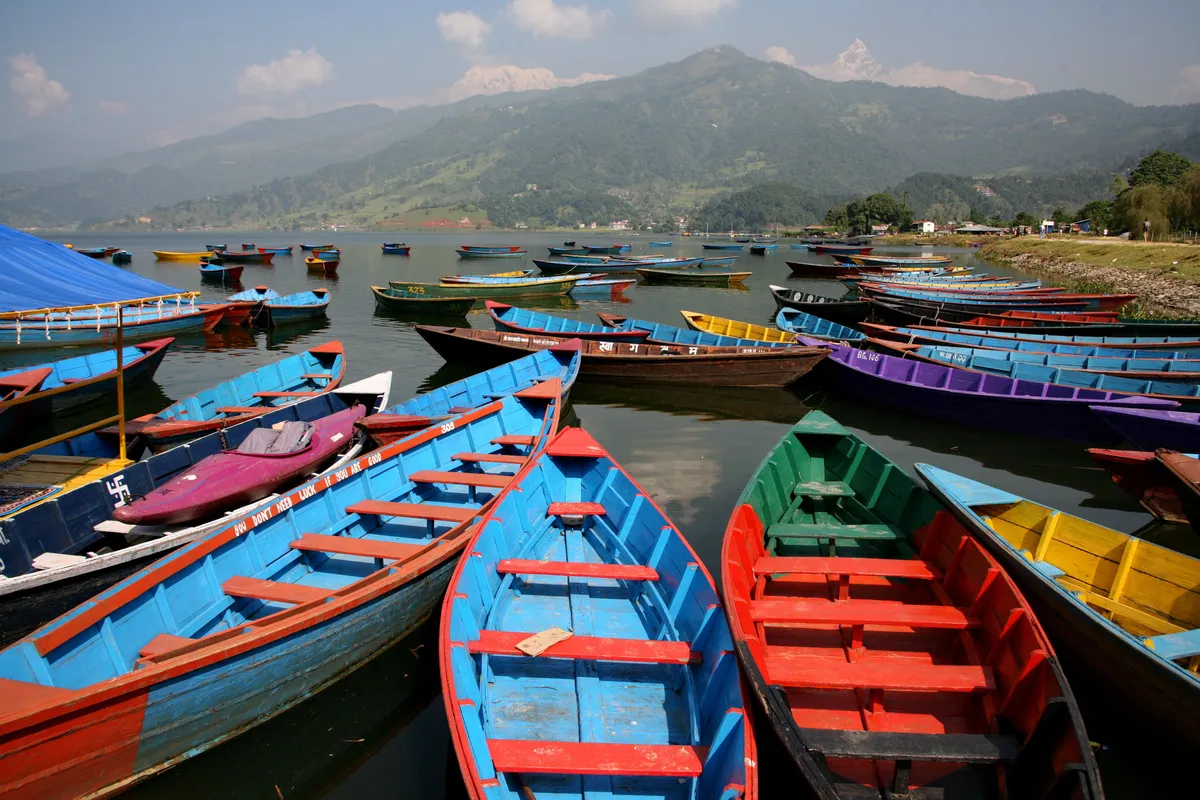
Yes. A Pokhara variant swaps heritage monuments for lakeside scenery: morning yoga facing Fewa Lake and the Annapurna range, with afternoons for the World Peace Pagoda, Sarangkot sunsets, Devi's Fall, and village day trips. The practice content stays the same.
While the standard retreat is based in Kathmandu, a Pokhara variant is available for travelers who want their yoga with a side of Himalayan panorama. Pokhara offers a different kind of sightseeing: fewer ancient monuments, but more natural beauty. Morning yoga on a terrace overlooking Fewa Lake and the Annapurna range is an experience that stays with you. Afternoon excursions might include a boat ride on the lake, a visit to the World Peace Pagoda, a short hike to Sarangkot for sunset views, or a trip to Devi's Fall and the Gupteshwor Cave.
The Pokhara yoga wellness retreat offers a shorter four-day program for travelers with limited time, but the seven-day format allows for a richer experience, including day trips to nearby villages and more extended practice sessions. For couples, the 6-day luxury Pokhara getaway combines yoga with premium accommodation and spa treatments in a romantic lakeside setting.
Ayurvedic Integration: Diet and Lifestyle
The retreat integrates Ayurvedic principles into both the yoga practice and the daily routine. Meals are vegetarian, prepared fresh, and designed to support your practice: light enough that you do not feel sluggish during asana, nourishing enough to sustain you through afternoon excursions. You will learn about the six tastes and how to balance them, about eating for your constitutional type, and about simple daily routines, tongue scraping, oil pulling, self-massage, that support health with minimal time investment.
An Ayurvedic consultation is included in the retreat, giving you personalized guidance on diet, lifestyle, and herbal support. This is not a generic wellness talk. The practitioner assesses your dosha, your constitutional type, and provides specific recommendations that you can implement immediately. Many participants find this consultation to be one of the most valuable parts of the retreat, offering insights into their health patterns that Western medicine has not provided.
Why Meditate in Sacred Spaces?
Meditating where generations have practiced before you feels measurably different. Monastery courtyards, sunrise sessions at Swayambhunath, and temple terraces carry a stillness that studio practice rarely matches, and the retreat schedules these sessions deliberately.
One of the unique features of this retreat is the opportunity to meditate in spaces that have been dedicated to contemplative practice for centuries. A morning meditation session might take place in a monastery courtyard, with the sound of monks chanting in the background. An afternoon session might be held at Swayambhunath, watching the sunset over the valley from a perch that has been sacred for over two thousand years.
These experiences are not gimmicks. There is a palpable quality to spaces that have absorbed generations of focused intention. Even skeptical participants often report that meditating in these settings feels different, deeper, more natural, than meditating in a studio at home. The retreat weaves these experiences into the program without making them feel forced or touristic. The practice comes first. The setting enhances it.
How Does Sound Healing Deepen Your Recovery?
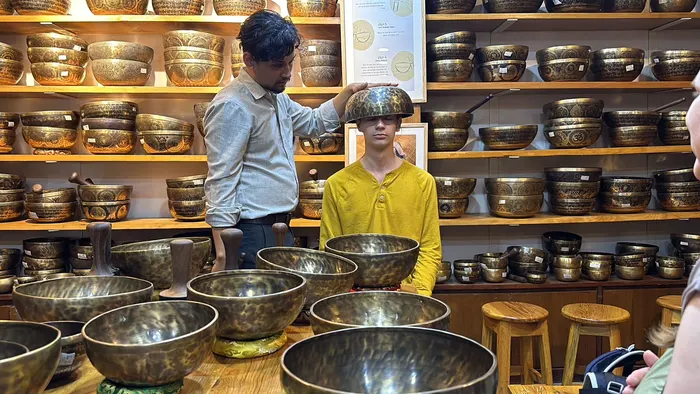
Sound healing reaches tension that conscious practice misses. A trained practitioner strikes Tibetan singing bowls in precise sequences that slow brainwave activity, so one session at the end of a full retreat day releases residual holding patterns that asana and meditation leave behind.
The retreat includes at least one sound healing session, typically using Tibetan singing bowls. Sound healing in Kathmandu has developed into a sophisticated practice, with practitioners who have trained for years in the precise placement and striking of bowls to induce specific brainwave states. A sound bath at the end of a day of practice and exploration is deeply restorative, releasing tension that asana and meditation may not reach.

Evening sessions often include yoga nidra, a guided relaxation practiced lying down in savasana. Yoga nidra systematically guides your awareness through the body, releasing tension at progressively deeper levels. It is sometimes called yogic sleep, though you remain conscious throughout. A thirty-minute yoga nidra session is said to be as restorative as several hours of ordinary sleep, and participants often report that it is the most relaxing experience of the retreat.
Cultural Immersion Beyond the Monuments
The sightseeing component goes beyond ticking off UNESCO sites. You will eat lunch at local restaurants serving authentic Newari and Nepali cuisine. You will walk through neighborhoods where tourists rarely venture, seeing how people live, work, and worship. You may visit a thangka painting school, where artists train for years to create the intricate Buddhist scroll paintings that adorn monasteries and homes. You may attend a cooking class and learn to make momos, Nepal's beloved dumplings, or dal bhat, the lentil and rice staple that fuels the nation.
These experiences ground the retreat in the reality of Nepal rather than a sanitized wellness bubble. You are not just practicing yoga in Nepal. You are experiencing Nepal, with all its complexity, beauty, and chaos. The contrast between the inner stillness of morning practice and the vibrant energy of afternoon exploration creates a rhythm that is uniquely satisfying. The spiritual tour in Nepal 2026 guide offers additional context for the sacred sites you will visit, and the cultural and spiritual tours guide provides a comprehensive overview of Nepal's heritage destinations.


What Physical Changes Can Seven Days Bring?
One week of daily practice produces visible change: noticeably better hip and hamstring flexibility, improved posture, reduced morning stiffness, and easing of common lower-back and neck complaints. Pranayama adds respiratory gains, and meditation lowers baseline muscle tension.
Seven days of daily yoga practice produces measurable physical changes. Flexibility improves noticeably, particularly in the hips, hamstrings, and spine. The morning stiffness that many people accept as normal begins to fade. Posture improves as you become more aware of your alignment. Many participants report that chronic aches, particularly in the lower back and neck, diminish or disappear.
These changes are not just about the asana. The pranayama practices improve respiratory efficiency, increasing lung capacity and oxygen uptake. The meditation reduces muscle tension and lowers cortisol. The Ayurvedic diet supports digestion and reduces inflammation. The combination is synergistic: each element amplifies the others, producing results that exceed what any single practice could achieve alone. The 6-day stress management retreat offers a more intensive focus on stress recovery for those who need it, while the seven-day format balances physical practice with cultural enrichment.
What Are the Mental and Emotional Benefits?
Most participants report clearer thinking, lower emotional reactivity, and better sleep within the week. Removing screens and daily stressors, then adding daily meditation, gives the nervous system enough quiet to reset, a shift partners and colleagues often notice first.
The mental and emotional benefits of a seven-day retreat are often more profound than the physical ones. The combination of daily meditation, reduced screen time, and removal from normal stressors creates a mental clarity that many participants have not experienced in years. Thoughts become more coherent. Emotional reactivity decreases. You find yourself responding to situations rather than reacting, a shift that partners and colleagues often notice when you return home.
The retreat environment also creates space for processing emotions that daily life suppresses. It is not uncommon for participants to experience moments of sadness, anger, or grief during a retreat. This is not a sign that something is wrong. It is a sign that the practice is working, that the armor is softening, that suppressed material is surfacing to be released. The instructors are experienced in holding space for these experiences, and the group environment, while not therapy, provides a container of support and understanding.
Who Is This Retreat For?
This retreat is designed for travelers who want a meaningful wellness experience without sacrificing cultural exploration. It suits solo travelers, couples, and friends traveling together. The yoga is accessible to all levels, from complete beginners to experienced practitioners. The sightseeing is moderate, with walking tours that most people can manage comfortably. The pace is relaxed, with plenty of free time built into the schedule.
It is not suitable for travelers seeking an intensive, silent, or strictly disciplined retreat. If you want eight hours of yoga a day, complete silence, and no external stimulation, this is not the program for you. But if you want to deepen your practice while experiencing one of the world's most fascinating cultures, in the company of like-minded travelers, with expert guidance and comfortable accommodation, this retreat delivers exactly that. For a more intensive wellness experience, the 9-day luxury yoga wellness escape offers a longer, more immersive program.
What to Bring and What to Expect
Pack comfortable yoga clothes, layers for cool mornings and evenings, comfortable walking shoes, a journal, a reusable water bottle, and sunscreen. The retreat provides yoga mats, blocks, straps, and blankets, so you do not need to bring your own equipment unless you prefer to. Accommodation is in a comfortable guesthouse or retreat center with private rooms, hot water, and Wi-Fi, though internet access may be limited during practice hours.
Nepal's climate varies by season. October and November offer clear skies and comfortable temperatures, ideal for both practice and sightseeing. March and April bring warm weather and blooming rhododendrons. The monsoon months of June through August are wet but lush, and the retreat continues with indoor practice spaces. Winter, December through February, is cold at night but offers crisp, clear days and fewer tourists. The retreat operates year-round, and each season has its own character. If the week awakens an appetite for longer mountain journeys, our complete guide to trekking in Nepal is the natural next read.
How Much Does the Retreat Cost, and What Is Included?
The seven-day program starts at $748, covering seven nights of accommodation, all vegetarian meals, twice-daily yoga and meditation, guided UNESCO sightseeing with entrance fees, one Ayurvedic consultation, and a sound healing session. Airport transfers and extra treatments cost more.
The seven-day yoga retreat with sightseeing offers exceptional value. Including accommodation, all meals, daily yoga and meditation, guided sightseeing tours with entrance fees, an Ayurvedic consultation, and a sound healing session, the program costs significantly less than equivalent retreats in Bali, Thailand, or the West. Airport transfers and additional treatments are available at reasonable extra cost.
When you consider what you receive, a week of expert instruction, cultural immersion, nourishing food, and comfortable accommodation in one of the world's most extraordinary destinations, the value is remarkable. Many participants find that the practices they learn save them money in the long run, reducing the need for physiotherapy, stress-related medical visits, and the kind of expensive but ineffective holidays that leave you needing a holiday to recover.
Continuing Your Practice at Home
The retreat includes guidance on establishing a sustainable home practice. You will leave with a written sequence that you can follow independently, a pranayama routine, and meditation instructions. The instructors are available for follow-up questions by email, and many participants stay in touch with each other, forming informal practice groups or accountability partnerships.
The real measure of a retreat is not how you feel on day seven but how you feel three months later. The practices you learn are designed to be sustainable: a twenty-minute morning routine that fits into a busy life, simple dietary principles that do not require exotic ingredients, and a meditation practice that can be done anywhere. The retreat plants seeds. Your ongoing practice is what makes them grow.