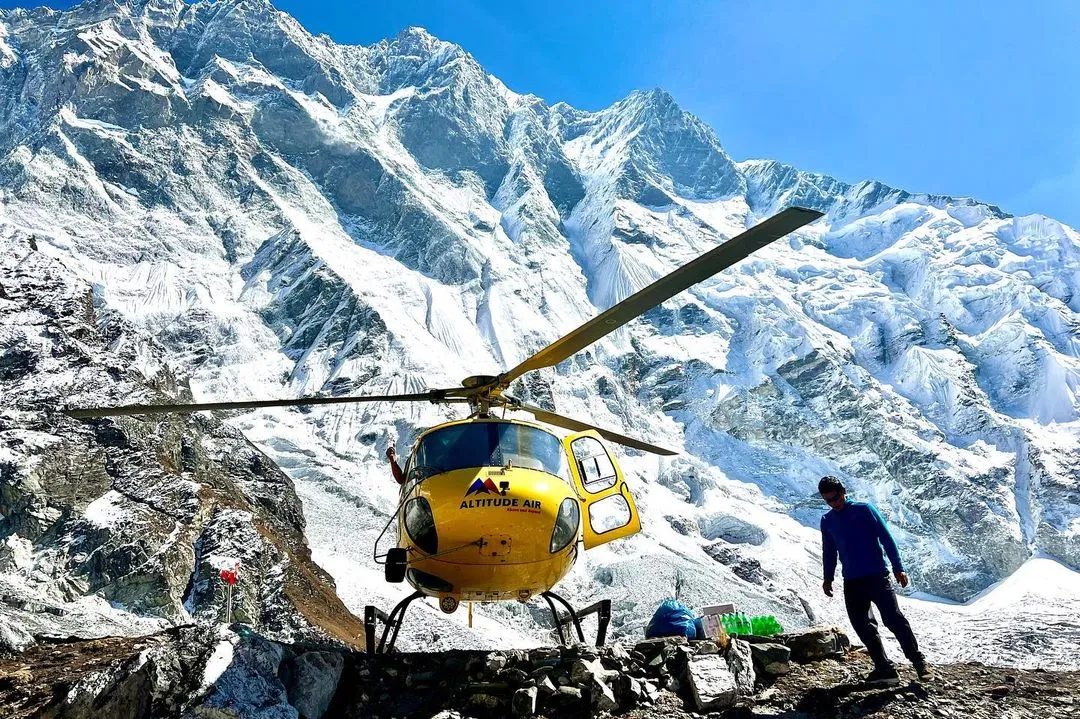
 For many senior travellers, the dream of standing before Mount Everest or gazing into the Annapurna Sanctuary feels out of reach. Multi-day high-altitude treks demand physical fitness, weeks of time, and a tolerance for basic accommodation that not everyone has or wants. A helicopter tour in Nepal for seniors changes that equation completely. In a few hours, you can soar over the world's highest peaks, land at sacred pilgrimage sites, and return to your Kathmandu hotel for dinner, all without lacing up a hiking boot.
At Enticing Himalayas, we have arranged dozens of helicopter tours for travellers aged 60, 70, and even 80+. The feedback is unanimous: this is not a compromise or a shortcut. It is a legitimate, deeply moving way to experience the Himalayas. This guide covers everything you need to know about helicopter tours in Nepal as a senior traveller: which flights are easiest, what medical considerations apply, how much walking is involved, and how to book with confidence.
Why Helicopter Tours Are Ideal for Senior Travellers
The traditional way to see Everest involves a flight to Lukla (one of the world's most challenging airstrips), then 12 to 14 days of trekking at altitudes above 4,000 metres. For seniors, this presents real challenges: the physical strain on knees and hips, the risk of altitude sickness, the cold, and the basic toilet facilities along the trail. A helicopter tour eliminates every one of these barriers while delivering the same views and a deeper sense of the landscape's scale.
Here is what a helicopter tour offers that trekking cannot:
- Zero trekking required. You board the helicopter in Kathmandu or Pokhara and land directly at the destination. No hiking, no switchbacks, no yaks or porters.
- Rapid ascent and descent. The helicopter climbs to high altitude, gives you time to absorb the view, and brings you back down before your body accumulates dangerous levels of altitude stress. Most tours limit ground time at the highest point to 10 to 20 minutes, which is well within safe limits for healthy seniors.
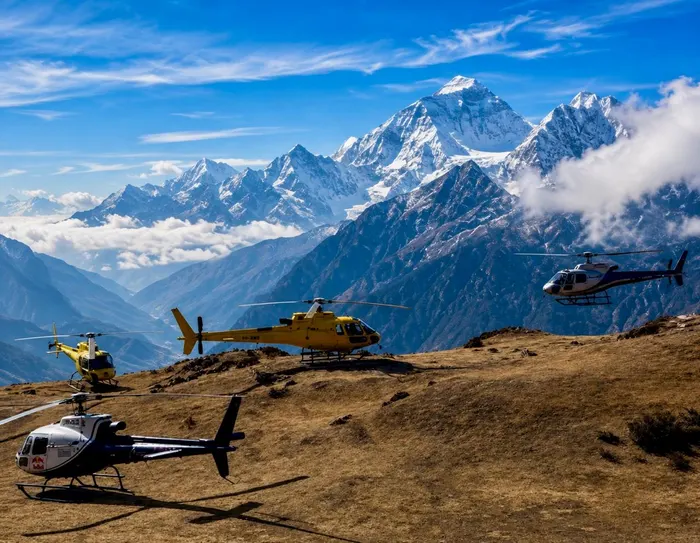
- Comfortable cabin. Modern helicopters like the AS350 B3e are pressurised, heated, and equipped with wide viewing windows. You sit in a normal seat, not a strap-in harness. Some seniors describe the motion as gentler than a car ride.
- Same-day return. You leave your Kathmandu hotel at 6 AM and are back by noon. No sleeping in teahouses, no squat toilets, no cold showers.
- All-inclusive pricing. The tour covers airport transfers, permits, and often a mountain breakfast. There is no need to budget for gear rental, porter tips, or trail snacks.
Best Helicopter Tours in Nepal for Seniors
Not all helicopter tours are equally suited to senior travellers. These four stand out for their accessibility, comfort, and minimal physical demands.
1. Everest Base Camp Helicopter Tour with Landing
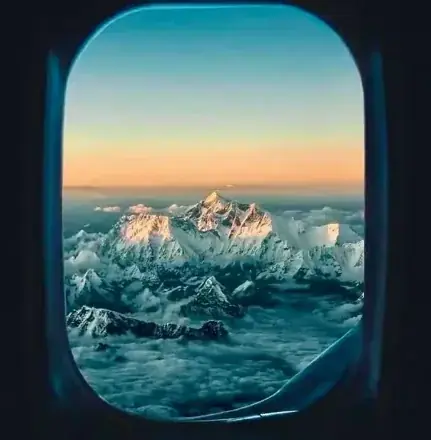
The flagship experience. You fly from Kathmandu, land at Lukla for refuelling, overfly Everest Base Camp and Kala Patthar, and descend to Hotel Everest View at 3,880 metres for breakfast. The hotel has a flat, paved terrace where you can sit and take in the panorama. There is no walking to reach the viewpoint. The helicopter does not land at the highest point (Kala Patthar, 5,545 metres), which significantly reduces any altitude risk. Most seniors handle this tour without any difficulty.
Duration: 4 to 5 hours door-to-door. Shared cost: USD 1,000 to 1,200 per person. Private charter: USD 3,500 to 4,500. Physical demand: Minimal. Boarding requires climbing 2 to 3 steps into the helicopter. See the full Everest helicopter tour details.
2. Gosaikunda Sacred Lake Helicopter Tour
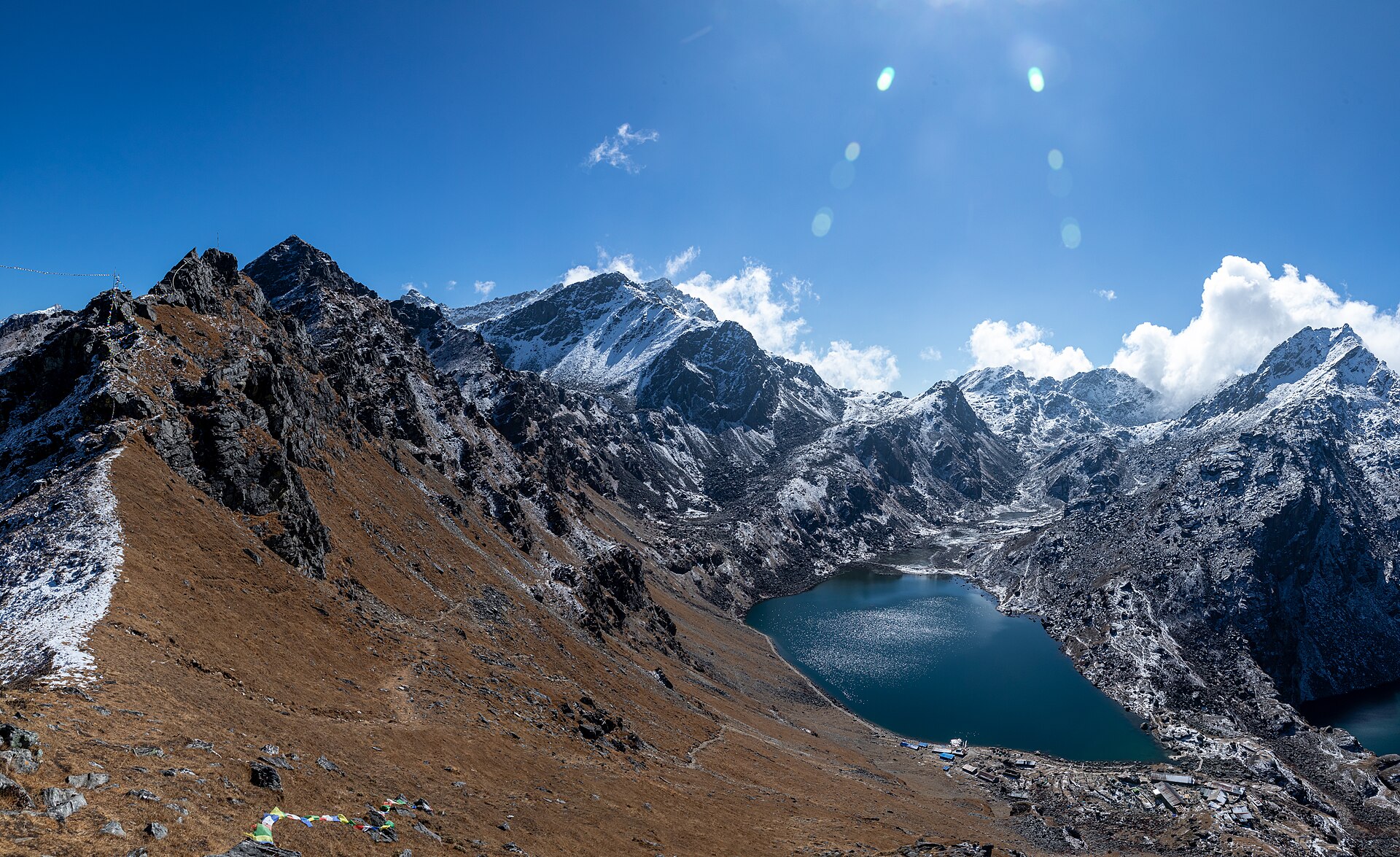
The shortest and most accessible landing tour from Kathmandu. You rise above the Langtang Valley in about 20 minutes and land at the holy Gosaikunda Lake (4,380 metres). This is a sacred Hindu pilgrimage site revered during Janai Purnima, and the landing zone is relatively flat. The tour includes time for short walks around the lake shore if you feel comfortable, but you can also stay near the helicopter and absorb the view. Because of its short duration, this is the easiest helicopter tour for seniors concerned about altitude.
Duration: 1.5 to 2 hours. Shared cost: USD 600 to 800 per person. Private charter: USD 1,800 to 2,500. Physical demand: Very low. Optional walking around the lake on flat terrain. See the Gosaikunda helicopter tour details.
3. Muktinath Helicopter Pilgrimage
A deeply meaningful journey for Hindu and Buddhist seniors. Muktinath Temple at 3,710 metres in the Mustang region is one of Nepal's most sacred sites, featuring 108 water spouts and an eternal flame. The helicopter lands at a helipad near the temple entrance, requiring only a short walk on stone steps to reach the shrine. Many elderly pilgrims tell us this tour allowed them to complete a dream they thought was closed to them. The flight passes through the dramatic Kali Gandaki Valley between the Annapurna and Dhaulagiri ranges.
Duration: 3 to 4 hours. Shared cost: USD 900 to 1,100 per person. Private charter: USD 3,000 to 4,000. Physical demand: Low. A short walk of about 10 minutes from helipad to temple on stone steps. See the Muktinath helicopter pilgrimage package.

4. Annapurna Base Camp Helicopter Tour from Pokhara
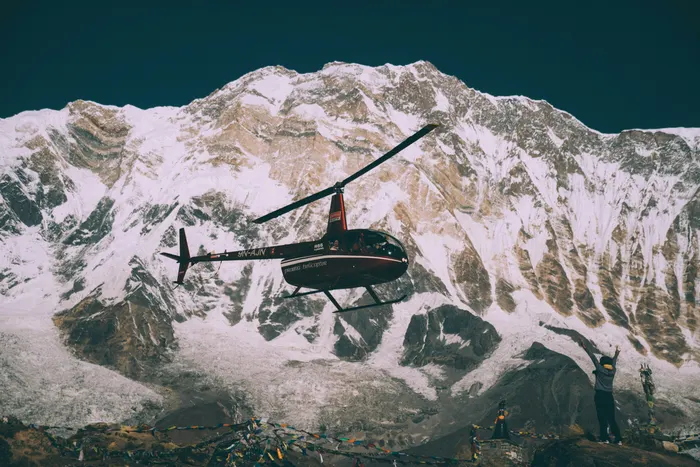
Departing from Pokhara (a lower, warmer city than Kathmandu), this tour flies directly into the Annapurna Sanctuary and lands at Annapurna Base Camp at 4,130 metres. You step out into a natural amphitheatre of 7,000- and 8,000-metre peaks. The landing zone is on a glacial plateau with flat, manageable terrain. You have 20 to 30 minutes to walk around, take photographs, and absorb the silence of the high mountains before the descent. Many seniors find this tour less intimidating than Everest because the landing altitude is lower and the flight is shorter.
Duration: 2 to 3 hours. Shared cost: USD 800 to 1,000 per person. Private charter: USD 2,500 to 3,500. Physical demand: Low. Flat walking at the base camp landing zone. See the Annapurna Base Camp helicopter tour details.
Health and Safety: What Seniors Need to Know
Safety is the number one concern for senior travellers considering a helicopter tour in Nepal, and rightly so. Here is what our experience and the industry standards tell us.
Altitude Considerations
The main risk is altitude sickness, but the risk profile of a helicopter tour is fundamentally different from trekking. You ascend rapidly, spend a limited time at altitude, and descend before your body begins to accumulate dangerous stress. Most helicopter tours keep ground time at the highest point to 10 to 20 minutes. For perspective, Everest View Hotel is at 3,880 metres, which is comparable to a modest ski resort in Europe. The full Everest Base Camp flyover reaches 5,545 metres but does not land there, so exposure is brief.
Our recommendation for seniors: Consult your doctor before booking, especially if you have a history of heart or lung conditions. Spend 1 to 2 days acclimatising in Kathmandu (1,400 metres) or Pokhara (820 metres) before the tour. Stay well hydrated. Avoid alcohol the night before. The helicopter carries oxygen cylinders, and pilots are trained to monitor passengers.
Aircraft and Pilots
Reputable operators in Nepal use the AS350 B3e (now H125) helicopter, manufactured by Airbus. This aircraft is the global standard for high-altitude mountain flying and holds the world record for the highest helicopter landing. Pilots must be licensed by the Civil Aviation Authority of Nepal (CAAN) and typically have thousands of hours of mountain flying experience. Weather is the deciding factor for every flight. If visibility, wind, or cloud conditions are marginal, the pilot will cancel. This is not an inconvenience, it is the safety system working.
Boarding and Mobility
Getting into a helicopter requires stepping up 2 to 3 stairs and ducking slightly under the rotor. Cabin crew are always available to assist. Once seated, the seatbelt is a standard automotive-style lap belt plus shoulder harness. If you have limited mobility, inform the operator at booking so they can prepare. Some operators can provide a portable step stool. Helicopter cabins are not wheelchair accessible, but for seniors who can walk with a cane or walker, the boarding process is usually manageable.
Insurance
Travel insurance is mandatory for helicopter tours in Nepal. Your policy must specifically cover helicopter evacuation at altitudes up to 6,000 metres. Many standard travel insurance policies exclude helicopter evacuation or cap the altitude coverage. Read your policy carefully. Enticing Himalayas can recommend providers that specialise in Nepal adventure travel. The cost of emergency helicopter evacuation in the Himalayas ranges from USD 5,000 to 15,000, so proper coverage is essential.
Senior-Friendly Flight Tips
Based on years of flying with senior guests, here are practical tips that make the experience smoother:
- Book a shared morning flight. Mornings offer the clearest mountain views and the calmest flying conditions. Shared flights also have fixed departure times, which creates a predictable routine. If you prefer a private charter, you can choose your own departure time, but aim for before 10 AM for the best visibility.
- Choose the right seat. The best seats are on the left side of the helicopter for Everest flights (you see Everest, Lhotse, and Nuptse approaching) and on the right side for Annapurna flights (you see Machhapuchhre and Annapurna South). Request your preferred side at boarding. On a shared flight, the pilot assigns seats by weight balance, but they will honour requests when possible.
- Dress in layers. Temperature at altitude drops sharply. Wear thermal underwear, a fleece mid-layer, and a windproof jacket. Bring a warm hat, gloves, and sunglasses. The cabin is heated, but you may want to step outside at the landing point. Our helicopter tour cost guide includes a full packing list.
- Take motion sickness medication if needed. If you are prone to car sickness, take an over-the-counter remedy like dimenhydrinate (Dramamine) about 30 minutes before boarding. The flight is generally smooth, but early morning turbulence in the valleys can unsettle some passengers.
- Eat lightly. Have breakfast before the flight on Everest tours (the Hotel Everest View stop includes a served breakfast), but eat lightly on Gosaikunda and Muktinath flights as there is no meal service. Avoid heavy, fatty foods to reduce the chance of nausea.
- Photography tips. Bring a camera with a polarising filter to reduce glare from the snow. Shoot from the window. Do not use a flash. Ask the pilot or your fellow passengers to take photos of you at the landing point. Our helicopter pilgrimage guide has more photography advice.
Helicopter Pilgrimage for Elderly Devotees
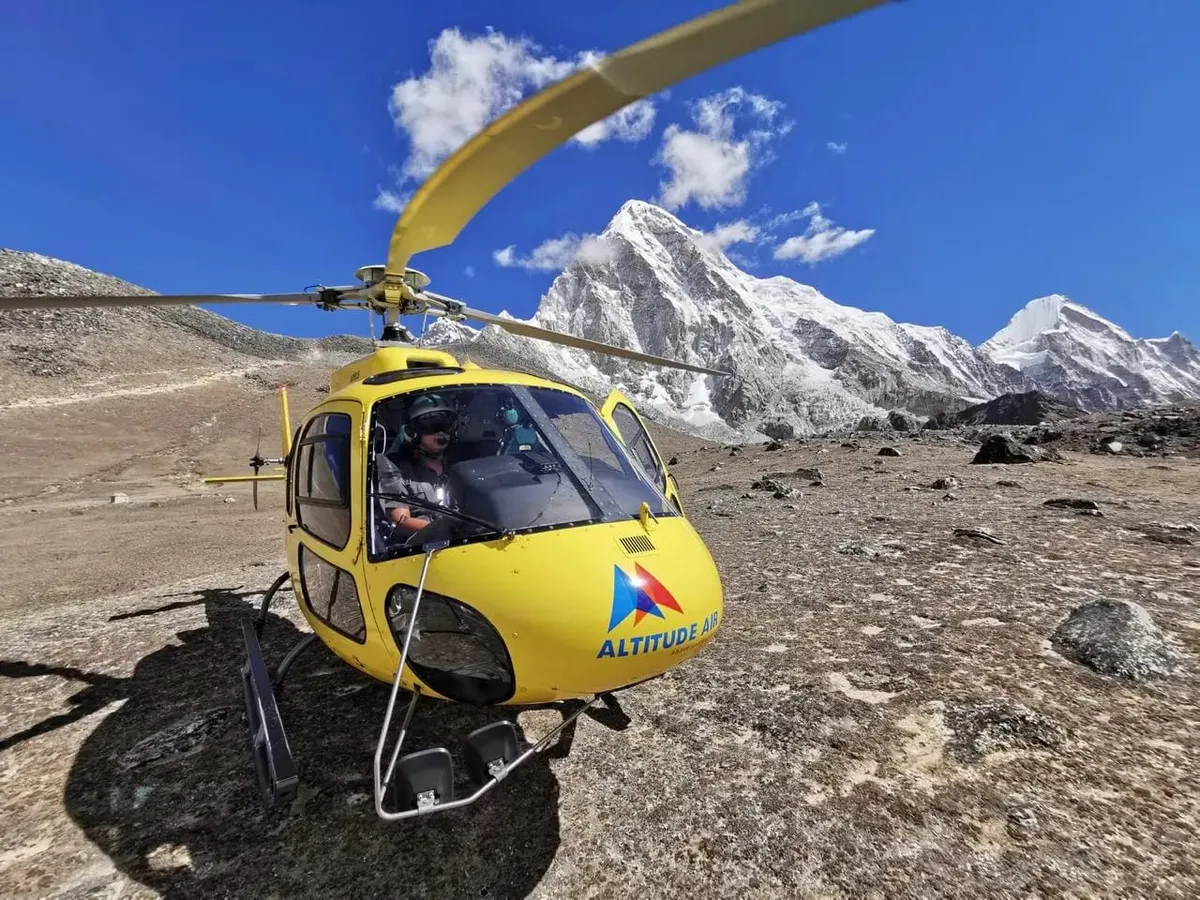
For Hindu and Buddhist seniors, helicopter tours in Nepal are more than sightseeing. They are a religious act. Being able to reach Muktinath, Gosaikunda, or the Everest region's monasteries without days of dangerous trekking is nothing short of a miracle for elderly pilgrims. These sites carry centuries of spiritual significance, and the helicopter makes them accessible to people whose bodies would otherwise prevent the journey.
We have arranged helicopter pilgrimages for seniors celebrating milestone birthdays, couples marking anniversaries, and families fulfilling a parent's lifelong wish. The emotional response at landing is always profound: many guests weep, pray, or simply stand in silence absorbing the mountain air. If you are considering a helicopter pilgrimage for yourself or a loved one, know that it is a legitimate and deeply respected way to visit these sacred places. The act of pilgrimage is about intention and presence, not about the difficulty of the approach.
Our spiritual cluster of blog posts explores this intersection in depth, including the Cultural and Spiritual Tours in Nepal guide and the complete guide to trekking in Nepal. For the spiritual context of the Muktinath region, our Muktinath and Mustang Spiritual Circuit guide is essential reading.


Helicopter Tour in Nepal for Seniors: Frequently Asked Questions
Can seniors do the Everest Base Camp helicopter tour?
Yes, absolutely. The Everest Base Camp helicopter tour is the most senior-friendly option because the helicopter does not land at the highest point (Kala Patthar) but descends to Hotel Everest View at 3,880 metres for breakfast. This altitude is manageable for most healthy seniors. The flight involves minimal physical exertion, the cabin is comfortable, and the entire experience is completed in 4 to 5 hours with no overnight stays.
What is the age limit for a helicopter tour in Nepal?
There is no official age limit. We have flown passengers well into their 80s. The deciding factors are general health, ability to board the aircraft (2 to 3 steps), and tolerance for moderate altitude exposure (up to about 4,000 metres for the landing tours). A pre-flight medical check-up is always recommended for seniors over 70.
Do I need travel insurance for a helicopter tour?
Yes, travel insurance is mandatory. Your policy must cover helicopter evacuation at altitudes up to 6,000 metres. Many standard policies exclude this, so read the fine print carefully. The tour operator will require proof of insurance before departure. Enticing Himalayas can recommend specialist providers.
How much walking is involved on a helicopter tour?
Minimal. On Everest tours, you walk from the car to the helicopter, board the aircraft, and then step from the helicopter to the terrace at Hotel Everest View. On Gosaikunda and Muktinath tours, the walk from the helipad to the lake or temple is about 10 minutes each way on flat or gently sloping terrain. No hiking is required.
What happens if a senior feels unwell during the flight?
The pilots are trained to handle altitude-related discomfort. The helicopter carries supplementary oxygen, and the pilot can descend immediately if a passenger shows signs of distress. Because ground time at altitude is limited to 10 to 20 minutes, serious altitude sickness is extremely rare on helicopter tours. If you feel uncomfortable at any point, tell the pilot or crew immediately.
Why Book Through Enticing Himalayas for a Senior Helicopter Tour
We understand that booking a helicopter tour as a senior involves trust. You are handing your safety to a machine and a pilot you have never met, in mountains where the weather changes in minutes. Here is why families choose us:
- We only work with CAAN-licensed operators with proven safety records
- We conduct our own weather checks before confirming any flight
- We advise honestly about which tours are appropriate for your health and mobility
- We arrange travel insurance through providers who specialise in senior adventure travel
- Our ground team monitors every flight from takeoff to landing
Browse all our aerial experiences on the Helicopter Tour in Nepal hub page, compare routes on our Nepal Helicopter Tours guide, and check our Everest Base Camp Helicopter Tour guide for the full itinerary. Contact us today for a personalised recommendation, and let us help you see the roof of the world without the trek.