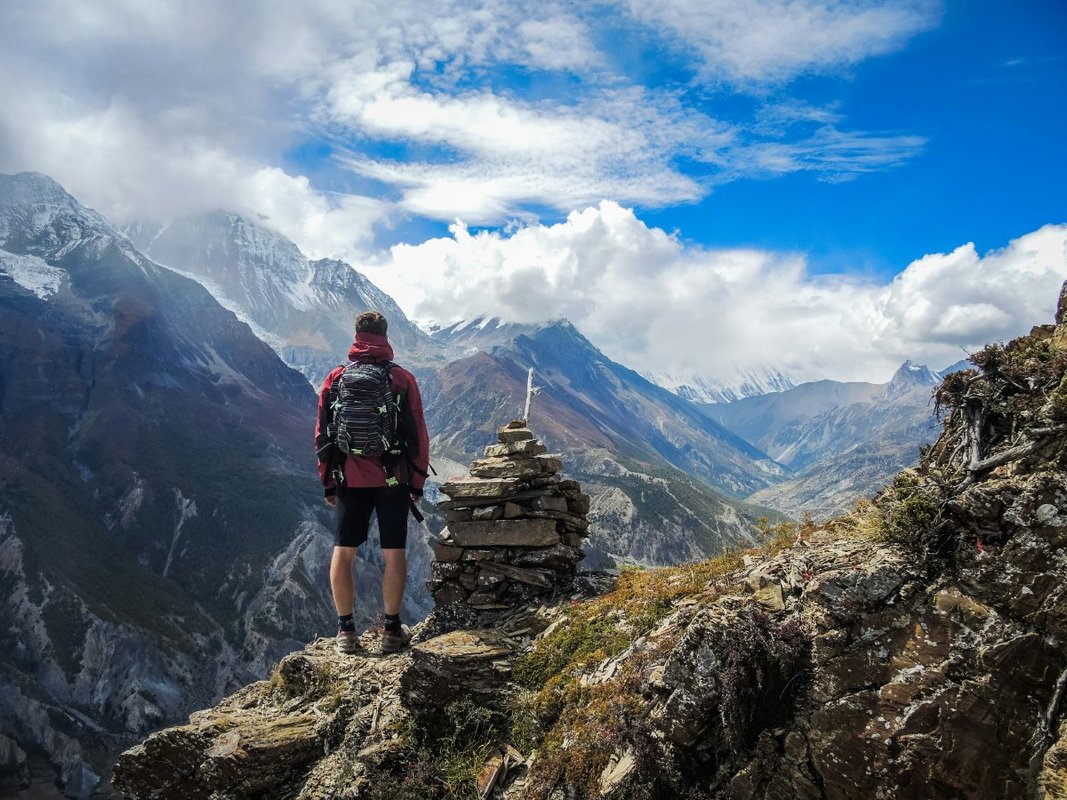
Every year, thousands of trekkers stand at the crossroads of the Everest Base Camp trail and ask the same question: should I go solo or hire a guide? It is not a trivial decision. The route to Everest Base Camp at 5,364 metres is one of the most iconic trekking journeys on the planet, but it also passes through remote Himalayan terrain, high-altitude zones, and weather-dependent logistics that can overwhelm even experienced hikers. In this guide, we break down the real differences between solo and guided Everest Base Camp trekking in 2026, covering costs, safety, logistics, permits, teahouse availability, and the intangible factors that determine whether your trek becomes the adventure of a lifetime or a cautionary tale.
Whether you are a seasoned backpacker who has trekked independently in Patagonia, the Caucasus, or the Alps, or a first-time Himalayan visitor weighing the value of professional support, this comparison will help you make an informed choice. We draw on current 2026 trail conditions, real pricing data from the Khumbu region, and the lived experience of trekkers who have done it both ways. For a broader overview of trekking in Nepal, including how to choose the right trek for your fitness and experience level, see our complete guide to trekking in Nepal and our resource on how to choose a trek in Nepal based on difficulty, permits, seasons and budget.

The Core Question: What Does Solo Actually Mean on the EBC Trail?
Trekking "solo" to Everest Base Camp does not mean you are alone on the trail. The Khumbu route from Lukla to Base Camp is well-travelled during peak seasons, and you will share the path with hundreds of fellow trekkers, porters, yaks, and expedition teams. What "solo" means in practical terms is that you are responsible for every aspect of your trek: navigation, permits, teahouse bookings, meals, altitude management, gear, emergency evacuation, and communication. You carry your own backpack (or hire a porter independently), you set your own pace, and you make all decisions without professional input.
A "guided" trek means you have hired a licensed Nepali trekking guide and often a porter through a registered agency. The guide handles permit logistics, teahouse reservations, route decisions, altitude monitoring, emergency communication, and cultural translation. The porter carries the bulk of your gear, typically up to 15-20 kg, so you can walk with a light daypack. The agency arranges your Lukla flights, provides a detailed itinerary, and serves as your safety net throughout the journey.
There is also a middle ground: hiring only a porter-guide, a single person who both carries a moderate load and provides basic navigation and teahouse booking support. This is increasingly popular among budget-conscious trekkers who want some support but not the full guided package. We will address this hybrid option in detail later.
Cost Comparison: Solo vs Guided in 2026
Cost is usually the first factor trekkers consider, and the difference can be significant. Let us break down the real numbers for a standard 12-14 day Everest Base Camp trek in 2026, based on current rates in Kathmandu and the Khumbu valley.
Solo Trekking Costs (Independent)
When trekking independently, you pay for each component separately. Here is the itemised breakdown for a typical 12-day EBC trek:
- Lukla round-trip flight: $360-420 (Ramechhap-Manthali departure during peak season)
- Sagarmatha National Park entry permit: $30 (plus local municipality fee $20)
- Khumbu Pasang Lhamu Rural Municipality entrance: $20
- Tea and meals (teahouse full-board): $25-35/day x 12 = $300-420
- Accommodation (often free with meals, $5-10 if charged): $0-120
- Gear rental in Kathmandu (sleeping bag, down jacket): $40-80
- Travel insurance (must cover helicopter evacuation above 5,000m): $80-150
- Wi-Fi and charging fees along the trail: $20-40
- Emergency helicopter evacuation fund (if not insured): $2,500-5,000
The realistic out-of-pocket cost for a solo EBC trek ranges from $850 to $1,200, assuming you already have proper hiking boots and base layers. If you need to evacuate by helicopter and your insurance does not cover it, the cost can skyrocket to $5,000 or more. For a detailed budget breakdown, see our Everest Base Camp trek cost guide for 2026.
Guided Trekking Costs (Through an Agency)
A full-service guided EBC trek through a registered Nepali agency typically costs between $1,200 and $2,500 depending on the level of service, group size, and inclusions. Here is what that price generally covers:
- All permits and entrance fees (arranged by the guide)
- Round-trip Lukla flights from Ramechhap/Manthali
- Licensed English-speaking trekking guide
- One porter per two trekkers (carries up to 20 kg total)
- Full-board meals (breakfast, lunch, dinner) at teahouses
- Accommodation in teahouses along the route
- Agency fee, guide and porter insurance, and staff equipment
- Emergency evacuation coordination and satellite phone access
- Kathmandu hotel (1-2 nights before and after the trek, in some packages)
The premium you pay for a guided trek, roughly $400-1,300 over the solo cost, buys logistical peace of mind, safety infrastructure, and local expertise. Whether that premium is worth it depends on your experience, comfort with uncertainty, and risk tolerance.
Porter-Guide Hybrid Cost
Hiring a porter-guide directly in Kathmandu or Lukla costs roughly $25-35 per day for 12 days, or $300-420 total, plus their meals and accommodation (another $150-200). This brings your total to roughly $1,000-1,400, which sits between the pure solo and full guided options. The porter-guide carries a moderate load (10-12 kg), knows the route, and can book teahouses, but may not have formal wilderness first-aid training or a guiding license.
Safety and Altitude Management: The Deciding Factor
Altitude sickness is the single biggest risk on the Everest Base Camp trek, and it does not discriminate by fitness level or trekking experience. Acute Mountain Sickness (AMS) can affect anyone ascending above 2,500 metres, and the EBC route spends multiple days above 3,500 metres, culminating at Kala Patthar (5,545 metres). The risk of High Altitude Pulmonary Edema (HAPE) and High Altitude Cerebral Edema (HACE), the severe and potentially fatal forms of altitude illness, is real and requires immediate descent.
A licensed guide is trained to recognise the early symptoms of AMS: headache, nausea, loss of appetite, insomnia, and dizziness. They carry a pulse oximeter to monitor your blood oxygen saturation daily, they know when to insist on a rest day, and they can coordinate a helicopter evacuation within minutes if symptoms escalate. Most importantly, a guide provides the authority to tell you to stop ascending when you might otherwise push through because you feel "mostly fine."
Solo trekkers must self-diagnose and self-regulate. This is where the danger lies. The same determination that gets people to Base Camp can also get them into trouble when they ignore warning signs. Solo trekkers should carry their own pulse oximeter, download the Lake Louise AMS scoring app, and have a clear evacuation plan that includes the emergency numbers for helicopter rescue companies. Comprehensive travel insurance covering helicopter evacuation above 5,000 metres is absolutely non-negotiable for solo trekkers.
For a deep dive into altitude sickness prevention and treatment protocols, read our guide on how to prevent altitude sickness on the Everest Base Camp trek and our broader resource on altitude sickness prevention and acclimatization on Everest and Annapurna treks.

Navigation and Route Finding
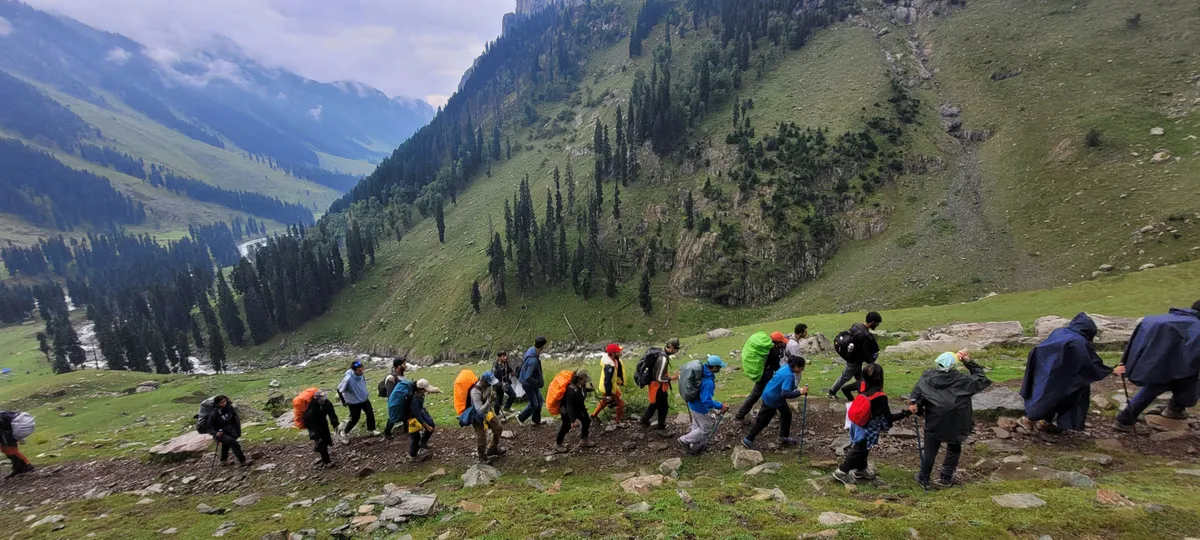
The main Everest Base Camp trail from Lukla to Base Camp is well-marked and heavily trafficked during peak seasons (March-May and September-November). In theory, a solo trekker with a basic map or GPS app (Maps.me, Gaia GPS, or AllTrails) can navigate the route without getting lost. The trail passes through a series of villages: Phakding, Namche Bazaar, Tengboche, Dingboche, Lobuche, Gorak Shep, and finally Base Camp. Signage is adequate, and other trekkers and lodge owners can point you in the right direction.
However, "well-marked" does not mean foolproof. The trail crosses several suspension bridges over the Dudh Koshi river, and yak trains can block the path for extended periods. In fog, snow, or whiteout conditions, which can develop rapidly at altitude, trail markers become invisible. Side trails to acclimatization peaks like Nangkartshang Peak above Dingboche or Kala Patthar above Gorak Shep are less obvious and often covered in snow. A guide who has walked the route dozens of times knows every junction, every shortcut, and every safe resting spot.
Off-season trekking (December-February or June-August) dramatically increases the navigation challenge. Winter snow can obscure the trail entirely above Namche, and monsoon rains can trigger landslides that reroute the path. If you are trekking in the shoulder or off seasons, a guide becomes far more valuable. For more on seasonal conditions, see our Everest Base Camp weather by month guide and our best time for EBC trek analysis.
Permits, Logistics, and Bureaucracy
One of the most tangible advantages of a guided trek is the handling of permits and paperwork. To trek to Everest Base Camp in 2026, you need three permits:
- Sagarmatha National Park Entry Permit - $30, available at the park entrance in Monjo or in Kathmandu. Requires your passport and one photo.
- Khumbu Pasang Lhamu Rural Municipality Entrance - $20, paid at the Lukla or Monjo checkpoint. This replaces the old TIMS card for the Khumbu region.
- Local Municipality Fee - $20, sometimes bundled with the Khumbu Pasang Lhamu fee.
For solo trekkers, obtaining these permits is straightforward but requires a visit to the Nepal Tourism Board office in Kathmandu or the local checkpoints, with passport photos and your passport. The process takes 1-2 hours. A guided trek includes all permits in the package price, and the guide handles the paperwork while you focus on preparing your gear.
The bigger logistical challenge is the Lukla flight. Flights from Kathmandu (or Ramechhap-Manthali during peak season) to Lukla are notorious for delays and cancellations due to weather. A guided trek includes pre-booked flights and the agency handles rebooking if your flight is cancelled. Solo trekkers must manage this themselves, which can mean spending extra days in Ramechhap or Kathmandu waiting for the weather to clear. For a full explanation of the Lukla flight system and the Ramechhap-Manthali alternative, read our Lukla flights guide for 2026.
Permit rules and fees can change. For the most current information on all trekking permits in Nepal, including TIMS, ACAP, MCAP, and restricted-area fees, see our comprehensive Nepal trekking permits guide.

Teahouse Booking and Accommodation Quality
Along the EBC route, teahouses (local lodges) provide meals and accommodation. During peak season, the best teahouses in Namche Bazaar, Dingboche, and Gorak Shep fill up by early afternoon. Solo trekkers risk arriving at a village only to find every lodge fully booked, forcing them to either backtrack or accept a lower-quality room (or in extreme cases, sleep in the dining hall on a bench).
Guides have established relationships with specific teahouse owners along the route. They call ahead each morning to reserve rooms, and they know which lodges offer the cleanest rooms, the best food, and the most reliable heating (usually a yak dung stove in the dining area). In peak season, this network is invaluable. A solo trekker can mitigate this risk by starting early each morning and arriving at the next village by 1-2 PM, but this removes flexibility from your daily schedule.
Accommodation quality varies dramatically along the route. In Namche Bazaar, you can find lodges with hot showers, Wi-Fi, and en-suite bathrooms. In Gorak Shep, the last settlement before Base Camp, rooms are basic with shared toilets and no heating in the bedrooms. A guide knows which teahouses offer the best value at each stop and can negotiate room rates or upgrade you to a better room. For a comprehensive guide to teahouse options along the entire EBC route, watch for our upcoming accommodation guide, and in the meantime check our Everest region guide covering routes, permits, seasons and itineraries.
The social dynamic within a guided group can also be a positive or negative. If you join a small group trek, you have built-in companionship and shared experiences. If you prefer solitude, a guided group may feel constraining. Private guided treks (just you and a guide/porter) offer the best of both worlds: cultural depth without group dynamics. For trekkers interested in the cultural and spiritual dimensions of Nepal, our guide to cultural and spiritual tours in Nepal provides a broader context for understanding the Himalayan worldview.

Flexibility, Freedom, and Pacing
Solo trekking offers maximum flexibility. You wake up when you want, walk at your own pace, stop for photos whenever you like, and change your itinerary on the fly. If you feel strong, you can push an extra hour to reach a higher village. If you feel tired, you can take an unplanned rest day. You eat what you want, when you want, and you can spend an extra afternoon in Namche Bazaar exploring the museum or the Saturday market without consulting anyone.
Guided treks follow a set itinerary, but this is not as rigid as it sounds. Good guides adjust the pace to match the group's fitness and acclimatization needs. If someone is struggling, the guide will slow down or add a rest day. The main constraint is teahouse reservations: if the guide has booked a room in Lobuche, there is pressure to reach Lobuche that day. However, a private guide (just you and the guide) offers nearly the same flexibility as solo trekking, since the itinerary can be adjusted daily.
For acclimatization, the set itinerary of a guided trek is actually an advantage. The standard EBC acclimatization schedule (rest days in Namche on day 3 and Dingboche on day 6) is proven to reduce AMS risk. Solo trekkers sometimes skip rest days to save money or time, which is a dangerous shortcut. The 14-day EBC itinerary is the gold standard for acclimatization, and solo trekkers should follow it even without a guide.
Who Should Trek Solo to Everest Base Camp?
Solo trekking to EBC is a viable option for a specific type of trekker. You are a good candidate for solo trekking if you meet most of these criteria:
- You have previous high-altitude trekking experience (above 4,000 metres) and understand AMS symptoms and protocols
- You have trekked independently in developing countries before and are comfortable navigating logistics in unfamiliar environments
- You have comprehensive travel insurance that covers helicopter evacuation above 5,000 metres
- You carry a personal locator beacon (Garmin inReach or similar) and know how to use it
- You are comfortable carrying a 12-15 kg backpack at altitude for 6-7 hours per day
- You have a flexible schedule that allows 2-3 extra days for weather delays and rest
- You are confident in your navigation skills and have offline maps downloaded
- You have budgeted for emergency evacuation ($3,000-5,000) as a contingency
If you check most of these boxes, solo trekking can be an immensely rewarding experience. The sense of self-reliance, the freedom to set your own pace, and the deep connection with the trail and its people are experiences that many solo trekkers describe as transformative. For a sense of how the EBC trek compares to other major Nepal treks, see our Annapurna vs Everest Base Camp comparison and our guide to the best treks in Nepal for beginners, families and solo women.
Who Should Hire a Guide for Everest Base Camp?
Guided trekking is the better choice for the majority of EBC trekkers, and here is why. You should strongly consider a guided trek if:
- This is your first trek above 4,000 metres, or your first trek in Nepal
- You have limited time and cannot afford 2-3 extra buffer days for logistical hiccups
- You are trekking outside the main seasons (December-February or June-August)
- You have a pre-existing medical condition that may be exacerbated by altitude
- You are travelling with a group of friends or family with varying fitness levels
- You want to focus entirely on the experience without worrying about logistics
- You are a photographer or content creator who wants to concentrate on capturing the journey
- You are a woman trekker who prefers the security and cultural access that a local guide provides
- You want the cultural depth that comes from a guide who grew up in the Khumbu valley
Even experienced trekkers often choose a guided EBC trek for the altitude safety factor alone. The cost premium of $400-1,300 is, for most people, a reasonable price for the peace of mind that comes with having a trained professional monitor your health and handle emergencies. For a frank assessment of the trek's difficulty, read our honest assessment of how hard the Everest Base Camp trek really is.
The Porter-Guide Middle Ground
For trekkers who want some support without the full guided package, the porter-guide option is worth serious consideration. A porter-guide is a local person who carries a moderate load (10-12 kg) and provides basic navigation, teahouse booking, and trail support. They typically charge $25-35 per day plus meals and accommodation. Over a 12-day trek, this adds roughly $500-600 to your solo budget, bringing the total to around $1,300-1,500.
The advantages of a porter-guide are significant: you walk with a light daypack, you have someone who knows the route and can book teahouses, and you have a companion who can communicate in Nepali and Sherpa. The disadvantages are that porter-guides may lack formal first-aid training, they may not carry a pulse oximeter or satellite phone, and they are not licensed guides, so their emergency response capability is limited.
If you choose this option, hire through a registered agency in Kathmandu rather than picking someone off the street in Lukla. Agencies provide insurance for their staff, ensure fair wages, and verify that the porter-guide knows the route. Hiring an independent porter without agency oversight risks exploiting the worker and leaves you without recourse if something goes wrong.
Emergency Evacuation: The Critical Difference
In a medical emergency at altitude, the difference between a guided and solo trek can be life-threatening. Here is what happens in each scenario:
Guided Trek Emergency
Your guide recognises the symptoms (severe headache, confusion, breathlessness at rest, coughing up pink froth), immediately calls the agency's Kathmandu office on a satellite phone, the agency contacts a helicopter rescue company, and a helicopter is dispatched within 30-90 minutes depending on weather. The guide stays with you, manages your descent if possible, and coordinates with the helicopter pilot on the evacuation point. Your insurance details are already on file with the agency, so the evacuation is pre-authorised. You are flown to Kathmandu and taken to a hospital within 2-3 hours of symptom onset.
Solo Trek Emergency
You must recognise your own symptoms, which is difficult because altitude impairment affects judgement. You must call for help on your personal locator beacon or satellite phone, providing your GPS coordinates and a description of your condition. The rescue company needs your insurance details and may require a credit card guarantee before dispatching. You must find a safe landing spot nearby (a flat area visible from the air) and mark it. You are alone, possibly in distress, in a remote location with no one to monitor your condition while you wait. If your beacon fails or you cannot communicate, rescue may be significantly delayed.
This is not meant to frighten but to illustrate the real risk. Solo trekkers must have a robust emergency plan: a charged personal locator beacon, printed copies of insurance documents, a list of helicopter rescue company numbers, and a clear understanding of their GPS location at all times. The cost of a helicopter evacuation from Gorak Shep to Kathmandu is $3,000-5,000, and if your insurance does not cover it, you are personally liable.
Gear and Equipment Considerations
The gear requirements for solo and guided treks are similar, but there are key differences in what you carry versus what the porter carries. On a guided trek with a porter, you carry a 5-8 kg daypack with water, snacks, a camera, extra layers, and a first aid kit. The porter carries your main duffel bag (up to 15 kg total, shared if there are two trekkers) with your sleeping bag, down jacket, change of clothes, toiletries, and bulkier items.
Solo trekkers carry everything themselves: a 12-15 kg backpack with sleeping bag (-15C or -20C rated), down jacket, base layers, insulation layers, shell jacket and pants, first aid kit (including Diamox, pulse oximeter, blister kit), water purification system, headlamp, toiletries, and electronics. This is manageable for fit trekkers, but the weight compounds with altitude. By the time you reach Lobuche at 4,940 metres, every extra kilogram feels heavier.
Essential gear for both styles includes a four-season sleeping bag (rentable in Kathmandu for $2-3/day), a down jacket (rentable for $1-2/day), trekking poles, a headlamp with spare batteries, a water bottle or hydration bladder with purification tablets or a SteriPen, and a basic first aid kit. For the full gear list and rental information in Kathmandu, check the gear section of our EBC cost guide.
Best Time and Seasonal Considerations for Your Chosen Style
The season you choose influences the solo versus guided decision significantly. During the peak autumn season (October-November) and spring season (March-May), the trail is busy, teahouses are full, and the weather is relatively stable. Solo trekking is most feasible during these windows because there are plenty of fellow trekkers to share information with, teahouse owners are in full operation, and the trail is easy to follow.
In the winter season (December-February), temperatures drop to -20C or colder above Namche, many teahouses close, and the trail above tree line can be covered in snow. Solo winter trekking is for highly experienced mountaineers only. A guided winter trek is safer because the guide knows which teahouses are open, can arrange heated rooms, and can assess avalanche and frostbite risk.
In the monsoon season (June-August), the trail is muddy, leeches are common below Namche, and cloud cover often obscures mountain views. However, the trail is quiet, teahouses are cheap, and the green valleys are beautiful. Solo monsoon trekking is viable for experienced trekkers who do not mind the rain and limited views. Guides are helpful for navigating landslide-damaged trail sections. For month-by-month weather details, see our month-by-month guide for the best time to visit Nepal.
Environmental and Economic Impact
Your choice between solo and guided trekking has an impact beyond your personal experience. Hiring a guide and porter through a registered agency supports the local Khumbu economy in a direct and meaningful way. Guides and porters earn $25-40 per day during the trekking season, which is a significant income in rural Nepal. Agencies pay into staff insurance funds, provide gear, and contribute to the local economy through teahouse bookings and food purchases.
Solo trekkers also contribute to the local economy through teahouse meals and accommodation fees, but the economic impact is smaller because there is no guide or porter wage. Additionally, solo trekkers who haggle aggressively over room prices or bring their own food to teahouses (to save money) undermine the local economy, which depends on food sales to survive.
From an environmental perspective, both styles have similar impacts. The Sagarmatha National Park is a fragile alpine ecosystem, and all trekkers should follow Leave No Trace principles, carry out their waste, and avoid single-use plastics. For guidance on ethical trekking practices, our cultural and spiritual tours guide includes a section on responsible travel in the Himalaya.
The Decision Framework: A Quick Self-Assessment
To help you decide, answer these questions honestly:
- Experience: Have you trekked above 4,000 metres before without a guide? If yes, solo becomes more viable. If no, strongly consider a guide.
- Time flexibility: Can you afford 2-3 extra days for delays? If yes, solo is more feasible. If no, a guide reduces logistical risk.
- Budget: Is the $400-1,300 premium for a guided trek a meaningful financial burden? If yes, solo or porter-guide may be the better choice. If no, the peace of mind is worth it.
- Risk tolerance: Are you comfortable being solely responsible for your safety in a remote environment? If yes, solo is an option. If no, a guide is essential.
- Season: Are you trekking in peak season (Oct-Nov or Mar-May)? If yes, solo is more feasible. If no, a guide is strongly recommended.
- Social preference: Do you prefer solitude or companionship on the trail? Solo offers maximum independence; a guided group offers built-in community.
- Cultural interest: Do you want deep cultural context and local stories? A guide provides this. Solo trekkers must do their own research.
- Medical history: Do you have any conditions that increase altitude risk (heart conditions, asthma, previous AMS episodes)? If yes, a guide is strongly recommended.
If you answered "guide" to three or more questions, a guided trek is likely the right choice. If you answered "solo" to most questions and meet the experience criteria, solo trekking can be a safe and rewarding option.
Common Myths About Solo and Guided EBC Treks
Myth 1: Solo Trekking is Always Cheaper
While the base cost is lower, solo trekkers face hidden costs: emergency evacuation without insurance ($3,000-5,000), extra days for weather delays ($50-80/day), gear you forgot to pack, and teahouse accommodation surcharges when you do not have a guide's relationship. In the worst case, a solo trek can cost more than a guided trek if something goes wrong.
Myth 2: Guides Slow You Down
A good guide matches your pace, not the other way around. They are acclimatized locals who can walk faster than most clients. The pace is set by the trekker, not the guide. If anything, a guide prevents you from going too fast, which is the more common and dangerous mistake.
Myth 3: Solo Trekking is More Authentic
Authenticity comes from engagement, not from the absence of a guide. A solo trekker who eats international food at teahouses and does not speak to locals is less authentic than a guided trekker whose guide introduces them to a Sherpa family for tea. Authenticity is about curiosity and openness, not about how you booked your trek.
Myth 4: You Cannot Hire a Guide as a Solo Trekker
You can always hire a guide mid-trek if you change your mind. Many trekkers start solo in Lukla and realise they want support, hiring a porter-guide in Namche Bazaar. This is a valid option, though it is better to arrange through an agency for insurance and quality reasons.
Final Recommendation
For the majority of trekkers planning an Everest Base Camp trek in 2026, a guided trek is the recommended option. The safety infrastructure, logistical support, cultural depth, and peace of mind justify the cost premium for most people. The EBC route is not technically difficult, but the altitude, remoteness, and weather variability create real risks that a guide mitigates effectively.
For experienced high-altitude trekkers with proper insurance, navigation skills, and a flexible schedule, solo trekking is a viable and deeply rewarding alternative. The key is honest self-assessment: do not let ego or budget override safety considerations. The mountain will be there next year; the goal is to make sure you are too.
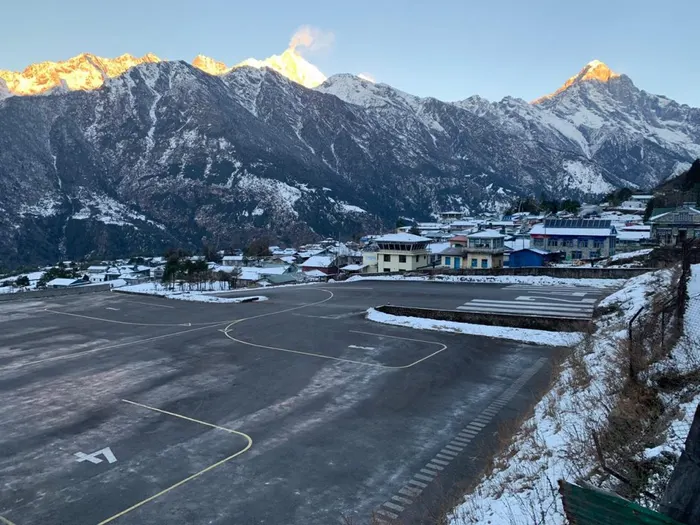
Whatever you choose, the Everest Base Camp trek is one of the great journeys on Earth. From the heart-pounding landing at Lukla airport to the surreal landscape of the Khumbu Glacier, from the warmth of a teahouse stove in Dingboche to the first glimpse of Everest from the top of Kala Patthar, this trek changes people. Choose the style that lets you experience it fully, safely, and with the right balance of challenge and support for your individual situation. For everything you need to plan your trek, start with our complete Nepal trekking guide and our Everest region guide.
The Social and Cultural Experience
This is where the solo versus guided debate gets nuanced. Solo trekkers often report richer cultural interactions because they are forced to engage directly with lodge owners, shopkeepers, and fellow trekkers. Without a guide acting as an intermediary, you learn basic Sherpa phrases, you negotiate your own meals, and you build connections organically. Many solo trekkers form impromptu groups on the trail, sharing dinners and acclimatization days with other independent trekkers they meet along the way.
Guided trekkers, on the other hand, benefit from the guide's cultural knowledge. A good guide does not just translate menus; they explain the meaning of the mani stones you pass, the history of the Tengboche Monastery, the significance of the prayer flags at Everest Base Camp, and the stories behind the Sherpa climbing culture. They can introduce you to local families, arrange a visit to a school in Khumjung, or explain why a particular stupa was built. This depth of cultural context is hard to replicate as a solo trekker unless you have done extensive pre-trip research.