Ghorepani Poon Hill Trek 2026: Itinerary, Cost and Tips
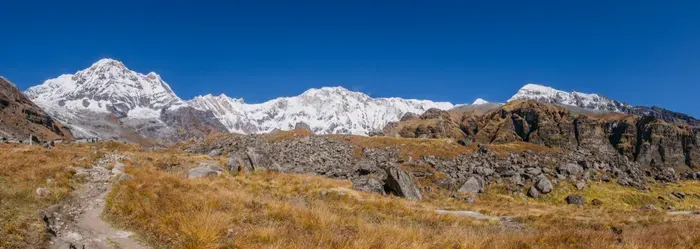
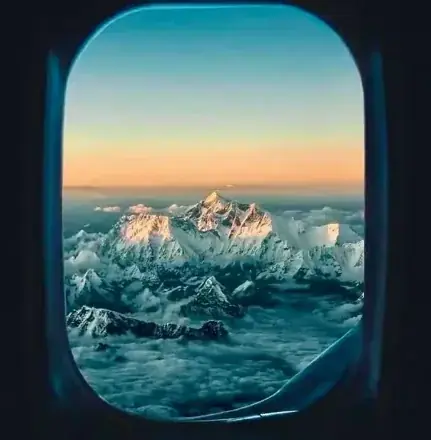
Few treks in Nepal deliver so much for so little effort as the Ghorepani Poon Hill trek. In under a week you trade Kathmandu's traffic for rhododendron forests, tight Gurung and Magar villages, and the single most photographed sunrise in the country. From the stone viewing tower at Poon Hill (3,210 m), the sky turns copper behind Dhaulagiri, Annapurna South, Machhapuchhre and a horizon of snow peaks that stretches almost the whole width of Nepal.
This guide is built around the real product we run, the 7-day Ghorepani Poon Hill trek with Himalayan views, and it covers everything a first-time or repeat trekker needs: the honest day-by-day itinerary, what the trek truly costs in 2026, the permits you must carry, the best months to walk, how hard the climbing really is, and how to pack for cold mornings and warm afternoons. If you are still deciding whether Annapurna is the right range for you at all, our complete Annapurna region trekking guide puts Poon Hill beside every other route in the range.
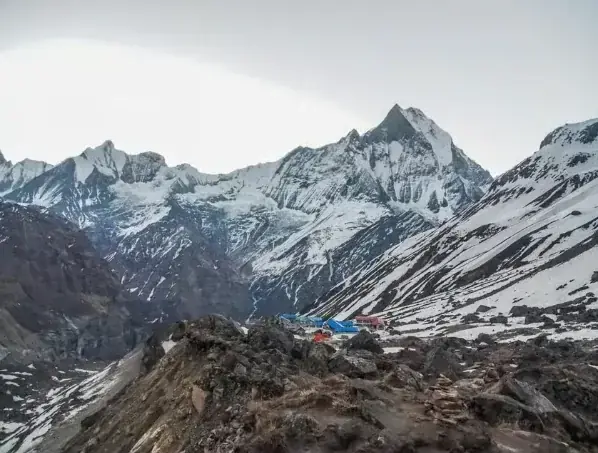
The trek also sits inside the Annapurna Conservation Area, the largest protected area in Nepal at 7,629 square kilometres, so the money you spend on permits funds trail repair, rubbish management and the livelihoods of the families whose teahouses you sleep in. That is part of why Poon Hill remains the benchmark short trek: it is beautiful, achievable and genuinely useful to the communities along the way.
What Is the Ghorepani Poon Hill Trek?
It is a short Annapurna foothills trek that climbs from road level to the Poon Hill viewpoint above the village of Ghorepani. Most itineraries run four to nine days from Pokhara, peak at 3,210 m for sunrise, and return through Gurung villages such as Ghandruk and the hot springs at Jhinu Danda.
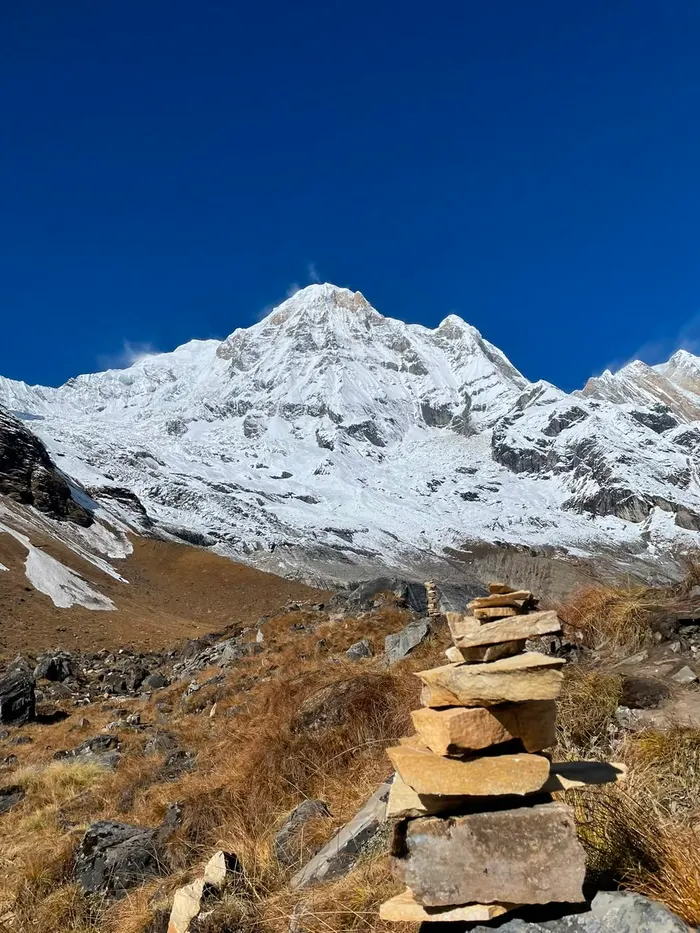
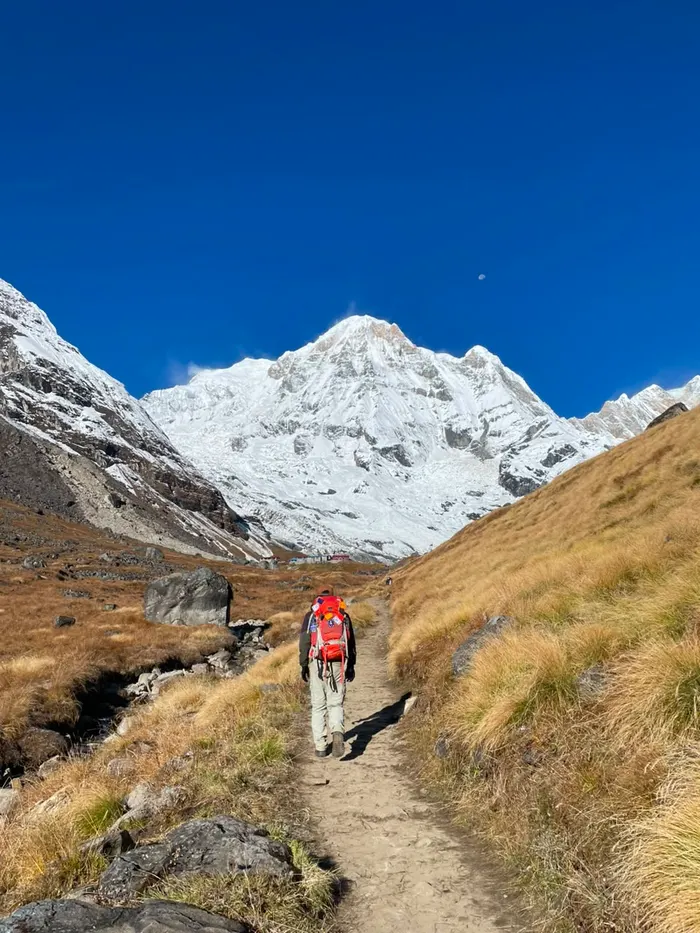
The defining feature is not a summit but a viewpoint. Poon Hill is a grassy, terraced ridge with a stone tower and a parapet of prayer flags, and it faces the deepest part of the Annapurna panorama. Because it sits lower than the Annapurna Base Camp route, it asks far less of your lungs while still putting Dhaulagiri (8,167 m) and Annapurna I (8,091 m) in front of you at dawn.
The village of Ghorepani itself, at roughly 2,860 m, exists almost entirely because of the trail. It is a settlement of lodges and small shops strung along a ridge, surrounded by the world's largest rhododendron forest. In spring the whole hillside ignites in red, pink and white blossom, which is why photographers treat late March and April as prime season.
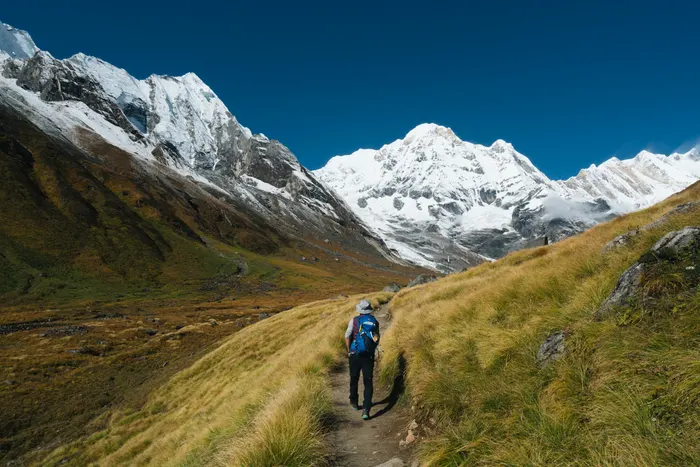
Compared with the high passes, Poon Hill is a gentle introduction to Himalayan trekking. You sleep in comfortable teahouses every night, you are never more than a day from a road, and you can walk it with a light daypack if you hire a porter. That combination of low risk and high reward is exactly why it appears so often in our guide to the best treks in Nepal for beginners, families and solo women.
Why Is Poon Hill the Most Famous Sunrise Viewpoint in Nepal?
Because the view is enormous, the climb is short and the light arrives on cue. Poon Hill faces a 180-degree wall of mountains including two 8,000-metre peaks, and a one-hour pre-dawn walk from Ghorepani puts you on the tower before the first glow. Few viewpoints anywhere give so much reward for so small an effort.
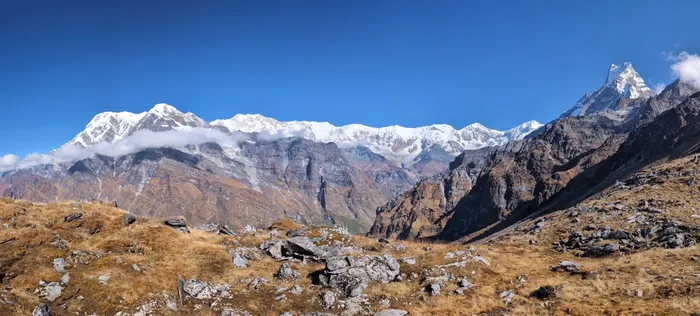
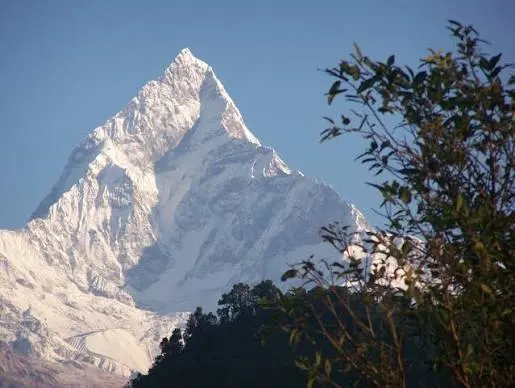
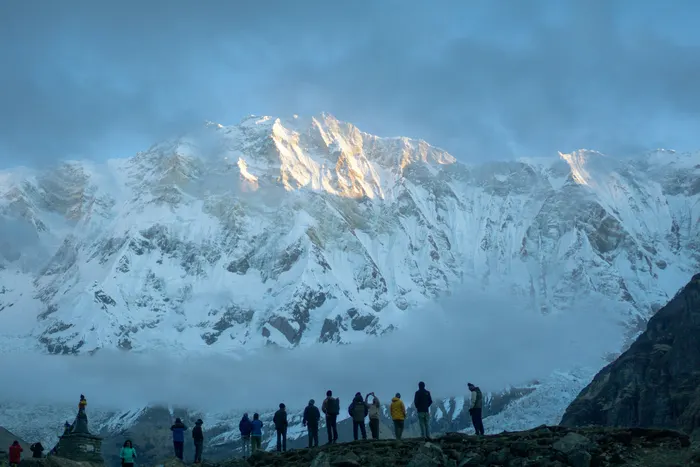
At first light the eastern sky warms behind the Annapurna massif while the Kali Gandaki valley to the north stays in deep shadow. As the sun clears the ridge, the snow turns from grey to rose to brilliant white, and Dhaulagiri, Tukuche Peak, Nilgiri, Annapurna South, the sacred fishtail of Machhapuchhre and distant Himchuli all catch the light in sequence. On a clear morning you can count more than a dozen named summits without turning your head.
The experience is also a social one. Hundreds of trekkers gather on the platform each morning, sharing blankets, tea flasks and the same quiet minute when the light finally hits Annapurna South. It is crowded, and it is worth it. If you want solitude, our guide to sunrise and sunset in Nepal explains how to time the same dawn from quieter vantage points.
The Classic Ghorepani Poon Hill Itinerary, Day by Day
Our standard trip runs seven days from Kathmandu to Kathmandu, which gives you a comfortable pace, a rest morning at Ghorepani and time in Pokhara. The outline below follows the route in our live package, adjusted only for the speed of the group.
- Day 1: Kathmandu to Pokhara. A scenic drive of roughly 200 km along the Trishuli river, taking six to seven hours, with a lunch stop. You arrive in time for a sunset walk on the Phewa lakeside. Flights are available if you prefer to save a day.
- Day 2: Pokhara to Ulleri and on toward Ghorepani. A short drive of about an hour to the trailhead, then five to six hours of walking through terraced fields and rhododendron and oak forest. The famous stone staircase above Ulleri is the day's sting, but it is taken slowly.
- Day 3: Ghorepani and the Poon Hill sunrise. A pre-dawn walk of about an hour to the viewpoint at 3,210 m for sunrise, then a six to seven hour walking day along the ridge with constant mountain views. This is the highest point of the trek.
- Day 4: Ridge descent to Tadapani. A shorter three to four hour day, mostly downhill, through mossy forest alive with birds. Tadapani (2,630 m) sits under the fishtail peak and makes an easy, scenic overnight.
- Day 5: Tadapani to Ghandruk or Jhinu Danda. Three to four hours of gentle walking, including a short village walk. Ghandruk is a large Gurung village with a fine museum and mountain views; Jhinu Danda has riverside hot springs to soak tired legs.
- Day 6: Return to Pokhara. A morning descent to the road head and a drive back to Pokhara, arriving by afternoon for a free evening by the lake.
- Day 7: Pokhara to Kathmandu. A six to seven hour drive back to the capital, again along the Trishuli, with a final mountain goodbye at the window.
Longer versions of this route add Annapurna Base Camp or the Mardi Himal ridge, and shorter three and four day versions skip the return villages and drive back from Ghorepani. The seven-day shape is the sweet spot for most travellers: enough time to acclimatise naturally, enough time in Pokhara to rest, and no single day that feels punishing.
How Hard Is the Ghorepani Poon Hill Trek?
It is a moderate trek, not a technical one. There is no scrambling, no glacier and no climbing gear. The main challenges are the long stone staircases, the total daily walking time of four to seven hours, and the cold at dawn on the viewpoint. Anyone who walks regularly at home will manage it comfortably.
Altitude is mild by Himalayan standards. Poon Hill tops out at 3,210 m and Ghorepani at about 2,860 m, both far below the threshold where serious altitude illness becomes common. Mild breathlessness and a light headache are possible on the first night at Ghorepani, but the gradual climb and the rest morning usually prevent anything worse. Our guide to altitude sickness on the Annapurna and Everest treks explains the warning signs and the simple rules that keep you safe.
The descent is the underestimated part. Stone steps are hard on knees and quads, so trekking poles are worth their weight. Train with hills, stairs or a loaded daypack for a few weeks before you fly, and you will enjoy the trek far more than you suffer it. Families with children from about six years old, and active travellers in their sixties and seventies, complete this route every season.
How Much Does the Ghorepani Poon Hill Trek Cost in 2026?
A guided seven-day Ghorepani Poon Hill trek with lodging, meals on the trail, permits and transport typically costs in the range of a few hundred to around two thousand US dollars per person, depending on group size, comfort level and whether you add a private guide, porter or extensions. Independent trekkers who arrange everything themselves usually spend far less on the trail itself.
The honest cost picture has four parts. First, permits: the ACAP entry permit and the TIMS card together come to roughly NPR 5,000 for a foreign trekker, about USD 38 to 40. Second, transport: the Kathmandu to Pokhara road costs very little by bus and more by private car or flight, and the trailhead transfer from Pokhara is short and cheap. Third, on-trail daily spend: figure USD 20 to 30 per day for a teahouse bed (USD 3 to 8), three meals (USD 5 to 10 each), hot showers, charging and occasional treats. Fourth, the guided package itself, which folds all of the above plus a licensed guide, porters and 24-hour support into one price.
Our own one-week Khopra Ridge trek, which runs in the same foothills, starts at USD 720 per person fully guided, and most travellers add USD 150 to 300 for domestic travel, meals in Pokhara and incidentals. Use that as your planning band for a comparable Annapurna foothills trip, and remember that a guided price buys peace of mind: permits arranged, lodges booked in peak season, a guide who knows which teahouse has hot water, and a plan if the weather turns. You can compare the wider options in our Annapurna region trekking guide.
When Is the Best Time to Trek to Ghorepani and Poon Hill?
The two best windows are autumn, from late September to November, and spring, from March to May. Autumn brings the clearest skies and the most stable weather after the monsoon. Spring brings warm days and the rhododendron bloom, though haze can soften the distant peaks. Both seasons deliver a reliable sunrise.
Autumn is the classic choice: skies washed clean by the departing monsoon, comfortable temperatures, and the busiest teahouses of the year. Spring is the photographer's season because the rhododendron forest between Ulleri and Ghorepani flowers in red, pink and white, and daytime temperatures are pleasant. Add the Nepali festival calendar, since a trek that overlaps Dashain or Tihar can be combined with a celebration in a village.
Winter, from December to February, is cold but very clear, and the trail is quiet. Snow can fall above Ghorepani, and dawn on Poon Hill is genuinely freezing, so pack accordingly. The monsoon, from June to early September, brings leeches on the lower trail, cloud that hides the sunrise, and slippery stone steps. If you must travel in the rains, drop altitude, be flexible and treat any clear dawn as a gift.
What Permits and Fees Do You Need for the Trek?
You need two permits for the Ghorepani Poon Hill trek: the Annapurna Conservation Area Project (ACAP) entry permit and a TIMS card (Trekkers' Information Management System). ACAP costs NPR 3,000 for foreign nationals and NPR 1,000 for SAARC nationals, and the TIMS card costs NPR 2,000 for individual trekkers or NPR 1,000 for group trekkers booked through a registered agency.
Both are issued in Pokhara or Kathmandu and are checked at the park gates on the trail. Children under ten are usually exempt from the ACAP fee. Because these are conservation funds rather than taxes, the money you pay repairs the very steps you climb and pays for the waste management that keeps the rhododendron forest clean. Keep your permits in your daypack, not your duffel, since wardens can ask to see them at any checkpoint.
The rules change from time to time, and there are additional restricted-area permits for regions far beyond Annapurna. Our 2026 guide to Nepal trekking permits and TIMS lays out every card, current fee and office so you can budget without surprises. If you book a guided trip we handle the paperwork for you and hand you the permits before you start walking.
What Should You Pack for Ghorepani and Poon Hill?
Pack for two climates in one day: warm, sunny afternoons in the low villages and near-freezing, windy dawns at the viewpoint. The essentials are broken-in trekking boots, a warm down or synthetic jacket, a hat and gloves for sunrise, a head torch for the pre-dawn climb, and a refillable water bottle. Layers do the work, not thick single garments.
Beyond clothing, bring a light sleeping bag or liner for teahouse beds, personal medications, high-factor sunscreen and lip balm for the thin air, and a power bank, since charging points cost a small fee and are shared. Trekking poles save your knees on the long stone descents. A small daypack holds everything you need while walking, and a porter can carry the rest if you prefer to move lightly.
You do not need technical gear, crampons or ropes on this route. You do need footwear you have already walked in, because the staircase above Ulleri is unforgiving of new boots. A compact first-aid kit, blister plasters and a little cash in small notes complete the list. ATMs are scarce and unreliable once you leave Pokhara, so carry enough rupees for the whole trek.
Trek Variations for Families, Women, Yogis and Photographers
The Poon Hill route is a platform, not a single fixed product. The same ridge supports a family holiday, a women-only journey, a yoga and wellness retreat, and a serious photography expedition, each paced and themed for a different traveller. Because the trail is gentle and the villages comfortable, it adapts to almost any group.
- Families with children. Our 9-day Annapurna family trek (from USD 1,265) is designed for children from about six years old, with private pacing, shorter days adjusted on the ground at no extra charge, and the hot springs at Jhinu Danda as a reward.
- Mothers and daughters, or women-only pairs. The 9-day mother-daughter Poon Hill trek (from USD 1,782) pairs travellers of different fitness levels, sets the pace to the slower walker, and adds a Poon Hill portrait session at sunrise.
- Yoga and wellness travellers. The 9-day Annapurna yoga trek (from USD 1,667) adds daily practice, a sunrise meditation on Poon Hill and a sound-healing session back in Ghandruk.
- Photographers. The 11-day Annapurna photography trek (from USD 1,897) combines the Poon Hill dawn with the Annapurna Base Camp golden hour, built around 4:30 am starts and nightly card backups.
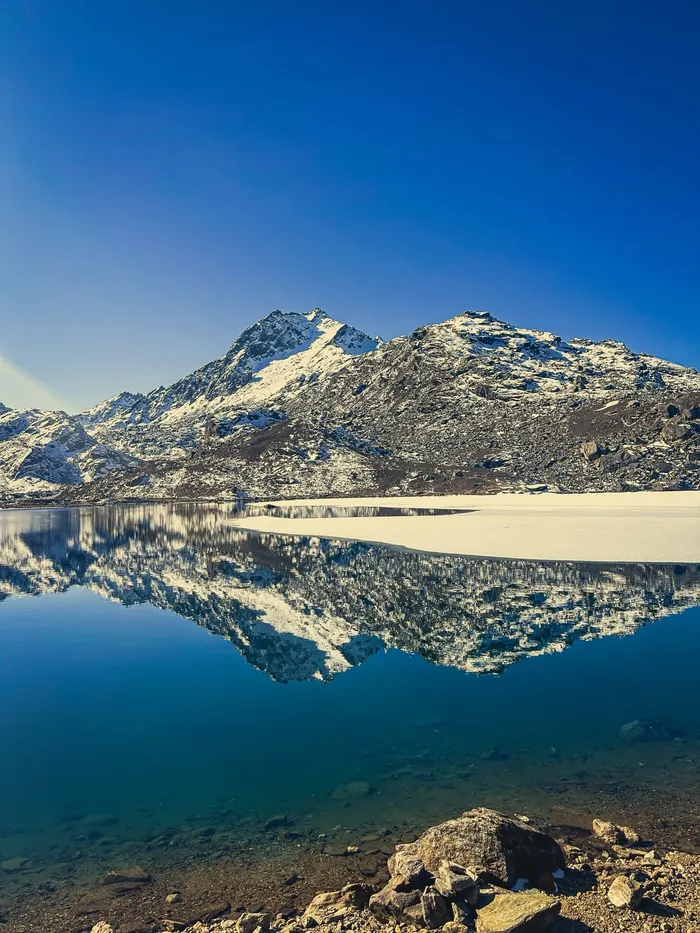
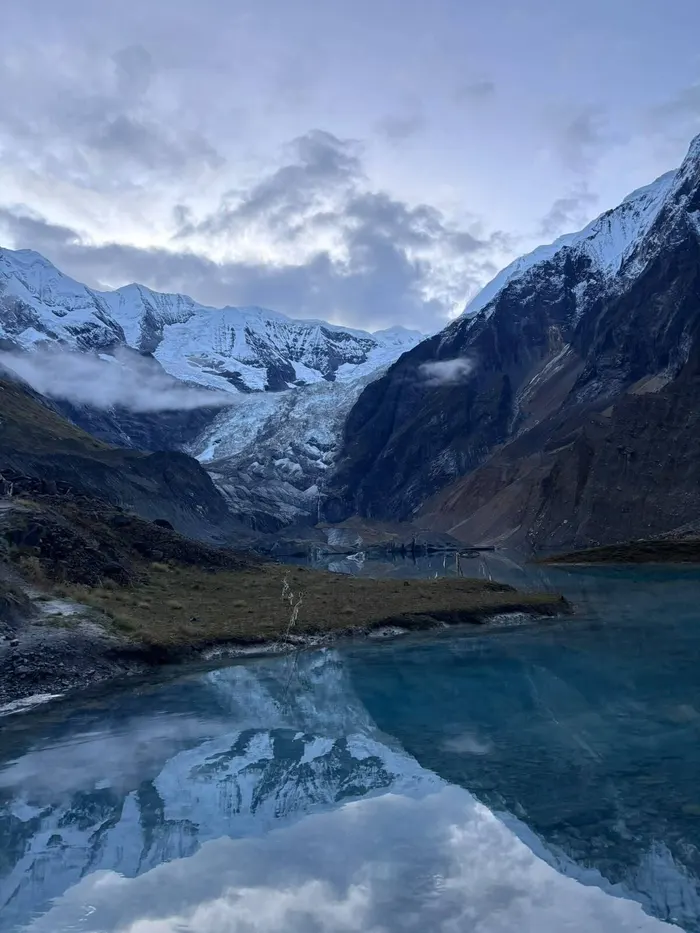
If you want a shorter or wilder alternative in the same foothills, the 5-day Mardi Himal trek (from USD 598) climbs to a base camp at 4,500 m, and the 7-day Khopra Ridge trek (from USD 720) reaches the sacred Khayer Lake. Our Khopra Ridge guide explains how that route compares.
How Do You Reach the Trailhead from Kathmandu or Pokhara?
Almost everyone starts in Pokhara, the lakeside city that is the gateway to the Annapurnas. From Kathmandu you either drive six to seven hours by tourist bus or private car along the Trishuli river, or fly to Pokhara in about twenty-five minutes. From Pokhara it is a short drive of roughly an hour to the trailhead, where the walking begins.
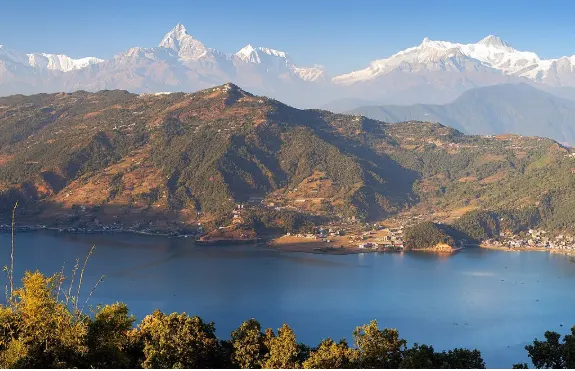
Pokhara itself deserves a night or two. The Phewa lakeside is calm, the views of Machhapuchhre across the water are superb, and the city is the last place to buy or rent gear. Our Pokhara travel guide covers what to do with an extra day. The road from Kathmandu is long but scenic, and the tourist buses are comfortable enough if you take a front seat.
Is Altitude Sickness a Risk on the Poon Hill Route?
Serious altitude illness is uncommon on this trek because the maximum sleeping altitude is low, but mild symptoms are possible. Ghorepani sits at about 2,860 m, and Poon Hill at 3,210 m, both moderate heights reached over several days of gradual climbing. Sleep low, drink water, avoid alcohol at altitude and walk at a steady pace.
The best protection is a sensible itinerary that gains height slowly, which is why the seven-day version is gentler than a rushed four-day dash. Watch for headache, nausea, dizziness or unusual breathlessness, tell your guide early, and be willing to rest or descend. Guides on our trips carry a pulse oximeter and a communication plan. Read the full prevention checklist in our altitude sickness guide for the Annapurna and Everest treks.
Teahouses, Food and Everyday Comfort on the Trail
Teahouses are simple, family-run lodges with twin rooms, shared bathrooms, a warm dining hall and a menu of dal bhat, noodles, soups, momos and eggs. Rooms are cheap and meals are the main income, so the system rewards eating where you sleep. Blankets are provided but a sleeping bag liner is more hygienic, and hot showers and charging cost a small fee.
Food on the trail is hearty rather than gourmet, and the safest bet is the local staple: dal bhat, the lentil and rice platter with vegetables and pickle, refilled as often as you like. Vegetarians and most dietary needs can be met with a little notice, especially on a guided trip where we tell the lodges in advance. Above Ghorepani the menu narrows and prices rise, since everything is carried up by porter or mule.
Wi-Fi is available at most lodges for a small fee but is unreliable above about 3,500 m, so treat the trek as a chance to disconnect. If a digital detox is part of what you want, our Annapurna region travel guide and the trail itself will happily oblige.
How Can You Trek Ghorepani Poon Hill Responsibly?
Travel lightly and spend locally. Carry out what you carry in, refuse single-use plastic where you can, refill from safe water points, and buy tea and meals from the teahouses that host you. Respect village customs, ask before photographing people, and keep your voice down near temples and schools.
Choose a registered agency that pays its guides and porters fairly and follows weight limits, and treat the conservation fees as part of the experience rather than a nuisance. The rhododendron forest you walk through is a slowly renewed resource, and the trail you climb was built and maintained with permit money. For the wider picture, see our guide to sustainable trekking practices in Annapurna and learn from the common trekking mistakes to avoid on the Annapurna trail.
Plan Your Ghorepani Poon Hill Trek With Enticing Himalayas
If the sunrise on Poon Hill is on your list, we can put a complete, well-paced trip together for you, or help you build one of the themed variants above. As the best trekking agency in Nepal for the Annapurna foothills, we run guided, family, wellness and photography departures on this route all autumn and spring. For travellers who want to fold a trek into a wider journey of temples, stupas and mountain culture, our cultural and spiritual tours in Nepal pair beautifully with a few days in the hills.
Tell us your dates, your group and your comfort level, and we will match you with the right departure, arrange your permits and lodges, and send you a clear packing list. The mountains do the rest.