Nepal is not only a destination for trekkers and pilgrims. In the warm, herb-scented rooms of Kathmandu's old city and the lakeside sanctuaries of Pokhara, a quieter tradition of healing has been practiced for centuries: Ayurvedic massage and Himalayan wellness spa therapy. This guide walks you through the real treatments, what they cost in 2026, how to choose a practitioner who knows what they are doing, and how to fold a spa day into a wider spiritual journey through Nepal.
For travellers fresh off a long trek, nursing sore knees from the Annapurna steps or jet-lagged from a long-haul flight into Kathmandu, few experiences rival an authentic Ayurvedic massage and wellness spa experience in Nepal. Warm herbal oils, long kneading strokes, steam, and the quiet rhythm of a treatment that has been refined across fifteen hundred years of Himalayan healing. Nepal's spa culture blends classical Ayurveda imported from the Indian plains with Tibetan herbal medicine and the indigenous wellness traditions of the Newar and Tamang peoples. The result is something distinct from a Thai massage, a Balinese spa, or a Western day-spa.
Whether you are pairing a spa afternoon with a spiritual tour in Nepal, recovering from a high-altitude trek, or simply chasing deep rest on your Himalayan holiday, this guide covers everything you need to know. It complements our broader coverage of certified Ayurveda and Panchakarma in Nepal (which dives into clinical multi-day cleanse programs) by focusing on the day-spa and single-treatment side of the wellness spectrum.

What Makes Ayurvedic Massage in Nepal Different
Ayurveda arrived in the Kathmandu Valley over a thousand years ago along the same trade routes that brought Buddhism, Hinduism, and the great artistic traditions of the Malla kingdoms. Unlike the clinical Panchakarma tradition (which we cover in depth elsewhere), the day-spa Ayurvedic experience in Nepal centres on abhyanga, the classical warm-oil full-body massage, and a small constellation of supporting treatments.
Three distinctive features set Nepali Ayurvedic massage apart from what you may have experienced elsewhere:
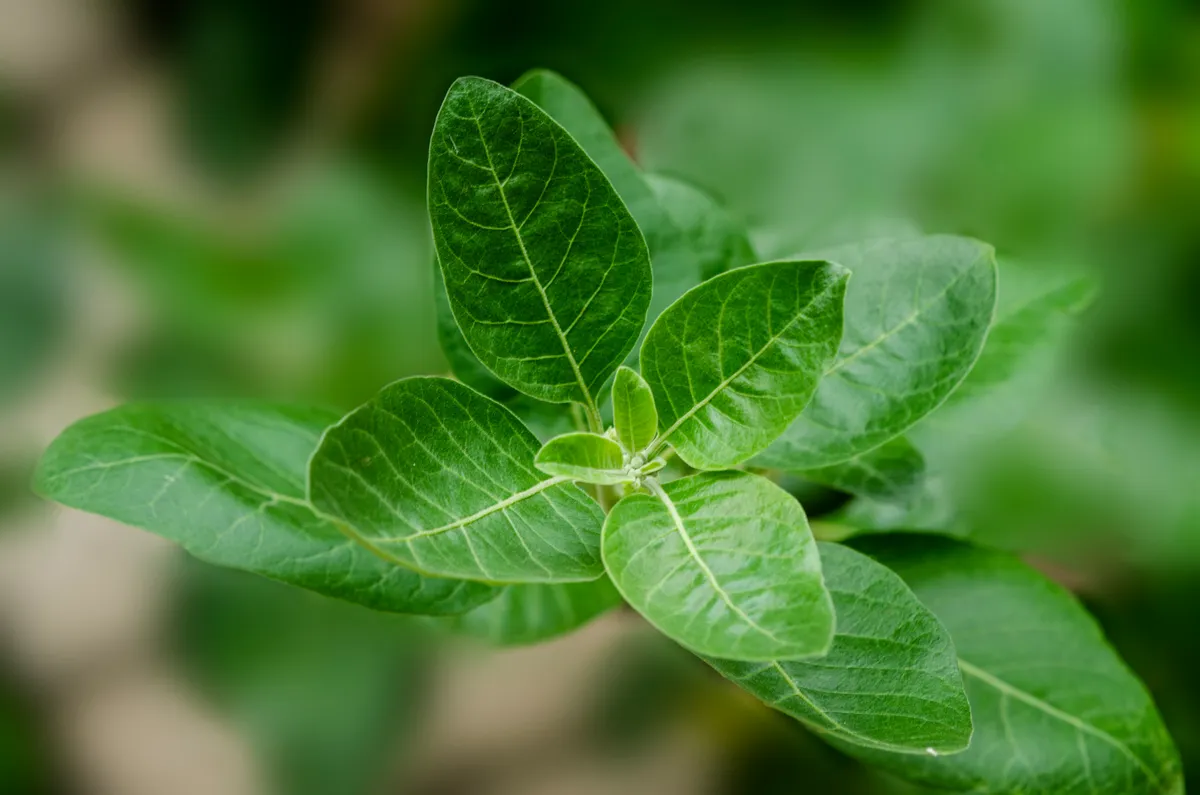
- Himalayan herbal oils. The base oils (sesame, mustard, coconut) are infused with herbs gathered in the mid-hills and high valleys: juniper from Dolpo, spikenard (jatamansi) from Langtang, rhododendron from the Annapurna foothills, and Himalayan cedar from the higher forests. These oils smell different and produce a differentiating warming sensation compared to South Indian Ayurvedic oils.
- Tibetan influence. Many Kathmandu practitioners trained under Tibetan doctors in Boudhanath and combine Ayurvedic strokes with Tibetan ku nye massage techniques, including work on the body's energy points (tser) and the use of heated herbal poultices (tse me).
- Setting. Many of the best spas operate inside restored Newar townhouses with carved wooden windows, courtyard gardens, and traditional low lighting. The architecture itself is part of the therapy.
It is also worth understanding what a day-spa Ayurvedic massage is not. It is not a clinical cleanse (for that, see a certified Panchakarma centre). It is not a substitute for medical care. And it is not a strong-tissue sports massage, though most therapists can adjust pressure on request. The goal is deep relaxation, lymphatic movement, and balancing of the three doshas (vata, pitta, kapha) rather than mechanical muscle release.
The Signature Treatments You Will Actually Find in Kathmandu and Pokhara
Walk into a reputable Ayurvedic spa in Kathmandu or Pokhara and you will typically see a menu built around seven signature treatments. Here is what each one involves, with 2026 pricing in Kathmandu (Pokhara prices run roughly 10-15% lower).
1. Abhyanga (Full-Body Warm Oil Massage)
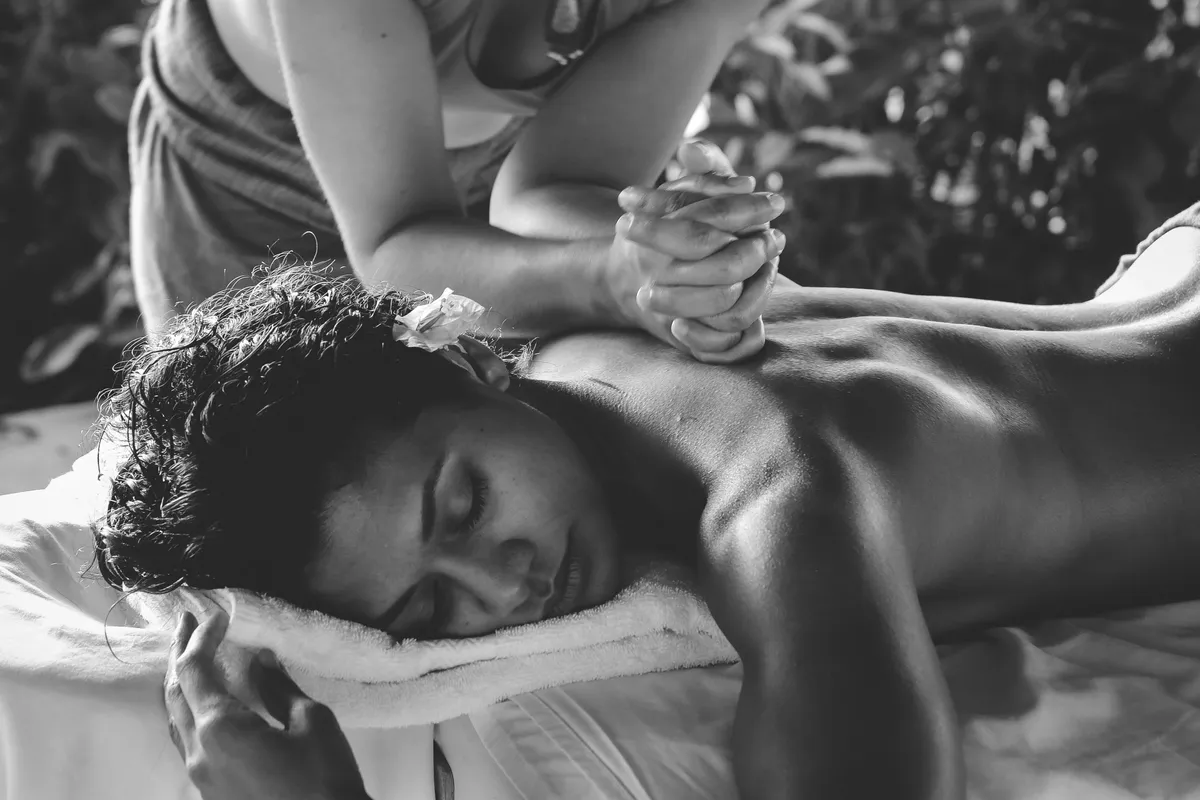
The foundation of Ayurvedic bodywork. The therapist heats herbal oil to body temperature and works it into the skin in long, rhythmic strokes that follow the body's energy channels (srotas). A classic session lasts 60 to 90 minutes and ends with a warm towel wipe-down and a cup of herbal tea. Price: USD 25-45 for 60 minutes, USD 35-60 for 90 minutes depending on the spa's standing.
2. Shirodhara (Forehead Oil Pour)
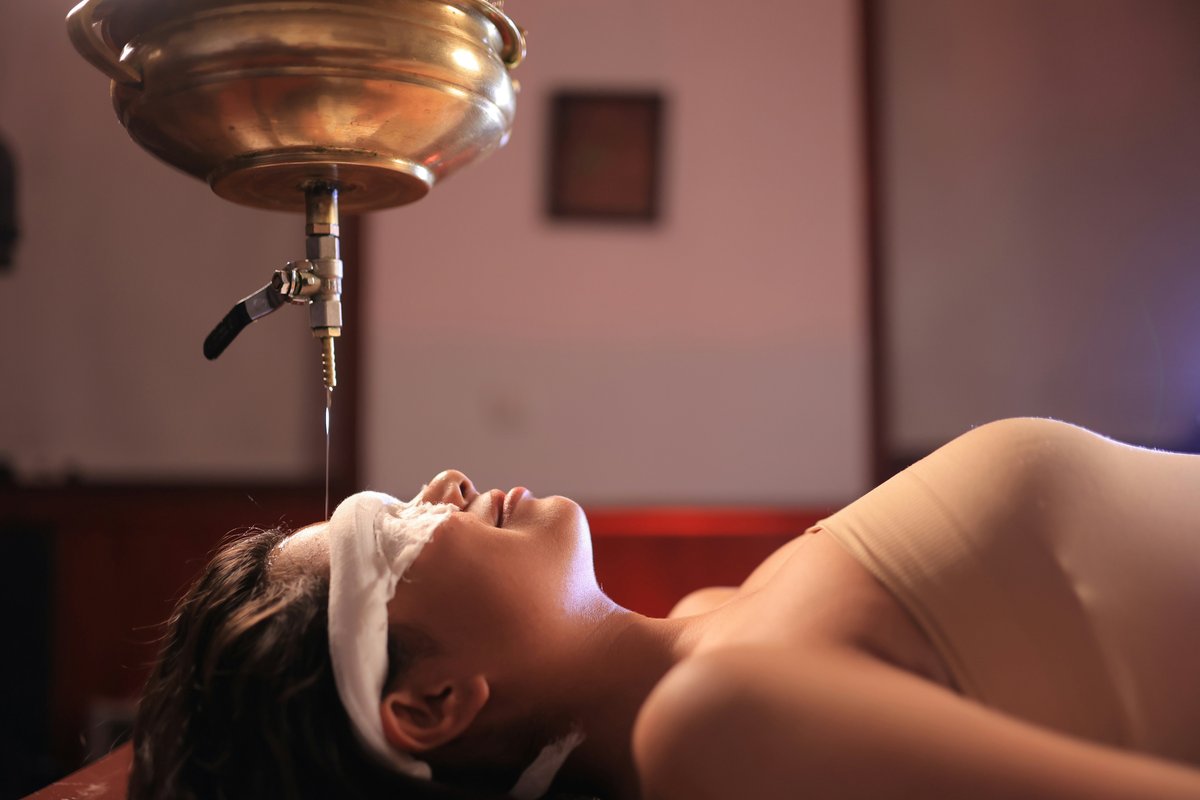
The signature Ayurvedic relaxation treatment. You lie on your back while a thin stream of warm herbal oil is poured in a slow, rhythmic pattern across your forehead (the "third eye" region). The effect is profoundly calming, and many people fall asleep within the first ten minutes. Sessions usually last 30-45 minutes and pair beautifully with a short abhyanga. Price: USD 30-50.
3. Pinda Sweda (Herbal Poultice Massage)
Small muslin bags filled with heated rice, herbs, and milk are pressed and kneaded across the body. The warmth is intense but never uncomfortable, and the oils released from the poultice leave the skin deeply nourished. Particularly good for joint stiffness after trekking. Price: USD 40-65 for 60-75 minutes.
4. Herbal Steam Bath (Bashpa Sweda)
After any oil treatment, many spas move you into a wooden steam cabinet infused with Himalayan herbs (typically juniper, lemongrass, and eucalyptus). Ten to fifteen minutes opens the pores and drives the herbal oils deeper into the skin. Often included in the treatment price; standalone steam sessions cost USD 10-15.
5. Foot Reflexology (Padabhyanga)
Ayurvedic foot massage using a small bronze bowl (kansa vatki) and warm herbal oil. The bronze is said to draw out excess heat and acidity. After several days of trekking Kathmandu Valley's stone staircases, this is the treatment most guides recommend first. Price: USD 15-25 for 30 minutes.
6. Marma Point Therapy
Light pressure applied to specific energy points mapped in the classical Ayurvedic texts. More subtle than a deep-tissue massage; feels closer to acupressure or gentle chiropractic adjustments. Often combined with abhyanga in a 90-minute session. Price: USD 35-55.
7. Himalayan Hot Stone Massage
A modern fusion treatment that uses smooth river stones from the Trishuli or Kali Gandaki rivers, heated and placed along the spine and key muscle groups, then used as massage tools. Not classical Ayurveda, but a Tibetan-influenced addition that most Kathmandu spas now offer. Price: USD 35-55.
Where to Go: The Best Ayurvedic Spa Neighbourhoods in Kathmandu
Kathmandu's Ayurvedic spa scene is concentrated in three neighbourhoods, each with its own character.
Thamel: The Traveller's Hub
The densest concentration of spas, with prices to match every budget. Quality varies widely. Look for spas that have been operating ten years or longer and that can name their training lineage (most reputable practitioners trained at the Nepal Ayurveda Medical Council, the Institute of Ayurveda in Kathmandu, or directly under a family vaidya). Avoid the cheapest street-side operations where the "Ayurvedic massage" is often just a standard oil rub with no herbal preparation.
Boudhanath: The Tibetan Quarter
Home to several Tibetan-influenced healing centres that combine Ayurvedic and ku nye techniques. The setting, with the great stupa a five-minute walk away, is uniquely calming. Several monasteries in the area also run monastery meditation programs you can pair with a massage for a full healing day.
Patan: The Heritage Quarter
A few exceptional spas operate inside restored Newar townhouses near Patan Durbar Square. The setting alone, with carved windows, sun-dappled courtyards, and brick walls cooling the air, makes these worth seeking out. Combine a massage with a morning Sacred Kathmandu heritage tour walking Patan's temples and a lunch of Newari cuisine.

Pokhara: The Lakeside Alternative
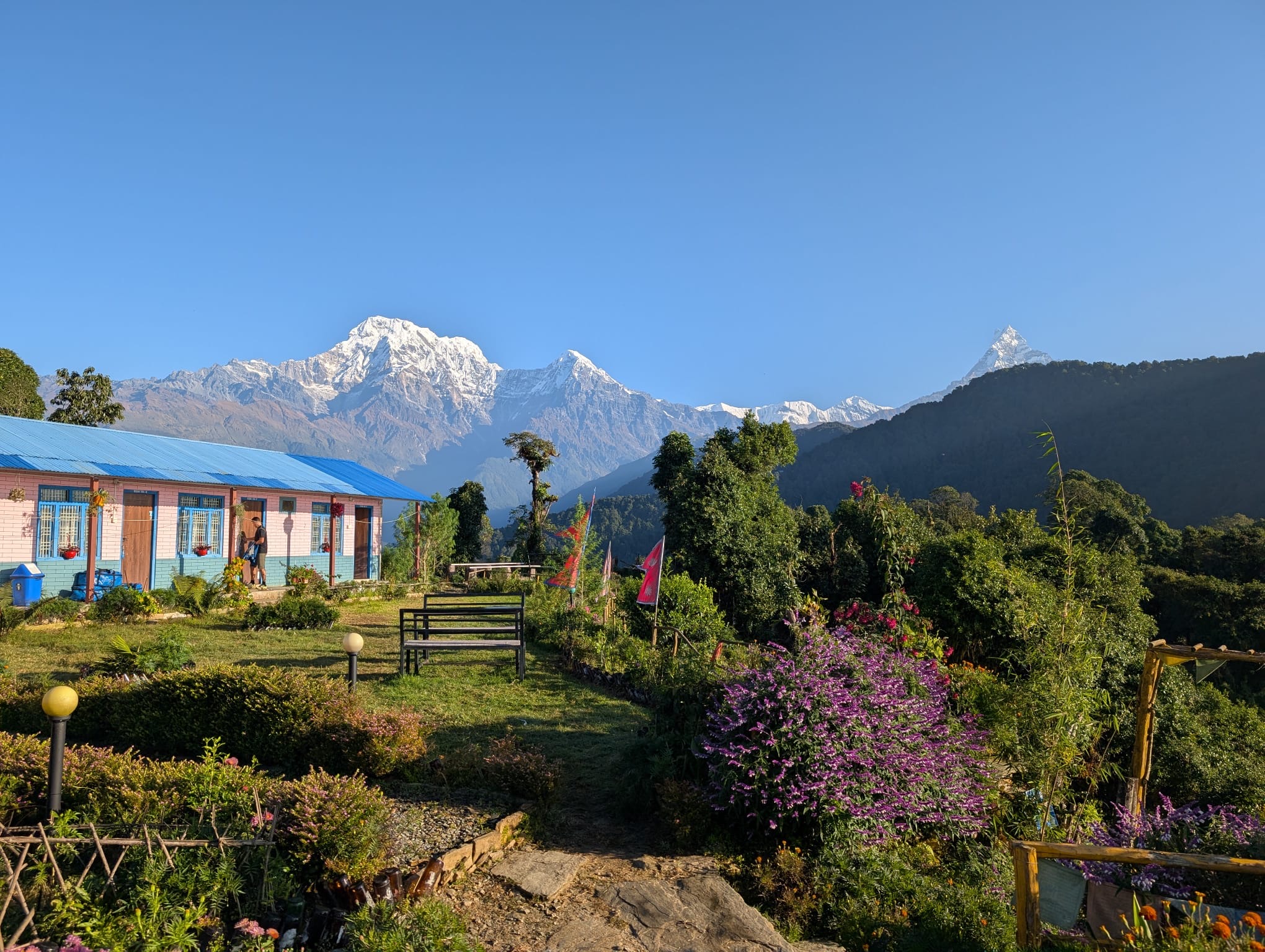
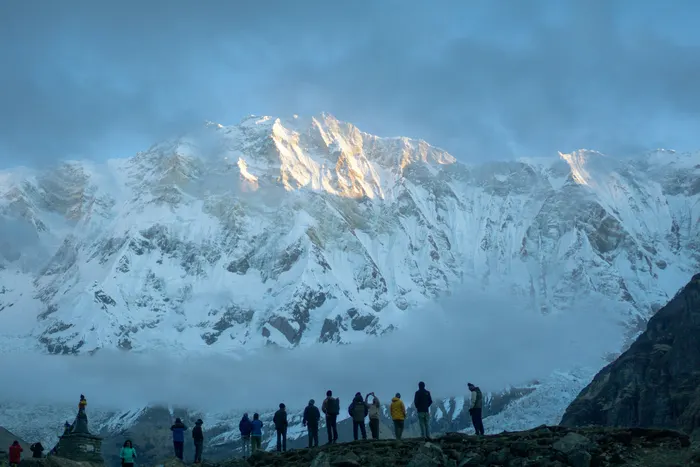
If your itinerary includes Pokhara, the spa scene there is smaller but well worth a day. Several excellent wellness centres operate along Lakeside, most with mountain or lake views. The pace is slower, prices are slightly lower, and the post-trek massage culture is more established. Many travellers arriving from the Annapurna region book two or three treatments over a rest day before flying home. See our companion guide to yoga and spiritual healing in Pokhara for the wider wellness scene.

How to Choose a Reputable Practitioner
The single most important factor in a quality Ayurvedic massage in Nepal is the practitioner's training. Here is a five-point checklist that separates genuine Ayurvedic therapists from general masseuses using the label:
- Ask about their training lineage. Reputable practitioners can name their teacher or school. Within Nepal, the Institute of Medicine (Maharajgunj), the Ayurveda Campus in Naradevi, and the Nepal Ayurveda Medical Council are the major certifying bodies.
- Question the oils. A real Ayurvedic spa will tell you which base oil and which herbal infusion they are using, and ideally let you smell the oil before the treatment. "Ayurvedic oil" with no further detail is a red flag.
- Expect a brief consultation. Even a day-spa treatment should begin with a five-minute intake: current dosha imbalances, recent travel, dietary habits, any injuries. Slipping straight onto the table without any intake suggests a generic service.
- Look for gender-matched practitioners. Classical Ayurvedic practice matches male therapists with male clients and female therapists with female clients. Reputable Kathmandu spas respect this convention; if yours doesn't, ask.
- Check reviews for specifics, not adjectives. A ten-year track record of reviews mentioning specific treatments ("shirodhara was perfect after the Langtang trek") signals genuine practice; "amazing massage!" repeated across dozens of generic reviews signals a marketing operation.
What to Expect on Your First Visit
A typical day-spa Ayurvedic massage in Kathmandu follows this arc. You will arrive ten minutes before your appointment, be offered herbal tea, and complete a short health intake. The therapist will take you to a private treatment room, explain the treatment, and leave you to undress to your comfort level (most Nepali spas provide a wrap or sarong). The treatment itself involves warm oil, long rhythmic strokes, and a quiet room. After the massage, you will rest for five to ten minutes, then move to a steam cabinet or simply sit with another cup of tea before dressing and leaving.
A few practical points:
- Do not eat heavily for two hours before your treatment. A light meal is fine.
- Arrive hydrated and continue drinking water afterward; Ayurvedic massage stimulates lymphatic drainage and the body needs fluid to flush effectively.
- Avoid strenuous exercise for the rest of the day. The oils continue absorbing for several hours, and intense activity works against the relaxation.
- Tip 10% if the service was good; tips are appreciated but not obligatory.
- Book ahead during high season (October-November, March-April). Good spas fill up two to three days in advance.
Pairing Ayurvedic Massage with a Wider Spiritual Journey
The deepest way to experience Nepal's healing traditions is to combine a single massage with a longer program. Travellers typically weave these together as:
- Pre-trek preparation. One deep-oil abhyanga session the day before a trek relaxes the muscles and prepares the joints for altitude. Especially useful before a challenging itinerary like the Gosaikunda Sacred Lake Trek or the Gosaikunda Sacred Lakes Yoga Retreat.
- Post-trek recovery. A hot-stone or poultice massage within 24-48 hours of returning from a long trek dramatically speeds recovery. Many travellers combine this with a day or two of gentle sightseeing on the Kathmandu Spiritual Circuit.
- Pilgrimage pairing. If you are visiting Lumbini, Muktinath, or another sacred site, adding one Ayurvedic session deepens the contemplative pace of the trip. See our guides to the Lumbini Buddhist pilgrimage and the Muktinath pilgrimage for inspiration.
- Meditation retreat add-on. Several Kathmandu retreats now include one Ayurvedic massage per three-day stay, recognising that bodywork helps the mind sit still. Our Himalayan meditation retreat guide explains the options.
Ayurvedic Massage vs Other Healing Modalities: A Quick Comparison
Many travellers come to Nepal with a vague sense that they want "something healing" without knowing which tradition suits them. Here is how Ayurvedic massage compares to the other healing experiences available in the country:
| Modality | Best for | Format | Duration |
|---|---|---|---|
| Ayurvedic massage (abhyanga) | Deep relaxation, post-trek recovery, dosha balancing | Single session or short series | 60-90 min |
| Shirodhara (oil pour) | Insomnia, anxiety, post-trek decompression | Single session | 30-45 min |
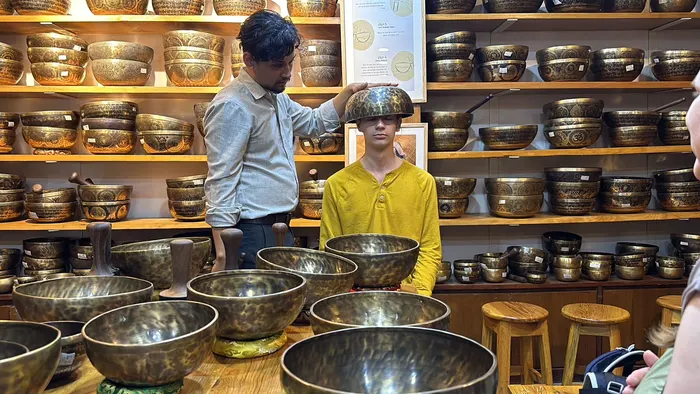
| Sound healing | Meditation support, vibrational release | Single session or retreat | 60-90 min |
| Reiki | Energy balancing, emotional reset | Single session or course | 45-75 min |
| Panchakarma (clinical) | Deep detox, chronic conditions | Residential program | 7-28 days |
| Yoga retreat | Flexibility, mindfulness, structured practice | Residential program | 3-10 days |
For broader context, our Spiritual and Wellness Travel in Nepal guide maps the entire landscape, and our detailed guides on traditional sound healing and Reiki healing in Nepal explore those two modalities in depth.

The Seven-Day Wellness Itinerary: A Suggested Framework
If you have a week in Nepal and want to build it around healing rather than trekking, this is the structure our team recommends most often. It balances rest, learning, and gentle movement:
- Day 1: Arrival in Kathmandu. Herbal tea on arrival, early night. No treatment yet; let your body adjust to the altitude (1,400m) and time zone shift.
- Day 2: Introduction to Ayurveda. Morning visit to a reputable day spa in Patan for a 60-minute abhyanga. Afternoon visit to Boudhanath Stupa and a gentle Temple Aarti evening walk for an easy cultural introduction.
- Day 3: Sound and silence. Morning yoga class in Thamel, midday shirodhara, evening Tibetan singing bowl session at a reputable sound healing centre.
- Day 4: Sacred geography. Day trip on the Kathmandu Spiritual Circuit to Pashupatinath, Boudhanath, and Swayambhunath. Evening rest, no bodywork.
- Day 5: Mountains and herbs. Day trip to Dhulikhel for the Namobuddha spiritual hike, returning by early evening. Light foot reflexology on return.
- Day 6: Deeper work. 90-minute pinda sweda (herbal poultice) or marma point session. Quiet afternoon reading or a short guided yoga session in the Himalayas.
- Day 7: Integration. Final 30-minute foot massage, last walk through Thamel, departure.
This framework compresses well into 3 days or extends naturally to 14 if you add a Pokhara leg or a luxury yoga wellness escape at the back end.
Prices and Tipping in 2026: An Honest Breakdown
The cost of an Ayurvedic massage in Nepal has remained remarkably stable post-pandemic, with only modest increases driven by inflation. As of early 2026, expect the following:
- Budget spas (Thamel walk-ins, basic Panchakarma clinics): USD 15-25 for 60-minute abhyanga. Quality varies; inspect the room and ask about the oils before committing.
- Mid-range spas (reputable Thamel, Boudha, Lakeside Pokhara): USD 25-45 for 60 minutes, USD 35-60 for 90 minutes. This is the sweet spot for quality and value.
- Luxury hotel spas and retreat centres: USD 60-120 for 60 minutes. Premium oils, private suites, and a more polished experience.
- Multi-day package (3-treatment bundle): Many mid-range spas offer a 10-15% discount when you book three or more treatments in advance.
Tipping is appreciated but not mandatory. NPR 500-1000 (USD 4-8) per session is generous; NPR 200-500 is standard. Tip in cash, in local currency where possible.
Cultural Etiquette: What to Know Before You Undress
A few cultural notes prevent awkward moments:
- Modesty norms differ by neighbourhood. In Thamel and tourist corridors, Western spa etiquette is well understood. In more traditional Patan or Boudha spas, a sarong or wrap is the norm and full nudity is uncommon.
- Classic Ayurvedic practice matches therapist and client gender. Most reputable spas follow this convention. Ask at booking if you have a preference.
- No tipping during treatment. Save any tip for after the session, handed directly to the therapist or left at the front desk.
- Phones off, voice low. Nepali spa culture prizes quiet. Even in a busy Thamel day-spa, the treatment rooms are kept hushed.
- No large meals immediately before. Ayurvedic philosophy holds that bodywork on a full stomach interferes with the digestive fire; the classical recommendation is two hours after eating.
How to Book: Direct, Through Your Hotel, or Through a Tour Operator
Three booking channels exist, each with trade-offs:
- Book direct with the spa. Cheapest, most flexible, but you do your own quality vetting. Works well in Pokhara and for established Kathmandu spas with strong online reviews.
- Book through your hotel. Convenient, with a 10-20% markup. Hotels usually vet their partner spas reasonably well, so quality is decent if not exceptional.
- Book through a tour operator. Best when the massage is part of a wider itinerary. A specialist operator like a spiritual and cultural tours specialist or a trusted trekking agency can integrate a healing day into a trekking or pilgrimage schedule without friction. At Enticing Himalayas, our team books the Ayurvedic Massage & Wellness Spa activity as part of broader wellness itineraries and can recommend specific therapists based on your needs.
Closing Thoughts: Beyond Relaxation, Toward Wholeness
In a culture that has practised healing arts for over a thousand years, an Ayurvedic massage in Nepal is not a luxury add-on but a window into a living tradition. The therapists who work in Kathmandu's restored Newari houses, the monks who supply herbal oils from mountain monasteries, the farmers who gather jatamansi from high Himalayan meadows - all are part of an unbroken chain of knowledge. To lie on a wooden table in a candle-lit room in Patan, smelling juniper and warm sesame, listening to the distant temple bells, is to experience a form of care that reaches back centuries.
Take your time choosing a spa. Ask about the oils. Respect the quiet. And when you rise from the table, an hour later, walking lighter into the Kathmandu evening, you will understand why so many travellers return to Nepal not for the mountains but for the healing.
Namaste, and may your journey be restful.