Nepal's Living Goddess Kumari: A Complete Sacred Guide 2026
In a courtyard in the heart of Kathmandu, a young girl sits at an ornate wooden window while hundreds of people bow beneath her. She is not a princess and not a queen. She is the Kumari, Nepal's living goddess, and for as long as she holds that title she is worshipped as the incarnation of a deity by Hindus and Buddhists alike. The Kumari tradition is one of the most remarkable living religious practices on earth, and the Kathmandu Valley is the only place where you can witness it. This guide explains who the Kumari is, how she is chosen, where to see her, how to behave around her, and how to build a respectful spiritual journey around the sacred valleys that surround her.
Who Is the Kumari, Nepal's Living Goddess?
The Kumari is a prepubescent girl chosen from a Newar family and revered as the living incarnation of the goddess Taleju. She resides in the Kumari Ghar on Kathmandu Durbar Square, blesses devotees from her window, and appears publicly during festivals. She is worshipped by both Hindus and Buddhists.
The word Kumari simply means "virgin" or "young girl," but the title carries an enormous weight. The Kumari of Kathmandu, sometimes called the Royal Kumari, is the most senior of several living goddesses in the valley. Patan and Bhaktapur each have their own Kumari, and smaller towns maintain related traditions of virgin worship. What sets the Kathmandu Kumari apart is her national standing: she is a state figure as much as a religious one, and her blessing has been sought by kings and, in the modern republic, by presidents.
She is, above all, a child. The Kumari plays, studies, and is cared for by her family, yet she is also believed to hold the presence of Taleju, a goddess associated with the Malla kings who once ruled the valley. This dual identity is the reason the tradition fascinates visitors. It is not a performance staged for tourists. It is a continuous ritual that has shaped the rhythm of Kathmandu for centuries, and it continues today with the same seriousness it has always carried.
The Origins of a Two-Thousand-Year-Old Tradition
The roots of Kumari worship reach back into the deep religious history of the Kathmandu Valley. The valley was once a lake, according to both geology and Buddhist legend, and it became a sacred landscape once the bodhisattva Manjushri is said to have cut the gorge at Chobhar and drained the waters. From that sacred origin, a culture grew in which the divine was understood to be present in the world, not removed from it.
The formal Kumari tradition as it survives today is usually traced to the late Malla period, roughly the seventeenth century, when the worship of Taleju became central to royal legitimacy. One well-known legend tells of a Malla king who was visited by the goddess in the form of a young girl. When he offended her, she withdrew, promising to return only in the body of a child from a Shakya family. From this story, the practice of installing a living goddess in a palace courtyard took hold and was carried forward from one dynasty to the next.
Behind the royal legend sits a much older layer of devotion: the Vajrayogini and Taleju cults of Newar Buddhism and Hinduism, the powerful goddess traditions of the valley, and a worldview in which a pure young girl can serve as a vessel for divine presence. The Kumari is therefore not an isolated curiosity but the visible tip of a deep religious inheritance that blends Hindu and Buddhist practice in a way found almost nowhere else on earth. Understanding that inheritance is the first step toward seeing the Kumari not as a spectacle but as a living expression of faith.
How Is a Living Goddess Chosen?
Selection is rigorous and rare. Candidates are young girls from Shakya families who must meet a long list of physical requirements and pass tests of courage and composure. A panel of priests and astrologers confirms the choice. Once selected, the girl becomes the Kumari and begins her sacred role.
The tradition holds that a true Kumari must possess thirty-two specific physical attributes. These are described in vivid, symbolic language: a neck like a conch shell, a body like a banyan tree, thighs like a deer, eyelashes like a cow, a voice as clear as a duck, and skin without blemish or scar. Her horoscope must also align with the goddess, and she must be free of illness and prior serious injury.
Candidates are then tested for temperament. In the best-known account, the girl is placed in a darkened room filled with frightening imagery, including the sight of sacrificed animals, and is observed for fear. A child who remains calm and unshaken is considered to carry the goddess's composure rather than an ordinary child's fear. The trials are meant to reveal steadiness, not to harm, and the families who offer their daughters do so as an act of deep religious devotion.
When the choice is confirmed, the girl is installed in the Kumari Ghar. From that moment her life changes completely. She is treated as a deity in residence, and her care, education, and daily routine are managed by appointed guardians. The role is temporary by design: it ends when she reaches puberty or is injured, at which point the goddess is understood to depart and a new Kumari is sought. Retired Kumaris return to ordinary life with a government pension and, in recent years, greater public support for their education and transition.
Where Can You Meet the Kumari in the Kathmandu Valley?
The Royal Kumari lives in the Kumari Ghar, a three-storey building on the south side of Kathmandu Durbar Square. She often appears at a central window in the late afternoon. Patan and Bhaktapur each have their own Kumari houses in their respective Durbar Squares, and both are worth visiting on a valley tour.
The Kumari Ghar itself is a masterpiece. Its wooden windows and struts are carved with peacocks, serpents, and deities, and the building is one of the finest examples of Newar craft in the city. Visitors gather in the small courtyard below and wait for the goddess to appear. When she does, it is usually only for a moment or two, and the response is immediate and hushed. Your guide will explain when an appearance is likely and how to behave if it happens.
In Kathmandu, the surrounding Durbar Square offers much more than the Kumari Ghar. The Hanuman Dhoka Palace, the towering Taleju Temple, and the fearsome black stone image of Kal Bhairav all stand within a few minutes' walk. A short drive away, the hilltop stupa of Swayambhunath, also known as the Monkey Temple, looks out over the entire valley and pairs naturally with a visit to the living goddess. For a wider look at how these sites fit together, see the complete guide to cultural and spiritual tours in Nepal.


Beyond Kathmandu, the medieval town of Bhaktapur preserves its own Kumari tradition inside a city that feels untouched by modern traffic, and the quiet Newar settlement of Panauti anchors a sacred confluence that few visitors reach. Together these three towns form the spiritual spine of the valley, and each one rewards slow, unhurried attention.
What Happens at the Indra Jatra Festival?
Indra Jatra is the great autumn festival of Kathmandu, and the Kumari is its centerpiece. Over eight days, masked dancers, chariots, and the living goddess herself fill the old city. The Kumari's chariot is drawn through the streets, and she delivers a blessing that is traditionally received by the head of state.
The festival honors Indra, the Hindu god of rain and heaven, and it marks the close of the monsoon season. It opens with the raising of a tall wooden pole called the Yosin outside the Hanuman Dhoka Palace, and for the days that follow the Durbar Square area becomes a stage of Lakhey dancers, drummers, and torch-lit processions. Three chariots carry the Kumari, Ganesh, and Bhairav through the narrow lanes, and the crowds that gather to see them are among the largest in the Nepali calendar.
For visitors, Indra Jatra is the single best opportunity to see the living goddess in public, though it is also the most crowded and the least private. The festival is not a show for tourists; it is a sacred event, and the deepest experience comes from watching respectfully from the edges rather than pushing for a photograph. If your trip can be timed around it, it repays the effort many times over. The experience is closely related to the temple aarti and heritage walks that bring the old city to life after dark.
Daily Life Inside the Kumari Ghar
Behind the public appearances lies a quieter, more human story. A Kumari lives apart from ordinary childhood. She is attended by caretakers, taught by private tutors, and given a routine that blends study, ritual, and rest. According to tradition, her feet should not touch the ground outside the house, so she is carried when she travels. Her play is limited, and her contact with other children is carefully managed.
Yet she is not isolated from family. Her parents and siblings visit, and her household includes the people who have cared for her since her selection. Modern practice has softened some older customs: Kumaris now receive a formal education, and public debate has focused on the wellbeing of the girls who hold the role. Many Nepalis speak of the Kumari with both reverence and tenderness, aware that a child is carrying a responsibility few adults could bear.
The role ends when the girl reaches puberty or loses the physical purity the tradition requires. At that point, the goddess is believed to leave her, and she returns to life as a private citizen. Retirement brings a state pension and, increasingly, support for schooling and reintegration. Former Kumaris have gone on to university, careers, and ordinary family life, and their stories have helped the wider world understand the tradition as something lived by real people, not only as an ancient rite.
What Is the Etiquette for Visiting the Kumari?
Treat the Kumari as a sacred person, not an attraction. Do not photograph her, do not touch her, and do not attempt to shake her hand. Remove your shoes where required, dress so that shoulders and knees are covered, and keep your voice low. A modest donation in the box is a respectful gesture.
The prohibition on photographing the Kumari is firm and widely respected. Even when she appears at her window, cameras stay down. Many visitors find that this rule, rather than limiting the experience, deepens it: without a lens between you and the goddess, you simply watch, and the moment stays with you far longer than a picture would.
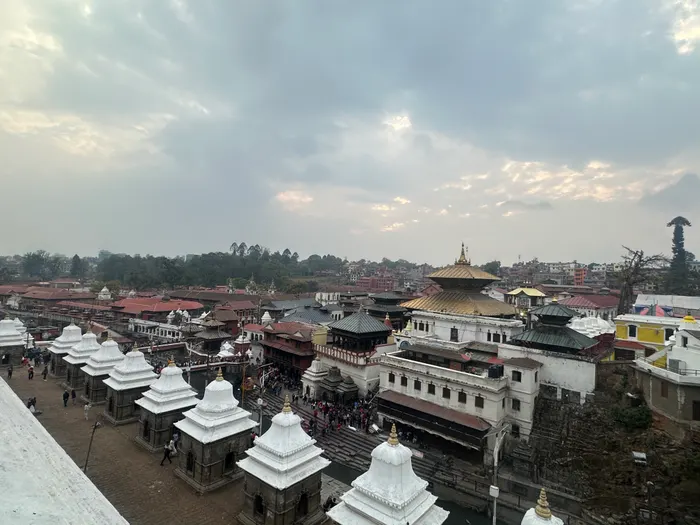
The same care applies across the valley. At Pashupatinath, leather items such as belts and bags are not permitted inside some Hindu temples, and the cremation ghats along the Bagmati River call for quiet discretion rather than photography. At Buddhist stupas such as Boudhanath and Swayambhunath, always walk clockwise around the monument, spin the prayer wheels with your right hand, and ask before photographing monks, sadhus, or worshippers. When a priest offers you a tika blessing, accept it with both hands or a slight bow. These small courtesies mark the difference between a tourist and a respectful guest, and they are noticed and appreciated.
Children are welcome, and many families find that the Kumari tradition sparks genuine curiosity in younger travelers. That said, the cremation ghats at Pashupatinath are not the right place for very young children, and a private guide can help you read each situation as it arises. Good etiquette is not a list of restrictions; it is the key that opens a deeper, warmer encounter with a living culture.
What Lies Beyond the Kumari in the Sacred Valleys?
The Kumari is the heart of the valley's spiritual life, but she is far from its only wonder. Within a twenty-kilometre radius lie seven UNESCO World Heritage monument zones, countless temples, and monasteries where devotion has continued without interruption for centuries. A visit to the living goddess is best understood as the doorway into this wider sacred landscape.
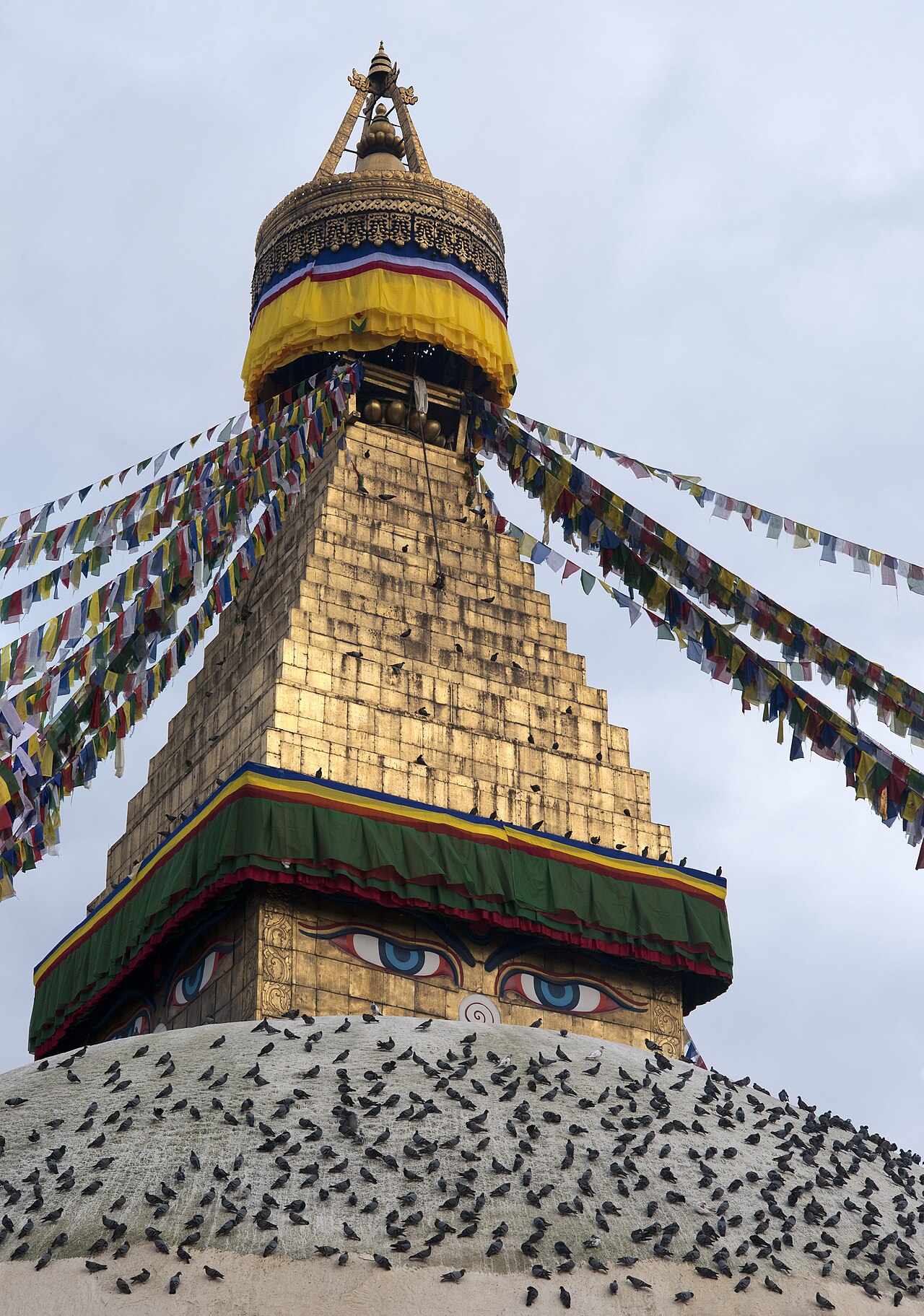
The great stupas are unmissable. Sound healing traditions and the deep resonance of chanting are part of daily life at Boudhanath, one of the largest spherical stupas in the world and the spiritual home of Nepal's Tibetan Buddhist community. Swayambhunath, the Monkey Temple, offers sweeping valley views and a hilltop atmosphere that shifts with the light. At both sites, the simple act of walking clockwise with the pilgrims is a meditation in itself.

The medieval cities complete the picture. Bhaktapur, with its pottery squares and the towering five-storey Nyatapola Temple, is the best-preserved of the old royal capitals, and its juju dhau, a creamy clay-pot yogurt, is a small ritual of its own. The ancient traditions of the Newars come alive in these streets, where a single courtyard can hold both a Hindu shrine and a Buddhist stupa. Panauti, at the meeting of two sacred rivers, adds a quieter, more contemplative note, while the Namobuddha hill offers a serene Buddhist monastery and the story of the prince who gave his body to a starving tigress.
For travelers who want to understand how these threads connect, a guided walk through the temple aarti and evening heritage rituals of the old city is an excellent complement to a daytime visit. The valley rewards those who move slowly, return to a favourite square at a different hour, and let the sacred rhythm of the place set the pace.
How Does the Kumari Fit Into a Nepal Spiritual Tour?
The Living Goddess sits at the center of a growing family of EHT journeys designed to open the spiritual heart of the Kathmandu Valley. The most direct is the Sacred Valleys & Living Goddesses tour, a four-day itinerary that pairs the Kumari Ghar with the valley's greatest monuments.
That journey runs at a contemplative pace. Over four days it covers the living goddess in her Kathmandu palace, the medieval squares of Bhaktapur, and the peaceful spiritual sites of the valley, with a private English-speaking guide, private transport, comfortable boutique accommodation with breakfast, and all entrance fees included. It is built for travelers who want depth rather than a checklist, and its small scale means the itinerary can bend around the moment when the Kumari appears at her window.
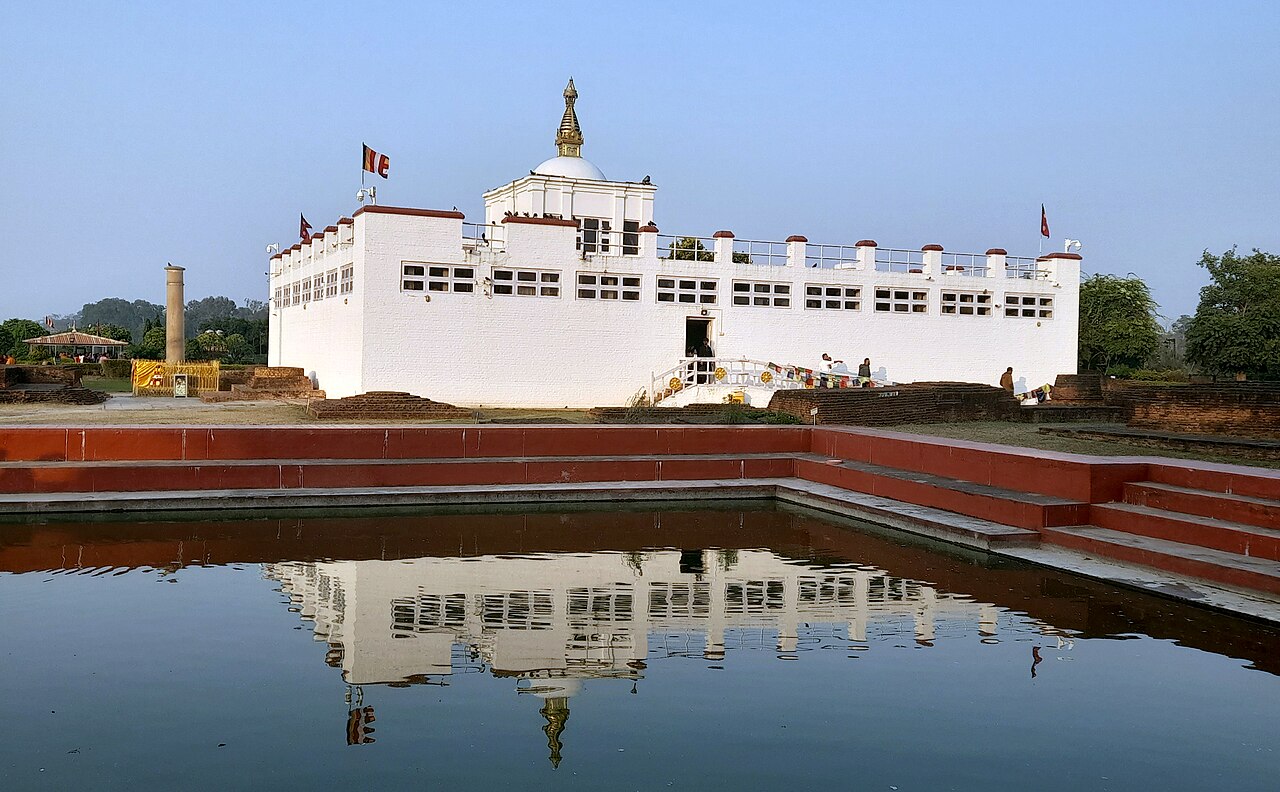
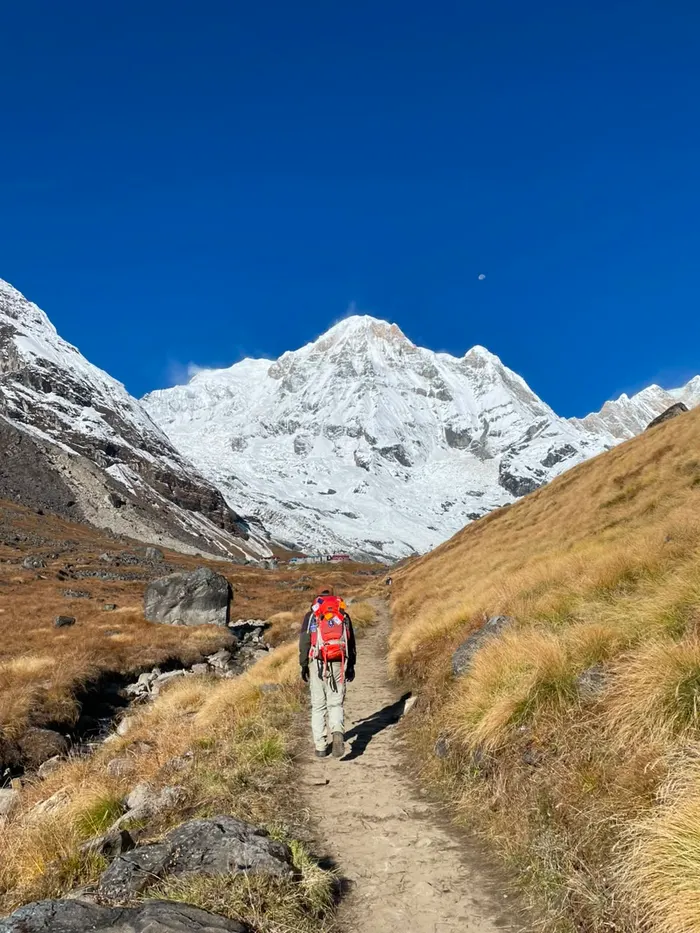
From that foundation, the possibilities widen. You can pair the living goddess with the Kathmandu Spiritual Circuit for a deeper pass through Pashupatinath, Boudhanath, and Swayambhunath, or extend south to the Lumbini Buddhist pilgrimage where the Buddha was born. Those who want mountain pilgrimage can add the Muktinath helicopter pilgrimage to the 108 sacred waters, or a gentle Dhulikhel and Namobuddha guided hike. Each of these sits alongside the two pillars that anchor our whole approach: the complete guide to cultural and spiritual tours in Nepal and our guide to trekking in Nepal.
If you would rather begin from the spiritual hub itself, the Spiritual Tour in Nepal activity page sets out the full range of journeys, and the Indra Jatra festival experience lets you time a visit around the living goddess's grandest public appearance. Tell us your travel dates and interests, and we will shape an itinerary that places the Kumari exactly where she belongs: at the centre of a journey through the sacred valleys.
When Is the Best Time to Visit the Sacred Valleys?
Spring and autumn are the ideal seasons for the Kathmandu Valley. From March to May the weather is mild and the gardens are in bloom, and from September to November the air is clear and the great festivals fill the calendar. Winter is quieter and cooler, while the monsoon brings lush green landscapes and dramatic skies.
Autumn is the season most travelers choose, and for good reason. Dashain and Tihar, Nepal's two biggest festivals, transform the valley with lights, feasts, and family gatherings, and Indra Jatra brings the Kumari into the streets of Kathmandu. The weather is stable, the Himalayan views from the surrounding hills are at their sharpest, and the cultural calendar is at its fullest.
Spring offers a gentler alternative. Temperatures are comfortable, rhododendrons bloom in the hills, and the festival of Holi adds a burst of colour to the old city. Winter, from December to February, is cool but perfectly pleasant for sightseeing, with crisp mornings and far fewer visitors, which makes it a fine choice for travelers who prefer quiet squares and unhurried temple visits. The monsoon, from June to August, is the least predictable season for travel, though the valley turns vividly green and the temples take on a moody, atmospheric beauty.
Packing and Preparing for the Valley
The Kathmandu Valley is a place of temples, so your packing list should begin with respect. Bring clothing that covers your shoulders and knees, since many sacred sites require modest dress, and choose comfortable shoes that slip off easily, because you will remove them often. A light scarf or shawl is endlessly useful: it doubles as sun protection, a layer for cool mornings, and a cover for bare shoulders at a shrine.
Leave leather belts and bags behind on days when you plan to enter Hindu temples such as Pashupatinath, where leather is not permitted. Carry a little cash in small notes for donations, offerings, and the charming clay-pot yogurt of Bhaktapur, and keep a refillable water bottle to cut down on plastic. A power bank, a sun hat, and a compact rain shell round out a practical kit for any season.
Just as important is mental preparation. Read a little about Hindu and Buddhist practice before you arrive, learn a few words of Nepali, and arrive willing to slow down. If your wider trip includes the mountains, our complete guide to trekking in Nepal covers permits, seasons, and altitude, while our monastery etiquette guide prepares you for the quieter rituals of temple and gompa alike.
Traveling Responsibly in the Sacred Valleys
Responsible travel here means remembering that these are living places of worship, not backdrops. Observe the no-photography rules, ask before pointing a camera at people, and keep a respectful distance during prayers and cremations. Small purchases from local artisans, from thangka painters to pottery makers, keep traditional craft alive and spread the benefits of tourism through valley communities.
Choose licensed guides and companies that employ local people, treat porters and staff fairly, and support the monasteries and heritage sites they visit. Avoid single-use plastic where you can, carry out what you bring in, and be mindful of your water and energy use in a city that faces real pressure on both. When you visit the living goddess, the most responsible act is also the simplest: approach quietly, listen to your guide, and let reverence guide your behaviour.
Nepal's spiritual tradition has survived for centuries because it is rooted in a community that cares for it. Travelers who arrive with curiosity and leave with gratitude become part of that continuity rather than a disruption of it. That, more than any photograph, is the memory worth carrying home.