Best Spiritual Evening Aarati in Nepal: Pashupatinath, Bagmati and the Sacred Flame Ceremony
As the sun sinks behind the Kathmandu Valley hills and the first lamps flicker along the Bagmati River, something shifts in the air. The chaos of the day - the honking, the dust, the endless commerce - recedes, and a deeper rhythm takes over. Priests in saffron robes lift brass lamps heavy with burning ghee. Bells ring in cascading waves. Conch shells blow long, mournful notes that seem to vibrate in your chest. This is the evening aarati, Nepal's most visceral spiritual experience, and it happens every single night.
The aarati ceremony is not a performance staged for tourists. It is a living, breathing act of devotion that has been performed on the banks of the Bagmati for centuries. Hindus believe the river is sacred - a tributary of the Ganges - and the evening aarati is the moment when the divine is invited to descend, when fire meets water, and when the boundary between the earthly and the eternal grows thin. For visitors to Nepal, attending an aarati is often the single most memorable moment of their trip. It is raw, sensory, and profoundly moving in a way that no museum or monument can replicate.
In this guide, we will walk you through everything you need to know about the spiritual evening aarati in Nepal: what it means, where to experience it, when to go, what to expect, and how to approach it with the respect it deserves. Whether you are a pilgrim, a spiritual seeker, or a curious traveler, the aarati will leave its mark on you.
What Is an Aarati? The Ritual Explained
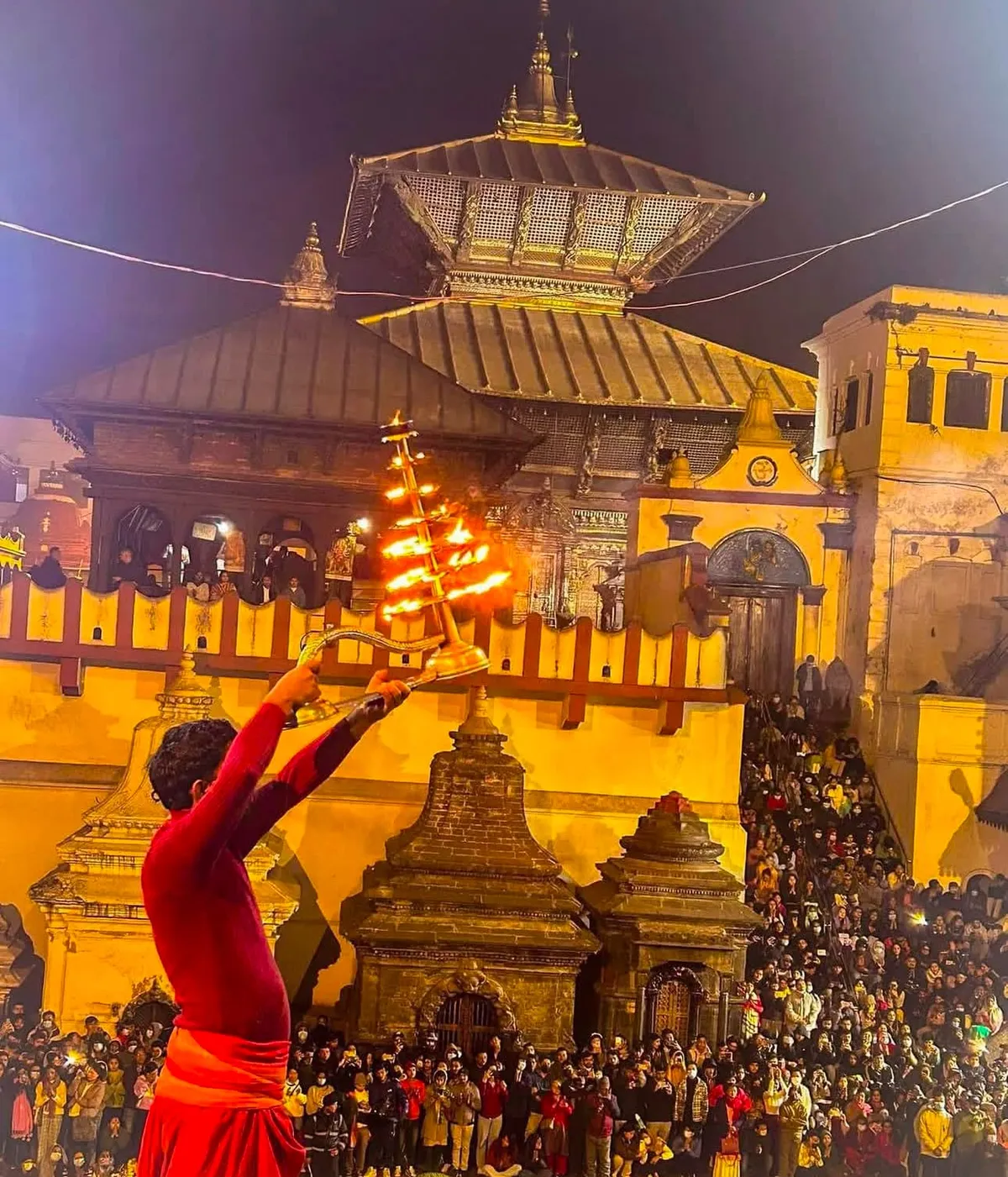
Aarati (also spelled arati or aarti) is a Hindu ritual of worship in which light from wicks soaked in ghee or camphor is offered to one or more deities. The word itself comes from the Sanskrit root "ara" meaning "to move toward" - the flame is moved in a circular motion toward the deity as an offering of light, dispelling darkness and ignorance. It is one of the oldest continuous rituals in the Hindu tradition, mentioned in the Vedas and elaborated in the Puranas.
The ceremony follows a precise choreography. A priest, or sometimes a group of priests, stands before the shrine or sacred object holding a large brass lamp with multiple wicks. The lamp is raised, lowered, and circled in a specific pattern - clockwise, tracing the sacred geometry of the universe. Each movement is synchronized with the ringing of bells, the beating of drums, and the chanting of mantras. The congregation faces the flame with palms pressed together, then cups their hands over the flame and draws them to their eyes, receiving the blessing of the light.
At its heart, the aarati is about gratitude and surrender. The five elements - earth, water, fire, air, and ether - are all present: the brass lamp (earth), the river (water), the flame (fire), the incense and chanting (air), and the space between the devotee and the divine (ether). It is a complete cosmology enacted in fifteen minutes.
Pashupatinath: The Heart of Evening Aarati in Nepal
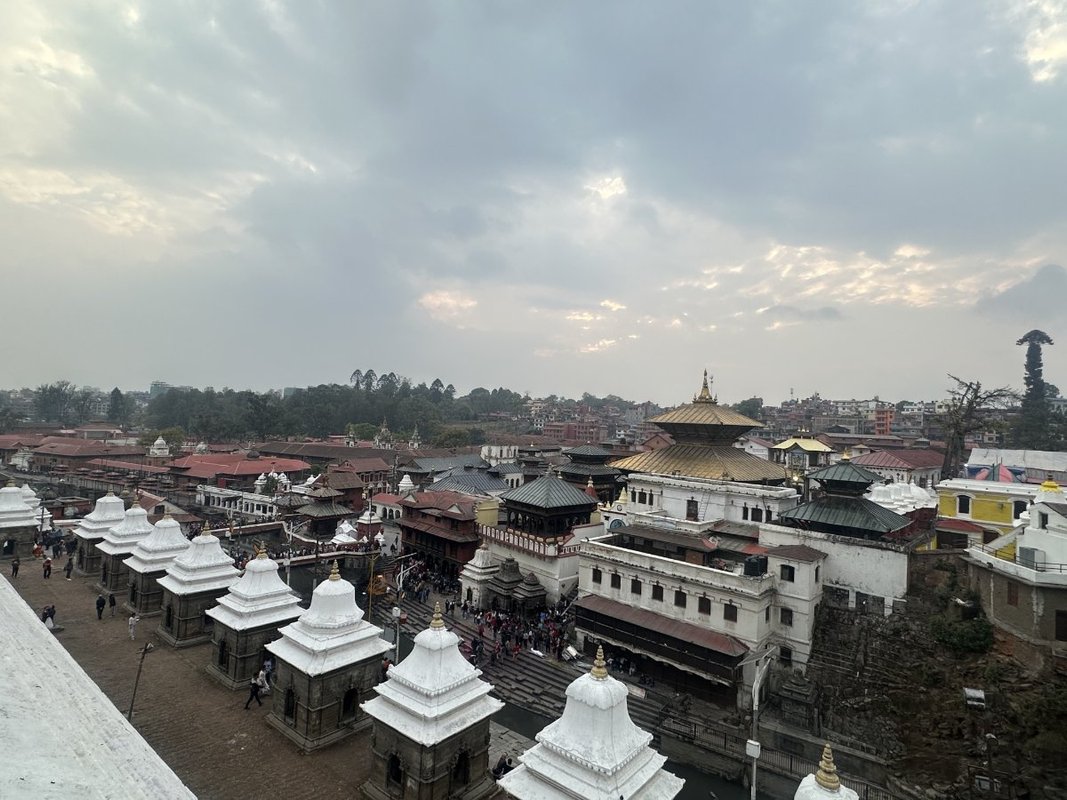
There is no more powerful place to witness the aarati than Pashupatinath, the holiest Hindu temple complex in Nepal and one of the most sacred Shiva sites in the world. Located on the eastern bank of the Bagmati River, about five kilometers from central Kathmandu, Pashupatinath is a sprawling campus of temples, ashrams, cremation ghats, and shrines that has been a site of continuous worship since at least the 5th century.
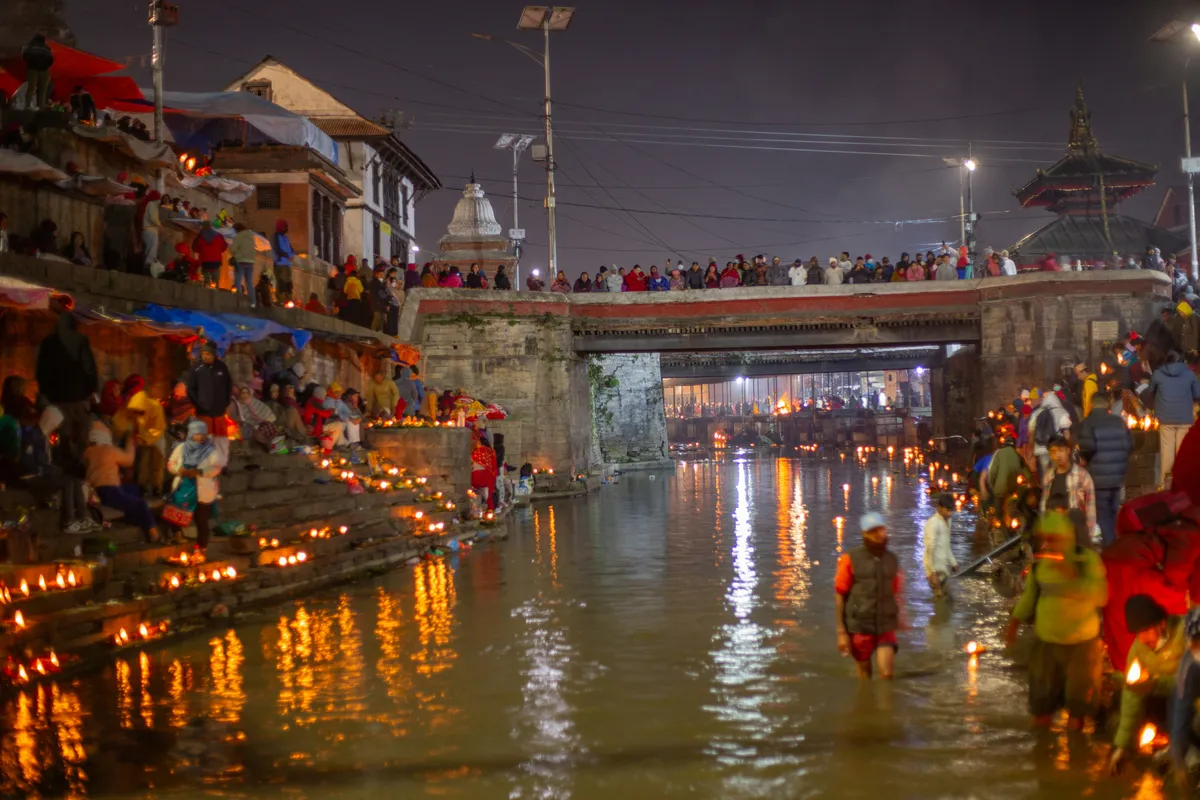
The evening aarati at Pashupatinath begins around 6:00 PM in winter and 6:30 PM in summer, though it is wise to arrive at least thirty minutes early to secure a good viewing spot. The ceremony takes place on the western bank of the Bagmati, directly opposite the main temple. Three raised platforms face the river, and on each platform, a team of priests performs the aarati simultaneously. The effect is mesmerizing: three synchronized flames moving in perfect unison, reflected in the dark water below.
The priests are young Brahmins trained from childhood in the precise movements and mantras of the ritual. They wear identical saffron dhotis, their foreheads marked with sandalwood paste and vermilion. As the ceremony begins, they light the massive brass lamps - some weighing over ten kilograms - and the crowd falls silent. The first notes of the conch shell cut through the evening air, followed by the deep resonance of temple bells. Then the chanting begins: ancient Sanskrit verses invoking Lord Shiva as Pashupati, the Lord of All Beings.
The aarati at Pashupatinath lasts about thirty to forty minutes. It builds in intensity, the chanting growing louder, the bells faster, the flames higher, until the final crescendo when the priests raise the lamps high above their heads and the entire congregation bows as one. After the ceremony, devotees line up to receive tika - the red vermilion mark on the forehead - and prasad, blessed offerings of flowers and sweets.
The Bagmati River: Sacred Waters and the Cycle of Life
The Bagmati is not a large river by Himalayan standards, but its spiritual significance is immense. It originates in the Shivapuri hills north of Kathmandu and flows through the heart of the valley before joining the Narayani and eventually the Ganges. For Hindus, the Bagmati is as sacred as the Ganges itself, and dying on its banks is considered a direct path to liberation.
This is why Pashupatinath is also a cremation site. The ghats along the river are where the dead are brought for their final rites, their bodies wrapped in orange cloth and placed on pyres of sandalwood. It can be confronting for Western visitors to witness cremations happening in the open air, just meters from where the aarati takes place. But this juxtaposition of death and devotion is not morbid - it is the whole point. The aarati celebrates the eternal light that outlasts the body. The flames of the cremation pyres and the flames of the aarati lamps are, in a sense, the same fire: one returns the body to the elements, the other returns the soul to the divine.
Visitors are welcome to observe the cremations from a respectful distance. Photography of the cremation ghats is generally discouraged, and it is essential to maintain a quiet, reverent demeanor. The aarati itself, however, is widely photographed and filmed - the priests and temple authorities are accustomed to it, and the ceremony is considered a public blessing.
Other Places to Experience Evening Aarati in Nepal
While Pashupatinath is the most famous, it is far from the only place to experience the evening aarati in Nepal. The Kathmandu Valley alone is dense with temples and shrines where the ritual is performed daily, each with its own character and atmosphere.
Boudhanath Stupa
The great stupa at Boudhanath, one of the largest spherical stupas in the world and the heart of Tibetan Buddhism in Nepal, has its own evening ritual. While not a Hindu aarati in the strict sense, the butter-lamp offering at Boudhanath is a deeply moving experience. As dusk falls, devotees light hundreds of small butter lamps around the base of the stupa, and the air fills with the sound of monks chanting and the scent of juniper incense. The white dome glows golden in the lamplight, and the painted eyes of the Buddha on the spire seem to watch over everything. It is a quieter, more meditative experience than Pashupatinath, but no less powerful.
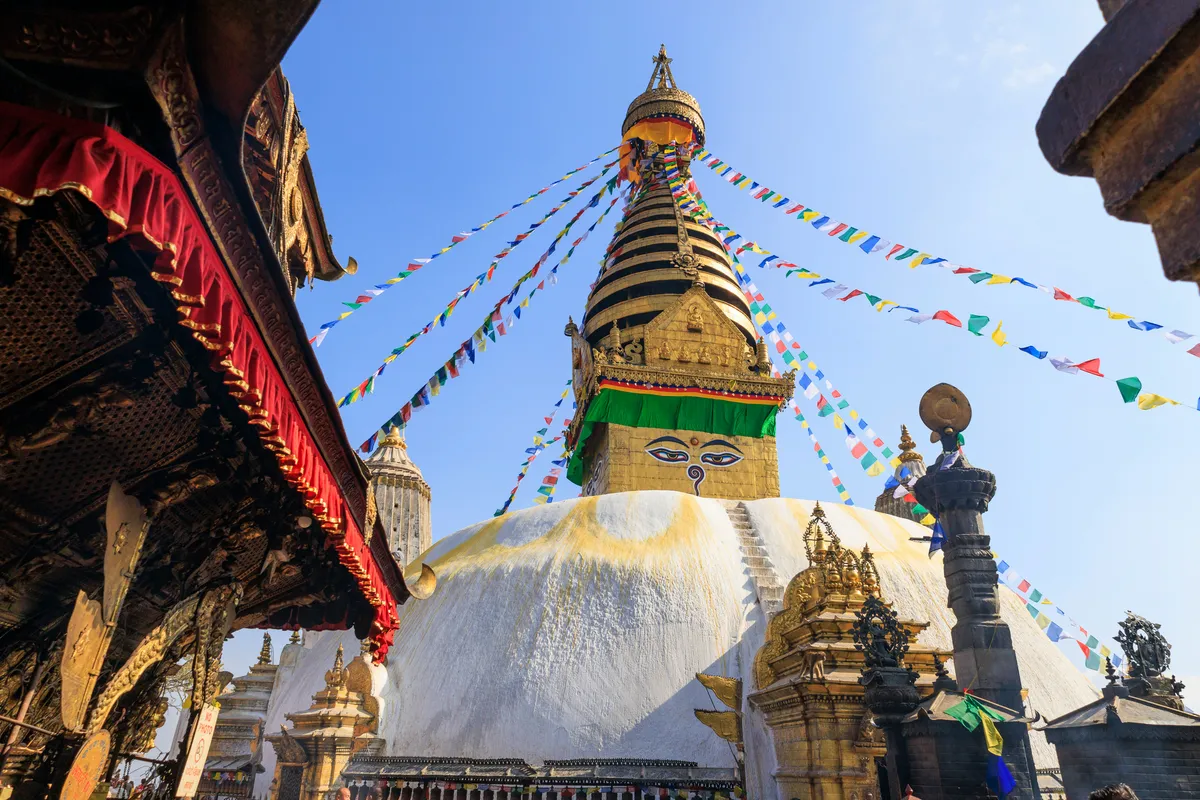 (Monkey Temple)
Swayambhunath, the ancient hilltop stupa overlooking Kathmandu, offers a different kind of evening magic. The main ritual here is not a formal aarati but the circumambulation of the stupa at sunset, when the prayer wheels spin in a continuous stream and the valley below fades from gold to indigo. Small shrines around the complex hold their own lamp offerings, and the atmosphere is one of quiet pilgrimage rather than grand ceremony. The panoramic view of Kathmandu at dusk, with the Himalayas on the northern horizon, is worth the climb alone.
Dakshinkali Temple
About twenty-two kilometers south of Kathmandu, in a narrow gorge where two rivers meet, stands the temple of Dakshinkali, dedicated to the goddess Kali in her most fierce form. The evening aarati here is a raw, intense affair - smaller and less choreographed than Pashupatinath, but charged with a primal energy. Animal sacrifices are still performed at Dakshinkali on Tuesdays and Saturdays, and the aarati that follows carries the weight of that offering. It is not for the faint-hearted, but for those seeking an unfiltered encounter with Nepal's living religious traditions, it is unforgettable.
Manakamana Temple
Perched on a ridge above the Trishuli River, the Manakamana Temple is dedicated to the wish-fulfilling goddess Bhagwati. The temple is reached by a dramatic cable car ride that climbs over a thousand meters in ten minutes, offering spectacular views of the river valley and the Annapurna range. The evening aarati at Manakamana is intimate and personal - the temple is small, and the priests know many of the devotees by name. The combination of the cable car journey, the mountain setting, and the heartfelt simplicity of the ritual makes this one of Nepal's most underrated spiritual experiences.
When to Attend: Timing, Seasons, and Special Occasions
The evening aarati at Pashupatinath happens every single day of the year, rain or shine. The start time shifts slightly with the seasons: roughly 6:00 PM in winter (November to February) and 6:30 PM in summer (March to October). Arrive at least thirty minutes early to find a good spot - the western bank fills up quickly, especially during festival seasons.
Certain days carry extra significance. Monday is Shiva's day, and the temple sees a surge of devotees. The aarati on Monday evenings is particularly elaborate, with additional priests and longer chanting. The full moon night, or Purnima, is another auspicious time - the moonlight on the Bagmati adds an ethereal quality to the ceremony. And during the great festivals of Maha Shivaratri (February/March) and Teej (August/September), the aarati at Pashupatinath becomes a massive event drawing tens of thousands of pilgrims from across Nepal and India.
If you are visiting during Maha Shivaratri, be prepared for enormous crowds. The temple complex stays open all night, and the aarati is performed multiple times. It is an extraordinary spectacle - sadhus covered in ash, endless lines of devotees, bonfires along the river - but it is also chaotic and physically demanding. For a first-time visitor, a regular weekday evening offers a more intimate and manageable experience.
What to Expect: A First-Timer's Guide
Attending the aarati at Pashupatinath is straightforward, but a little preparation goes a long way. Here is what you need to know.
Dress modestly. This is an active place of worship, and both men and women should cover their shoulders and knees. Remove your shoes before entering the temple area - there are shoe-minding stalls near the entrance where you can leave them for a small fee. Leather items are generally discouraged inside Hindu temples, so leave leather belts and bags behind if possible.
Bring an offering. It is customary to bring flowers, incense, or a small donation for the temple. You can buy marigold garlands and incense sticks from vendors outside the main gate. A small cash offering (even 50 or 100 rupees) placed in the donation box is also appreciated.
Find your spot. The best viewing is from the western bank, directly across from the main temple. There are stone steps leading down to the river where you can sit. The eastern bank, near the main temple, is restricted to Hindus only - the temple interior itself is off-limits to non-Hindus, but the aarati viewing area on the western bank is open to everyone.
Be present. Put your phone away for at least part of the ceremony. The aarati is designed to be experienced with all five senses - the sight of the flames, the sound of the bells, the smell of incense and ghee, the feel of the cool evening air, the taste of the prasad afterward. A photograph can capture the image, but only presence can capture the feeling.
Stay for the end. After the main ceremony, the priests walk among the crowd offering tika and prasad. This is a moment of direct connection - accept the blessing with your right hand, bow your head slightly, and say "Namaste." It is a small gesture that means a great deal.
The Deeper Meaning: Fire, Water, and the Soul
To understand the aarati fully, it helps to understand the symbolism of fire in Hindu thought. Fire - agni - is one of the five great elements and the only one that can transform matter without being transformed itself. It consumes wood and releases heat and light, but the fire itself remains fire. It is the closest earthly analogue to the atman, the eternal soul that passes through bodies without being changed by them.
The aarati flame is not just a lamp. It is a representation of the divine light that resides in every being. When the priest circles the flame before the deity, he is saying: the light in me honors the light in you. When the devotee cups their hands over the flame and draws them to their eyes, they are internalizing that light - taking it into themselves as a blessing and a reminder of their own divine nature.
The river adds another layer. Water in Hindu cosmology is the primordial substance from which all life emerges and to which all life returns. The Bagmati, flowing past the cremation ghats and the aarati platforms simultaneously, holds both death and devotion in the same current. The flame reflected in the water is a visual koan: the eternal light dancing on the surface of impermanence.
This is why the aarati at Pashupatinath is so powerful. It is not just a beautiful ceremony. It is a direct encounter with the core questions of existence - life, death, light, darkness, the temporary and the eternal - enacted in fire and water every evening, free for anyone who shows up.
Photography and Etiquette: Capturing the Moment Respectfully
The aarati at Pashupatinath is one of the most photogenic events in Nepal, and the temple authorities are generally tolerant of photography during the ceremony. That said, there are important boundaries to respect.
Do not use flash. The sudden burst of light is disruptive to the priests and other devotees, and it flattens the natural beauty of the flame. Modern phone cameras and mirrorless cameras handle low light well enough without flash. A small tripod is acceptable if you set it up discreetly and do not block anyone's view.
Do not photograph the cremation ghats. The families gathered there are in mourning, and pointing a camera at them is deeply disrespectful. If you want to photograph the general scene, frame your shots to exclude the cremation areas. When in doubt, ask a temple official or simply err on the side of restraint.
Do not treat the priests as props. They are performing a sacred duty, not posing for Instagram. A candid shot of the ceremony is fine; directing a priest to look at your camera is not. The same applies to sadhus and other devotees - always ask permission before taking a portrait, and offer a small donation if you do.
Above all, remember that you are a guest in someone else's sacred space. The aarati is not a show. It is a prayer. Approach it with the same reverence you would bring to a service in your own tradition, and you will be welcomed with warmth.
Practical Information: Getting There, Costs, and Tips
Getting to Pashupatinath. The temple complex is about five kilometers east of Thamel, the main tourist district. A taxi from Thamel takes twenty to thirty minutes depending on traffic and costs around 500 to 700 rupees. Ride-hailing apps like Pathao and inDrive also work in Kathmandu and are often cheaper. If you are staying near the airport, Pashupatinath is only ten minutes away.
Entry fees. The aarati viewing area on the western bank is free for everyone. There is an entry fee of 1,000 rupees (about $8 USD) for foreign nationals who wish to enter the main temple complex, though this does not grant access to the inner temple itself, which remains restricted to Hindus. The fee contributes to the maintenance of this UNESCO World Heritage Site.
Guides. Official guides are available at the entrance and charge around 1,000 to 1,500 rupees for a one-hour tour. A good guide can explain the symbolism of the carvings, the history of the temple, and the meaning of the rituals in a way that enriches the experience enormously. If you prefer to explore independently, the complete guide to cultural and spiritual tours in Nepal provides excellent context.
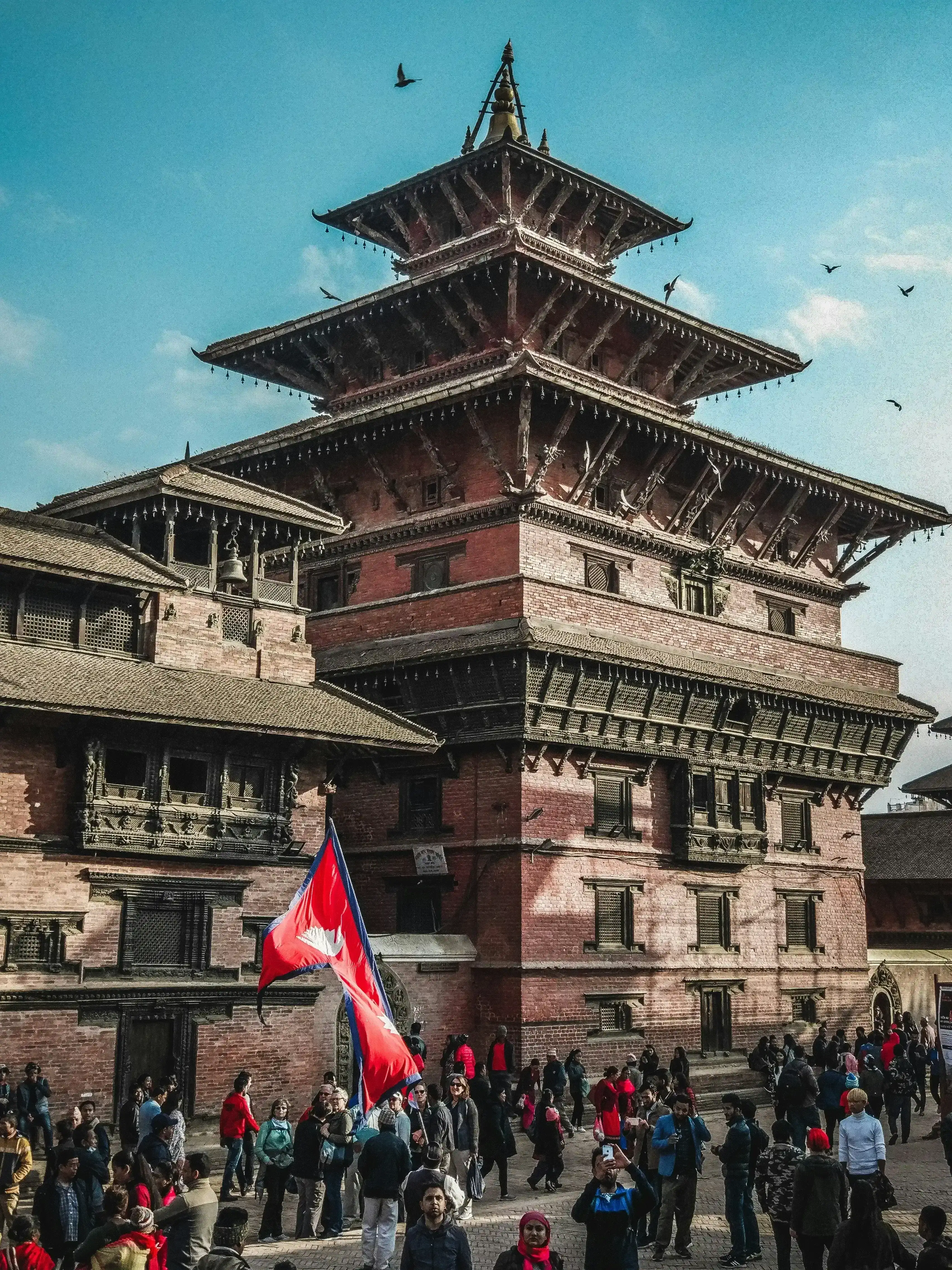
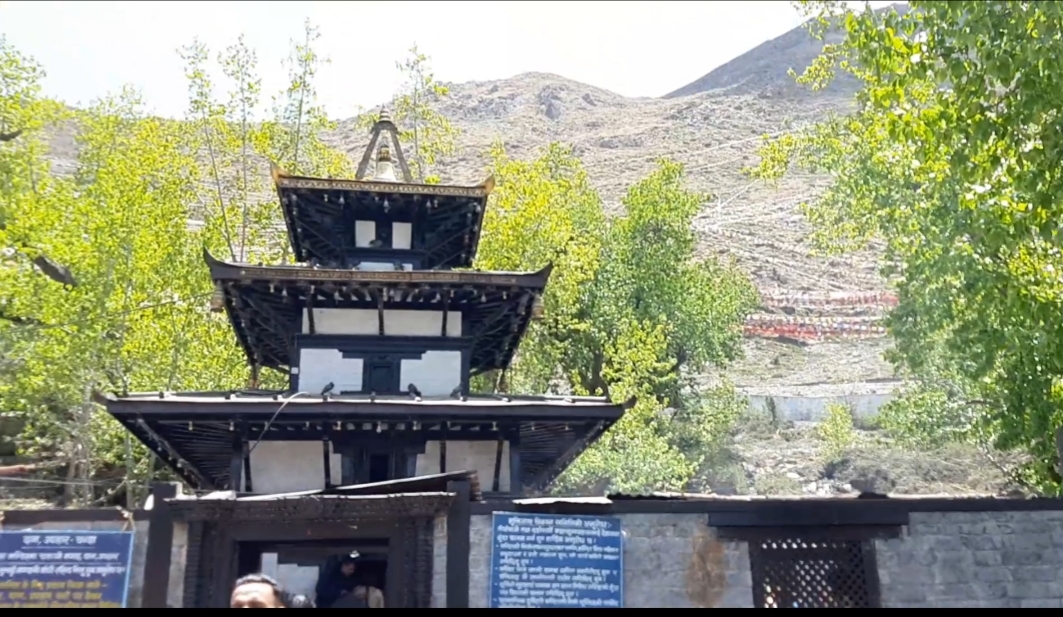
Combining with other sites. Pashupatinath pairs naturally with Boudhanath, which is only ten minutes away by taxi. Many visitors do both in a single evening: arrive at Pashupatinath by 5:30 PM for the aarati, then head to Boudhanath for dinner at one of the rooftop restaurants overlooking the stupa. The Kathmandu Spiritual Circuit package bundles these sites with Swayambhunath for a complete two-day immersion.
Why the Aarati Matters: A Living Tradition in a Changing Nepal
Nepal is changing fast. Kathmandu's skyline is filling with concrete towers. The young are moving abroad for work. The old ways are under pressure from every direction. And yet, every evening, the priests at Pashupatinath light their lamps, the bells ring, and the conch shells blow. The aarati endures.
This is not accidental. The aarati is not a relic preserved for tourists. It is a living tradition sustained by the faith of millions of Nepalis who still believe that the flame carries their prayers to the divine. When you attend the aarati, you are not watching a cultural performance. You are participating - however humbly, however briefly - in a continuity of devotion that stretches back further than any written record.
For the traveler, the aarati offers something rare: a moment of genuine stillness in a world that rarely stops moving. For fifteen or twenty minutes, the phone stays in the pocket, the itinerary fades, and there is only the flame, the river, and the sound of bells. It is, in its own way, a form of meditation - one that requires no training, no belief system, no prior knowledge. You just show up, and the ceremony does the rest.
If you are planning a spiritual journey in Nepal, the evening aarati should be at the top of your list. It costs nothing, it happens every night, and it will stay with you long after you have left the valley. For a deeper dive into Nepal's sacred landscape, explore our guide to the best trekking agency in Nepal and discover how to combine spiritual experiences with Himalayan adventure.