Most travelers arrive in Kathmandu for the mountains and discover, within a day or two, that the real altitude of this city is internal. The valley holds one of the densest concentrations of living contemplative tradition anywhere on earth: giant stupas ringed by prayer wheels, monastery courtyards where debate and silence share the same walls, hillside caves where some of Asia's greatest meditators once sat, and a modern wellness scene layered gently on top. For visitors who want more than sightseeing, meditation in Kathmandu offers something rare: the chance to learn and practice in places where the techniques have been passed down without interruption for centuries.
This guide covers where to sit, what to practice, what it costs, and how to plan a meditation trip around the capital. It pairs the classic sacred sites with practical retreat options, from free monastery sessions to multi-day guided programs. If you are starting from zero, our meditation for beginners guide covers the basics of posture, expectation and technique, while this article focuses on the specific places and logistics of the Kathmandu Valley.


Why Is Kathmandu Such a Powerful Place to Meditate?
Kathmandu concentrates three things meditators usually travel far to find: authentic living lineages, sites saturated with centuries of practice, and easy access. Within a single valley you can circle a UNESCO stupa at dawn, receive instruction from a Tibetan lama by lunch, and sit in a cave associated with Guru Rinpoche by afternoon. Few capitals anywhere offer this density of contemplative infrastructure within an hour's drive.
The historical reasons run deep. The valley was a crossroads of Indian and Tibetan Buddhism, and its Newar communities preserved tantric Buddhist traditions that survive nowhere else in the same form. When Tibetan refugees arrived in the 1960s, they rebuilt their great monasteries here, making Kathmandu the outdoor capital of Tibetan Buddhism. The result is a city where the cultural and spiritual traditions of Nepal are not museum exhibits but daily practice, and where a traveler can step from a honking street into a courtyard of deep stillness in sixty seconds flat.


There is also a practical argument. Unlike remote Himalayan regions, Kathmandu has an international airport, every category of accommodation, excellent food, and short travel distances between practice sites. You can build a genuinely transformative retreat week without ever driving more than ninety minutes from your hotel, which matters enormously when your goal is sustained calm rather than logistical stress. For a wider view of what the country offers, from Lumbini's monasteries to lakefront Pokhara, see our overview of meditation in Nepal.
What Are the Best Places to Meditate in Kathmandu?
The valley's best meditation sites fall into three groups: ancient stupas and temples where practice is woven into public space, monasteries and retreat centers that offer structured programs, and outlying hillside sites that reward a day trip. Boudhanath, Swayambhunath, Kopan and Pharping anchor the list, but each suits a different kind of traveler. This section walks through all three groups so you can match the place to your intention.
Boudhanath: Morning Kora and Evening Stillness
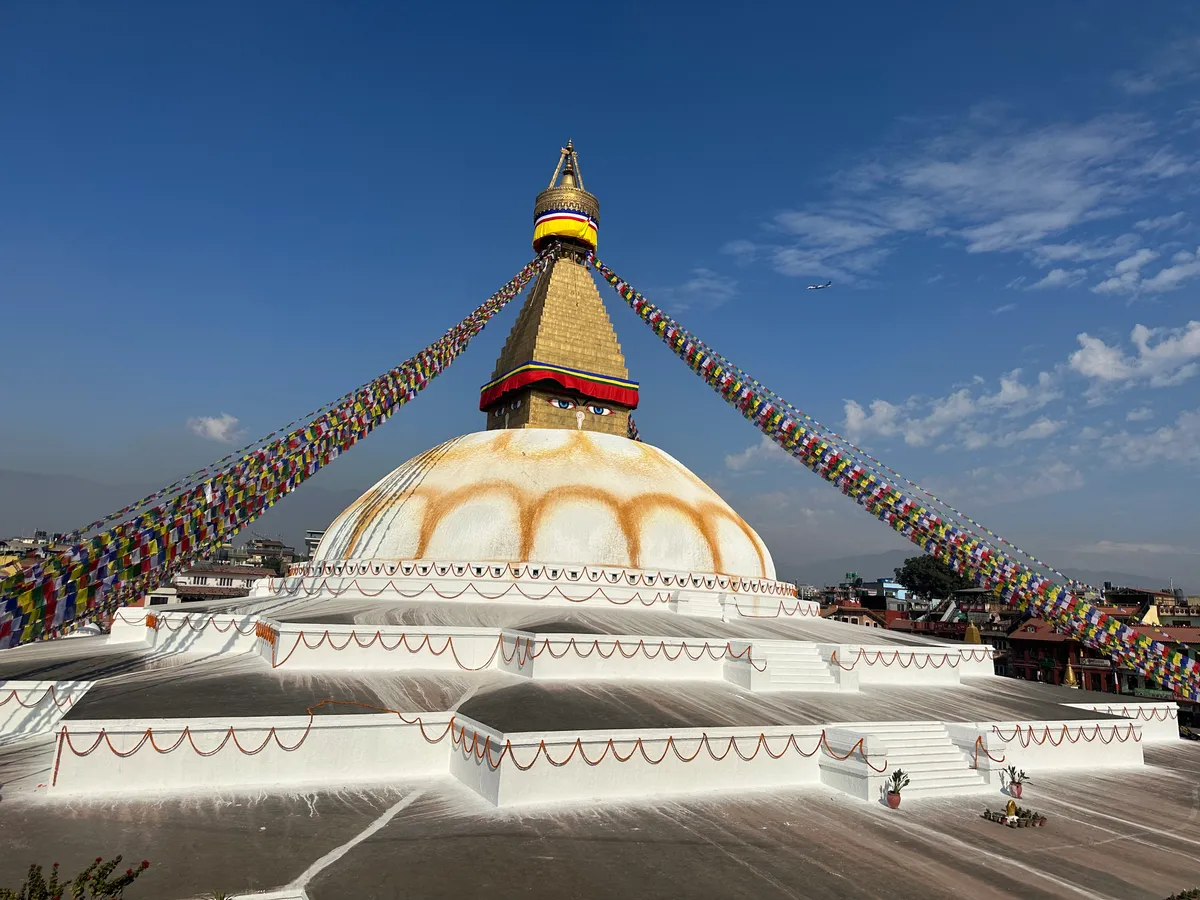
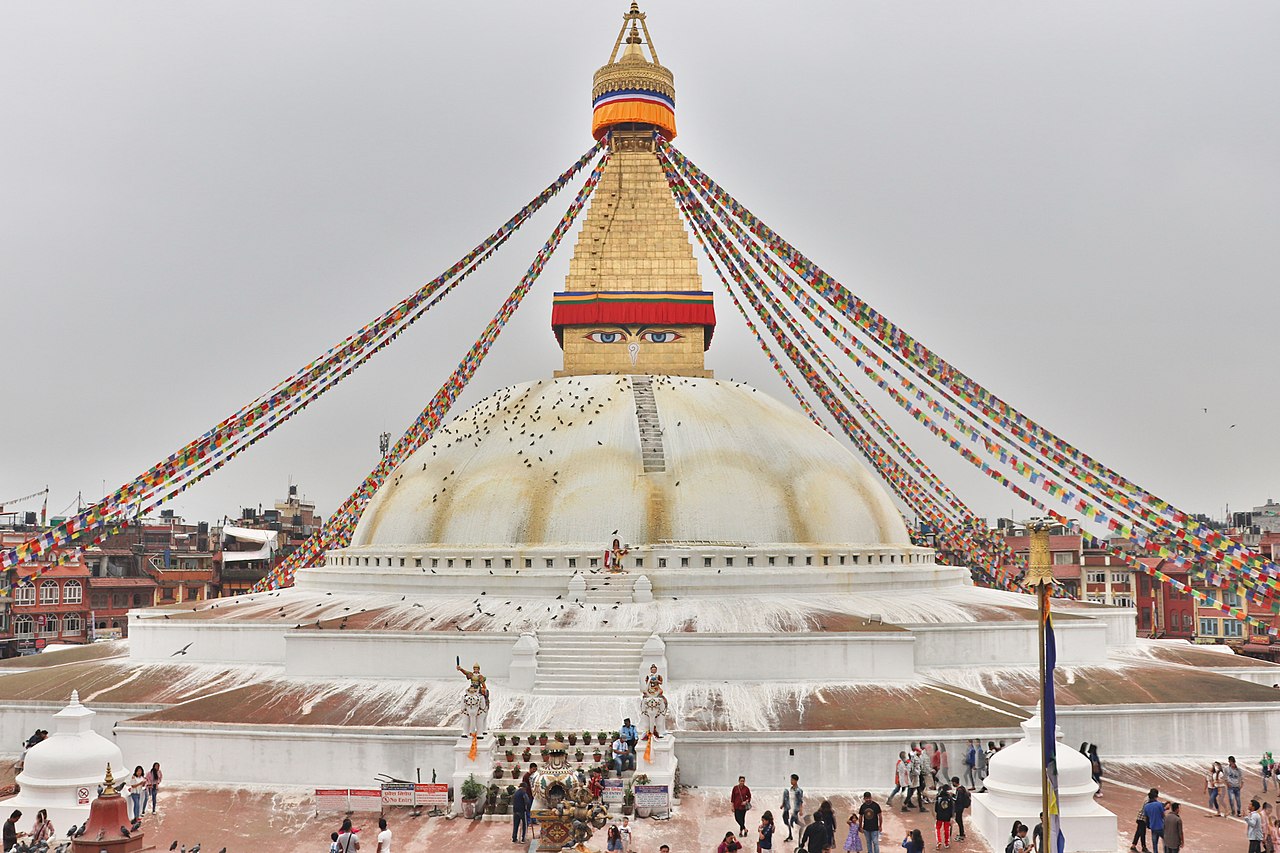
Boudhanath is the beating heart of Kathmandu's meditation scene. The massive white dome, crowned with the all-seeing eyes of the Buddha, is one of the largest stupas in the world and the center of Tibetan Buddhist life in Nepal. Practice here begins at dawn, when locals and monks perform kora, the meditative clockwise walk around the stupa, spinning prayer wheels as they go. Joining the kora requires nothing but your feet and a respectful silence. It is walking meditation in its most organic form, and it is free.
By evening the atmosphere shifts. Butter lamps flicker in the small chapels at the stupa's base, and the crowd thins. Sit against a rooftop railing at one of the plaza's cafes, let the dome fill your vision, and simply follow the breath. Many travelers describe their first Boudhanath sunset as the moment a trip to Nepal turned into a spiritual journey. For a structured take on this experience, the evening aarati tradition adds devotional sound to the practice.
Planning note: Boudhanath lies about twenty minutes from Thamel by taxi and a little more from the airport. Many meditation travelers deliberately book guesthouses in the Boudhanath area rather than Thamel, trading nightlife for the ability to walk to dawn kora in pajamas and a shawl. For the conduct that keeps these spaces welcoming, our article on monastery etiquette and sacred conduct covers dress codes, offerings and photography rules in detail.
Swayambhunath: The Hill of Self-Arising Wisdom
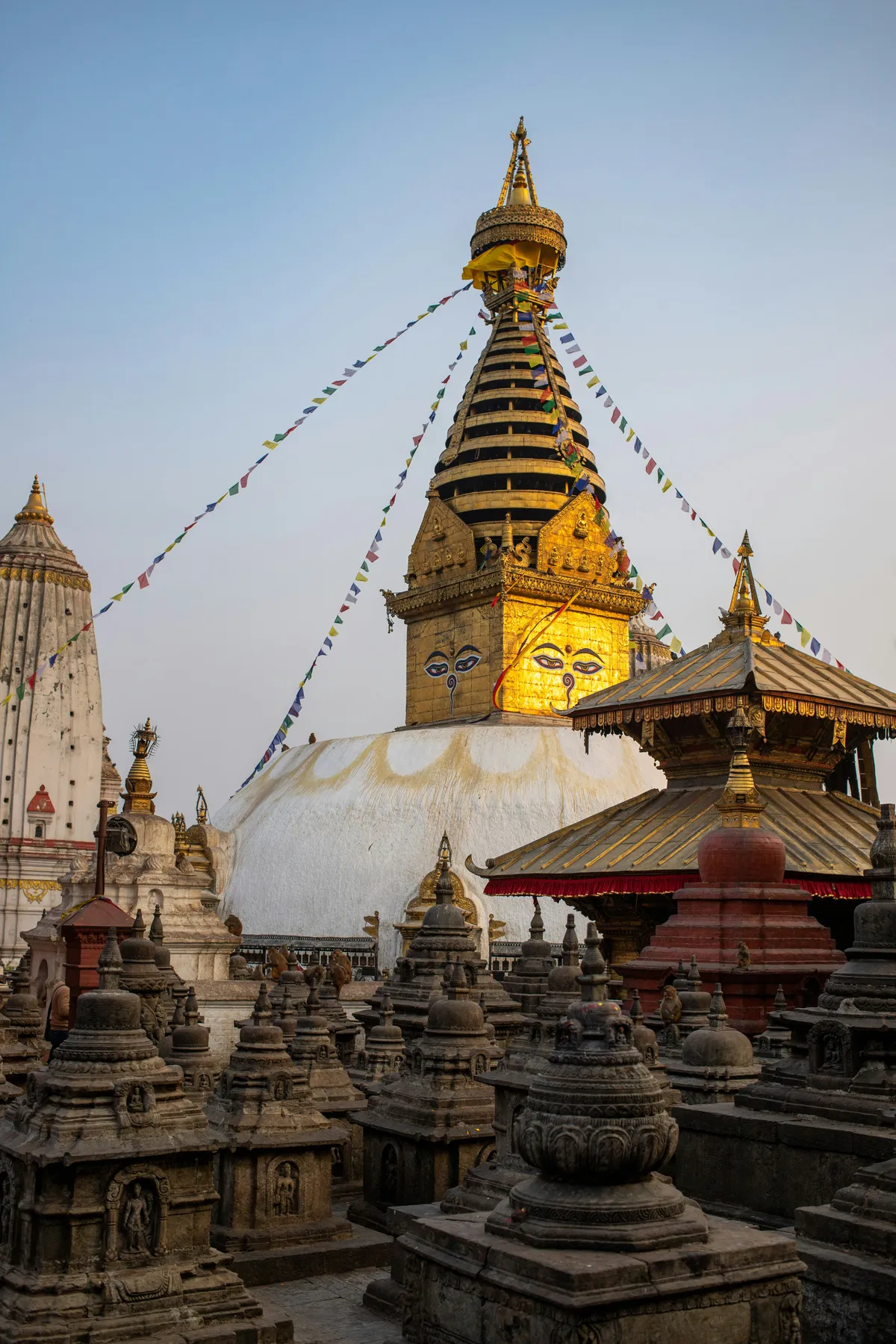
Swayambhunath, the famous Monkey Temple, rises on a forested hill west of the old city. Legend holds that the valley was once a lake and that the self-arising flame at Swayambhu's heart appeared on the lotus island that remained when the waters drained. Climbing the long eastern stairway, past the sleeping Buddha and the garudas, is itself a moving meditation, and the platform at the top offers the finest meditation seat in the valley: a wide stone plaza with the whole city spread below.
Arrive before eight in the morning to share the hill mostly with pilgrims, nuns and the resident monkeys. The western side holds smaller shrines where it is genuinely quiet, and the forest paths behind the stupa make a lovely setting for slow walking practice. Swayambhunath pairs naturally with a visit to the old royal squares, which is one reason it anchors so many of the Kathmandu Valley's classic sightseeing circuits.
Where Can You Sit With Monks in Kathmandu?
Monastery practice is widely accessible in the valley. Kopan Monastery north of Boudhanath runs its famous residential courses, smaller monasteries offer drop-in sessions and teaching, and the gompa libraries around Boudha hold regular dharma talks in English. Most sessions welcome visitors of any faith or none, and many run on a donation basis, which makes monastery practice the most affordable formal option in the city.
Kopan Monastery sits on its own green hill twenty minutes' walk from Boudhanath. Founded in the early 1970s by Tibetan lamas, it became globally known for its month-long meditation courses and shorter introductory programs that mix Tibetan Buddhist philosophy with guided practice. A stay here is one of the most structured ways to begin, with daily teaching, group meditation and periods of silence. Our guide to Kopan, Osho and monastery stays compares what each offers.
Osho Tapoban in the Nagarjun forest reserve offers a completely different flavor: active meditation in the Osho tradition, with dynamic breathing sessions, dance and catharsis before stillness. For travelers who find silent sitting impossibly restless at first, this style can be a surprisingly effective doorway. And for those who want the depth of the ten-day format, the classic Vipassana silent retreat remains the most intense option in the country.
Beyond the centers, the valley's Tibetan Buddhist teaching tradition means visiting lecturers and resident rinpoches give public talks throughout the year, especially around Boudhanath. Check notice boards at the monasteries and the area's dharma centers when you arrive.
What Meditation Styles Can You Practice in the Valley?
Kathmandu supports every major style of meditation, which is unusual for a single city. Breath-focused mindfulness, Tibetan shamatha practice, Vipassana body scanning, mantra recitation, sound healing and active meditation are all available within the valley, usually within a short taxi ride. This breadth lets you experiment before committing to one technique, and many travelers sample two or three traditions during a single week.
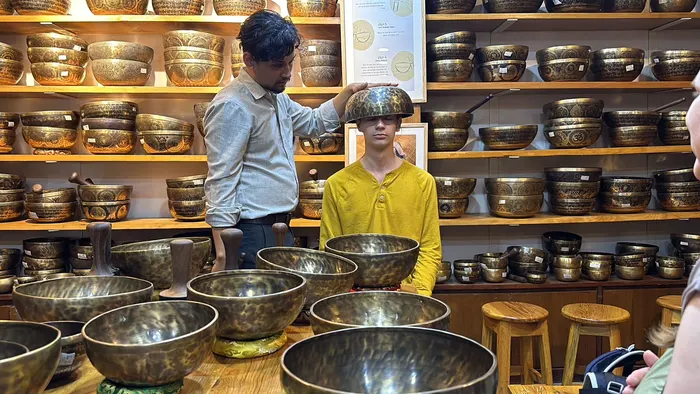
Mindfulness in the modern secular format is the easiest entry point, and our piece on mindfulness as a secular practice explains why it works so well for stress relief. Mantra meditation uses sacred sound, most famously Om Mani Padme Hum, and fits Kathmandu perfectly; our mantra meditation guide covers the practice, while the singing-bowl tradition is explored in our article on sound healing meditation. Devotional aarati at Pashupatinath offers a fourth doorway, where chant and firelight carry the mind inward without any technique at all.
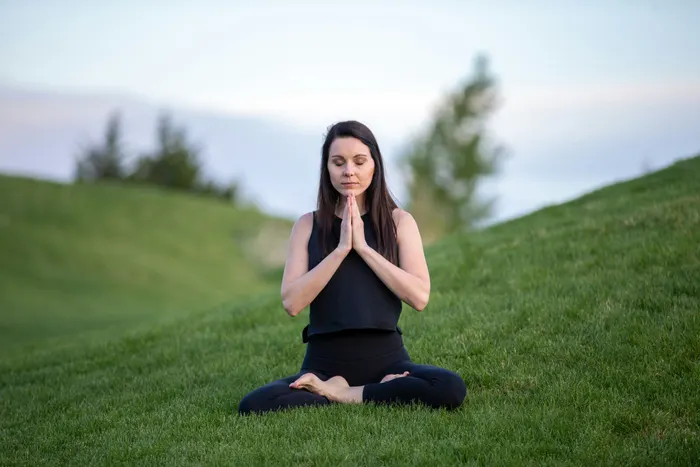
If silence itself is what you seek, compare the formats in our guide to what happens on a silent retreat, and if your interest is more scientific than religious, the research covered in our article on the science of meditation explains what each style does to the brain.
How Much Does Meditation in Kathmandu Cost?
Practice in Kathmandu scales across every budget. Joining kora at a public stupa is free, many monastery sessions run on donation, and drop-in classes cost only a few dollars, while structured multi-day programs with accommodation, teaching and meals typically range from under two hundred dollars for a short city retreat to around six hundred for a week-long guided program. Your total spend depends less on the practice and more on how much structure and comfort you want around it.
At the accessible end, the two-day Kathmandu Spiritual Circuit covering Pashupatinath, Boudhanath and Swayambhunath costs $189 and pairs the three most powerful practice sites with guiding and logistics. A compact urban reset like the Kathmandu Half-Day Wellness and Spa Escape runs $138. The three-day Yoga and Sound Healing Retreat in Kathmandu at $288 adds yoga and singing-bowl work to daily meditation.
Longer immersion programs include the six-day Yoga and Stress Management Retreat at $633, the four-day Yoga Retreat with Reiki Healing Therapy at $403, and the five-day Yoga Retreat and Hiking program at $518 for those who want trail time between sessions. For the full spectrum of free programs, donation-based courses and low-cost centers, our budget meditation guide is the essential companion, while travelers at the other end of the spectrum will find options compared in our luxury meditation retreats article.

When Is the Best Time of Year to Visit?
October and November are the prime months: clear skies, comfortable daytime temperatures and post-monsoon freshness that make every sunrise at the stupas feel earned. March and April form the second season, with warming weather, blooming rhododendrons at higher day-trip elevations and similarly good visibility. Both windows pair excellent practice conditions with festival energy.
The monsoon, from June through early September, is the greenest and least crowded season, and dedicated practitioners often love it: the valley steams with mist, the courtyards are hushed and rooms are easy to book. Expect afternoon rain and plan your siting for mornings. Winter, from December through February, brings the clearest mountain views of the year and crisp, cold dawns that many meditators find wonderfully sharp, though hilltop mornings require real layers. Whenever you come, check the festival calendar first. Buddha Jayanti, the full moon celebration of the Buddha's birth, enlightenment and passing, transforms Boudhanath into a sea of lanterns and pilgrims, and it is one of the most powerful meditation nights of the year. Our retreat packing guide adjusts for each of these seasons.
A One-Day Meditation Itinerary in Kathmandu
If you only have one day, structure it around the valley's natural rhythm of light. Dawn belongs to the stupas, midday to teaching, and evening to fire and chant. This loop covers Boudhanath, Swayambhunath and Pashupatinath and requires nothing but taxis and comfortable shoes.
Start at Boudhanath at sunrise, joining the kora as the light catches the golden spire. After two circuits, find a rooftop cafe for breakfast with the dome in view, then take a taxi to Swayambhunath and climb while the morning is still cool. Explore the western shrines, sit for twenty minutes on the quiet side, and descend before the crowds. In the afternoon visit a monastery around Boudhanath for a session or teaching, and end the day at Pashupatinath for the evening aarati, where the river, the fire and the drums close the circle. Travelers who want this arc with a guide often book the two-day Kathmandu Spiritual Circuit to deepen it without rushing.
A Three-Day Valley Retreat Plan
With three days you can add the outlying sacred hills and a full retreat day. Day one follows the one-day itinerary above at a relaxed pace. Day two goes south to Pharping, where the Asura Cave complex is revered as the meditation place of Guru Rinpoche, the saint who brought Buddhism to Tibet; the hillside shrines and pine forest make it the most atmospheric practice site within reach of the capital. Day three stays close to your base: a morning session at Kopan or a monastery of your choice, an afternoon Ayurvedic massage to loosen sitting-stiff shoulders, and a final evening kora at Boudhanath under the full weight of stars.
This three-day shape is exactly what the 3-day Yoga and Sound Healing Retreat in Kathmandu delivers in guided form. If three days becomes a week, add a day trip to Namobuddha, one of the country's most beloved pilgrimage monasteries, and consider a night in Bhaktapur or the medieval lanes of Bandipur on the way to longer retreats in Pokhara or Lumbini, the Buddha's birthplace.
Can Beginners Join a Kathmandu Retreat?
Yes, and Kathmandu is arguably the best place in Nepal to start. Most monasteries and centers run introductory programs that assume zero experience, drop-in sessions require no commitment, and English is spoken at every serious teaching venue. Beginners gain the most by starting with short guided sessions before attempting longer self-directed sits, then stepping up to a multi-day course once the habit feels familiar.
A sensible progression: join the dawn kora on your first morning to feel public practice, take one or two drop-in meditation classes on days one and two, then enter a short residential or day program with structure. Our beginner's guide to starting a practice walks through posture, breath and what to expect from your first sessions, while the complete beginner's guide to meditation in Nepal sets the wider scene. For the softest possible entry, guided sessions under the meditation and yoga retreat format combine gentle movement with sitting practice so restlessness never becomes a barrier. Once you understand what each center offers, our article on how to choose a meditation retreat in Nepal gives you a decision framework.
Packing for a Kathmandu Meditation Trip
Pack for modesty, layers and silence. Shoulders and knees covered for temple and monastery visits, warm shawl and socks for cold-season dawn sits, earplugs and an eye mask for guesthouse rest, and a small notebook for practice journaling. Leave room for prayer flags or a singing bowl on the way home. Everything else is optional, and laundry services are everywhere.
Full checklists live in our meditation retreat packing guide and the companion piece on essential retreat gear. If you plan to combine your retreat with trekking before or after, the seasonal and equipment advice in the complete guide to trekking in Nepal tells you what the trails require, from permits to boots.
How Do You Combine Meditation With Other Valley Experiences?
Meditation pairs beautifully with the rest of what Kathmandu offers, and the pairing is not a compromise. Cooking classes train presence, spa therapies release the body so the mind can settle, and heritage walks through the old city become moving meditations when taken slowly. A practice-focused trip does not mean skipping the pleasures of the capital; it means meeting them differently.
The classic combinations: a Kathmandu wellness and Ayurvedic massage session after long sits, with our guide to the city's day spas for where to book; a spa day built around the Full-Day Trekkers Spa and Wellness Retreat at $184 for the deepest reset; and slow mornings spent journaling, a practice our article on meditation and journaling turns into a genuine spiritual tool. Travelers who struggle with sleep at altitude often add the techniques from our guide to meditation for sleep, while those carrying stress or worry will find the mountain setting especially kind to the methods in meditation for anxiety relief.
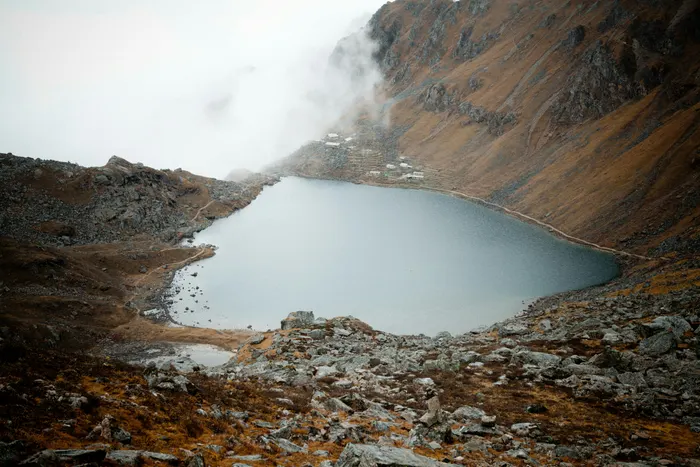
The fullest version of this pairing is a trip that moves deliberately: practice days in the valley, then a gentle trek that keeps the meditation going on the trail. Our pieces on walking meditation and mindful trekking and on combining hiking with meditation map that transition, and the five-day Gosaikunda Sacred Lakes Trek and Yoga Retreat at $658 is a ready-made version, walking you to a high sacred lake with daily yoga and meditation built in.
How Do You Choose the Right Place for You?
Choose by time, style and comfort. With one day, do the stupa circuit; with three, add Pharping and a monastery day; with a week or more, consider a residential course at Kopan or a guided multi-day program. Choose by style: silence seekers should look at Vipassana formats, devotees will love aarati and mantra, restless beginners often thrive with active meditation, and secular practitioners should start with mindfulness. Choose by comfort: monastery stays are simple, guesthouse-based programs are middle, and the luxury end is covered elsewhere on this site.
Whichever you choose, treat the first sessions as an introduction rather than a verdict. The valley rewards return visits; many travelers describe their first Kathmandu meditation trip as a scouting mission for their second. If a question arises that this guide has not answered, from center availability to combining sites, our team arranges custom meditation itineraries in the valley and beyond, and you can reach us through the contact page for tailored suggestions and a quotation.
Sitting Still in a Moving City
There is a reason practitioners have chosen this valley for two thousand years. Kathmandu is loud, chaotic and dusty, and precisely because of that, its pockets of stillness are real stillness, earned and unmistakable. When the morning fog lifts off Boudhanath and the first kora begins, the noise of the city has nowhere to go. Learning to find that quiet inside a moving city is the same skill as finding quiet inside a moving mind, which is why so many travelers leave Kathmandu changed by a week spent sitting in its courtyards. Come for the mountains if you must, but leave an afternoon free for the practice. The best view in the valley is the one with your eyes closed, and a guided introduction through Kathmandu's best meditation places and retreats is the easiest way to begin.