Nepal is the land where the Buddha was born, and for Buddhists around the world, a pilgrimage here is among the most meaningful journeys one can undertake. The country holds an extraordinary concentration of sacred sites: the exact spot of the Buddha's birth at Lumbini, ancient stupas that have drawn devotees for over a millennium, cave monasteries where great masters meditated, and high-altitude gompas set against the world's highest peaks. A Buddhist pilgrimage circuit through Nepal is not merely a tour of monuments; it is a journey through the living heart of a tradition that has shaped the spiritual landscape of Asia for 2,500 years.
This guide maps out a complete Buddhist pilgrimage circuit from Lumbini in the southern plains to Tengboche in the Everest highlands, with detailed information on each site, practical logistics, and advice on how to structure your journey. Whether you have a week or a month, you will find a route that honors the depth and breadth of Nepal's Buddhist heritage.
Why a Buddhist Pilgrimage in Nepal
Buddhist pilgrimage in Nepal is distinct from pilgrimage in India or Tibet. Here, the sites are embedded in a living culture: monks still chant in the monasteries, butter lamps still burn in the shrines, and the stupas are not museum pieces but active centers of devotion. The diversity is also remarkable. In a single journey you can move from the Theravada monasteries of Lumbini to the Tibetan Buddhist gompas of the high Himalayas, encountering Zen, Vajrayana, and Newar Buddhist traditions along the way. The spiritual tour in Nepal 2026 guide provides a broader overview of how Buddhist pilgrimage fits into the country's wider spiritual landscape.

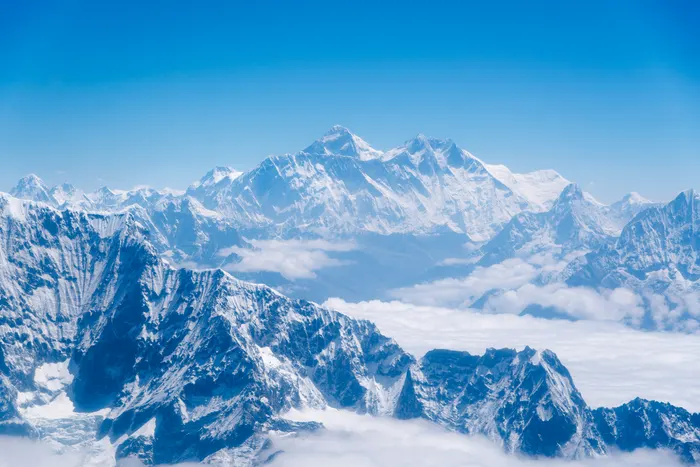
The circuit also offers a geographical journey that mirrors an inner one: from the hot plains of the Terai, where the Buddha was born into a royal family, up through the temperate Kathmandu Valley, where Buddhism flourished in urban centers of learning, and finally into the thin air of the high Himalayas, where the tradition found its most austere and contemplative expression. Each elevation brings a different facet of the dharma into focus.
Lumbini: The Birthplace of the Buddha
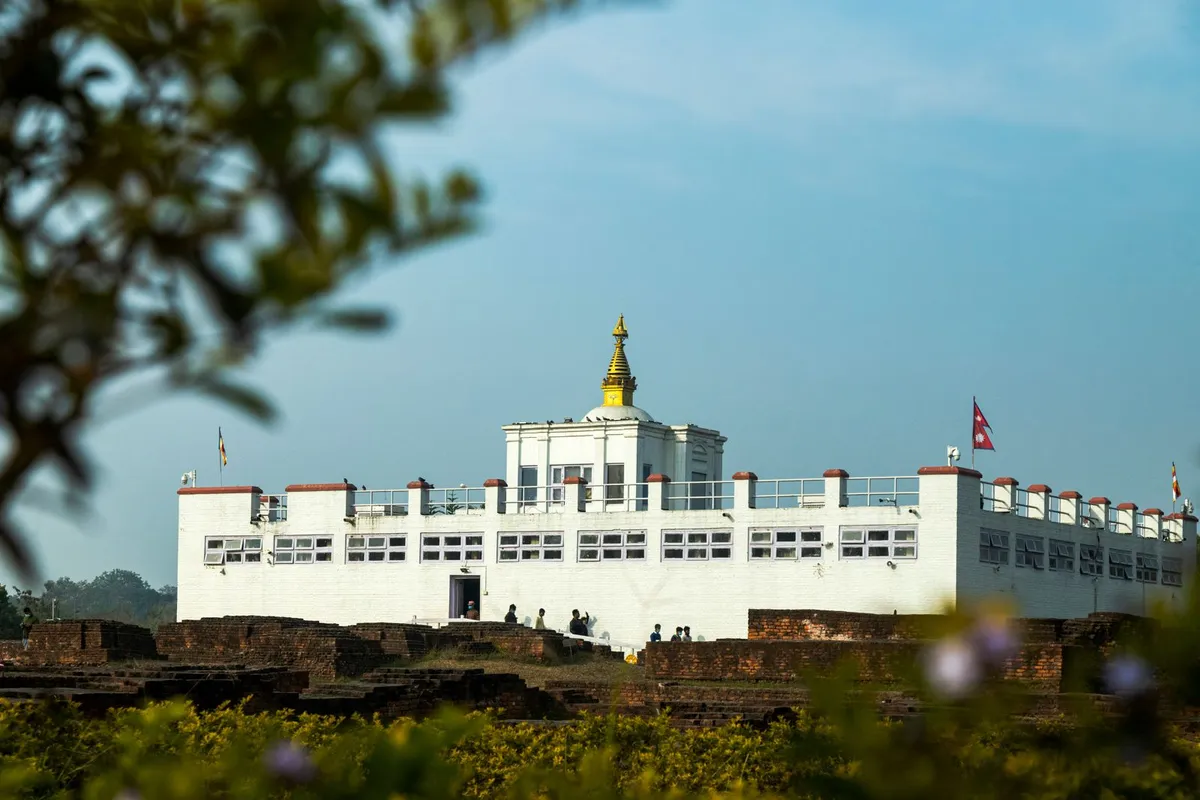
Lumbini, in the southern Terai plains near the Indian border, is the most important Buddhist pilgrimage site in Nepal and one of the four main pilgrimage sites of Buddhism worldwide. It was here, in the gardens of Lumbini around 563 BCE, that Queen Maya Devi gave birth to Siddhartha Gautama, who would become the Buddha. The site was lost to history for centuries before being rediscovered in 1896, when a stone pillar erected by the Emperor Ashoka in 249 BCE was found, its inscription confirming Lumbini as the Buddha's birthplace.
Today, Lumbini is a UNESCO World Heritage Site and a vast sacred garden spanning several square kilometers. The central Maya Devi Temple encloses the exact spot of the Buddha's birth, marked by a stone carving and protected within a modern structure. Adjacent to the temple is the sacred pond where Queen Maya Devi is said to have bathed before giving birth, and the Ashoka Pillar stands nearby, its Brahmi inscription still legible after more than two millennia.
Beyond the central garden, Lumbini's monastic zone is a unique feature: countries from around the world have built monasteries and temples here in their own architectural styles, creating a global village of Buddhist practice. You can walk from a Thai temple with its golden spires to a Japanese pagoda, a Burmese stupa, a Chinese monastery, and a German-built Tibetan gompa, all within a few kilometers. The variety is a powerful reminder of Buddhism's reach and adaptability. For a detailed guide to visiting Lumbini, see our Lumbini pilgrimage guide.
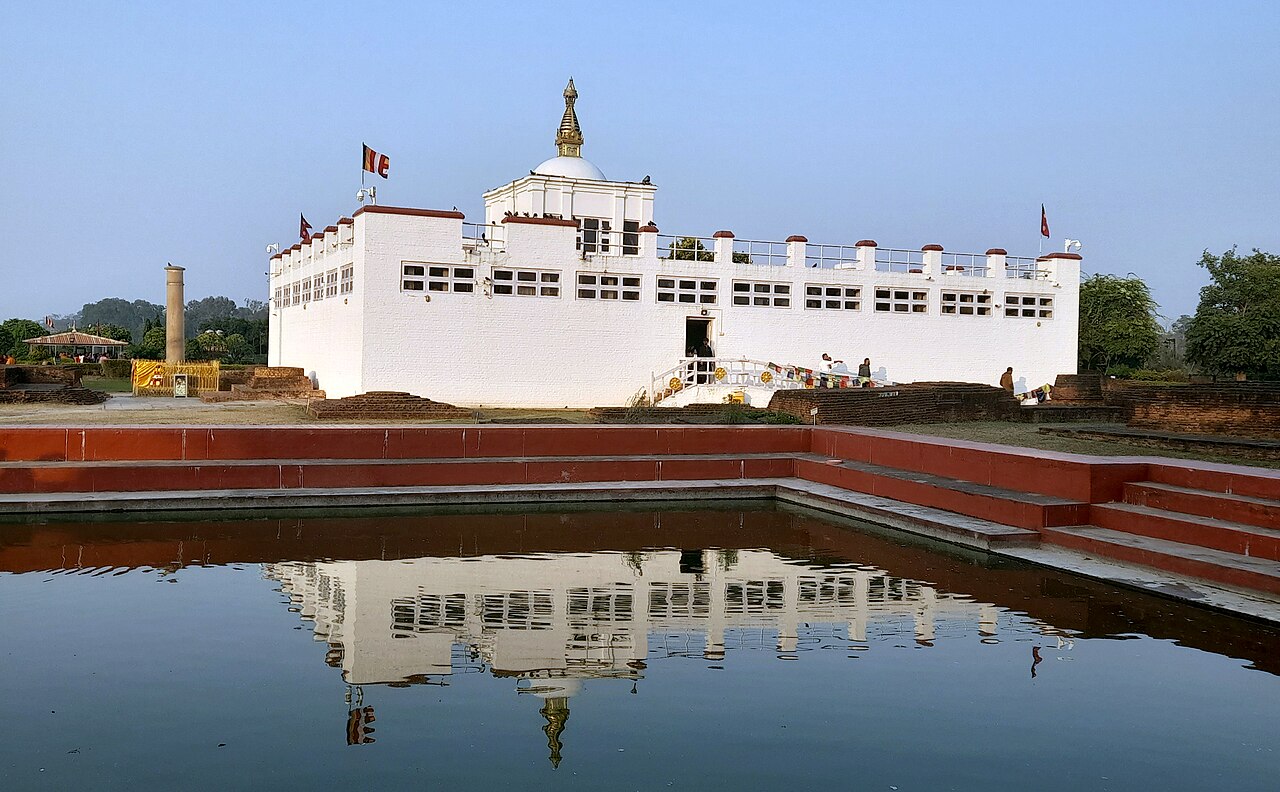
Plan at least two full days in Lumbini. The site is large, and walking or cycling between the monasteries takes time. The nearest airport is Gautam Buddha Airport in Bhairahawa, about 30 minutes by road, with flights from Kathmandu. Alternatively, you can drive from Kathmandu in 7 to 8 hours, or from Pokhara in 5 to 6 hours. Accommodation ranges from simple guesthouses to the Lumbini Garden Lodge and several mid-range hotels near the entrance.
Boudhanath Stupa: The Great Stupa of Kathmandu
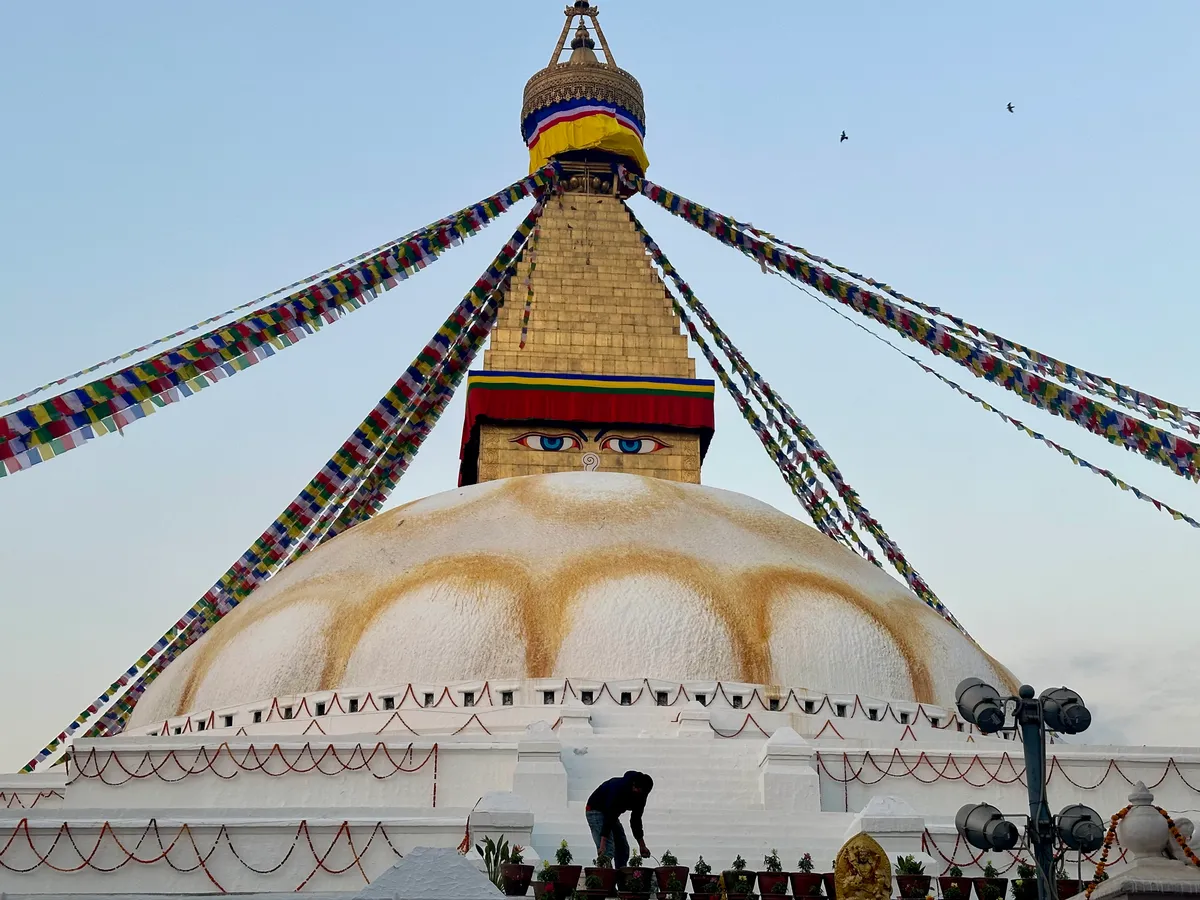
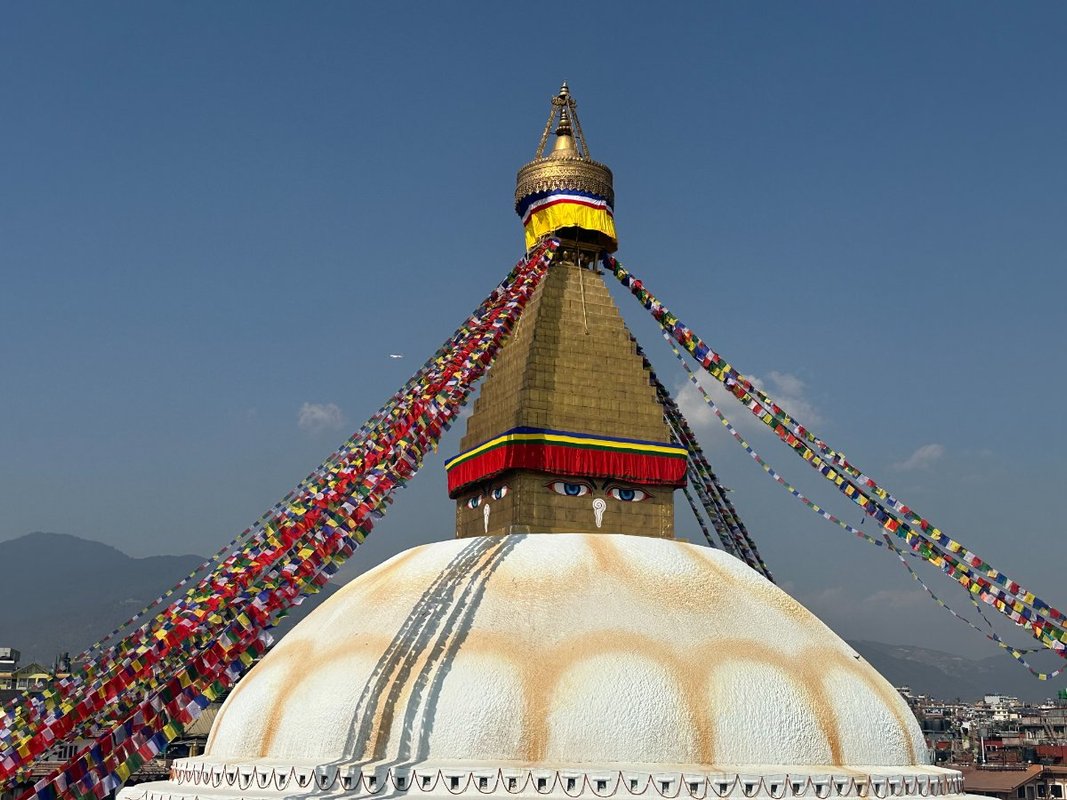
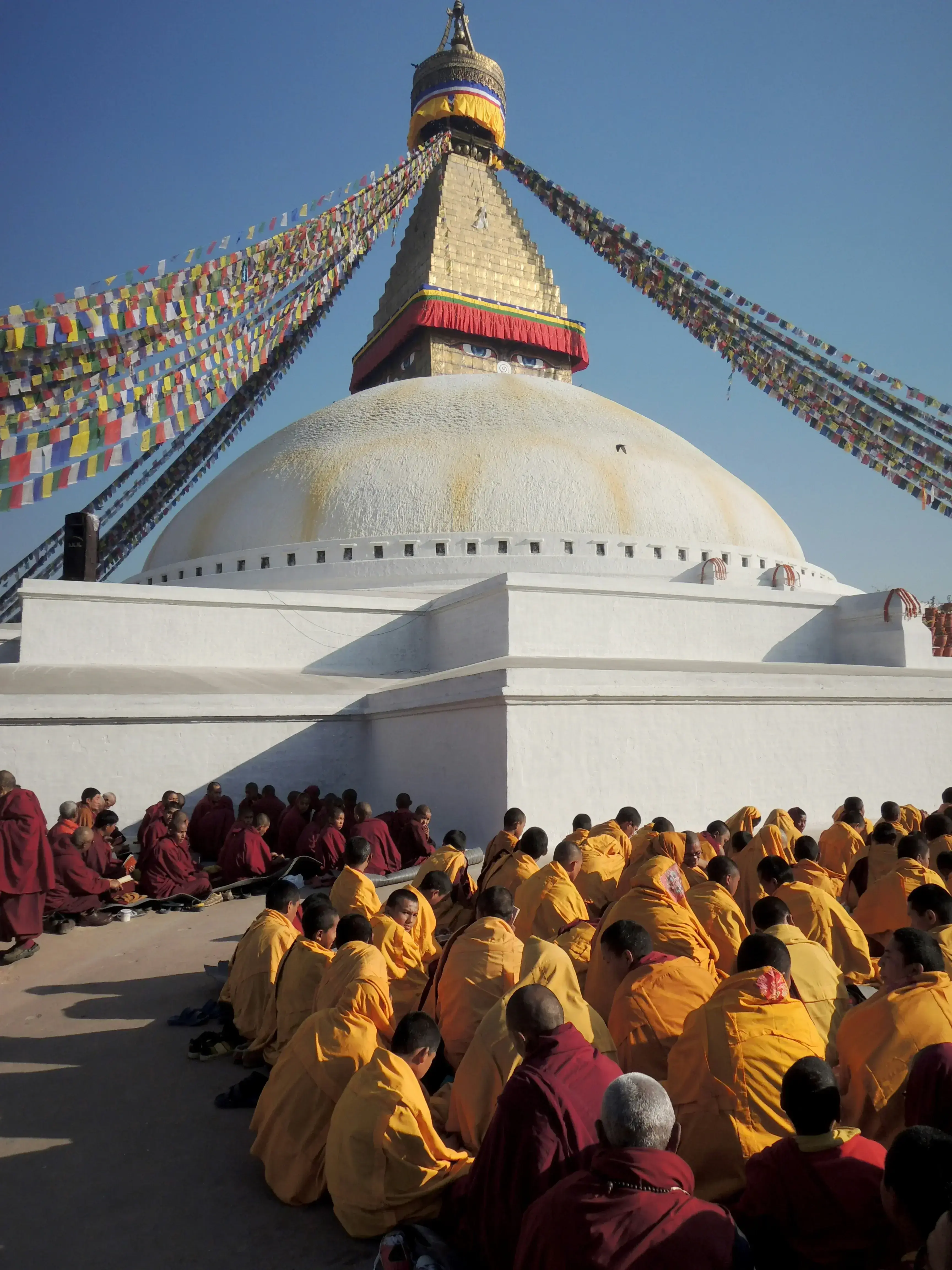
From the plains of Lumbini, the circuit rises to the Kathmandu Valley, where Boudhanath Stupa dominates the skyline of the city's northeastern edge. Boudhanath is one of the largest spherical stupas in the world and the most important Tibetan Buddhist site outside Tibet. Its white dome, topped with a gilded spire and the all-seeing eyes of the Buddha, is one of the most recognizable images of Nepal.
The stupa's origins are shrouded in legend, but it is believed to date to at least the 5th century CE. It became a major center of Tibetan Buddhism after the Chinese invasion of Tibet in 1959, when thousands of refugees settled in the surrounding area and built monasteries. Today, more than 50 monasteries and gompas ring the stupa, and the air is thick with the smell of incense, the sound of chanting, and the murmur of prayer wheels turned by circumambulating pilgrims.
A visit to Boudhanath is not a quick photo stop. The practice here is kora: walking clockwise around the stupa, spinning prayer wheels, and reciting mantras. Do this at dawn, when the light is soft and the crowds are thin, and again at dusk, when butter lamps are lit and the stupa glows against the darkening sky. Visit the monasteries that line the perimeter: Shechen, Ka-Nying Shedrub Ling, and the Thrangu Monastery are all welcoming to visitors. For a deeper dive into Boudhanath's significance, read our guide to Boudhanath Stupa.
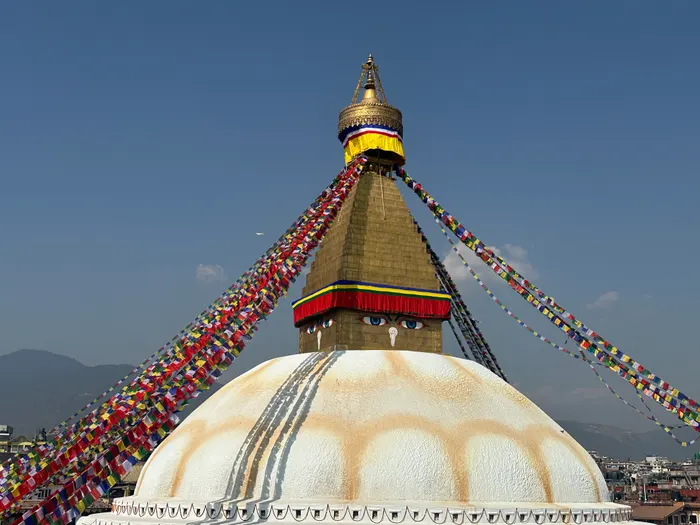
Boudhanath is in Kathmandu, about 20 minutes by taxi from Thamel. There is no entry fee for the stupa area itself, though some monasteries request a small donation. Plan at least half a day, ideally a full day including a morning and evening visit. The Kathmandu spiritual circuit package combines Boudhanath with Pashupatinath and Swayambhunath in a convenient two-day itinerary.
Swayambhunath: The Self-Arisen Stupa
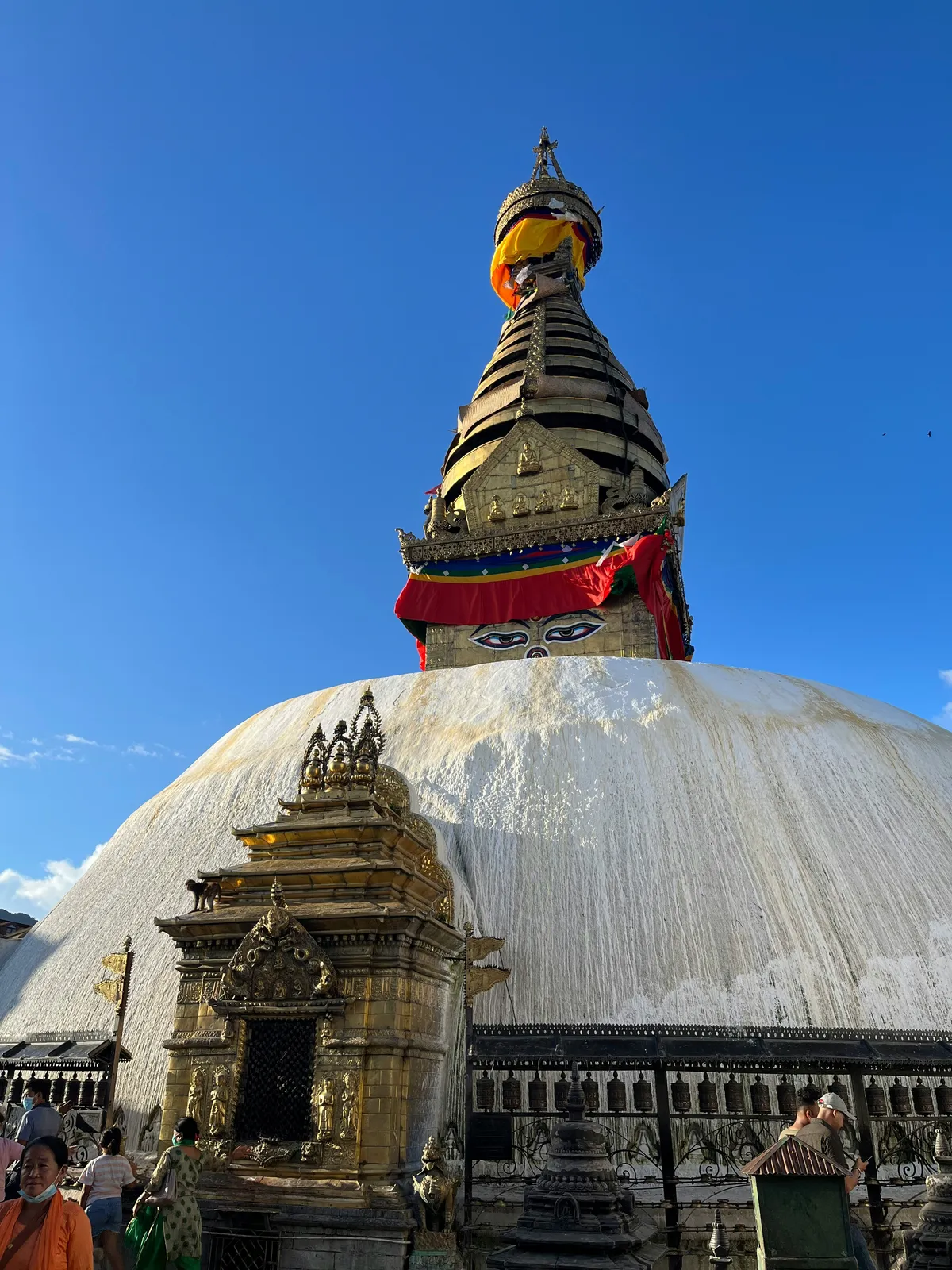
Swayambhunath, perched on a hilltop west of central Kathmandu, is the oldest Buddhist site in the valley, with a history stretching back at least 1,500 years. Known as the Monkey Temple for the troops of rhesus macaques that inhabit its slopes, Swayambhunath is a complex of stupas, shrines, and monasteries that blends Buddhist and Hindu elements in a way that is uniquely Nepali.
The main stupa, with its white dome and gilded spire, is similar in form to Boudhanath but smaller and more intimate. The 365 stone steps leading up to the stupa are a pilgrimage in themselves, and the view from the top, across the Kathmandu Valley to the Himalayan foothills, is one of the finest in the city. The site is particularly powerful at sunrise and sunset, when the valley fills with golden light and the prayer flags snap in the breeze.
Swayambhunath is also a center of Newar Buddhism, the unique tradition of the Kathmandu Valley's indigenous Newar people, which preserves Sanskrit Buddhist texts and practices that have disappeared elsewhere. The monasteries around the stupa house ancient manuscripts, thangka paintings, and statues, and the resident monks are often happy to explain the site's history and symbolism to interested visitors. Plan 2 to 3 hours for a thorough visit. The stupa is about 15 minutes by taxi from Thamel.
Namobuddha: The Place of Ultimate Compassion
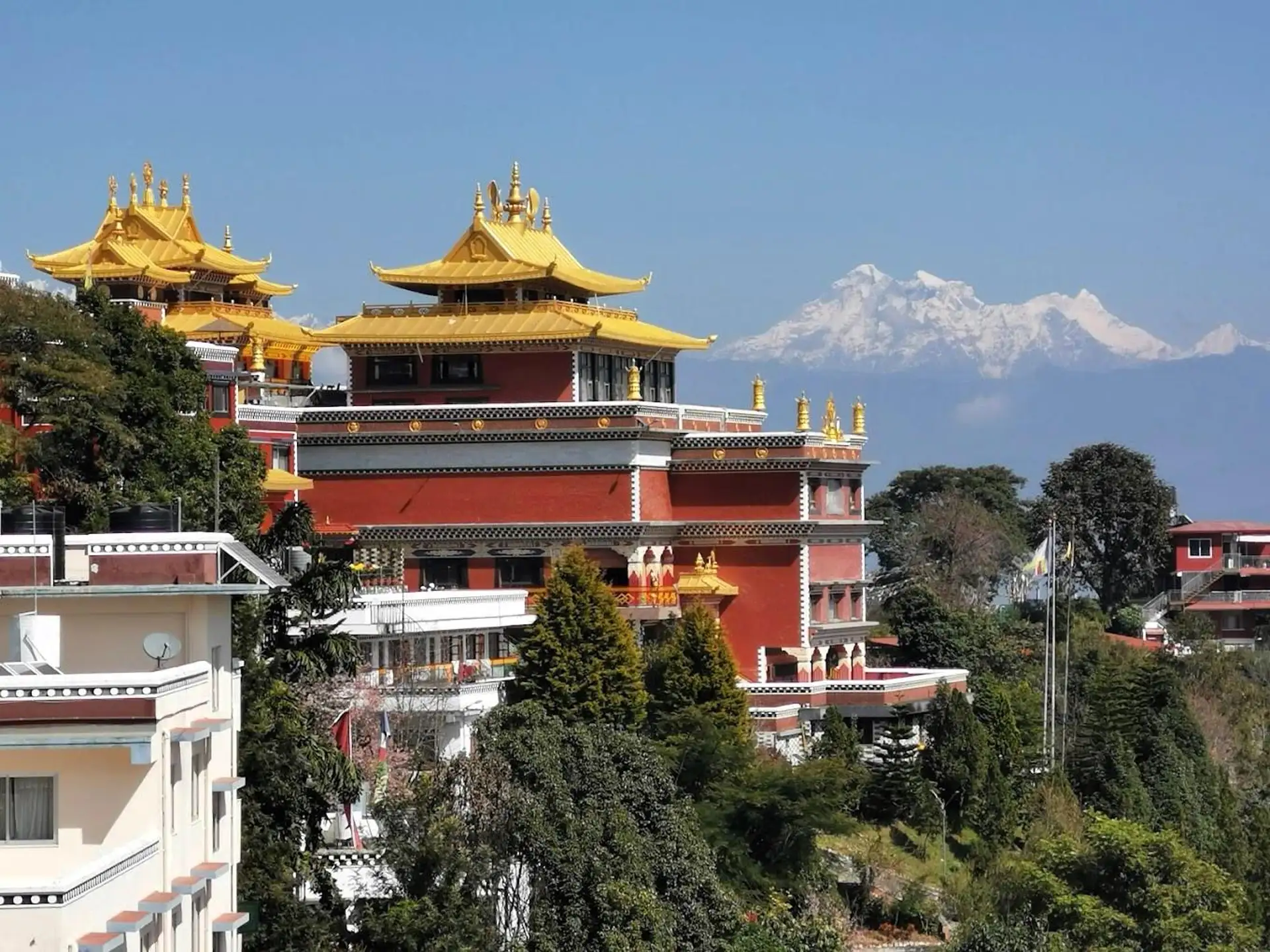
About 40 kilometers east of Kathmandu, on a hilltop overlooking the Panchkhal Valley, lies Namobuddha, one of the most beautiful and least visited of Nepal's major Buddhist sites. According to legend, this is the place where the Buddha, in a previous life as a prince, encountered a starving tigress and her cubs and offered his own body as food, an act of compassion so profound that it marked a key moment on his path to enlightenment.
The Thrangu Tashi Yangtse Monastery, a stunning complex of traditional Tibetan architecture with sweeping views of the Himalayas, now stands at the site. The monastery is active, with several hundred monks in residence, and visitors are welcome to join the daily prayers, walk the kora path around the hilltop, and visit the small shrine that marks the spot of the Buddha's sacrifice. The atmosphere is serene and the setting, with terraced fields falling away on all sides and snow peaks on the northern horizon, is unforgettable.
Namobuddha can be visited as a day trip from Kathmandu, about 2 hours by car, or as an overnight stay. The monastery has a simple guesthouse, and there are a few lodges in the nearby village. For a more active approach, the Dhulikhel to Namobuddha spiritual hike is a beautiful half-day walk through terraced fields and traditional villages that ends at the monastery.
Pharping: The Caves of the Great Adepts
Pharping, a small town about 20 kilometers south of Kathmandu, is one of the most important sites in Tibetan Buddhist sacred geography. It is here that Guru Rinpoche (Padmasambhava), the 8th-century master who brought Buddhism to Tibet, is said to have attained realization through the practice of Vajrakilaya. The cave where he meditated, Asura Cave, is a major pilgrimage destination, and the nearby Yanglesho cave is equally revered.
Pharping is also home to several active monasteries, including the Palyul Retreat Center and the Vajrayogini Temple, which sits on a hilltop above the town and is sacred to both Buddhists and Hindus. The town has a distinctive energy: it is a place of serious practice, with retreatants in long-term solitary meditation in the surrounding hills, and the atmosphere is quieter and more intense than the tourist-oriented sites of the Kathmandu Valley.
A visit to Pharping typically takes a full day from Kathmandu. The drive is about an hour each way. Visit Asura Cave and Yanglesho in the morning, have lunch at one of the simple local restaurants, and then walk up to the Vajrayogini Temple in the afternoon. The views from the temple, across the valley to the Kathmandu skyline, are a fitting end to the day.
Tengboche Monastery: The High-Altitude Gompa
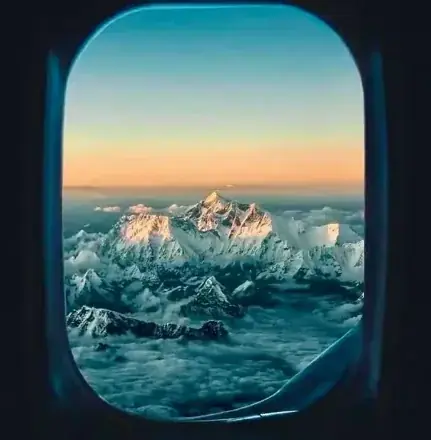
For pilgrims willing to venture into the high Himalayas, Tengboche Monastery in the Everest region is the circuit's crowning destination. Set at 3,867 meters on a ridge with a panoramic view of Everest, Lhotse, Nuptse, and Ama Dablam, Tengboche is one of the most spectacularly situated monasteries in the world. It was founded in 1916 and is the spiritual center of the Khumbu region's Sherpa community.
Reaching Tengboche requires a trek of at least 5 to 7 days from Lukla, following the classic Everest Base Camp trail. The monastery is typically reached on the second or third day of trekking from Namche Bazaar, and many trekkers time their arrival to attend the afternoon puja, when the monks chant in the main hall as the setting sun lights up the peaks through the windows. The experience is profoundly moving, even for those with no religious affiliation.
Tengboche also hosts the annual Mani Rimdu festival, a 19-day sequence of rituals culminating in three days of public ceremonies, masked dances, and blessings. The festival usually falls in October or November and draws pilgrims and trekkers from around the world. If your dates align, attending Mani Rimdu at Tengboche is one of the great cultural experiences of the Himalayas. The festivals of Nepal guide covers Mani Rimdu and other major celebrations in detail.
For those who cannot commit to a multi-day trek, the helicopter pilgrimage and trek combos article explores options for reaching high-altitude monasteries like Tengboche by air, combined with shorter walks.

Other Notable Buddhist Sites
Kapan Monastery
On a hill north of Boudhanath, Kapan Monastery is a major center of the Gelug school of Tibetan Buddhism and the home of the famous month-long meditation courses described in our spiritual wellness guide. Even if you are not doing a course, the monastery is worth a visit for its peaceful gardens, panoramic views, and the large gilded statue of Maitreya, the future Buddha, in the main gompa.

Hiranya Varna Mahavihar (Golden Temple) in Patan
In the heart of Patan Durbar Square, the Golden Temple is a 12th-century Newar Buddhist monastery with exquisite metalwork, a courtyard filled with statues and prayer wheels, and a resident community of Buddhist priests. It is a living monument to the Newar Buddhist tradition and one of the finest examples of medieval Nepali religious architecture.
Muktinath
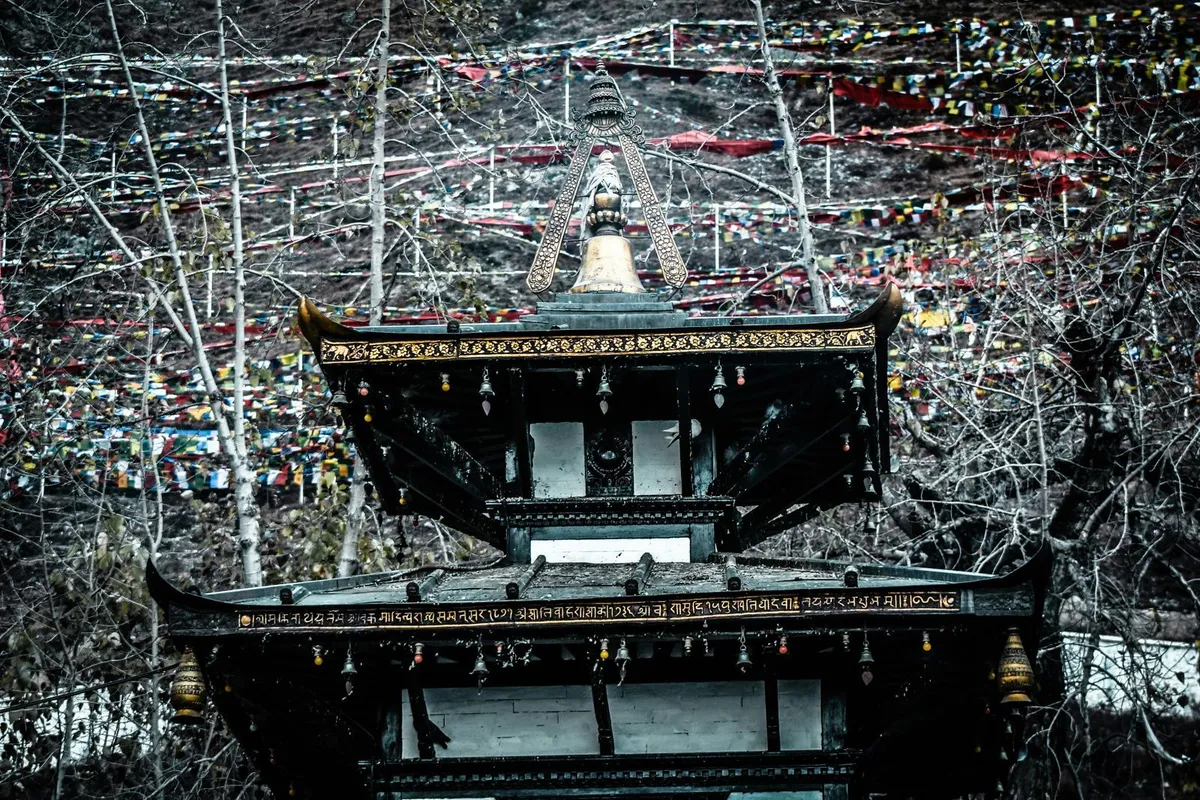
While primarily a Hindu pilgrimage site, Muktinath in the Mustang region is also sacred to Buddhists, who know it as Chumig Gyatsa, the Place of a Hundred Waters. The eternal flame burning from a rock fissure and the 108 waterspouts are revered by both traditions, and the site is a powerful example of the syncretism that characterizes Nepali spirituality. Our Muktinath pilgrimage guide covers the site in detail.
Sample Itineraries
One-Week Buddhist Pilgrimage Circuit
- Day 1: Arrive Kathmandu. Afternoon visit to Swayambhunath at sunset.
- Day 2: Morning at Boudhanath (kora at dawn). Afternoon at Kapan Monastery.
- Day 3: Day trip to Namobuddha and Dhulikhel. Overnight at Namobuddha monastery guesthouse or return to Kathmandu.
- Day 4: Day trip to Pharping (Asura Cave, Yanglesho, Vajrayogini Temple).
- Day 5: Fly to Bhairahawa, transfer to Lumbini. Afternoon at Maya Devi Temple and sacred garden.
- Day 6: Full day exploring Lumbini's monastic zone. Evening meditation at a monastery of your choice.
- Day 7: Morning at Lumbini. Fly back to Kathmandu. Depart or extend.
Two-Week Circuit with Trekking
- Days 1-4: Kathmandu Valley sites as above (Swayambhunath, Boudhanath, Namobuddha, Pharping).
- Days 5-6: Lumbini (fly to Bhairahawa, two days at the sacred garden and monastic zone).
- Days 7-12: Fly to Lukla, trek to Tengboche Monastery (3 days up, 2 days down, with acclimatization). Attend puja at Tengboche.
- Days 13-14: Return to Kathmandu. Rest, shopping, departure.
Practical Information
Best Time to Go
The best months for a Buddhist pilgrimage circuit are October to November (clear skies, comfortable temperatures, major festivals) and March to April (spring blooms, moderate weather). December to February is cold, especially at Tengboche, but the sites are quiet and the mountain views are often at their sharpest. June to September is monsoon: Lumbini is hot and humid, mountain views are obscured, and trails to Tengboche can be slippery with leeches.
Getting Around
Domestic flights connect Kathmandu to Bhairahawa (for Lumbini) and Lukla (for Tengboche). Private cars with drivers are the most comfortable way to reach Namobuddha and Pharping from Kathmandu. Within the Kathmandu Valley, taxis are plentiful and affordable. For the Everest trek, you will need a guide and permits; our guide to choosing a trekking agency covers the logistics in detail.

What to Pack
- Modest clothing: Shoulders and knees covered at all religious sites. A shawl or scarf is useful for temple visits.
- Comfortable walking shoes: You will be on your feet for hours at Lumbini and on the kora paths.
- Layers: The temperature difference between Lumbini (hot plains) and Tengboche (freezing at night) is extreme.
- Headlamp: Essential for early morning kora at Boudhanath and for monastery stays.
- Cash: Small denominations for monastery donations, butter lamps, and offerings.
- Passport photos: Required for trekking permits if you are going to Tengboche.
Etiquette at Buddhist Sites
- Always walk clockwise around stupas, prayer wheels, and temple interiors.
- Remove shoes before entering temple halls and monastery shrines.
- Do not point the soles of your feet at Buddha images or monks.
- Ask permission before photographing monks or rituals.
- Keep your voice low and your phone on silent.
- Offer donations discreetly, placing money in the designated boxes rather than handing it directly to monks.
Deepening Your Pilgrimage
A Buddhist pilgrimage is not a checklist of sites. The outer journey to sacred places is meant to support an inner journey of reflection and practice. Consider incorporating meditation into your daily routine on the road: a few minutes of sitting at each site, a circumambulation done with full attention, a moment of silence before moving on. Many pilgrims also bring a practice text or a mala (prayer beads) and dedicate the merit of their journey to a specific intention.
For those who want a fully supported pilgrimage experience, Enticing Himalayas offers several packages that handle all logistics. The Lumbini Buddhist pilgrimage package covers the birthplace with guided visits and comfortable accommodation. The Nepal cultural pilgrimage experience combines Kathmandu Valley sites with Lumbini in a comprehensive itinerary. For a broader spiritual journey that includes both Buddhist and Hindu sites, see our complete guide to cultural and spiritual tours in Nepal.

Frequently Asked Questions
How long does a complete Buddhist pilgrimage circuit in Nepal take?
A thorough circuit covering Lumbini, Kathmandu Valley sites, and Tengboche takes 14 to 18 days. A shorter version focusing on Lumbini and the Kathmandu Valley can be done in 7 to 10 days. If you skip the Everest trek, 5 to 7 days covers the main sites comfortably.
Do I need to be Buddhist to visit these sites?
No. All sites welcome visitors of any faith or none. The only requirement is respect: dress modestly, follow the customs of each site, and approach the experience with an open mind. Many non-Buddhist travelers find the pilgrimage deeply meaningful as a cultural and contemplative journey.
What is the best time of year for a Buddhist pilgrimage in Nepal?
October to November offers clear skies, comfortable temperatures, and major festivals like Mani Rimdu at Tengboche. March to April brings spring blooms and moderate weather. Winter is cold but quiet. Avoid June to September if possible, as monsoon rains affect travel and obscure mountain views.
Can I visit Tengboche Monastery without doing a full Everest trek?
Tengboche requires a trek of 5 to 7 days round-trip from Lukla. There is no road access. For those with limited time or fitness, helicopter tours can land near the monastery, allowing a visit of a few hours. These are expensive but feasible as a day trip from Kathmandu.
Is Lumbini safe to visit and how do I get there?
Lumbini is safe and well-developed for tourism. Fly from Kathmandu to Gautam Buddha Airport in Bhairahawa, about 30 minutes from Lumbini by road. Alternatively, drive from Kathmandu in 7 to 8 hours or from Pokhara in 5 to 6 hours. The site has good accommodation and restaurants.
What should I wear when visiting Buddhist monasteries and stupas?
Dress modestly: cover shoulders and knees. Remove shoes before entering temple halls. A shawl or scarf is useful for covering bare arms. Avoid shorts, tank tops, and revealing clothing. At high-altitude monasteries like Tengboche, bring warm layers as interiors can be cold.
About Enticing Himalayas

Enticing Himalayas is a licensed trekking and tour operator based in Kathmandu, Nepal. We specialize in cultural tours, spiritual pilgrimages, trekking adventures, and wellness retreats across the Himalayas.
Our Services
- Cultural and heritage tours across Kathmandu Valley, Lumbini, and beyond
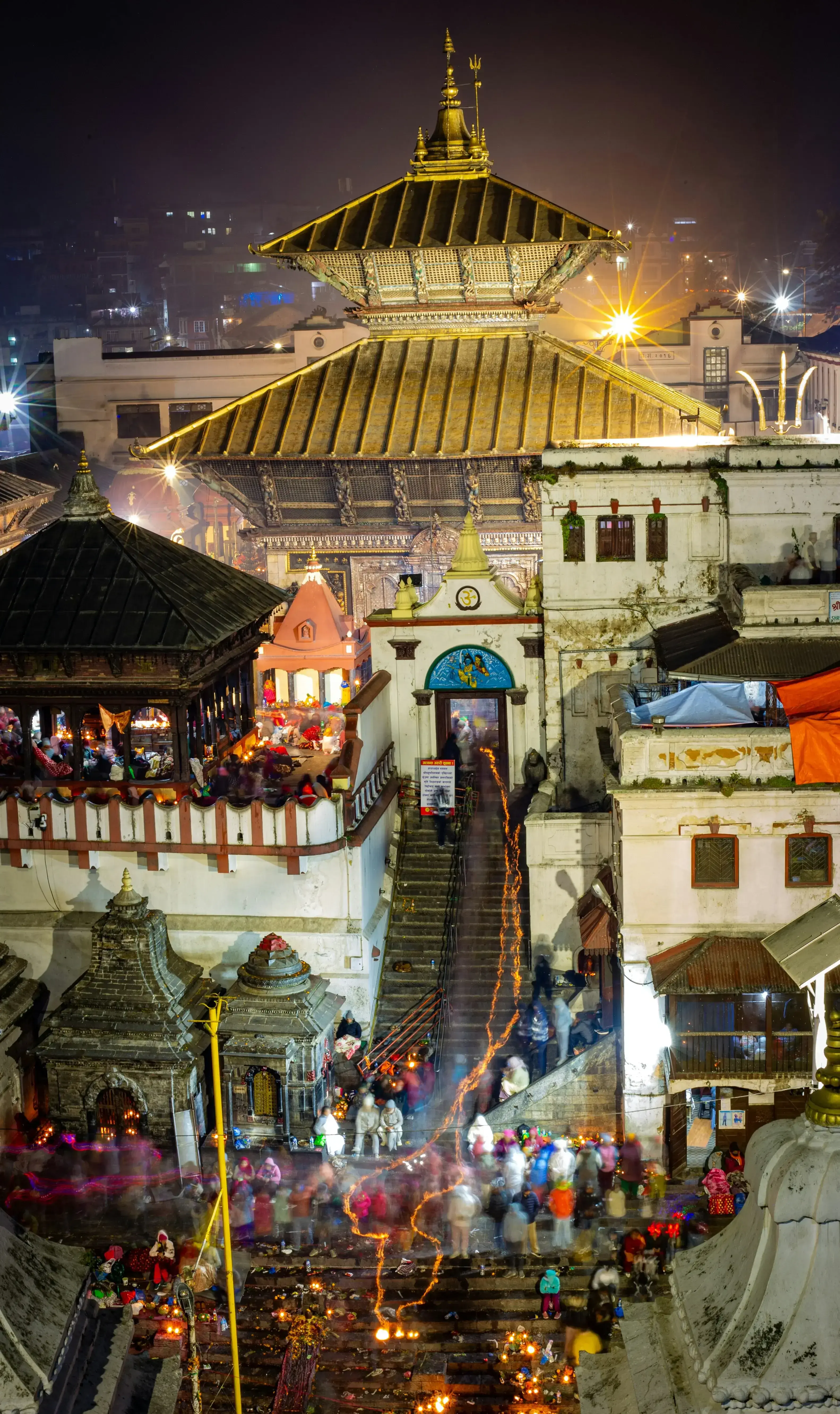
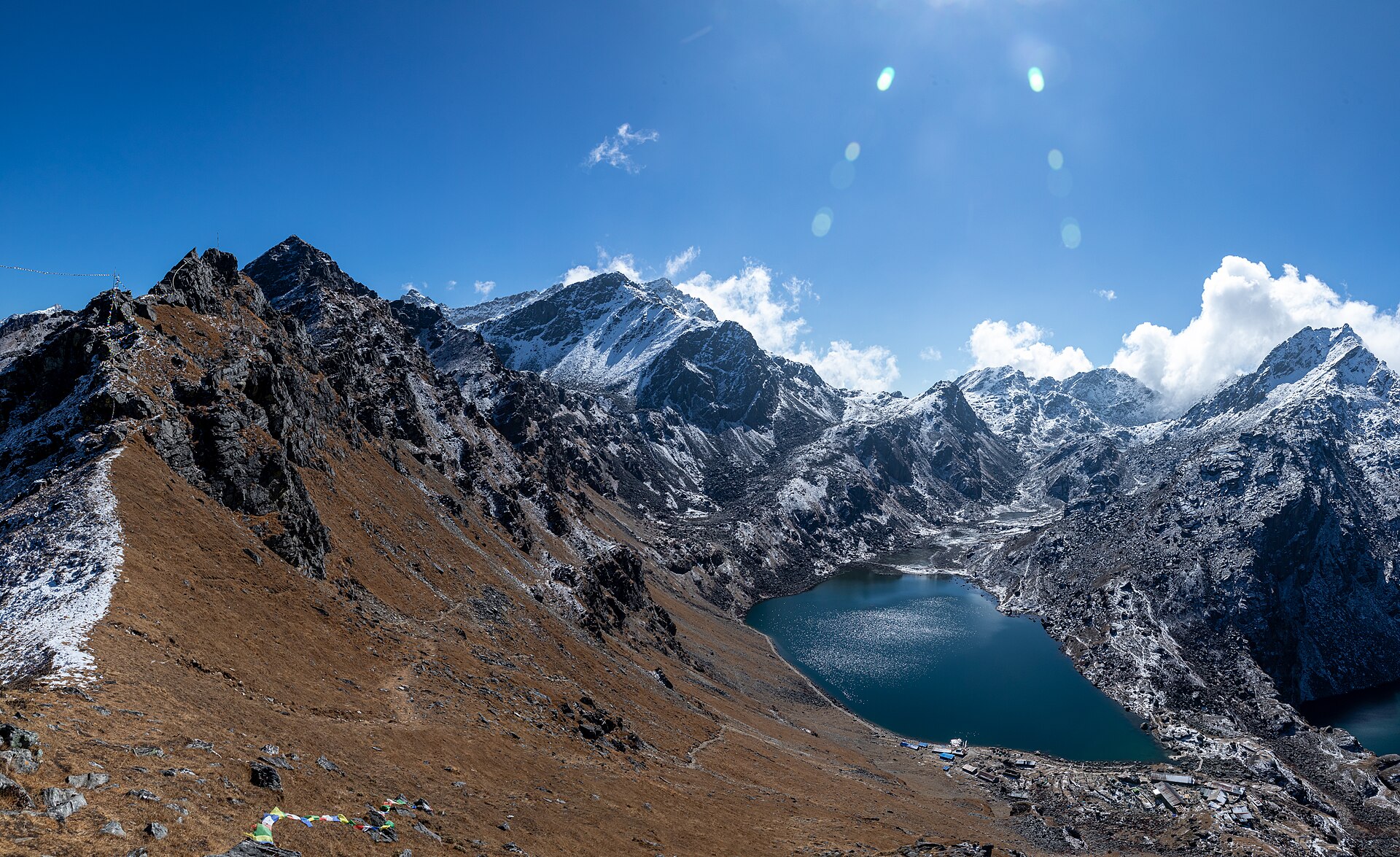
- Spiritual pilgrimages to Pashupatinath, Muktinath, Gosaikunda, and sacred Buddhist sites
- Trekking and mountaineering in Annapurna, Langtang, Everest, and Mustang regions
- Yoga, meditation, and wellness retreats with certified instructors
- Customized itineraries for solo travelers, families, student groups, and digital nomads
Our Accreditations


About the Author
This guide was written by the Enticing Himalayas content team, drawing on years of firsthand experience organizing spiritual tours and pilgrimages across Nepal.
Why Trust Enticing Himalayas
We are a government-registered travel company operating legally in Nepal. Our guides are licensed by the Nepal Tourism Board. We have successfully organized trips for thousands of travelers from over 40 countries.