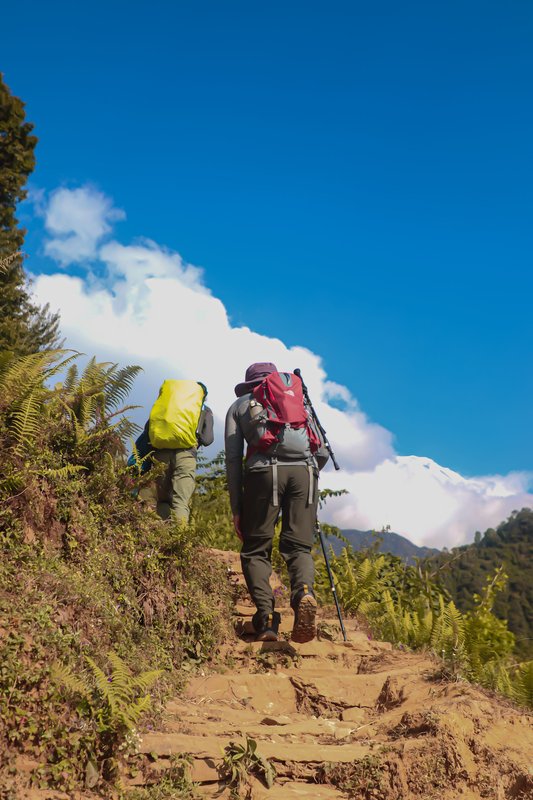
Travelers usually come to Nepal for two things: the highest mountains on earth and some of the world's deepest contemplative traditions. What fewer visitors realize is that these two gifts are not separate. The same country that gave the world the Buddha's birthplace also guards some of the most quietly spectacular forests, alpine meadows and silent ridgelines in Asia. When you practice meditation in Nepal surrounded by living nature rather than studio walls, the practice changes character. It becomes less effortful, more sensory and often more durable, because the landscape itself does half the settling for you.
This guide explores the growing practice of forest bathing in a Nepali context: what it is, why the Himalayas are unusually suited to it, where to go, how to actually do it, and how to weave it into a wider journey of cultural and spiritual travel in Nepal. Whether you are an experienced meditator or someone who simply feels better after a day under trees, the combination of meditation and nature in Nepal offers a gentle, low-cost, deeply restorative way to experience the country.


What Is Forest Bathing and Why Does Nepal Do It Best?
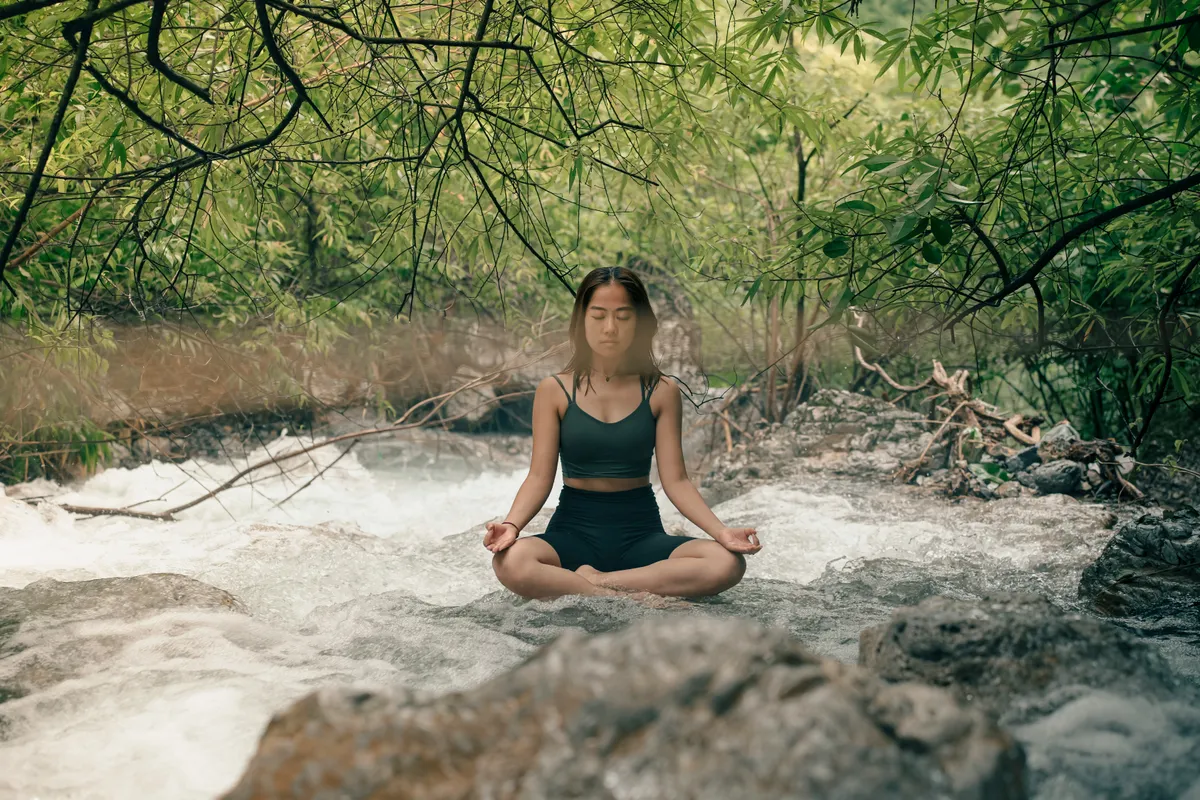
Forest bathing, known in Japan as shinrin-yoku, is the practice of spending slow, unstructured, sensory time in a living forest. It is not hiking, not exercise and not a nature walk with a destination. It is simply being present in the forest atmosphere, letting sight, smell, sound and touch do the work that effort usually does in indoor practice.
The term was coined in Japan in the 1980s as a public health response to stress-related illness, and decades of Japanese research have since linked regular forest time with lower cortisol, lower blood pressure and improved mood. The proposed mechanisms include phytoncides, the airborne compounds that trees release, and the rest effect of soft, complex natural scenery on human attention.
Nepal is a remarkably strong setting for this practice for three reasons. First, the country holds an extraordinary range of forest types within short distances: sal forests on the southern plains, subtropical broadleaf on the valley rims, cloud forests of rhododendron and magnolia at mid elevation, and dwarf birch and juniper at the alpine edge. Second, many of these forests are already regarded as sacred, threaded with hermitage caves, meditation retreats, prayer flags and pilgrimage paths, so the culture supports stillness rather than rushing. Third, outside a handful of famous viewpoints, most of these landscapes are quiet. You can walk for an hour through forest above Kathmandu or below an Annapurna ridge and meet more birds than people.
If you already like the idea of mixing trail time with quiet time, our guide to meditation and hiking in Nepal covers the overlap in more detail. Forest bathing is the gentler, slower sibling of that approach: less about kilometers, more about minutes of genuine attention.
Why Does Meditating Outdoors Feel Different from Indoors?
Meditating outdoors feels different because nature supplies the conditions that indoor practice has to manufacture: soft visual interest, steady ambient sound and a drop in the mental effort of focusing. Psychologists call it soft fascination, and it explains why an hour under trees can feel like twenty minutes of studio practice.
Anyone who has tried to sit with a restless mind knows the cycle: you focus, you drift, you notice you drifted, you refocus. Indoors that loop runs entirely on willpower. Outdoors the loop shortens itself. The movement of leaves, the texture of bark, distant birdsong and shifting light give attention just enough to hold onto without demanding anything. In the language of attention restoration theory, natural environments let directed attention rest while involuntary attention quietly stays engaged.
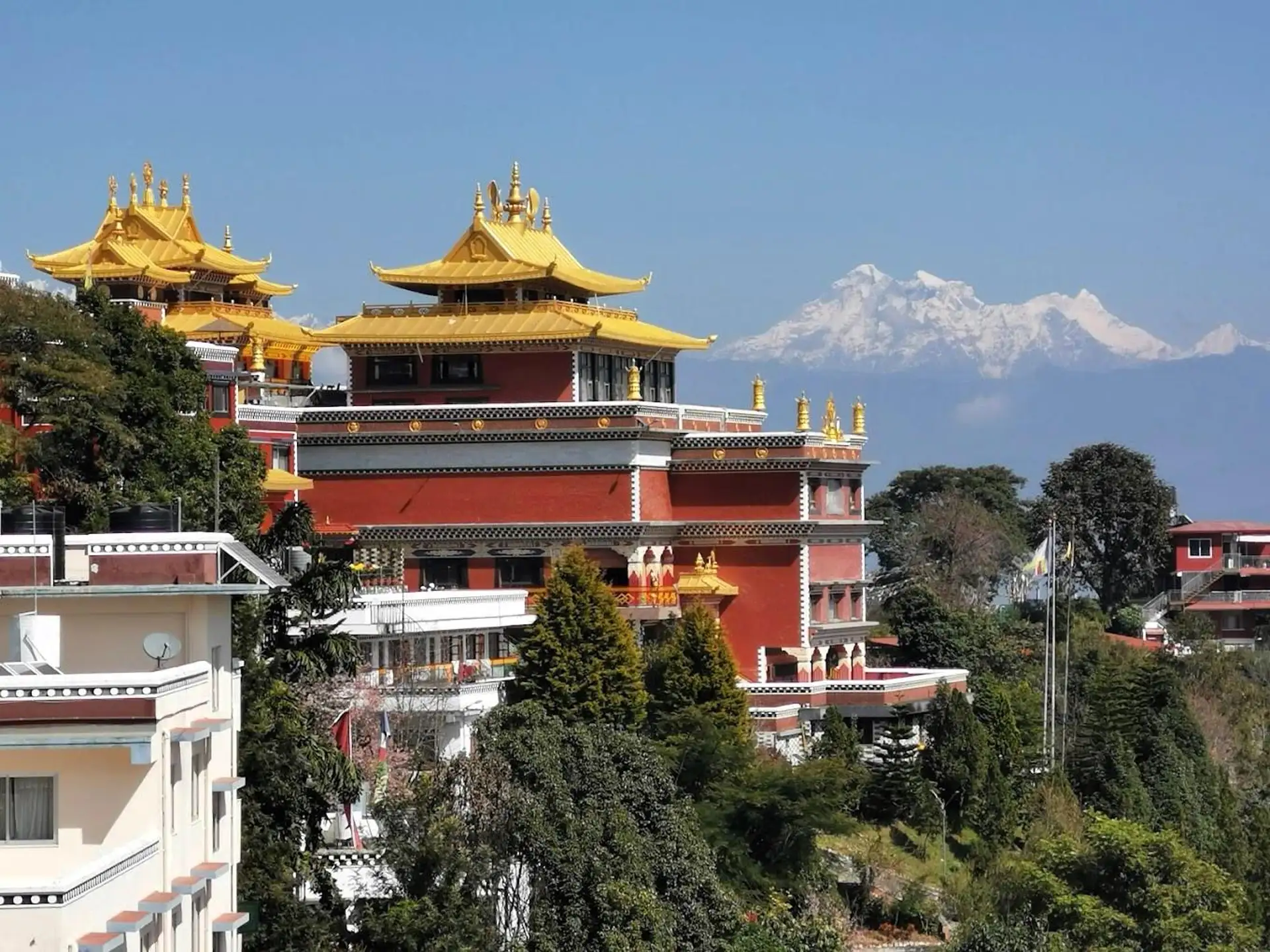
There is also a social dimension. For many travelers, a meditation hall can feel formal or even intimidating: postures, bells, unwritten rules. A forest asks nothing of you. That makes nature an ideal training ground for beginners, and a useful change of scene for experienced practitioners who have hit a plateau. Our guide to secular mindfulness practice in Nepal covers the same attention mechanics in an indoor setting, and the two approaches reinforce each other well.

Finally, outdoor practice builds a habit you can take home. You may not have a Himalayan pine forest outside your door, but almost everyone has a park, a garden or a single generous tree. Learning to settle outdoors in Nepal trains a skill that survives the flight home far better than a practice that only works with a cushion, a silent room and forty free minutes.
The Practice of Mountain Silence
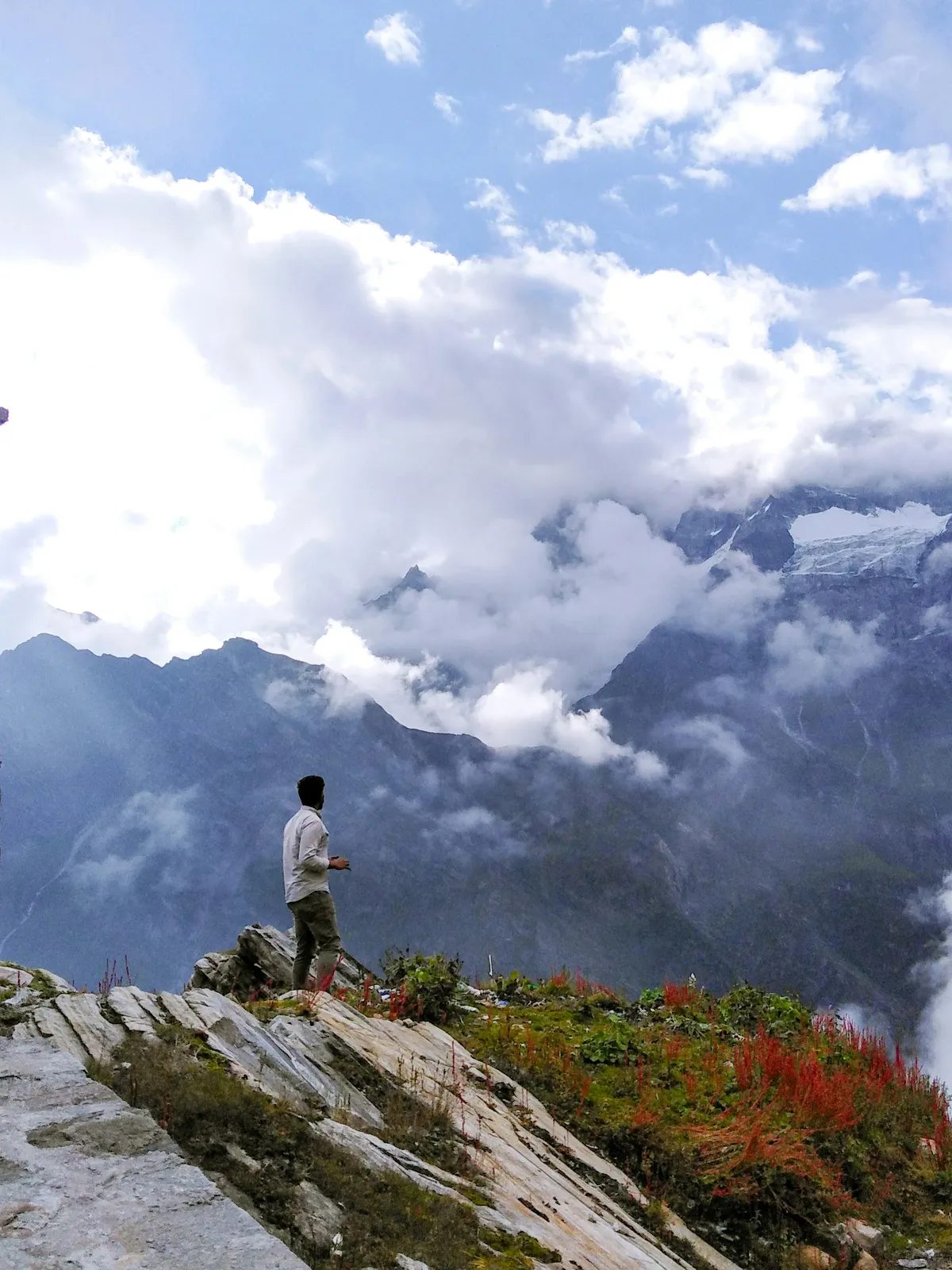
Mountain silence deserves its own section because it is not the same thing as quiet, and chasing it is one of the most rewarding things you can do in Nepal. Silence in the high country is not an absence. It is a layered, textured presence made of wind moving through juniper, the click of marmot stones, the distant sound of meltwater and the hum that seems to sit inside big rock and ice landscapes. Trekkers describe standing on a ridge at dawn and hearing their own heartbeat. That is the silence meditators travel for.
Two things create it. One is altitude and distance from roads: above roughly 3,000 meters in most of Nepal, engine noise largely disappears and the soundscape returns to water, wind and wildlife. The other is cultural: many high places are pilgrim sites, visited respectfully, often outside the trekking day. The result is a soundscape that modern life has almost abolished elsewhere. Researchers studying noise exposure note that genuinely quiet places are now rare on earth, and Nepal still has hundreds of them within a day's walk of a trailhead.
Formal silent retreats in Nepal approach this silence from the inside, withdrawing speech to reveal the mind's own noise. Nature-based practice approaches it from the outside, letting the landscape's quiet gradually slow your internal commentary until the two silences meet. Practicing both in one trip is a powerful combination that many visitors describe as the most restful week of their year.

Where Are Nepal's Best Forests and Silent Places for Meditation?
The best places for nature meditation in Nepal are the valley-rim forests around Kathmandu, the hilltop woods of Bandipur, the lakeside and peace-pagoda trails of Pokhara, the sacred sal garden of Lumbini, and the alpine silence above the treeline around lakes like Gosaikunda. Each suits a different traveler and a different season.
Kathmandu Valley rim. The protected forests of Shivapuri Nagarjun National Park rise directly north of the city, and Phulchoki, the valley's highest hill, guards its south. Both offer half-day forest immersion within an hour of your hotel: mossy oak and rhododendron, birdsong, and enough slope to feel like a real mountain without needing a trekking permit week. The National Botanical Garden at Godavari on Phulchoki's lower slopes is one of the calmest managed green spaces in the country, ideal for a first slow practice session.
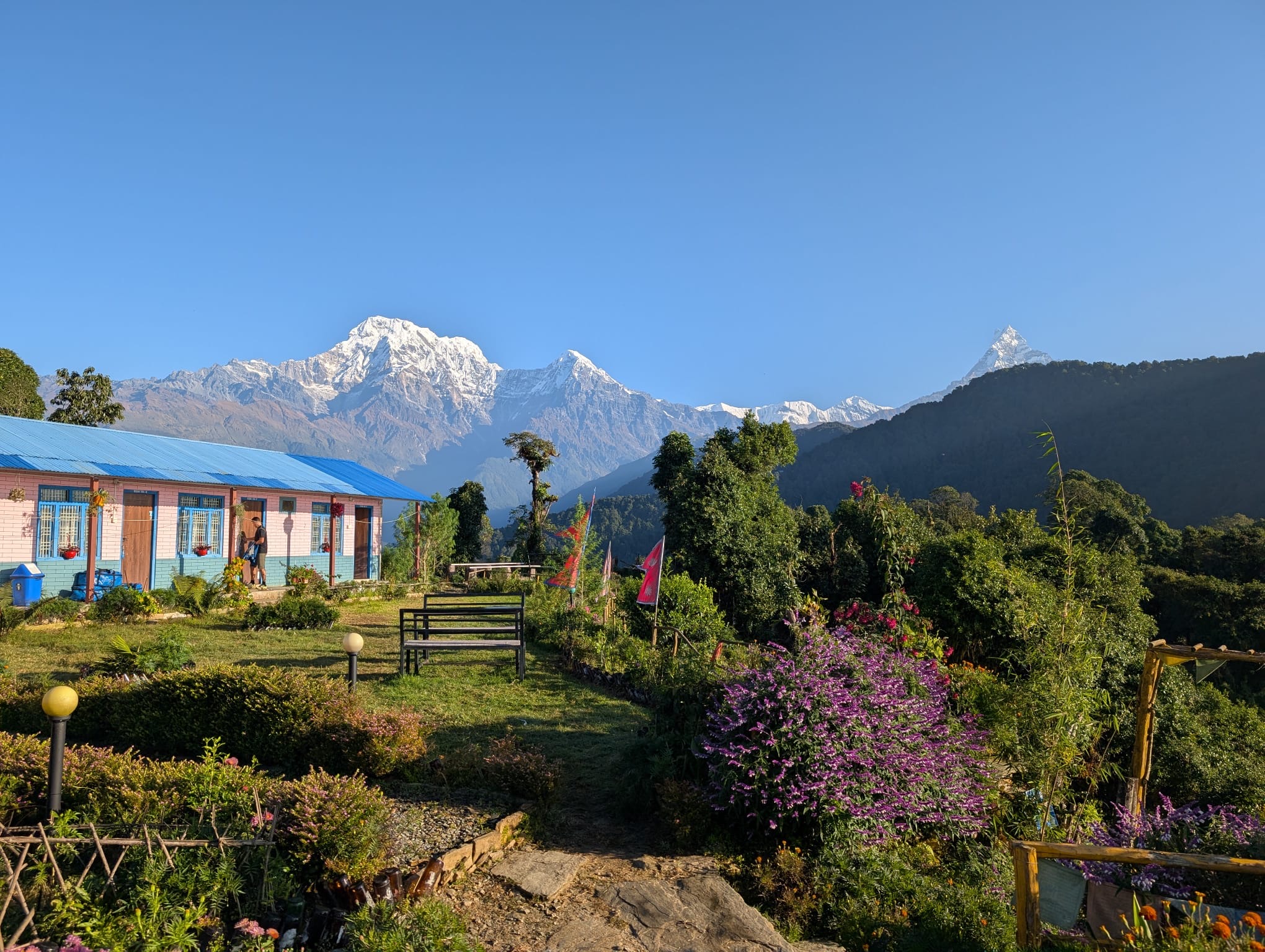
Bandipur. This restored hilltop town halfway between Kathmandu and Pokhara sits inside a bowl of sal forest and orange terraces. The traffic-free ridge road above town is one of Nepal's easiest genuinely quiet walks, with a sunrise view over the Annapurna range and forest sounds in both ears. It is the ideal low-effort nature stop on an overland route.
Pokhara. The lakeside city is the gentlest entry point to nature meditation in Nepal. Forested ridges rise behind town, the World Peace Pagoda sits inside mature woodland above the lake, and rowboat mornings on Pokhara's Phewa Lake offer a water-based variant of forest bathing where the sound palette is paddle, bird and ripple. Many wellness retreats cluster here precisely because nature access is effortless.
Lumbini. The birthplace of the Buddha is framed by a large sacred garden and older sal forest. Meditating under the sal trees where tradition places the Buddha's birth is not just symbolic; the grounds are among the few flat, shaded, endlessly quiet landscapes in the terai, and the monastic zones add bells, chanting and incense to the soundscape at intervals. See our Lumbini travel guide for planning.
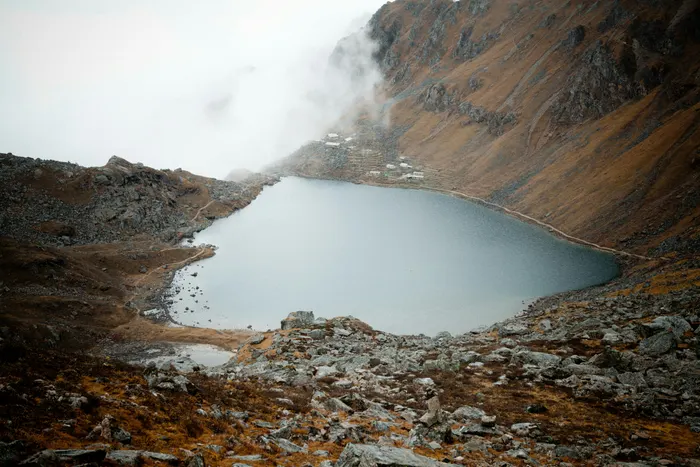
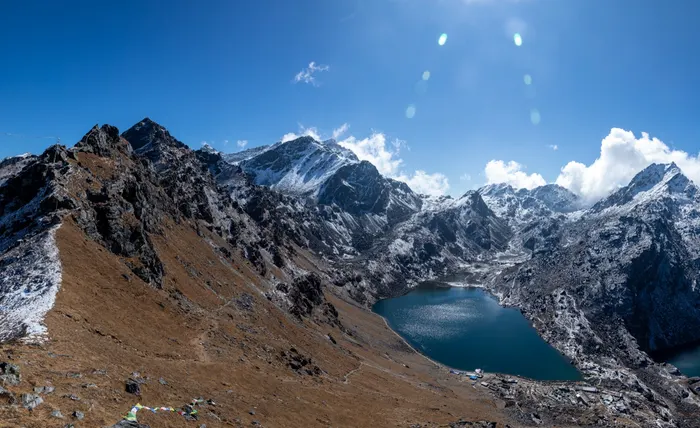
Alpine lakes and high country. Above the forest, silence changes texture. The trail country around Gosaikunda Lake moves from rhododendron into open alpine scrub, and the air at 4,300 meters carries almost no sound at all except water and wind. For experienced hikers this is the summit of the practice: a landscape where simply sitting still feels like a ceremony. Travelers who cannot manage days of uphill walking can still touch this world: our account of a Rara Lake helicopter journey in far-western Nepal shows how remote alpine silence can be reached in a single morning.
Annapurna rhododendron forests. In spring, the mid-elevation trails between Ghandruk, Ghorepani and Chame pass through some of the finest flowering forest on earth. When the lali gurans, Nepal's national flower, opens between March and April, whole hillsides turn crimson and the forest floor hums with pollinators. Slow, appreciative walking through this bloom is forest bathing at its most colorful.
If you prefer your nature at pilgrim pace, the practice of slow trekking and mindfulness in Nepal maps several routes where the journey itself, not the viewpoint, is the point. That philosophy is the bridge between trekking culture and forest bathing.
How Do You Turn a Forest Walk into a Meditation?
Turning a forest walk into a meditation requires no technique beyond deliberate slowing. Walk at half your normal speed, drop the destination, cycle your attention through each sense in turn, and stop completely for at least one long sit. The method below works on any trail in Nepal.
- Choose your window. Early morning, roughly 6 to 9 am, offers the coolest hours, the most bird activity and the fewest people. In the terai this also avoids the heat of midday.
- Walk at half speed for the first ten minutes. Slowing down is the practice. Let your eyes fall on whatever they fall on; resist naming and ranking. If you notice you have started rushing, stop, take three slow breaths and begin again slowly.
- Cycle through the senses. Spend a few minutes on hearing: count how many distinct sounds you can identify. Then smell: damp earth, leaf decay, blossom, pine resin after rain. Then touch: bark texture, wind temperature, ground underfoot. Then sight: near, middle, far. This cycle is the spine of the session.
- Find a sit spot. Halfway through your window, choose somewhere comfortable, a fallen trunk, a dry ledge, a clear patch of ground, and sit for fifteen to thirty minutes. Do not meditate on anything in particular. Just let the forest be the object of attention.
- Close gently. Before leaving, stand still for one full minute and ask what changed since you began. Almost always the answer is: breath slower, shoulders lower, hearing sharper. That noticing seals the session so the nervous system remembers it.
The classic walking meditation practice from the Himalayan tradition formalizes this process with attention on the soles of the feet, and it pairs beautifully with forest bathing: use formal walking technique on the moving parts of the route, and open awareness in the sit spots. Total time matters less than sincerity; forty honest minutes outperforms a distracted three hours.

Five Nature Meditation Techniques Worth Trying
Once the basic slow-walk method feels natural, five further techniques deepen the practice. Each takes minutes to learn and none requires any belief system, only willingness.
1. The sit spot. Choose one specific place, a particular tree, a lakeside bench, a ridge stone, and return to it daily if you can. Repetition transforms the spot: wildlife resumes normal behavior around you, and the place becomes a kind of outdoor meditation hall you carry in memory. This is the single most recommended nature technique in our guide to building a daily practice while traveling.
2. Sound mapping. Sit and draw a rough clock face on paper. Each time a sound reaches you, mark its direction and a word for it: koel, wind, temple bell, oar. After ten minutes you have a portrait of the soundscape. The exercise converts hearing, the sense we cannot close, into a focus anchor.
3. Breath and breeze sync. Instead of counting breaths, let the moving air set the pace: attend to the sensation of the breeze on your face and hands, and let breath length adjust to it. In still air, substitute bird rhythm or leaf shimmer. This makes a rustic version of the breathwork described in our guide to pranayama and breathwork at altitude.
4. Grounding contact. Where it is clean, safe and appropriate, sit or stand with bare feet or hands on grass, moss or stone. The point is not folklore about electrons but simple sensory grounding: skin meeting the living surface of the earth is a strong, calming attention object, especially at the end of a session.
5. The forest body scan. Take the familiar body scan outdoors and let the forest supply part of the scan: warmth of sun on one shoulder, cool shade on the other, wind moving hair, ground pressing up through the sitting bones. The environment gives the scan a richness an indoor room cannot match.
Bringing a notebook turns any of these into nature journaling, a meditative writing practice that many travelers find extends the calm of the session long after the walk ends. Write three lines before leaving the forest: one observation, one sensation, one question you cannot answer.
When Is the Best Season for Nature Meditation in Nepal?
The best season for nature meditation in Nepal is autumn, from October to November, for stable weather and crystalline mountain views; spring, from late February to April, for flowering forest; winter for valley-rim stillness; and the monsoon for misty, mossy sessions if you come prepared.
Autumn, October to November, is the classic answer: post-monsoon air scrubs clean, forests still damp and green, temperatures mild at every altitude, and the mountain views at their most honest. Book early, since this is peak season and popular trails get busy; forest-side and dawn practice keeps the experience quiet even when viewpoints are not.
Spring, late February to April, is the naturalist's season. The rhododendron bloom begins in the low hills in February and climbs to mid elevation by March and April, while magnolias, orchids and bird migration peak. Days warm quickly in the terai, so shift sessions earlier into the morning the later in spring you travel.
Winter, December to February, is the silence hunter's secret. Cold, dry air carries sound over extraordinary distance, crowds vanish, and the valley-rim forests around Kathmandu hold good morning light by eight. Bring serious layers for sitting still: forest bathing moves little, so dress ten degrees colder than a walker would.
The monsoon, June to August, divides opinion. Forests are at their greenest, mosses luminous, and cloud forests genuinely magical; but paths are slick, leeches are active below 2,000 meters, and views often hide. Serious practitioners adjust rather than cancel: choose higher and drier valleys, harden your footwear, carry salt or leech socks, and treat the mist itself as the meditation object. Monsoon is also the season when indoor alternatives shine: monastery sessions, singing-bowl evenings and retreat programs of the kind surveyed in our guide to yoga and meditation retreats in Nepal.

Can You Combine Nature Meditation with Trekking and Tours?
Yes, and the combination is one of Nepal's signature experiences. Trekking delivers you into the landscapes where silence is deepest, and short daily practice slots, twenty minutes at a lunch stop, thirty at a viewpoint, turn ordinary rest days into the heart of the trip.
The practical pattern is simple. Keep walking days moderate, roughly six to twelve kilometers, so energy remains for attention. Attach practice to natural pauses: the teahouse morning before departure, the ridge or river lunch stop, the hour before dinner. Higher up, above the treeline, shift to open awareness: sitting still in that vastness, watching weather move across peaks, is meditation of a very pure kind. For the full range of what trekking in Nepal involves, from permits to pacing, our complete guide to trekking in Nepal in 2026 is the right starting place.
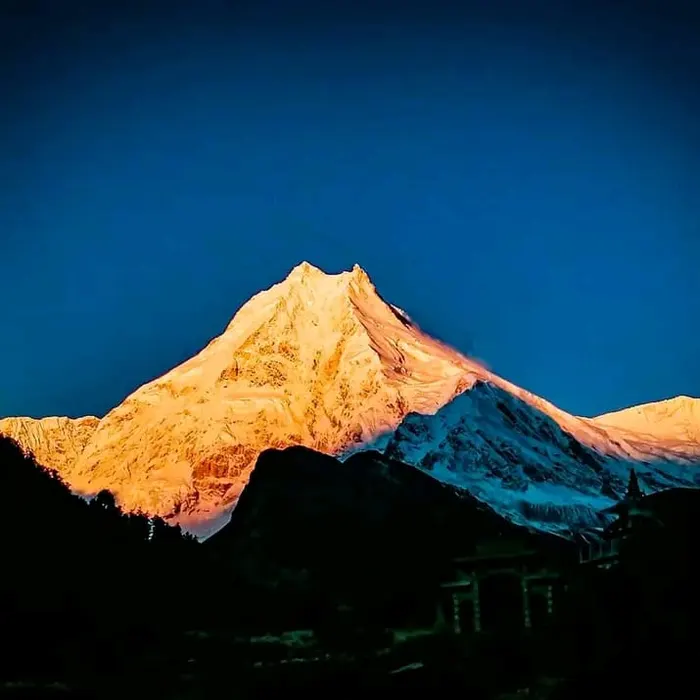
Two itineraries make the pairing especially easy. The Gosaikunda Sacred Lakes trek and yoga retreat, from $658, climbs from rhododendron forest to a 4,300-meter pilgrim lake with daily guided yoga and meditation built into the route, so the ascent itself becomes the practice. The 5-day yoga retreat with hiking, from $518, keeps sessions in the gentler mid-country forests for travelers who want the combination without sustained altitude. If you are drawn to slower movement generally, our meditation and hiking guide maps the mindset, and for anyone considering their first multi-day walk, the meditation for beginners guide covers the sitting basics you will lean on at altitude.
What Should You Pack for a Nature Meditation Journey?
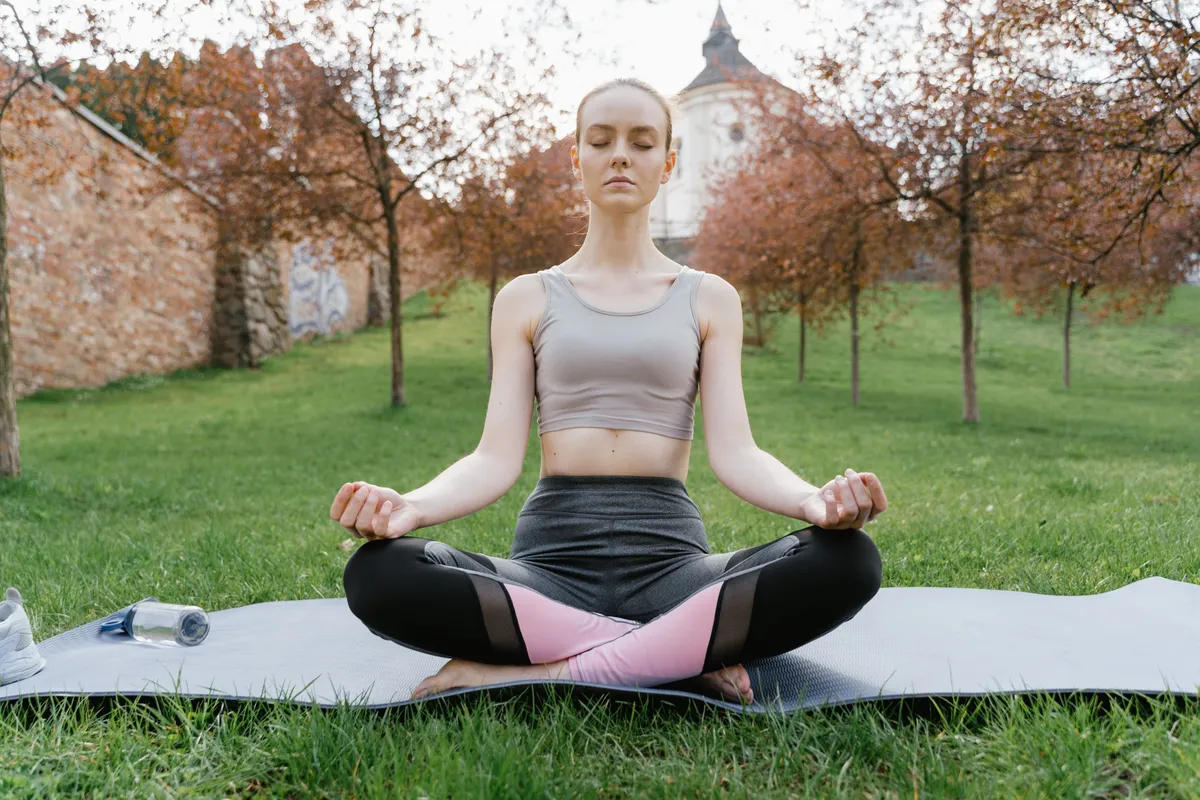
Pack for sitting still outdoors, not for walking fast: quiet natural-fiber layers, a rain shell, a warm hat and gloves, a light foam sit pad, a journal and pencil, and modest insect protection for the terai. The single most useful item is a small closed-cell foam pad.
It is worth saying plainly: sitting still in the mountains is colder than hiking in them. A practice wardrobe is a stillness wardrobe. Soft, quiet outer fabrics matter too, both for wildlife and for fellow practitioners, since synthetic jackets are loud in wind and against bark. Choose muted colors that do not startle birds, which improves the soundscape for everyone. A warm hat and light gloves double your comfortable sitting range in winter and at altitude, and a wide-brim hat plus a reusable water bottle cover the warm end.
Small items earn their weight: a foldable sit pad makes cold or damp ground meditable; a pencil writes in rain when a pen will not; a paper map engages landscape attention far better than a phone screen. If you carry a phone for camera safety, keep it off and out of reach for the session window. For the wider kit, including what to bring for indoor retreat programs, our meditation retreat packing list for Nepal remains the reference guide, and the two lists overlap heavily.
A Week in the Forest: A Sample Nature and Meditation Itinerary
The following weeklong shape works from autumn through spring and needs no trekking permits beyond standard park entries. It moves from valley-rim forest to hilltop woods to lakeside water practice, ending with the deepest quiet.
- Day 1, Kathmandu. Arrive, rest, and take an easy late-afternoon orientation walk in the embassy-area lanes or garden grounds. Keep the first day deliberately underwhelming: the practice week begins with a sleep, not a schedule.
- Day 2, Kathmandu valley rim. Dawn entry into Shivapuri Nagarjun park forests for a three-hour slow walk and sit spot. Afternoon free for a nap, then join the evening aarati ceremony to let sound meditation follow silence practice.
- Day 3, Bandipur. Overland to the ridge town, afternoon practice on the forest road above town at golden hour, sunset silence over the Annapurna range.
- Day 4, Pokhara. Continue west, lakeside afternoon, and a first water session: twenty minutes of simply watching light on Phewa Lake with the breath as background. Consider booking the 3-day sound healing retreat, from $288 as a post-trip extension if bowl resonance practice appeals.
- Day 5, Pokhara high forest. Morning climb through the peace-pagoda woodland, sit spot on the ridge, descend to the old bazaar for lunch. This is the week's deepest forest day.
- Day 6, toward the high country or home valley. Either begin a short upward walk toward alpine silence along the Gosaikunda yoga trek route, or, if the week stays low, transfer toward Bhaktapur for a dawn session in its quiet brick lanes and a rest day among woodcarving and courtyards.
- Day 7, return and integrate. Morning sit in the botanical garden at Godavari on the way to the airport if flying out from Kathmandu; on the flight, close the eyes and find the mountain silence again, now portable.
If a guided version of this shape appeals, the 6-day Nepal cultural, nature and Himalayan experience, from $377 covers a similar arc with logistics handled, and the dedicated healing tour to nature builds a full itinerary around forest time itself. Visitors with an interest in the etiquette of sacred sites en route, monastery visits, incense offerings, quiet hours, will find the monastery etiquette and meditation half-day activity a useful primer.
Is a Nature Meditation Retreat in Nepal Right for You?
A nature meditation retreat in Nepal suits you if you are overstimulated, seeking stillness, or curious about practice that does not require belief. It needs adjustment for strict accessibility requirements and for monsoon travel, but a version exists for nearly everyone.
The traveler who benefits most is usually the over-caffeinated modern one: the person whose attention has been fragmented for years and who suspects, correctly, that a screen-free week inside living quiet would do more than another productivity system. Nepal is unusual in offering that medicine at short distances, a forest within an hour of an international airport, alpine silence within two days of it. If you are deciding between formats, our guide to choosing a meditation retreat in Nepal walks the comparison, and the meditation for anxiety relief guide is directly relevant for travelers whose restlessness has a nervous edge.
Some practical honesty is due. Altitude changes breath, sleep and mood for the first days; plan practice flexibility accordingly. Accessibility varies: valley-rim and lakeside sessions are achievable for most travelers, while the alpine silence rewards those who can walk uphill for hours. Solo travelers should read the solo meditation travel guide for safety and loneliness tips, couples may prefer the shared formats in our couples retreats guide, and families will find workable structures in the family mindfulness guide. Budget and luxury versions both exist, compared in our budget meditation guide and luxury retreat guide.
For travelers who want to go deeper into the tradition behind the landscape, the history of meditation in Nepal explains why this small country carries such contemplative weight, from the Buddha's forest to today's retreat scene. And when you are ready to look at specific programs, the meditation in Nepal activity page gathers the current guided options in one place.
Forest bathing is, finally, a modest practice: no certificates, no hierarchy, no equipment beyond a pad and a coat. Its power is precisely that modesty. You go into a forest, you slow down, you pay attention, and the quiet that modern life has made rare does the rest. In Nepal, where the forests are sacred, the mountains are the world's highest and the contemplative tradition is two and a half millennia deep, that modesty is amplified into something travelers remember for the rest of their lives.