Mountain Flight in Nepal: Your Complete 2026/27 Guide
Some travellers save for years to stand at Everest Base Camp. Others give the mountain an hour of their morning and walk away with photographs that look impossible from a plane window. A mountain flight in Nepal is the country's most accessible Himalayan experience: a pressurised aircraft, a guaranteed window seat, and a slow, deliberate arc past the highest peaks on Earth, all between breakfast and lunch in Kathmandu Valley.
This guide explains exactly what a mountain flight is, what you will see, what it costs, when to fly and how it compares with a helicopter tour. If you want to skip straight to booking, the dedicated mountain flight in Nepal activity page has full details, and the all-in Kathmandu Mount Everest scenic flight tour with airport shuttle covers transfers and tickets in one price. For the cultural side of the same trip, our complete guide to cultural and spiritual tours in Nepal shows what else the valley holds once you are back on the ground.


What Exactly Is a Mountain Flight in Nepal?
A mountain flight is a dedicated scenic airline service that departs Kathmandu in the early morning, flies east along the Himalayan chain, turns around near the far eastern giants and returns to the same runway about an hour later. It is a scheduled commercial flight operated specifically for sightseeing, with a crew that names each peak over the speaker as it slides past your window.
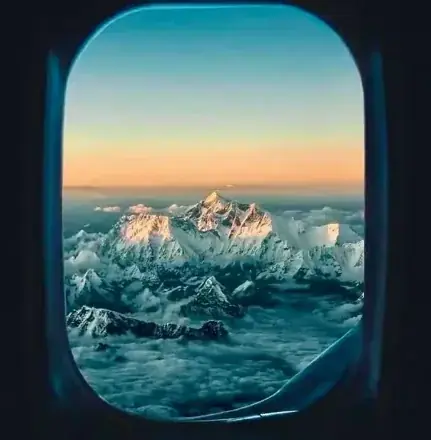
Unlike charter flights or treks, nothing about the experience demands fitness, permits or acclimatisation. You check in at Kathmandu's international terminal like any other passenger, board a small twin-engine aircraft, and climb to a cruising altitude that puts the 8,000-metre peaks at eye level or below. The aircraft is pressurised and heated, so you watch the planet's biggest walls in shirt-sleeve comfort while sipping nothing stronger than the tea you had at the hotel.
The format has existed for decades and is a fixture of Nepali aviation: airlines publish seasonal schedules, weather permitting a departure every morning, and the route is flown so often that crews know exactly where Everest sits in relation to the sun. For travellers with limited time, tight budgets or mobility constraints, it is the single most efficient way to see the high Himalaya.
The One-Hour Route from Takeoff to Kanchenjunga
Every mountain flight follows broadly the same corridor. After takeoff the aircraft banks northeast and climbs toward the border ranges north of Kathmandu. The first peaks appear within minutes: the Langtang and Jugal Himals rise close enough to the capital that, on a clear morning, you can trace the ridgelines trekkers walk in the Langtang Valley.
The aircraft then tracks east along the Himalayan crest. The crew announces each summit in turn, often with the Tibetan name, the Nepali name and the height, and passengers rotate attention from the left side of the cabin to the right as the aircraft positions each peak for the best light. Near the eastern end of the route, close to Makalu and the great wall of Kanchenjunga on the far horizon, the aircraft makes its signature wide turn, so passengers who spent the outbound leg on the shadow side get the sunlit view on the way home.
The return leg retraces the corridor at a slightly different altitude, which is why many passengers say the second half of the flight feels like a different trip entirely: peaks seen in silhouette on the way out are backlit gold on the return. An hour after wheels-up, you are back on the tarmac in Kathmandu with the rest of the day in front of you.
Which Peaks Will You See from Your Window Seat?
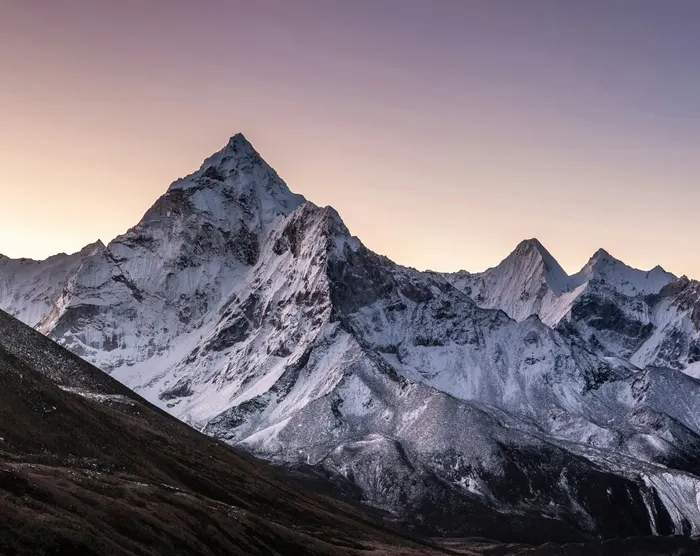
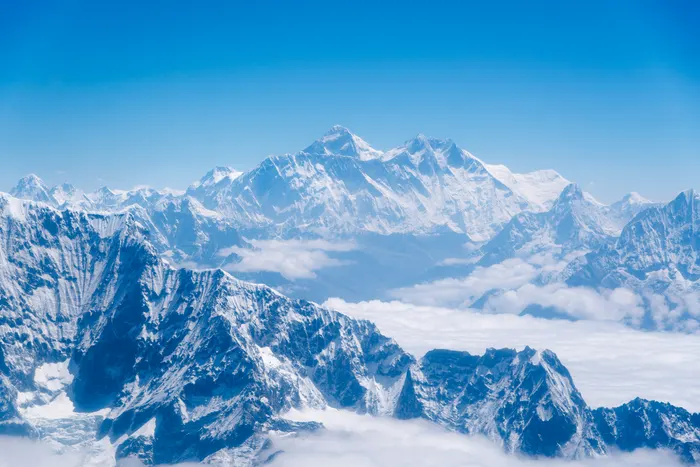
You will see more 8,000-metre summits in sixty minutes than most trekkers see in three weeks. The standard route passes the following highlights, announced one by one:
- Everest (8,849 m) is the headline act, its distinctive triangular summit and the South West Face unmistakable even at distance, with the snow plume often streaming off the top.
- Lhotse (8,516 m) sits directly beside Everest and is the fourth highest mountain on Earth; from the air the two read as a single immense massif.
- Makalu (8,485 m) rises east of the Khumbu, an isolated pyramid of rock and ice that many passengers photograph more than Everest itself.
- Cho Oyu (8,188 m) guards the Tibetan border west of the Khumbu and marks the transition into the deepest section of the range.
- Shisha Pangma (8,027 m), also called Gosainthan, is the only 8,000er wholly within Tibet and one of the first giants to appear on the route.
- Kanchenjunga (8,586 m) glimmers at the far eastern end of the route, a sprawling five-peaked massif on the horizon that signals the turnaround.
- Gauri Shankar (7,134 m) is the sacred twin-peaked mountain sacred to both Hindus and Buddhists, striking for its knife-edge profile.
- Dorje Lakpa (6,966 m) and Melungtse (7,181 m) form an elegant gateway into the high country.
- Pumori (7,161 m) and Nuptse (7,861 m) frame the Everest group itself, while Gyachung Kang (7,952 m) hides between Cho Oyu and the Khumbu.
- Langtang Lirung (7,234 m) is the closest major summit to Kathmandu and the first big wall you pass.
Photographers should note that the interplay of these peaks is what makes the flight special: watching the range step upward from 6,000-metre foothill walls to the 8,000-metre roof of the world in a single panorama is something no ground-based viewpoint in Nepal offers. Our aerial photography guide with camera settings and seat selection covers the technical side, from shutter speeds that beat propeller vibration to polarising filters for high-altitude glare.
How Does a Mountain Flight Compare with a Helicopter Tour?
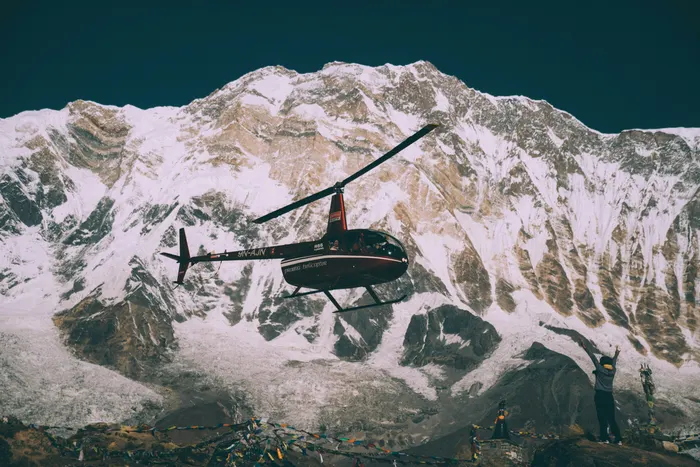
A mountain flight gives you the panorama; a helicopter tour gives you the proximity, and in some cases the landing. The fixed-wing flight stays at scenic cruising altitude on a set corridor, while helicopters like those on our helicopter tour in Nepal route fly lower and slower, hover near viewpoints such as Kala Patthar, and on landing tours actually touch down at Everest Base Camp or a viewpoint hotel for breakfast. The comparison matters because the two products serve different travellers, and our full Nepal helicopter tours aerial guide maps every option.
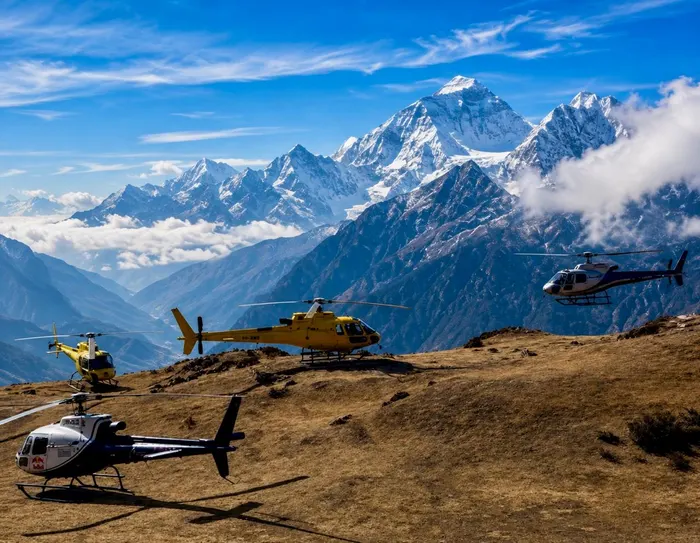
Price is the biggest differentiator. A mountain flight ticket costs a fraction of a helicopter seat; even the Everest versus Annapurna helicopter comparison shows helicopter seats running to several times the price. Time is the second differentiator: the flight takes about an hour total while a helicopter tour with landing can occupy half a day. The third is experience style: the fixed-wing cabin is quiet, roomy enough to move, and social, while a helicopter is intimate, head-set-wearing and doors-on for safety. Travellers who want to land at base camp and touch the icefall air should read about what a landing changes about the experience, and those weighing whether the premium product justifies itself will find an honest breakdown in our review of whether a helicopter tour in Nepal is worth it.
The practical summary: choose the mountain flight for the most peaks per dollar and the gentlest logistics; choose a helicopter, such as the luxury Everest Base Camp helicopter tour with landing or the luxury Annapurna Base Camp helicopter tour from Kathmandu, for proximity, hovering photography and the option to stand at altitude. Many travellers do both on different trips, and the one-day Everest Base Camp helicopter tour guide explains how that faster alternative fits a single free morning.
Who Operates Mountain Flights from Kathmandu
Two airlines dominate the scheduled scenic market from Kathmandu. Buddha Air, the country's largest domestic operator, runs its long-running Everest scenic service with Beechcraft 1900 turboprops, an 18-seat layout in which every seat is both a window and an aisle seat. Yeti Airlines flies the same corridor with its own fleet and an identical guarantee: a window seat for every fare-paying passenger. Both crews narrate the peaks in English, and both schedule their departures in the early-morning window when the Himalayan air is calmest and clearest.
Alongside the airline products, Enticing Himalayas operates its own curated Everest View mountain flight, a one-hour aerial tour for the 2026/27 season, which pairs the scenic flight with hotel transfers, check-in handling and a guide who briefs you on the peaks before boarding. The advantage of the curated version is simple: mountain flights are weather-dependent and famously early, and having a local team manage the 5 a.m. alarm call, the terminal queue and any same-morning rebooking removes almost all friction.
When Is the Best Season for a Mountain Flight?
October through April is the reliable window, with the finest conditions in two peaks: autumn, from early October to late November, when post-monsoon air is scrubbed clean, and spring, from late February through April, when long clear mornings return before the pre-monsoon haze builds. Winter offers the crispest air of the entire year, with visibility that regularly exceeds 150 kilometres, though December and January mornings sometimes start with valley fog in Kathmandu that clears by mid-morning.
The monsoon, roughly June through early September, is the gamble season. Cloud decks swallow the mid-hills and the peaks spend much of the morning behind moisture, so airlines cancel more departures and operate reduced schedules. Because a mountain flight needs only one clear hour, even shoulder-season travellers often fly successfully; the strategy is to book your flight early in your stay so a next-morning retry is possible. The seasonal logic mirrors the aviation side of our month-by-month weather and visibility guide for Himalayan flights, and if the same question applies to your ground plans, our best time for Everest Base Camp trek breakdown covers it from the trail perspective.
What Does a Mountain Flight Cost in Nepal?
The all-in price for most travellers is the package, not the ticket. Enticing Himalayas' Kathmandu Mount Everest scenic flight package with airport shuttle costs from US$385 and includes the flight ticket, hotel pickup and drop-off, a guide and terminal assistance, which matters at 5 a.m. Airline tickets sold directly at the counter or through local agents vary with season and operator, and the gap between a bare ticket and a managed package is usually smaller than the cost of a missed departure when a self-managed transfer arrives late.
Compared with alternatives, the value case is emphatic. A shared helicopter seat toward Everest costs several times the package price, as our complete helicopter tour price breakdown documents, and a trek to see the same massif costs two weeks of time and a four-figure budget, as shown in our Everest Base Camp trek cost breakdown. The mountain flight is the only product that delivers the full 8,000-metre panorama for a three-figure sum and an hour of your morning.
Where Should You Sit for the Best Views?
There is no wrong seat, and that is not marketing fluff: scenic aircraft are configured with a single column of seats on each side, so every passenger is at a window. On the outbound leg the high Himalaya sits to the north, which is on the left side of the aircraft as it flies east; after the turnaround near the eastern giants, the range passes down the right side. In practice you see the entire parade from either side, and the crew banks gently so that headline peaks are visible to the whole cabin.
What matters more than the seat is the preparation. Mornings at altitude are cold even in a heated cabin near the door seals, so dress in warm layers as if for a winter city walk; our packing checklist for Himalayan flights was written for helicopters but applies almost line for line to the fixed-wing cabin. Skip the wide-angle lens for the peaks themselves: a medium telephoto compresses the range and renders Everest's summit pyramid far better than a phone at full zoom. Wipe your window before takeoff, shoot with the lens close to the glass, and keep the camera strap on because the aircraft does bank and vibrate.
If your goal is publishable images rather than memories, read our photography guide with camera settings and shot planning before the flight, and consider splashing out on a helicopter day instead, because hovering at Cho Oyu is a different genre of photography altogether. For shared-versus-private logic on any aerial booking, our shared versus private comparison applies beyond helicopters too.
Is a Mountain Flight Right for You?
In most cases, yes, because the flight strips away nearly every barrier that keeps people from the high Himalaya. There is no trekking, no altitude exposure beyond a pressurised cabin, no permits and no multi-day commitment. Seniors and travellers with limited mobility fly comfortably, a point our guide to Himalayan views for seniors and elderly travellers covers in detail, and the fixed-wing cabin is more forgiving than a helicopter for anyone wary of small aircraft: more space, less noise, no headset, no doors-off wind.
The flight suits couples chasing a once-in-a-trip memory, with the romantic framing covered in our piece on Himalayan flights for honeymooners and couples; families with school-age children who can sit still for an hour; and business travellers with a single free morning in Kathmandu. It is less suitable for two groups: those who will only be satisfied by touching base camp ground, who should look at landing helicopter products, and those flying mid-monsoon with no schedule slack for weather retries.
Weather, Cancellations and the Refund Reality
Mountain flights live and die by morning visibility, and cancellations are routine rather than exceptional. Airlines decide at dawn whether the corridor is clear; if the flight is cancelled you are rebooked on the next available departure or refunded according to the operator's policy, and a managed booking through our team, which follows the process in our step-by-step Himalayan flight booking guide, handles the rebooking call before you have finished breakfast.
The practical defence is scheduling. Book the first or second morning of your stay, not your last; keep the day after free as a retry slot; and expect an alarm call around 5 a.m. because every scenic operator flies early while the air is still and the light is clean. Weather in this corridor is a science of its own, and our safety guide covering weather protocols and pilot decision-making explains exactly how crews read Himalayan conditions. The same dynamics govern the famous short runway to Everest's trailhead, chronicled in our guide to Lukla flights and weather delays, and they are why every operator in Nepal plans a backup before it plans a departure.
What Can You Combine with Your Mountain Flight?
The flight lands mid-morning, which makes it the perfect anchor for a bigger day or a bigger week. The classic same-day pairing is cultural: by early afternoon you can be walking the durbar squares and temple courtyards described in our guide to heritage and pilgrimage travel in Nepal, or riding the ropeways covered on the best cable car experience in Nepal to a hilltop shrine above the valley. The Nepal cultural and scenic tour of Kathmandu and Pokhara packages the same idea into a multi-day circuit.
If the window view plants a seed, the next step is ground-level. The five-day Everest View short trek to the Namche panorama is the natural progression for fit travellers, and our guide to the Pikey Peak trek, the best low Everest viewpoint covers a quieter alternative. Bigger ambitions route through our complete guide to planning a trek in Nepal with the right agency, the Everest region guide from Lukla to Kalapatthar, our first-timer breakdown of how hard the Everest Base Camp trek really is, and the classic Annapurna versus Everest comparison. Altitude deserves respect wherever you graduate to, so read our prevention and acclimatisation guide before committing.
How Do You Book a Mountain Flight in Nepal?
The booking itself is simple, but the sequencing matters. Confirm your dates and send an inquiry early, ideally before you leave home, because the clearest mornings fill first in peak season; our step-by-step aerial booking guide walks through the inquiry-to-takeoff flow. Choose the managed scenic flight package with shuttle and guide if you want the 5 a.m. logistics handled, or the dedicated mountain flight activity page if you prefer to build your own day around the ticket. Plan a fallback morning, then confirm the final weather call with your guide the evening before.
On departure day the sequence is quick: wake before dawn, meet the car, check in at the scenic-flight counter, hold a window seat, and climb while the valley is still blue below you. Bring your passport for check-in, your camera charged, and layers for the cabin. Everything else, from the narrated peak list to the turnaround, is arranged before you arrive.
A Morning You Will Not Forget
There is a reason mountain flights have survived every fashion in Himalayan travel: they compress the greatest mountain scenery on Earth into the gentlest possible format. No other experience puts Everest, Lhotse, Makalu, Cho Oyu, Shisha Pangma and Kanchenjunga in a single frame, in a warm seat, with a cup of tea waiting back at the hotel and the whole afternoon still unspent. For trekkers it is a preview and a celebration; for everyone else it is the headline experience of a Nepal trip, distilled to its most beautiful hour.
If you are ready to see the roof of the world before lunch, start with the mountain flight in Nepal page, and if the morning view leaves you hungry for the trail, our 2026 guide to choosing a trekking agency in Nepal is the next document to read. The mountains will be there either way; the window seat is only guaranteed if you book it.