Loading...
3 hours
Authentic Community Homestay Experience in Nepal in Kathmandu Valley
Kathmandu Valley
Instant Confirmation 3 hours
Free Cancellation
Up to 24 hours
Local Expert Guide
English speaking
Small Group
Max 12 people
Instant Confirmation
Mobile voucher
Overview
Experience an authentic community homestay in Panauti, Nepal, with local culture, traditional food, warm hospitality, and meaningful village experiences.
Authentic Community Homestay Experience in Nepal: Panauti
An hour's drive from Kathmandu, at the point where the Roshi and Punyamati rivers meet, sits a small Newari town that most visitors to Nepal never see. There are no big buses here, no souvenir stalls lining the streets, no crowds jostling for photos. Instead, there are carved wooden windows on centuries-old brick houses, pagoda-roofed temples that predate many in Kathmandu itself, and families who have quietly opened their homes to travelers — not as a business transaction, but as an extension of the same hospitality they'd offer any guest. This is Panauti, and it offers one of the most authentic community homestay experiences anywhere in Nepal.
If you want to understand what daily life in Nepal actually looks like — beyond temples on a checklist and treks on a map — a Panauti homestay is one of the clearest windows into it, and one of the most genuinely authentic community homestay experiences in Nepal.
What Makes Panauti Different
Panauti is often described by those who've been there as "the Bhaktapur nobody visits" — a fair comparison, since it shares the same Newari architectural heritage as a full Bhaktapur day tour, the same centuries of temple-building history, and the same warm brick-and-timber townscape found on a walk through Patan Durbar Square. The difference is scale and pace. Where Bhaktapur and Patan have become significant tourist destinations, Panauti has remained largely a working town — its temples still actively used for daily worship, its narrow streets still primarily walked by residents rather than visitors.
This matters enormously for anyone considering a community homestay Nepal experience, because it means your visit isn't diluted by mass tourism. The family who hosts you isn't one of dozens running similar operations on the same street — they're often one of a small, close-knit group of households in the village who have chosen, deliberately, to welcome outside guests into their home and their community.
What Is a Community Homestay, Exactly?
A community homestay is different from both a hotel and a typical "homestay" booked through a general travel platform. In Nepal, genuine community homestays are usually organized through a registered local network — meaning a group of households in a village jointly manage bookings, share income according to an agreed rotation, and maintain shared standards for guest experience. This model, pioneered in villages like Sirubari and later adopted across the country, exists specifically to:
- Keep tourism income within the local community, rather than flowing to an outside company or hotel chain
- Distribute the benefits of tourism fairly among multiple households rather than concentrating it with a single family
- Preserve traditional architecture and lifestyle, since homestays are typically run from existing family homes rather than purpose-built guesthouses
- Create genuine cultural exchange, since you are a guest in someone's actual home and daily life, not a customer in a commercial hospitality setting
In Panauti, this means staying in a real Newari household as part of a local family stay Nepal experience — often a multi-generational home — where you sleep in a family's guest room, eat meals cooked in their kitchen, and spend your evenings talking, learning, or simply sitting together, the way any guest would in a Nepali home.
The Newari Heritage of Panauti
To understand a homestay experience in Panauti, it helps to understand what makes Newari culture Panauti so culturally significant. Panauti's history as a settlement stretches back over a thousand years, and its Newari community — one of the indigenous peoples of the Kathmandu Valley and surrounding hills — has shaped nearly everything about the town's architecture, festivals, food, and daily rhythm.
Temples and Sacred Architecture
Panauti is home to one of the oldest surviving Panauti temples in Nepal — the Indreshwar Mahadev Temple, a multi-tiered pagoda dedicated to Shiva, believed to date back to the 13th century and considered one of the finest examples of traditional Newari temple architecture still standing. The town's location at the confluence of the Roshi and Punyamati rivers (traditionally considered a third, invisible river joins here too, making it a sacred triveni confluence) has made it a significant pilgrimage site for centuries, particularly during the Makar Mela festival held roughly every twelve years.
Living Newari Culture
Unlike heritage sites that have become primarily museums or tourist attractions, Panauti's temples, courtyards, and public squares remain genuinely in use — daily worship, seasonal festivals, and community gatherings still happen exactly where they have for generations. Staying with a host family gives you access to this living culture in a way that a day-trip simply cannot: you might be invited to join a household ritual, walk to a temple with your host at dawn, or find yourself, quite by accident, in the middle of a local festival procession.
Traditional Newari Craftsmanship
Panauti's brick-and-timber architecture — with its intricately carved wooden windows, tiled roofs, and inner courtyards — represents centuries of Newari building tradition. Many host families live in homes that have been in their family for generations, offering guests a rare chance to actually stay inside this architecture rather than simply photograph it from outside.
What to Expect From a Panauti Homestay
A Genuine Welcome
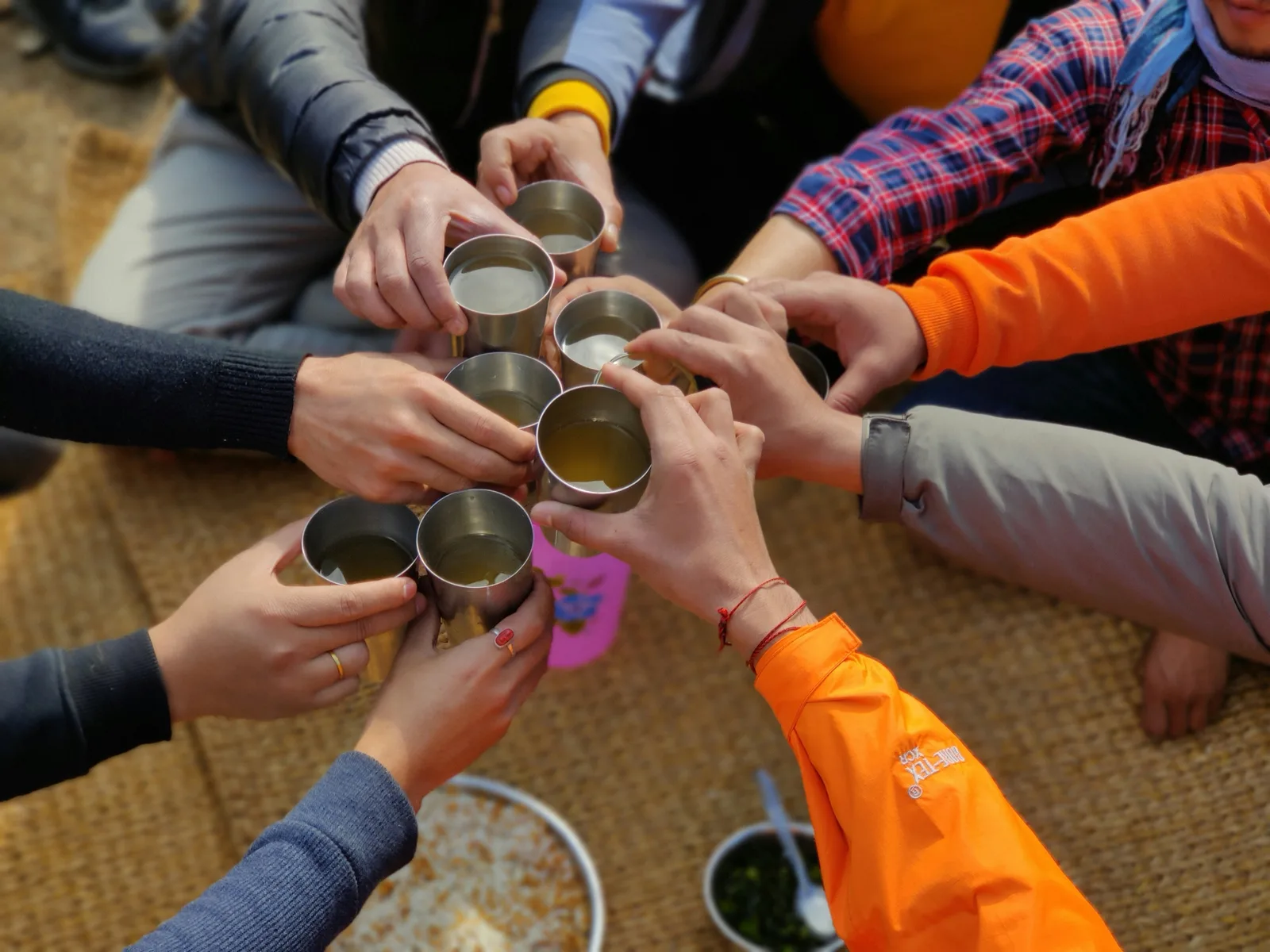
Most homestay visits begin the same way any visit to a Nepali home would: a warm welcome, a cup of tea, and an unhurried introduction to the household. There's rarely a rigid "check-in" process — instead, you're simply welcomed as a guest.
Traditional Newari Food
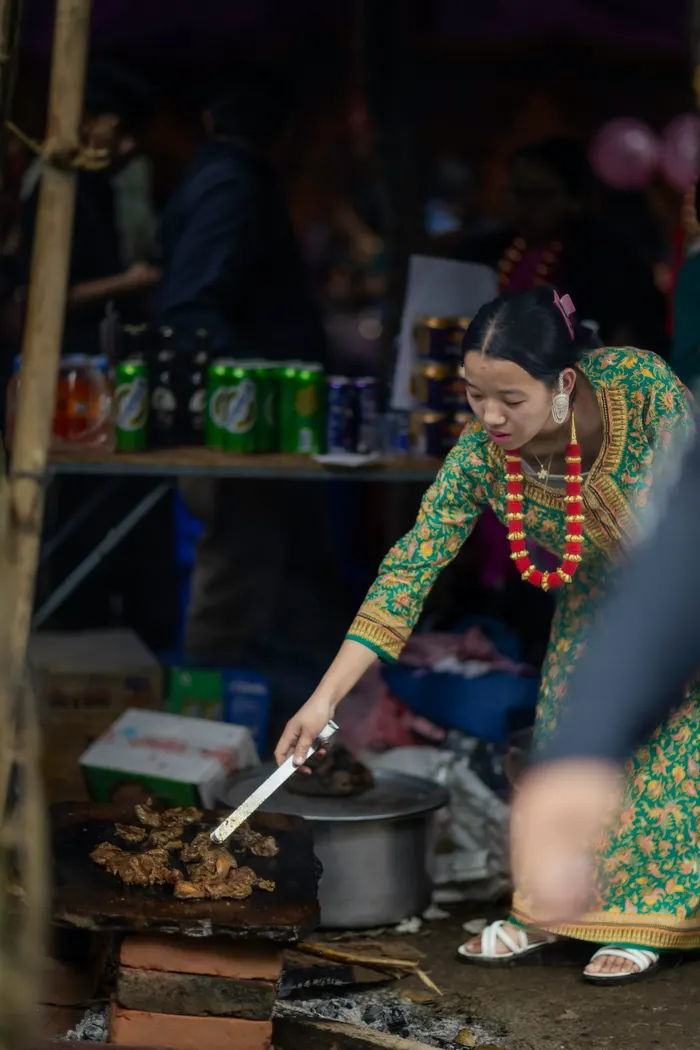
Food is central to the Panauti homestay experience. Newari cuisine is one of the most elaborate and distinctive culinary traditions in Nepal, and host families often prepare dishes rarely found in restaurants aimed at tourists — bara (savory lentil pancakes), choila (spiced grilled meat), chatamari (a rice-flour crepe sometimes called "Newari pizza"), and seasonal vegetable curries cooked in traditional mustard oil. Many homestays also offer the chance to help prepare the meal itself, turning dinner into a genuinely participatory cultural experience rather than something simply served to you.
A Village, Not Just a House
Because Panauti's homestay network is genuinely woven into the town itself, your stay typically extends beyond the house you're sleeping in — much like the local perspective you get on a proper Kirtipur city walk or a guided Nuwakot heritage hills tour. Hosts often walk guests through the town's temple squares, along the riverbank, or into the surrounding countryside, introducing neighbors and pointing out details of daily life a solo visitor would likely miss entirely — which shop sells the best sel roti, which temple is currently being restored, whose house that particular carved window belongs to.
Simple, Comfortable Accommodation
Homestay rooms in Panauti are typically simple and clean rather than luxurious — a private or shared guest room, shared bathroom facilities in some homes, and the kind of comfortable, lived-in atmosphere you'd expect from staying in someone's actual house rather than a hotel built for guests. This is part of the appeal: you are experiencing Nepali domestic life as it actually is, not a curated version of it.
Evenings of Genuine Conversation
Many past guests describe the evenings as the most memorable part of a Panauti homestay — sitting with the family after dinner, sharing stories, asking questions about Newari culture and Nepali life, and often being asked just as many questions in return. Language differences rarely prove a serious barrier; patience, gesture, and a shared meal tend to bridge most gaps.
A Typical Day in a Panauti Community Homestay
Morning: Wake to the sound of the household beginning its day — often including a walk to a nearby temple for morning worship, which guests are usually welcome to observe or join respectfully. Breakfast typically includes tea, and depending on the household, traditional items like chiura (beaten rice) or leftover dal bhat.
Late morning: A guided walk through Panauti's old town, including the Indreshwar Mahadev Temple complex, the riverside confluence, and the town's traditional brick lanes — often led by your host or a local guide connected to the homestay network.
Midday: Lunch back at the homestay, typically dal bhat tarkari or a Newari specialty depending on the day and season.
Afternoon: Time to explore independently, rest, or continue cultural activities — some homestays offer optional add-ons like a cooking session, a short countryside walk, or a visit to a local craftsperson's workshop.
Evening: Dinner with the family, followed by conversation, and — depending on timing — the chance to witness or join a local ritual, small festival, or simply the quiet rhythm of the household's evening routine.
Why Choose Panauti Over a More Touristic Homestay Destination
Nepal has several well-established homestay destinations, and each offers something slightly different. Panauti's particular strength lies in three things:
- Proximity combined with authenticity. At roughly an hour from Kathmandu, Panauti offers genuine, unpolished cultural immersion without requiring a multi-day journey to reach — making it one of the easiest genuine cultural detours from the city for anyone planning Panauti Nepal travel.
- A living heritage town, not a preserved museum piece. Because Panauti hasn't been heavily developed for tourism, daily life continues largely unaffected by visitor numbers, meaning your presence blends into the town's normal rhythm rather than disrupting it.
- Deep Newari cultural specificity. While many Nepali homestays offer general rural or hill-village culture, Panauti offers something more specific: access to one of the best-preserved Newari heritage towns in the country, with all the food, architecture, and religious tradition that comes with it.
Combining a Panauti Homestay With the Rest of Your Nepal Trip
Because of its short distance from Kathmandu, a Panauti homestay pairs naturally with other things to do in the region:
- A short hike or heritage walk through the surrounding hills before or after your stay
- A day trip to nearby Namo Buddha, one of Nepal's significant Buddhist pilgrimage sites, roughly an hour further by road — a stop that also fits neatly into a broader spiritual tour in Nepal
- A Newari cooking class, either as part of the homestay itself or as a standalone addition
- A combined Kathmandu Valley cultural tour, pairing Panauti with Bhaktapur or Patan, or folding it into a wider trip like the 8-day Nepal highlights tour, Nepal Unveiled, or the Golden Triangle Nepal tour
- A wellness stop afterward, such as a day spa in Kathmandu or a short yoga retreat with sightseeing
- An overnight or multi-night stay, extending beyond a single night to more fully settle into the household's rhythm
Many travelers build Panauti into a broader customized Nepal itinerary, treating it as a deliberate slow-travel counterpoint to busier stops like Kathmandu Durbar Square or a multi-day trek. If you're arranging your own guide for the visit, it's worth reading up on how to hire a trekking guide in Nepal and booking a guide online safely, including a look at local guides versus international platforms and typical trekking guide costs in Nepal.
Responsible and Sustainable Tourism Through Homestays
Choosing a genuine community homestay in Panauti is also a meaningful form of sustainable tourism in Nepal and rural tourism Nepal at its best. Because the homestay network is locally organized and jointly managed, your spending goes directly to the host family and, through shared community arrangements, indirectly benefits the wider village — supporting the maintenance of traditional homes, temples, and public spaces that might otherwise struggle for funding.
This stands in contrast to conventional tourism models where the majority of spending is captured by outside operators, international hotel chains, or transport companies with limited connection to the destination itself. A homestay visit, by design, keeps the economic benefit of your trip where it can do the most good — with the people actually maintaining the culture you've come to experience.
Tips for a Great Panauti Homestay Experience
- Come with time, not just interest. An overnight stay allows the experience to unfold naturally, rather than feeling rushed.
- Ask questions. Most host families are genuinely happy to explain rituals, architecture, food, and daily life — curiosity is welcomed, not intrusive.
- Dress modestly, particularly when visiting temples or joining household religious activities.
- Be flexible with plans. Village life doesn't run on a tourist schedule, and the best moments often happen spontaneously.
- Book through a registered, community-run homestay network to ensure your visit genuinely benefits the local family and town rather than an unrelated intermediary.
- Bring a small gift or offer to help with a household task if the opportunity arises — small gestures are often deeply appreciated.
- Learn a few words of Nepali, even just greetings — it's a small effort that goes a long way in building genuine connection.
Who a Panauti Homestay Is Best Suited For
- Cultural travelers who want depth over breadth — a single, immersive experience rather than a checklist of sights
- Slow travelers looking to balance a busier Nepal itinerary with a quieter, more reflective stop
- Photography and architecture enthusiasts, given Panauti's exceptional and largely unphotographed Newari townscape
- Families and solo travelers alike, since homestay hosts are generally experienced at welcoming a wide range of guests
- Anyone seeking a genuine alternative to more heavily visited heritage towns like Bhaktapur or Patan
The Makar Mela: Panauti's Once-in-Twelve-Years Festival
One detail that sets Panauti apart from almost anywhere else in Nepal is the Makar Mela — a major religious festival held at the town's sacred river confluence roughly once every twelve years, drawing tens of thousands of pilgrims from across the country. While the chances of your visit coinciding with the full Makar Mela are naturally slim, smaller annual and seasonal festivals tied to the same sacred site happen far more frequently, and host families are often deeply involved in the preparations, processions, and rituals — offering homestay guests a rare, unscripted window into how a genuinely significant Nepali religious tradition actually unfolds at the community level, rather than as a staged event for visitors.
Panauti's Role in the Wider Newari Cultural Landscape
Panauti sits within a broader constellation of Newari heritage towns across the Kathmandu Valley and its surrounding hills, alongside better-known destinations like Bhaktapur, Patan, and Kirtipur. What distinguishes Panauti within this landscape is its relative isolation from the valley's main urban sprawl — set apart in its own smaller valley at the meeting of two rivers, it developed with a slightly different architectural and cultural rhythm than its larger neighbors. For travelers who have already visited Bhaktapur or Patan, a Panauti homestay offers a valuable point of comparison: the same underlying Newari culture, but experienced at village scale, with far fewer visitors and a much more direct connection between guest and host family.
More From Our Nepal Travel Blog
If Panauti has sparked an interest in exploring more of Nepal's culture, wellness scene, and adventure trails, our full Nepal travel blog covers everything from Kathmandu Valley heritage towns to high-Himalayan trekking guides. Here are some related reads to plan the rest of your trip:
Kathmandu Valley Culture & Heritage
- Bhaktapur Day Tour: Temples, Squares and Newari Culture
- Patan Durbar Square: The Artistic Heart of Kathmandu Valley
- Kirtipur City Walk: Hidden Treasures of a Newari Town
- Nuwakot Heritage Hills Tour: Nepal's Historic Hill Fortress
- Nepal Unveiled: Ancient Streets to Himalayan Heights
- Nepal Heritage and Wildlife Experience: Culture Meets Nature
- 8 Days Nepal Highlights Tour: Culture, Nature, Mountains
- Golden Triangle Nepal Tour: Kathmandu, Pokhara and Chitwan
- Spiritual Tour in Nepal 2026: A Journey of Stillness, Rituals & Wellness
Wellness, Yoga & Meditation
- 7-Day Yoga Retreat with Sightseeing in Nepal
- Wellness Tour in Nepal for Couples: Romantic Getaways
- Spa and Wellness in Kathmandu: Best Day Spas for Travelers
- The Science of Meditation: Your Brain in the Himalayas
- Meditation and Fasting in Nepal: Spiritual Cleansing Guide
- Meditation and Nature in Nepal: Forest & Mountain Silence
- Meditation and Journaling in Nepal: A Spiritual Practice
- Family Meditation Retreats in Nepal: Mindfulness for All
- Meditation and Detox in Nepal: Cleansing Body and Mind
- Meditation for Sleep in Nepal: Overcoming Insomnia Naturally
- Meditation for Anxiety Relief: Healing in the Mountains
- Meditation and Hiking in Nepal: Combining Trail Time with Stillness
- Budget Meditation in Nepal: Affordable Retreats and Free Programs
- Luxury Meditation Retreats in Nepal: High-End Wellness in the Himalayas
- Solo Meditation Travel in Nepal: A Guide for Independent Seekers
- Couples Meditation Retreats in Nepal: Shared Spiritual Journeys
- What to Pack for a Meditation Retreat in Nepal: Essential Gear
- Meditation Retreat Packing List for Nepal: What to Bring
- Meditation and Pranayama in Nepal: Breathwork at Altitude
- Chakra Meditation in Nepal: Energy Centers and Himalayan Healing
- Mantra Meditation in Nepal: Om Mani Padme Hum and Sacred Chanting
- Walking Meditation in Nepal: Mindful Trekking Through the Himalayas
- Silent Meditation Retreats in Nepal: What Happens When You Stop Talking
Trekking Guides & Practical Planning
- How to Hire a Trekking Guide in Nepal 2026/27
- Book a Guide in Nepal Online: Where and How to Book Safely
- Local Guides in Nepal vs International Platforms
- Trekking Guide Cost in Nepal: Daily Rates 2026/27
- Nepal Visa Guide 2026: On-Arrival, eVisa, Tourist Visa Fees and Process
- Nepal SIM Card and Internet Guide 2026: Staying Connected While Trekking
- Nepal Travel Insurance Guide 2026: Trekking and Helicopter Evacuation Coverage
- Manaslu Circuit Trek Permits Guide 2026
- Manaslu Circuit Trek Cost Guide 2026: Complete Budget Breakdown
- Manaslu Circuit Trek Itinerary: 14-Day Day-by-Day Guide
- Langtang Valley Trek Cost Guide 2026: Complete Budget Breakdown
- Langtang Valley Trek Itinerary: 7-Day Day-by-Day Guide
- Kanchenjunga Circuit Trek Guide 2026: Nepal's Remote Eastern Himalaya
- Gokyo Lakes Trek Guide 2026: Gokyo Ri, Fifth Lake and the Ngozumpa Glacier
- Upper Mustang Trek Guide 2026: Lo Manthang, Caves and the Forbidden Kingdom
- Everest Three Passes Trek Guide 2026: Renjo La, Cho La and Kongma La
Paragliding & Adventure
- Paragliding Near Pokhara: Beyond Sarangkot
- Paragliding in Nepal's Far West: Emerging Sites
- Pokhara vs Sarangkot: Which Paragliding Launch Is Better?
- Top 10 Paragliding Sites in Nepal Ranked: Where to Fly in 2026
You can also browse Places to See, Things to Do, Tour Packages, our Travel Guide, the Festival Calendar, or start planning a custom trip.
Why This Experience Matters
A visit to a monument tells you what a culture built. A community homestay experience tells you how a culture actually lives — what people eat on an ordinary Tuesday, how a household organizes its morning, what a temple means to the family that walks past it every single day. In Panauti, this distinction is especially vivid, because the town's heritage isn't separated from daily life behind ticket booths and viewing platforms — it's simply woven into it. Staying with a host family here doesn't just show you Newari culture; for a night or two, it lets you live inside it.
At Enticing Himalayas, we work directly with registered community homestay networks in Panauti and across Nepal's Kathmandu Valley to connect travelers with genuine host families — ensuring your stay is authentic, respectful, and directly beneficial to the community you're visiting.
Frequently Asked Questions
How far is Panauti from Kathmandu?
Panauti is roughly 30–35 kilometers from Kathmandu, typically a one- to one-and-a-half-hour drive depending on traffic and road conditions.
Is a homestay in Panauti comfortable for first-time visitors to Nepal?
Yes. While accommodation is simple rather than luxurious, registered community homestays maintain good standards of cleanliness and hospitality, and hosts are experienced at welcoming international guests, including first-timers.
Will there be a language barrier? Some, though it's rarely a real obstacle. Many hosts speak at least basic English, and where they don't, warmth, gesture, and shared meals communicate a great deal on their own.
What is the best time of year to visit Panauti for a homestay?
Autumn (September–November) and spring (March–May) offer the most pleasant weather, though Panauti can be visited comfortably in most seasons given its relatively low elevation.
Can I combine a Panauti homestay with sightseeing elsewhere in the Kathmandu Valley?
Yes — Panauti is easily combined with visits to Bhaktapur, Patan, Namo Buddha, or a short Kathmandu Valley hike, either before or after your homestay.
Is it safe and appropriate to photograph temples and daily life in Panauti?
Generally yes, with basic courtesy — ask before photographing individuals directly, and be respectful around active religious rituals, particularly inside temple interiors.
How long should I stay for the experience to feel worthwhile?
A single overnight stay offers a genuine taste of the experience, but two nights allow for a more relaxed, unhurried visit and deeper conversation with your host family.
How do I book an authentic, community-run homestay in Panauti rather than a generic guesthouse?
The most reliable approach is booking through a verified local operator or community homestay network with direct, transparent relationships to registered host families in the town.
Panauti homestay
authentic community homestay
community homestay Nepal
Newari culture Panauti
Highlights
- Panauti homestay
- authentic community homestay
- community homestay Nepal
- Newari culture Panauti
- Panauti Nepal travel
- local family stay Nepal
- Panauti temples
- rural tourism Nepal
- sustainable tourism Nepal
What's Included
- Traditional Nepali meals
- Local host interaction
- Local sightseeing
- Basic hospitality and guidance
What's Not Included
- Transportation to/from Panauti
- Travel insurance
- Personal expenses
- Extra meals or activities not mentioned
Itinerary
No itinerary available.
Gallery
Details
Duration
3 hours
Location
Kathmandu Valley
Provider
Enticing Himalayas Travels
Contact
9851144618
Book this experience
$199per person
Secure booking- Location
- Kathmandu Valley
- Duration
- 3 hours
- Confirmation
- Instant
Travellers
Price calculated per person
1
1 Traveller × $199$199
Total$199
From
$199/person